
 Worksheets
chemistry 9
Total questions: 120
Worksheet time: 1hrs 10mins
Which is/ are the example(s) of Solid Sol?
Jelly
Coloured gemstone
Milk
Milky glass
What is the solute in the soda water?
Water
Carbon dioxide
Sugar
Oxygen
(a) was the first scientist to give the term Element.
A solution for making tea contains 20 g of sugar in 150 ml of water. Find the concentration of solution.
What is Tyndall effect?
What are the properties of metal?
Malleable
Sonorous
Ductile
Lustre
Suspension can be separated by filtration.
TRUE
FALSE
Solution is a (a) mixture.
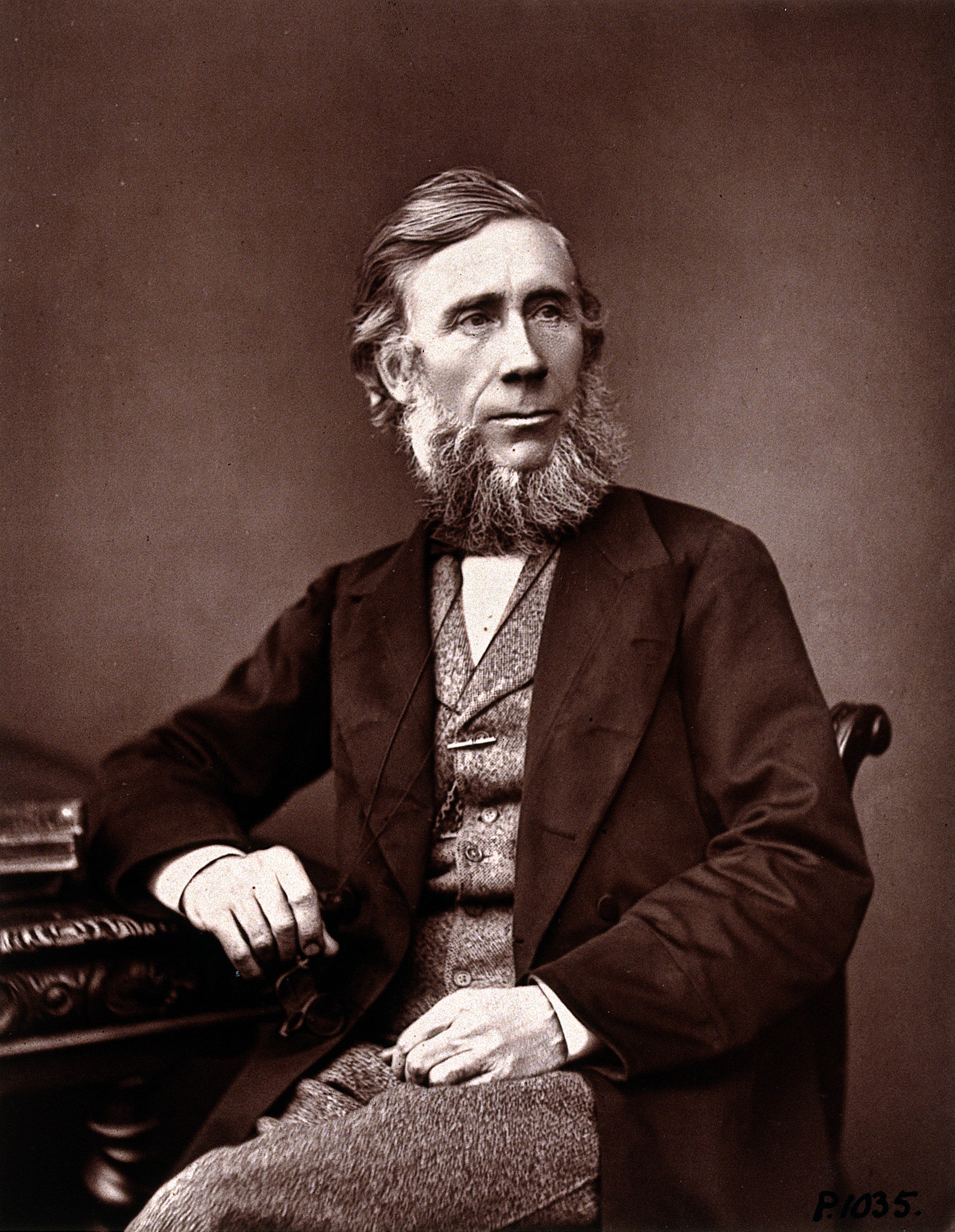
Who is this person?
Robert Boyle
Antoine Lavoisier
John Tyndall
None of the above
What is Pure substance?

Air is regarded as mixture because?
It's pressure may vary.
It's temperature may vary.
Volume changes under different compositions.
It's compositions may vary.

In which of the following constituents are present in the ratio?
Mixture.
Compound.
Solution.
Colloid.

A mixture will appear translucent in the case of?
Copper sulphate + water.
Alum + water.
Sugar + water.
Starch + water.

Brass is an example of?
Homogeneous compound.
Homogeneous mixture.
Heterogeneous mixture.
Heterogeneous compound.
The process of removing impurities from a solution by using filter paper is called as
Chromatography
Filtration
Sublimation
Solution
The component of the solution that is dissolved in the solvent (usually present in lesser quantity) is called (a)
When two liquids do not mix, they form two separate layers and are known as
(a) Miscible liquids
(b) Immiscible liquids
(c) Saturated liquids
(d) Super saturated liquids
How one can separate ammonium chloride from a mixture containing ammonium chloride and sodium chloride?
(a) Precipitation
(b) Sublimation
(c) Chromatography
(d) Cetrifugation
The size of the particle of solute is ............ for colloidal Solution
<1nm
>1nm
Between 1nm and 100nm
Above 100 nm
Tyndall effect means
Rays scattered by dust particles
Rays travelling from one medium to other
Rays undergoing Refraction
Rays undergoing totally reflected
Dissolved Sodium chloride can be separated from salt solution by
Chemical process of extraction
Physical process of evaporation
Chemical processes
Blood and sea water are
blood is a mixture whereas sea water is a compound
blood is a compound and sea water is a mixture
both mixtures
Define a pure substance?
A pure substance consists of a single type of particles and constant composition.
A pure substance consists of two different types of particles with variable composition
A pure substance consists of many types of particles and different composition
In a sugar solution water is_____ and sugar is_____
water is solute and sugar is solvent
water solute and as well as solvent
water is solvent and sugar is solute
What is meant by chromatography?
The process of separation of volatile and non volatile mixtures is called chromatography.
The process of separation of components of a mixture based on its solubility is called chromatography
The process of separation based on its solubility is called chromatography
The method used in washing machines to squeeze out water from wet clothes
Sublimation
Distillation
Centrifugation
When a saturated solution is heated and more solute is dissolved in it, what is such a solution called?
Supersaturated Solution
Colloidal Solution
Aqueous Solution
Thermo Saturated Solution

A sample contains two substances and has uniform properties. The sample is ________?
A compound.
A heterogeneous mixture.
An element.
A homogeneous mixture.
A mixture will appear translucent in the case of?
Copper sulphate + water.
Alum + water.
Sugar + water.
Starch + water.

Which of the following is an example of heterogeneous substance?
Bottled water.
Table salt.
Pieces of copper.
Candle.
Two chemical species X and Y combine together to form a product P which contains both X and Y
X + Y → P
X and Y cannot be broken down into simpler substances by simple chemical
reactions. Which of the following concerning the species X, Y and P are correct?
(i) P is a compound
(ii) X and Y are compound
(iii) X and Y are elements
(iv) P has a fixed composition
(a) (i), (ii) and (iii),
(b) (i), (ii) and (iv)
(c) (ii), (iii) and (iv)
(d) (i), (iii) and (iv)
What is the solute in the soda water?
Water
Carbon dioxide
Sugar
Oxygen
how will you seperate oxygen from a mixture of liquid air?
centrifugation
seperating funnel
fractional distillation
distillation
Tyndall effect is observed in forests because of
tress
high oxygen level
mist and dust particles in the air
less sunlight
If we put camphor in an open container, its amount keeps on decreasing due to the phenomenon of
(a) Evaporation
(b) Precipitation
(c) Condensation
(d) Sublimation
Which of the following elements is not a metalloid?
(a) Boron
(b) Silicon
(c) Germanium
(d) Tungsten
Brass is an alloy. It is a mixture of______
30% Zinc 70% copper
20% copper 80% nickel
40% iron 80% copper
35% gold 65% zinc
Brass is an alloy. It is a mixture of______
30% Zinc 70% copper
20% copper 80% nickel
40% iron 80% copper
35% gold 65% zinc
Air is regarded as mixture because?
It's pressure may vary.
It's temperature may vary.
Volume changes under different compositions.
It's compositions may vary.
In which of the following constituents are present in the ratio?
Mixture.
Compound.
Solution.
Colloid.
A mixture of two or more metals or a metal and non-metal is known as
Pure compound
Heterogeneous mixture
Alloy
Pure solid
Sodium carbonate is
an element
a compound
a mixture
None of these
Two substances A and B when bought together form a substance C with the evolution of heat. The properties of C are entirely different from those of A and B. the substance C is:
A compound
An element
A mixture
None of the above
Name the mixture whose particles are large enough to scatter light:
True solution
Homogenous solution
Colloid
all of the above
Which of the following property does not describe a compound:
it is composed of two or more elements
it is a pure substance
constituents cannot be separated by physical means
mixed in any proportion by mass
Which of the following is a chemical change?
cooking food
melting of wax
dissolving sugar in water
mixing iron fillings with sulfur powder
The continuous zig-zag movement of colloidal particles in a dispersion medium is called:
Oscillation
Tyndall effect
Dispersion
Brownian movement
Colloids can be separated by
filtration
distillation
sedimentation
centrifugation
Burning of a candle is
physical change
chemical change
both physical and chemical change
none of the above

A
B
C
D

Name the flask
round bottom flask
flat bottom flask
conical flask

NAME THE APPARATUS
DISTILLATOR
CONDENSOR
FRACTIONATING COLUM

NAME THE SEPARATION TECHNIQUE
FRACTIONAL DISTILLATION
DISTILLATION
SEPARATING FUNNEL
EVAPORATION

NAME THE PROCESS
DISTILLATION
FRACTIONAL DISTILLATION
EVAPORATION
CONDENSATION

NAME THE SEPARATION TECHNIQUE DISTILLATION
EVAPORATION
DISTILLATION
CONDENSATION

NAME THE SEPARATION TECHNIQUE AND NAME THE COMPONENTS IT IS USED TO SEPARATE
LIST THE PROPERTY OF METAL WHICH MAKES THEM SUITABLE FOR MAKING UTENSILS USED IN COOKING FOOD
Air is regarded as a mixture because:
Its pressure may very
Its pressure may very
Its volume changes under different conditions
Its composition may vary

The process used to separate oil and water is:
Distillation
Sublimation
Separating funnel
chromatography
Two substances A and B when bought together form a substance C with the evolution of heat. The properties of C are entirely different from those of A and B. the substance C is:
A compound
An element
A mixture
None of the above
A sample contains two substances and has uniform properties. The sample is:
A compound
A heterogeneous mixture
An element
A homogeneous mixture
White gold is used in jewelry and contains two elements, gold and palladium. A jeweler has two different samples that are both identical in appearance and have a uniform composition throughout. What can be said about the samples?
They are homogeneous mixtures and be classified as metallic alloys.
The materials are heterogeneous mixtures and can be classified by their components
The samples have variable compositions and are classified as metallic solutions.
The samples are heterogeneous mixtures that can be separated using magnetic properties.
.A student is given a mixture of iron filings and sulphur in thee ratio 1 : 2 by weight. He was then asked to heat the mixture over a flame and to observe the olor change. The student will observe that the mixture becomes:
Black
Grey
Yellow
Orange

Distillation is a good separation technique for:
Solids
Liquids
Solid alloys
Gases
If we put camphor in an open container, its amount keeps on decreasing due to the phenomenon of
Evaporation
Precipitation
Condensation
Sublimation
The amount of heat which is used to change the state of matter not for increase the temperature is called
Latent heat
Specific heat
Heat capacity
None of the above.
Which of the following will produce severe burns ?
Cold water
Hot water
Boiling water
Steam
Ice floats on water because
it has higher density than water
it has lower density than water due to more volume
it is solid
it is low melting solid
Latent heat of fusion is amount of
heat energy required to change 1 kg solid into liquid completely at its melting point.
heat energy required to convert 1 kg solid into liquid at room temperature
heat energy required to change 1 g of solid into liquid completely
heat energy required to change 1 kg of solid into liquid at any temperature.
When heat is constantly supplied by a burner to boiling water, then the temperature of water during vapourisation
Rises very slowly
Rises rapidly until steam is produced
First rises and then becomes constant
Does not rise at all
When water at 0°C freezes to form ice at the same temperature of 0°C, then it
Absorbs some heat
Releases some heat
Neither absorbs nor releases heat
Absorbs exactly 3.34 x 10⁵J/kg of heat
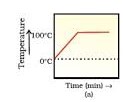
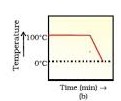
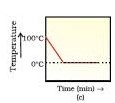
A student heats a beaker containing ice and water. He measures the temperature of the content of the beaker as a function of time. Which of the following will correctly represent the result.
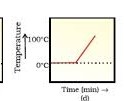
In which form, do the water molecules have less kinetic
energy?
(a) Ice
(b) Water
(c) Steam
(d) All of them have equal kinetic energy
Which of the following has highest kinetic energy?
(a) Particles of ice at 0 degree C
(b) Particles of water at 0 degree C
(c) Particles of water at 100 degree C
(d) Particles of steam at 100 degree C
235K = _________°C
38
-20
20
-38
At what temperature liquid water and steam co-exist?
At the melting point of ice
At the boiling point of water
At the freezing point of water
At the condensation point
Melting point of ice is
273.16K
373.15K
100°C
250.18K
The S.I unit of temperature is:
Celsius
Fahrenheit
Kelvin
None
On converting 308 K, 329 K and 391 K to Celsius scale, the correct sequence of temperatures will be:
33°C, 56°C and 118°C
35°C, 56°C and 119°C
35°C, 56°C and 118°C
56°, 119°C and 35° C
When water at 0°C freezes to form ice at the same temperature of 0°C, then it:
Absorbs some heat
Neither absorbs nor releases heat
Absorbs exactly 3.34 x 10⁵J/kg of heat
Releases some heat
When a solid is heated it's particles begin to vibrate with energy
true
false
Which of the following represented latent heat of fusion in PPT?



Which of the following represented latent heat of vapourization in PPT?
Latent heat of vapourisation is amount of
heat energy required to change 1 kg liquid into vapours completely at its melting point.
heat energy required to convert 1 kg solid into liquid at room temperature
heat energy required to change 1 kg liquid into vapours completely at its boiling point.
heat energy required to change 1 kg of solid into liquid at any temperature.
20. For you, individually do you get an any better understanding of topics with my animations?
Answer Honestly with a little thinking.
Yes
No
It actually confuses me even more.
I don't know.
Which one of the following is an example of a fluid?
Oxygen
Carbon
Phosphorus
Sulphur
235K = _________°C
38
-20
20
-38
Which of the following statements is NOT true?
The molecules in a liquid and a gas can flow.
The molecules in a liquid are arranged in a regular pattern.
The molecules in a gas move about randomly at high speed.
The molecules in a solid vibrate about a fixed position
Name the process by which dry ice changes into carbon dioxide gas.
Evaporation
Condensation
Sublimation
Vaporisation
At what temperature liquid water and steam co-exist?
At the melting point of ice
At the boiling point of water
At the freezing point of water
At the condensation point
Melting point of ice is
273.16K
373.15K
100°C
250.18K
Which of the following undergoes sublimation?
Sodium chloride
Potassium chloride
Ammonium sulphate
Ammonium chloride
In which of the following conditions, the distance between the molecules of hydrogen gas would decrease?
Increasing the pressure on hydrogen in a closed container
Increasing the volume of the container of hydrogen gas
Heating the container
Some hydrogen gas leaking out of container
Which one among the followings has a fixed volume but no fixed shape?
Carbon dioxide
Ice
Kerosene
Xenon
A few substances are arranged in the increasing order of ‘forces of attraction’ between their particles. Which one of the following is the correct arrangement?
oxygen – honey – sugar
oil – air– salt
juice – salt – oxygen
salt – air – sugar solution
which of the following is matter
air
stone
cloud
all of them
the 'panch tatva' or five basic elements are air,water,fire,earth and ___________?
trees
animals
sky
moon
what do you think?
matter is continuous or particulate
continuous
particulate
when 2-3 crystals of potassium permanganate are dissolved in water, the colour of water will be
blue
green
yellow
purple pink
what is the chemical formula of potassium permanganate
PPM
KMn
KMnO
KMnO4
do you think particles of matter have spaces between them?
yes
no
do you think the particles of matter are continuously moving?
yes
no
when 2-3 crystals of copper sulphate is added to a glass of water ,the colour developed is
blue
green
red
yellow
what is the chemical formula of copper sulphate
CuS
CoSO4
CuSO3
CuSO4
as the temperature rises, particles of matter move
fast
slow
not effected
none of them
intermixing of two different types of matter on their own is called:
fusion
diffusion
vaporisation
condensation
Idu-Mishmi dancers are from which part of India?
Andhra Pradesh
Arunachal Pradesh
Himachal Pradesh
Rajasthan
Do particles of matter attract each other
Yes
No
How many states of matter are there?
3
4
5
2
One of them is the fourth state of matter?
Cell Wall
Plasma
Plasma Membrane
Cytoplasm
The fifth state of matter is given by?
Subhash Chandra Bose
Albert Einstein
Satyendra Nath Bose
Both Satyendra Bose and Einstein
The fifth state of matter is called as?
REC
ABC
BAC
BEC
What is the full form of CNG?
Cairo Nitro Gasoline
Car Need Gas
Compressed Natural Gas
Congress Natural Gas
Full form of LPG?
Light Petrol Gas
Liquified Petroleum Gas
Light Purple Gas
Light Paper Glue
The S.I unit of temperature is:
Celsius
Fahrenheit
Kelvin
None
What is the formula of ammonium chloride?
AmCl
NH4Cl
NaCl
MgCl2
The substances which occupy some space and having some mass called
Particles
Impure substance
Ions
Matter
Particles of matter having space between them is called
Interstitial space
Intermolecular space
Vacant space
None of the above
On which factors evaporation does not depend
Humidity
Temperature
Surface area
Quality of matter
The temperature at which vapour pressure of liquid is equal to atmospheric pressure is
Melting point
Freezing point
Boiling point
None of the above

