
 Worksheets
Earth Systems Midterm Review
Total questions: 120
Worksheet time: 2hrs 35mins

The German scientist Johannes Kepler is known for ....
using a telescope for enhanced observations
the Law of Gravitation
3 Laws of Motion
3 Laws of Planetary Motion
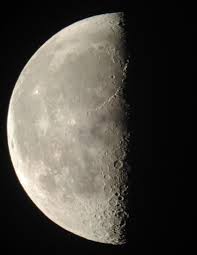
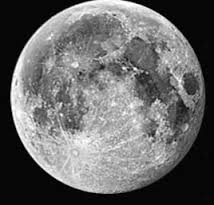
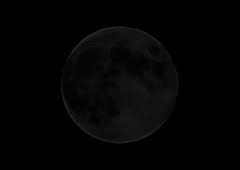
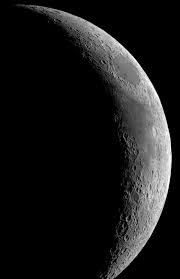
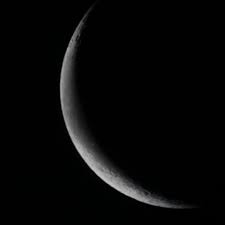
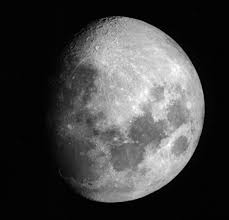
Why do we see phases of the moon during a month?
We see only the lit part of the moon as it moves around Earth
Parts of the moon are always in shadow
Eclipses of the moon occur nightly
The moon is smaller when it is farther from us.
The Greek, Eratosthenes, estimated the circumference of the Earth using......
calculus
the declination of the north star
gps satellites
the angles of shadows at the equinox
Seasons, phases of the Moon, and the rising and setting of the sun are _________ that are seen in the sky.
stars
constellations
Zodiac symbols
patterns
Day and night are caused by...
The sun rotating around the Earth.
The Earth rotating on its axis.
The sun rotating on its axis.
The sun rising and setting every day
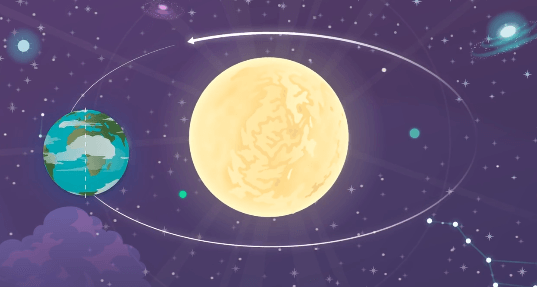
The movement of the Earth around the Sun is called its _____
revolution
rotation
precession
regression
the spinning of a celestial body, such as a planet, around an axis
Rotation
Revolution
Orbit
Gravity
The tilt of the earth is what gives us the ___
Oceans
Months
Seasons
Date
Mercury,Saturn
Jupiter, Uranus, Neptune
Jupiter, Neptune,
Mercury,Saturn,
Uranus
Mars,Jupiter,
Saturn,Uranus
Neptune

What are asteroids?
small pieces of stars
small planets
large metallic rocks that orbit the sun
icy stars that orbit the sun
What is a comet made of?
rock, dust, and ices
ice and water
rock and dust
dust and ions
Where is the asteroid belt located?
between Mars and Jupiter
between Neptune and the Kuiper Belt
between the sun and the Earth
between the Kuiper Belt and the Oort Cloud

One similarity between asteroids, comets and meteoroids is that they all:
are made of rock
come from the Asteroid Belt
come from the Oort Cloud
orbit the sun
The sun is in the ________________________ of our solar system.
outside
center
circle
moon
All matter and space that exists is called the
galaxy
planetary system
universe
A cluster of stars, dust, gas and matter is a
galxay
planetary system
universe
Planets orbit around a star (like the Sun), because of gravity is called
galaxy
planetary sytem
universe
What is the name of the scientific theory that explains how the universe was created?
The Balloon Theory
The Big Bang Theory
The Small Bang Theory
A bright, shiny sphere of plasma (very hot gas) is called
moons
stars
planets
A round and massive object that orbits around a star. They can be made of rocks, gasses, or gas and ice.
moons
stars
planets
An object that orbits a planet is called a
moon
sun
planet
Our solar system formed from
an exploded star
a cloud of gas and dust
a black hole
What force helped with the formation of the sun and planets?
Electricty
Magnets
Gravity
Only Earth has a moon
true
false
Stars can be classified by
all of these
color
size
luminosity
What was the first element present in our universe?
boron
hydrogen
oxygen
What process provides the energy for stars?
gravity
radioactive decay
fusion
Another name for a shooting star
meteor
miter
mixer

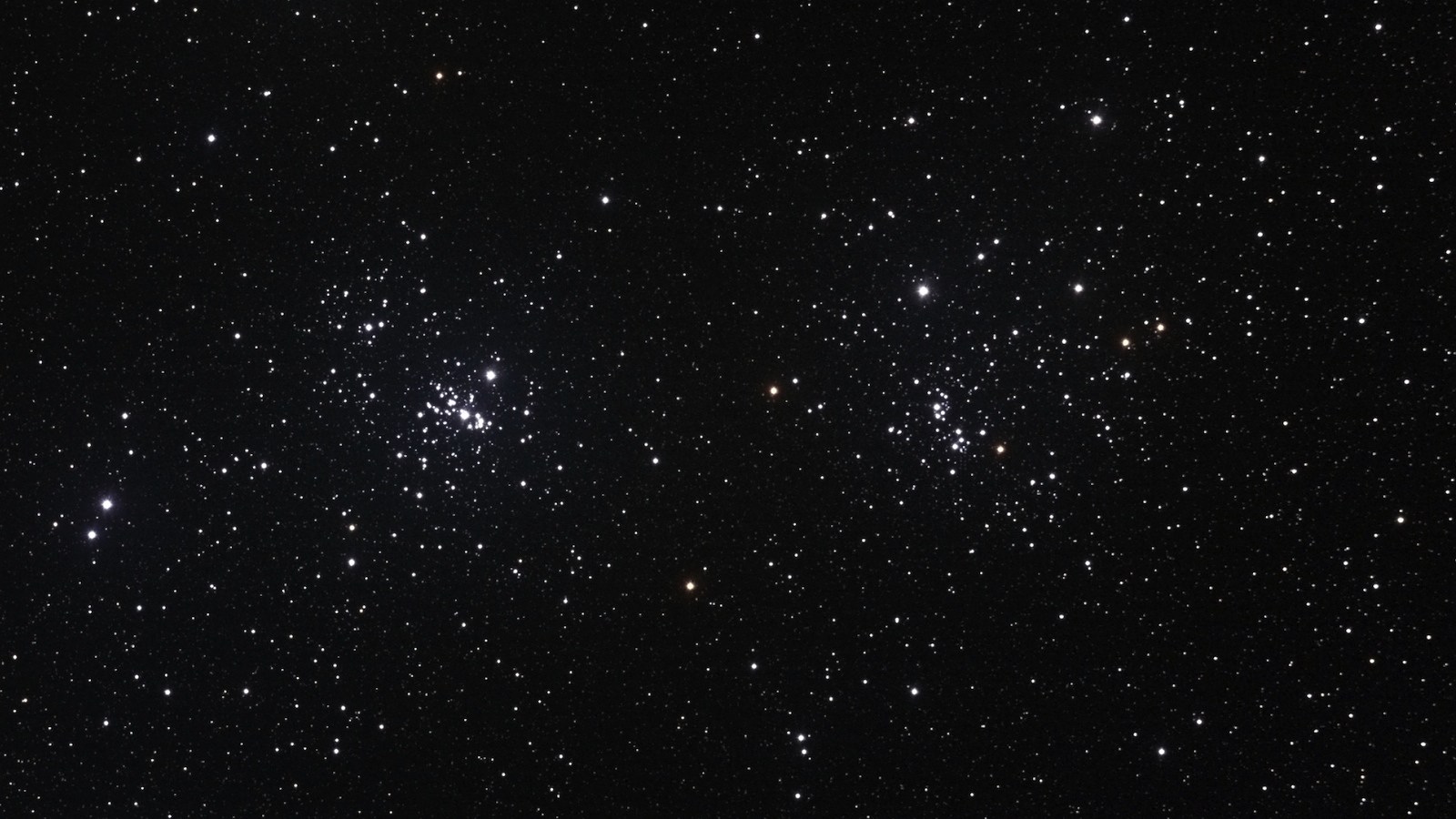
What constellation is this? (hint: this constellation also contains the North Star)
Draco
Ursa Minor
Corona Borealis
Cepheus


People in the Northern Hemisphere see the same constellations as the people in the Southern Hemisphere.
True
False

A notable usefulness of constellations (check all that apply)
as a cute picture in your windows
as a calendar to assist in when to plant and harvest crops
to guide travelers and provide direction
as evidence of life in the universe

What is the final stage of a low mass star?
White Dwarf
Black Hole
Red Giant
Neutron Star
What is the final stage of a high mass star?
White Dwarf
Black Hole
Red Giant
Neutron Star
What is the final stage of a very high mass star?
White Dwarf
Black Hole
Red Giant
Neutron Star

Which stage of life is the sun currently in?
White Dwarf
Planetary Nebula
Main Sequence
Red Giant

A stellar nebula will eventually condense into a hot ball of mostly hydrogen called a __________. At this point, nuclear fusion has not yet started but it will soon.
Protostar
White Dwarf
Brown Dwarf
Main Sequence
In a low-medium mass star, at the end of the red giant stage, the red giant's atmosphere expands outward to create a...
White Dwarf
Planetary Nebula
Supernova
Neutron Star
In a low-medium mass star, after the end of the red giant phase, a hot inner core of the star is left over. This core is a called a __________. There is no longer nuclear fusion happening at this stage.
White Dwarf
Planetary Nebula
Supernova
Neutron Star
In a high mass star, at the end of the red giant phase, the gravity causes the star to rapidly collapse. This collapse causes a massive explosion called a __________
White Dwarf
Planetary Nebula
Supernova
Neutron Star
In a very high mass star, a supernova triggers the formation of a __________ which has a gravitational pull so strong that even light cannot escape.
White Dwarf
Neutron Star
Stellar Nebula
Black Hole

Which elements are found in a main sequence star?
Hydrogen (H)
Helium (He)
Carbon (C)
Oxygen (O)

Which is one of the heaviest element found in a red giant star?
Nitrogen (N)
Iron (Fe)
Sulfur (S)
Magnesium (Mg)
A stellar nebula is made up of...
clouds of gas
clouds of gas and dust
stars
planets

Before Earth cooled, volcanoes were
active on Earth's surface
inactive on Earth's surface
did not exist on Earth's surface
being created on Earth's surface
Evidence shows that interstellar bodies are moving away from Earth, some faster than others, which BEST suggests that the universe
is shrinking.
is expanding.
was not formed by a big bang.
has always been the same size.
Over time, scientists have changed their model of our solar system. It has transitioned from
a Sun-centered to a Moon-centered model.
a Moon-centered to an Earth-centered model.
an Earth-centered to a Sun-centered model.
a Sun-centered to an Earth-centered model.
The outer most layer of the Earth is the...
Inner Core
Outer Core
Mantle
Crust

What spiral galaxy do we live in?
Andromeda Galaxy
The Galactic Republic
Milky Way Galaxy
Snickers Galaxy
Formed where two sections of Earth’s crust are colliding
Divergent-
Convergent-
Transform-
The movement of the tectonic plates is caused by
the rotation of the Earth.
convection currents in the Asthenosphere
the gravity of the iron-nickel core.
the Moho discontinuity.

Most geologists think that the movement of Earth’s plates is caused by _______
convection.
continental drift.
subduction.
conduction.
What is common at convergent boundaries?
Valleys
Canyons
Mountains
Rivers
What happens often at transform boundaries?
Rain
Hurricanes
Volcanic activity
Earthquakes
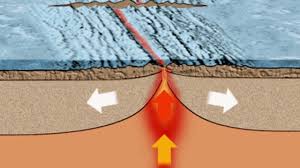
In sea-floor spreading, molten material rises from the mantle and erupts
along the edges of all the continents.
along mid-ocean ridges.
in deep-ocean trenches.
at the north and south poles.
Process by which a more dense plate is forced underneath another when they collide. (Produces a trench, volcanoes, deep/thrust earthquakes, and tsunamis.)
Seafloor Spreading
Mid-Ocean Ridge
Divergence
Subduction

In the middle of this diagram, the mantle convection will form a
volcanic island arc
mid-ocean ridge
trench
tsunami
Which layer is the HOTTEST?
Crust
Mantle
Outer Core
Inner Core
Which layer is broken up into large sections called tectonic plates?
Crust
Mantle
Outer Core
Inner Core
Which is the widest layer of the Earth?
Crust
Mantle
Outer Core
Inner Core
Which type of CRUST is more dense?
Oceanic Crust
Continental Crust
Which type of crust is thicker?
Oceanic crust
Continental crust
Which sections make up the Lithosphere?
Oceanic Crust
Continental Crust
Upper Mantle
Lower Mantle
The asthenosphere sits directly below which layer?
Crust
Lithosphere
Mantle
Outer Core
Which STATE is the inner core?
Solid
Semi-molten
Liquid
Gas
Which state is the UPPER part of the Mantle?
Solid
Semi-molten
Liquid
Gas
WHich is the innermost layer of the Earth?
Crust
Mantle
Outer Core
Inner Core

Which is the correct order of the Earth's layers?
Outer most layer first.
Crust, Outer Core, Mantle, Inner Core
Crust, Mantle, Outer Core, Inner Core
Inner core, Outer core, Mantle, Crust
As you move deeper into the Earth's core, the temperature is:
cooler
hotter
The Earth's crust is made of ______________ that "float" on top of the __________.
Fill in the blanks.
mantle, cups
plates, mantle
mantle, inner core
Which of the following is not a characteristic of a mineral?
Solid
Inorganic
Hardness
Formed in Nature

Which of the following would be the best description of the mineral property called luster?
A minerals resistance to being scratched.
The color a mineral gives off.
How a mineral reflects light.
Observing the color of the powder left behind when scraping across a surface.

The atoms within a mineral are arranged in an orderly, repeating three-dimensional pattern. Which of the characteristics of minerals does this statement describe?
Solid
Inorganic
Crystal Structure
Made In Nature
My teacher mentioned that in order for a substance to be a mineral, it has to be _____ or nonliving.
Inorganic
Organic
Mixture
Liquid

In the lab, a student wants to identify two different minerals. So, she takes them and scrapes them across a plate to see the color of the powder they leave behind. What property of minerals is she testing?
Color
Hardness
Luster
Streak

A measure of a mineral's resistance to scratching. This is measured by scratching it against another substance of known hardness on the Mohs Hardness Scale.
Color
Hardness
Luster
Streak

Which statement is the best example of the mineral property of cleavage?
The mineral broke and had jagged edges.
The mineral broke and had flat edges.
Minerals never break
All are correct


Calcite can scratch -
Apatite
Fluorite
Talc

