
 Worksheets
10 Chemistry and Physics
Total questions: 194
Worksheet time: 20hrs 3mins
N2+O2--> _NO
Which equation is balanced?
PbO2 + 2H2
SO2 + H20 --> H2SO4
2Na + 2H2O --> 2NaOH + H2
Mg + __HCl ---> MgCl2 + H2
What law governs the balancing of chemical equations?
Law of Energy
Law of Conservation of Matter/Mass
Law of Gravity
Law of Matter Movement
Balance this equation
_Al +_HCl --> _H2 +_AlCl3
2,6,3,2
it's already balanced
4,12,3,4
2,1,4,5
What are the coefficients that would properly balance this equation?
__Ca + __H2O --> __Ca(OH)2 + __H2
2,1 --> 2,1
1,2 --> 1,1
1,2 --> 2,4
1,2 --> 2,1
What are the coefficients that would properly balance this equation?
__AgNO3 + __H2S --> __Ag2S+ __HNO3
2,1 --> 1,2
1,2 --> 1,1
1,2 --> 1,2
1,2 --> 2,1
What are the coefficients that would properly balance this equation?
__H2 + __S --> __H2S
1,1 --> 1
2,2 --> 2
1,2 --> 1
1,2 --> 2
What are the coefficients that would properly balance this equation?
__Al + __O2--> __Al2O3
4,1 --> 2
4,3 --> 4
3,4 --> 1
4,3 --> 2
Determine the coefficients to make the following equation balanced?
__N2 + __O2--> __NO
1, 1, 1
1, 1, 2
2, 2, 2
1, 2, 2
Determine the coefficients to balance the equation.
__Al +__HCl --> __H2 +__AlCl3
2,6,3,2
it's already balanced
4,12,3,4
2,1,4,5
Balance the the following equation.
__Zn+__HCl -->__ZnCl2 +__H2
1,1,2,1
1,1,1,2
1,2,1,1
2,1,1,1
Mn + _ HNO3 → Mn(NO3)2 + H2
Al(NO3)3 + _ NaOH -> Al(OH)3 + 3 NaNO3


Increase in temperature causes the particles to
slow down
move faster
stay apart from each other
move in the correct order
Why does a higher concentration increase the rate of reaction?
it increases the amount of reactants
it lowers the activation energy
it increases the energy of reactant particles
it increases the frequency of collision
Why does a higher temperature increase the rate of a reaction?
It increases both the frequency collision and energy of reactant particles
It only increases the frequency of collision
It only increases the energy of reactant particles
It reduces the activation energy of the reaction
Grinding an effervescent tablet into powder increases the rate of reaction due to increase of
concentration
total surface area
temperature
size

Which factors increase the rate of a reaction?
increasing temperature
increasing concentration
increasing total surface area
All of these
Increasing pressure causes the reacting particles
to bond together
to repel from each other
gain more kinetic energy
to move closer together
Increasing the temperature gives particles more __________.
time
energy
space
frequency
As the frequency of ________________ collision increases, the rate of reaction increases.
time
speed
effective
efficient
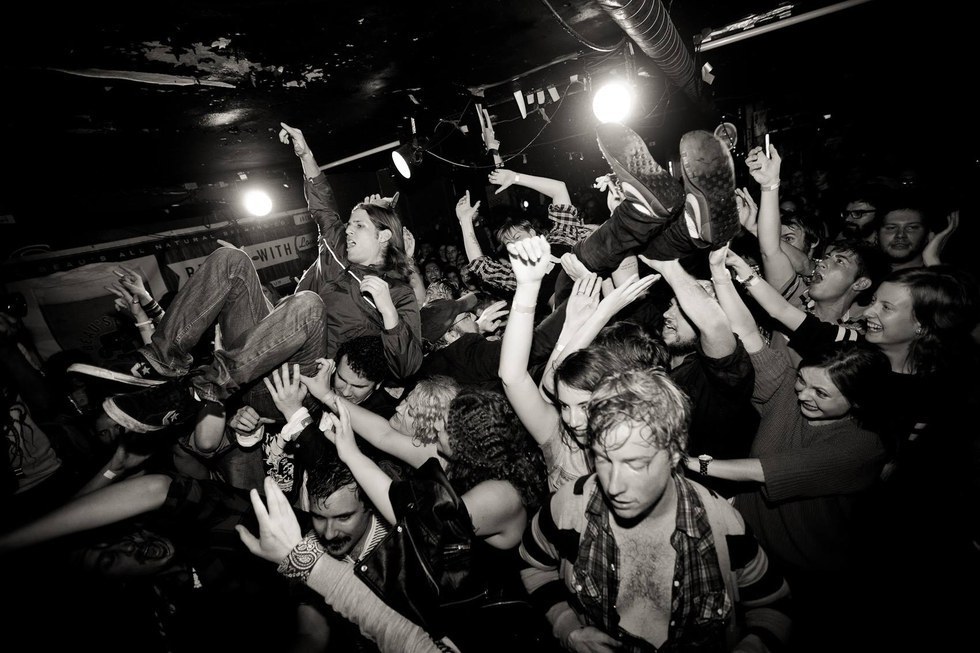
You add more bodies into a "mosh pit" to hope for more collisions. You have increased
temperature
concentration
pressure
catalyst
Why does a higher concentration increase the rate of reaction?
it increases the amount of reactants
it lowers the activation energy
it increases the energy of particle collisions
it increases the frequency of collisions
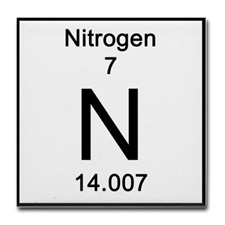
Nitrogen, N, will form which of the following ions?
N
N-3
N-5
N+5
What will be the charge of a bromine ion?
+7
-7
-1
+1

What criteria must be met for reactant collisions to result in a successful product?
The reactants must collide with each other
The reactants must collide with enough energy and be in the right positions
The reactants must have enough energy to form the activated complex
What is the chemical symbol for Hydrogen
H
He
Hy
Hg
What element has the symbol Al
Argon
Aluminium
Silver
Gold
What is the symbol for Carbon
Ca
C
Co
Cr
What is the symbol for Neon
No
Nn
Ne
N
What is the symbol for Potassium
P
Po
K
Pt
Which element has the symbol Cl
Carbon
Chlorine
Cadium
Copper
What is the symbol for Sodium
S
Au
So
Na
What is the symbol for Magnesium
Mn
Mc
Mg
Md
What is the symbol for Zinc?
Z
Zi
ZN
Zn
What is the symbol for Iron?
Ir
In
Fe
FE
The positive parts of an atom are

A helium atom has 2 protons. It has an atomic mass of 4. How many neutrons does it have?
2
4
6
8
A phosphorus atom has 15 protons. It has a mass number of 31. How many neutrons does it have?
15
16
31
6
True or false: The mass number is the number of protons + the number of neutrons.
True
False
A sodium atom has 11 protons. It has a mass number of 23. How many neutrons does it have?
11
23
12
5
A berilium atom has 4 protons. It has a mass number of 9. How many neutrons does it have?
5
4
9
8
A mercury atom has 80 protons. It has a mass number of 201. How many neutrons does it have?
201
121
80
281
A calcium atom has 20 protons. It has a mass number of 40. How many neutrons does it have?
(a)
The atomic number of nitrogen is 7. Its mass number is 14. How many neutrons does it have?
7
48
14
4
If an element has 5 protons and 9 neutrons, what is its mass number?
14
5
9
2
If an element has 17 protons and 20 neutrons, what is its mass number?
17
10
20
37
If an element has 1 proton and 0 neutrons, what is its mass number?
0
1
2
3
If an element has 10 protons and 12 neutrons, what is its mass number?
(a)
What reaction has the following general formula:
A + CD --> C + AD
Combination
Decomposition
Single Replacement
Double Replacement
Combustion
What reaction has the following general formula:
AB --> A + B
Combination
Decomposition
Single Replacement
Double Replacement
Combustion
What reaction has the following general formula:
A + B --> AB
Combination
Decomposition
Single Replacement
Double Replacement
Combustion
What reaction has the following general formula:
CxHy + O2 −>CO2 + H2O
Combination
Decomposition
Single Replacement
Double Replacement
Combustion
What is the general reaction scheme for a single replacement reaction?
A + B --> AB
AB --> A + B
A + CD --> C + AD
AB + CD --> CB + AD
CxHy+O2 −> CO2+H2O
What is the general reaction scheme for a combustion reaction?
A + B --> AB
AB --> A + B
A + CD --> C + AD
AB + CD --> CB + AD
CxHy+O2 −> CO2+H2O
What is the general reaction scheme for a combination reaction?
A + B --> AB
AB --> A + B
A + CD --> C + AD
AB + CD --> CB + AD
CxHy+O2 −> CO2+H2O
What is the general reaction scheme for a double replacement reaction?
A + B --> AB
AB --> A + B
A + CD --> C + AD
AB + CD --> CB + AD
CxHy+O2 −> CO2+H2O
What type of reaction is the following:
BaCl2+2KI −> 2KCl + BaI2
Combination
Decomposition
Single Replacement
Double Replacement
Combustion
What type of reaction is the following:
2KI −> 2K + I2
Combination
Decomposition
Single Replacement
Double Replacement
Combustion
What type of reaction is the following:
C11H24+17O2−> 11CO2 + 12H2O
Combination
Decomposition
Single Replacement
Double Replacement
Combustion
What type of reaction is the following:
2NaHCO3−> Na2CO3+CO2+H2O
Combination
Decomposition
Single Replacement
Double Replacement
Combustion
What type of reaction is the following:
Zn + 2HCl −> ZnCl2+H2
Combination
Decomposition
Single Replacement
Double Replacement
Combustion


The Atomic number is known as the _______
Number of electrons in an atom
Number of Protons in an atom
Number of neutrons in an atom
Number of Protons and electrons in an atom
What charge do protons have?
Positive
Negative
Neutral
What is Atomic Mass Number ?
Number of Protons
Number of Neutrons
Number of Protons and Neutrons
Number of Protons and Electrons
The number of electrons in an atom is equal to the...
Atomic number
Protons
Atomic Mass
Neutrons
The formula used to calculate the number of neutrons is:
Mass Number - Atomic Number
Protons + Electrons
Atomic Number - Mass Number
Protons x2
How many periods are on the periodic table?
5
6
7
8
Elements in the same group have : (2 correct answers)
Similar chemical properties
Similar names
Same number of outer (valence) electrons)
The same number of protons


An archer pulls the bowstring back, then releases the string and the arrow flies forward. Pulling the string back is the...
action force
reaction force
net force
inertia
When two equal forces act in opposite directions on an object, they are called ______________________.
frictional force
balanced force
centripetal force
gravitational force
When an unbalanced force acts on an object, the force ______________________.
changes the motion of the object
is cancelled by another force
does not change the motion of an object
is equal to the weight of the object
1st
Law of Motion
2nd
Law of Motion
3rd
Law of Motion
1st
Law of Motion
2nd
Law of Motion
3rd
Law of Motion
What is the acceleration of a 50 kg object pushed with a force of 500 newtons?
100 m/s2
25,000 m/s2
10 m/s2
25 m/s2

A cannonball with a mass of 0.5 kg is flying at an acceleration of 10 m/sec/sec. What is its force?
50 Newtons
5 Newtons
20 Newtons
9.5 Newtons
An example of scalar magnitude is _____.
velocity
mass
acceleration
force
Which statement describes a scalar?
direction

8m
Distance and direction of an object's change in position from a starting point is called _____.
Speed in a specific direction is called _____.
velocity
motion
position
displacement
Is this a scalar quantity or a vector quantity?
A deer running 15 meters per second due west.
Is this a scalar quantity or a vector quantity?
Wind blowing at 20 m/s.
direction
The students are arguing over the differences between speed and velocity. One student says, “Speed is a vector because it describes how fast an object traveling. Velocity is a scalar because it tells how fast and what direction an object is traveling.” Which of the following statements is correct?
The students' understanding of all four terms (speed, velocity, scalar, and vector) is correct.
The students' understanding of all four terms (speed, velocity, scalar, and vector) is incorrect.
The students' understanding of speed and velocity is incorrect but their
understanding of scalar and vector is correct.
The students’ understanding of speed and velocity is correct but their understanding of scalar and vector is incorrect.
How do scalars and vectors differ?
scalers have units
scalers have direction
vectors have units
vectors have direction
7. For winter, a duck flies 10 m/s due to south against a gust of wind with a speed 2.5 m/s. What is the resultant velocity of the duck?
7.5 m/s, north
12.5 m/s, south
7.5 m/s, south
12.5 m/s, north

What is the resultant force?
40 N left
0 N Balalnced
400 N right
40 N right


What is the resultant/ net force?
400 N Up
400 N Down
- 400 N Down
800 N Down

What is the resultant force?
17 N, Left
6N, Right
None of the above
11N, Left

a force exerted by an object with mass to
another object with mass. It is also called as gravity.
(a)
What is force in physics?
A power in star wars
A push or pull on an object
A stop on an object
The start of an object
What can force do to an object?
Accelerate an object
Slow down an object
Have the object remain in place
Have the object change shape
All of the above
What is the measure of force?
Newtons
Light years
Inches
Gallons
What is the unit for FORCE?
N (Newtons)
lbs (pounds)
g (grams)
m/s (meters per second)


What type of force was at work in the parachute?
elastic spring force
frictional force (air resistance)
magnetic force
gravitational force


___________ is an opposing force that makes objects in motion slow down.
force
speed
friction
mass

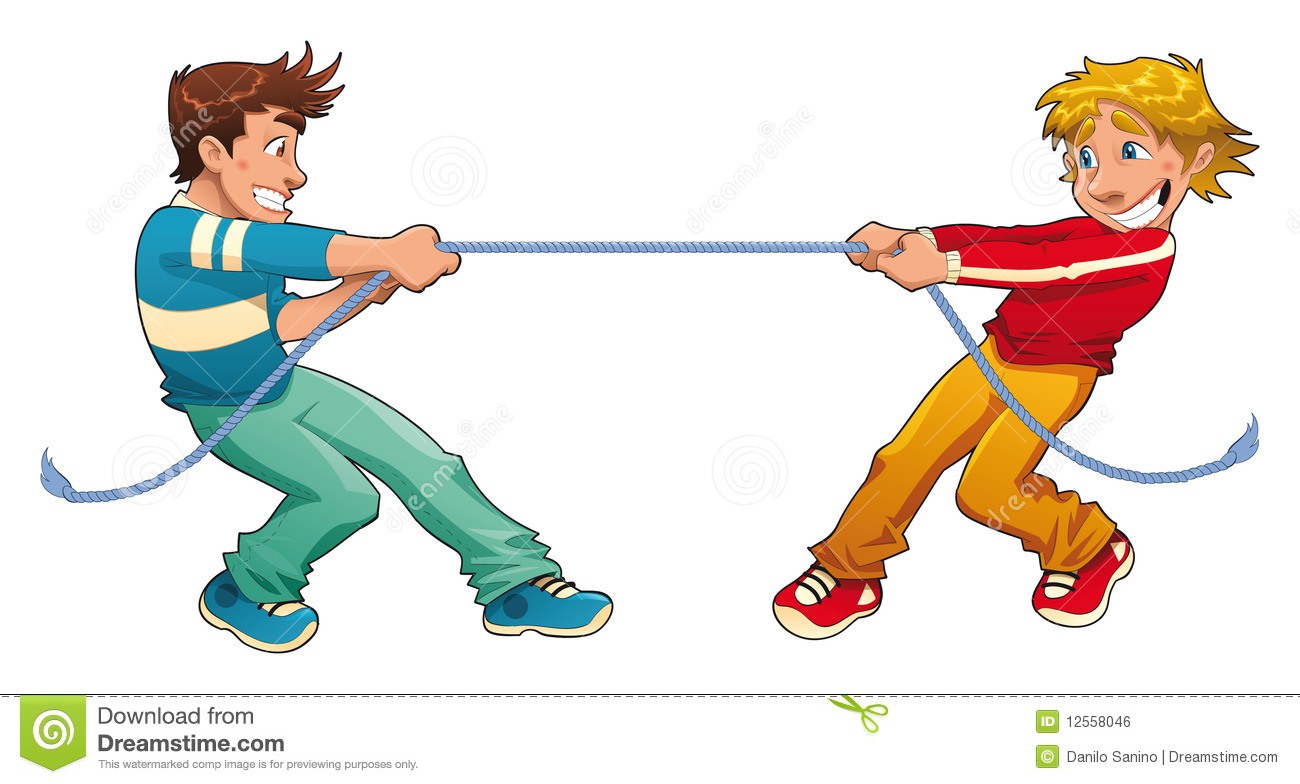
The girls in this picture represent ________ forces (or 2 objects in equilibrium).
Balanced Force
When forces are balanced, there is no change in motion
When two forces act upon each other in opposite directions, and they are both the same size.
Equal in size and opposite in direction
Occurs when objects change in motion and can happen in two different ways.

Which image is an example of a balanced force?
Image 1
(Top Image)
Image 2
(Bottom Image)

Which boy will have an easier time getting down the hill?
Boy A , because he is experiencing less friction than boy B.
Boy B, because he is experiencing more friction than boy A.
How does the mass of an object affect it's motion?
It has no effect
The less the mass the less effect a force will have
The greater the mass the greater the effect a force will have
The greater the mass the less effect a force will have
What is acceleration?
Constant velocity
The rate at which the velocity of an object changes
Displacement/Time
When an object slows down
The average speed of a car that travels 180km in 3 hours is
50km/h
55km/h
60km/h
65km/h
If a person walks 50km North and 50km South, what is the total distance covered?
0km
50km
100km
150km
If a person walks 50km North and 50km South, what is the final displacement?
0km
50km South
100km North
150km North
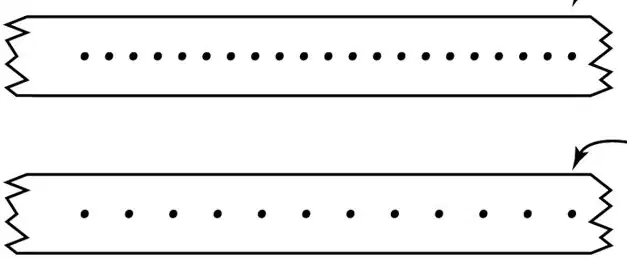
Which object is travelling faster?
Top
Bottom
Both are travelling the same speed
The bottom ticker tape shows an object
Not moving
Travelling at a constant speed
Accelerating
Decelerating
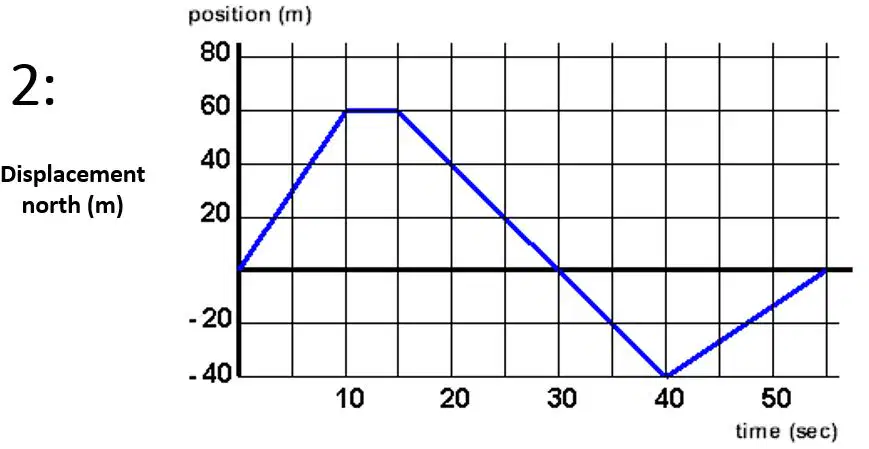
What is the object doing between 0-10s?
Moving north
Moving South
Stationary
What is the overall distance travelled by the car?
60m
0m
200m
40m south
What is the final displacement of the car?
60m
0m
200m
40m south
What is the velocity of the car between 40-55s
6m/s North
0m/s South
4m/s South
2.66m/s North
An athlete runs a marathon (42.2km) with a speed of 10km/h. How long did they take to complete the marathon?
2.44h
4.44h
4h
4.22h
A car speeds up to 60km/h from rest in 5 seconds. Calculate its average acceleration in km/h/s
60km/h/s
5km/h/s
12km/h/s
300km/h/s
An object accelerations at 10km/h^2 for a period of 12 minutes. If it was originally stationary, what is the final velocity?
10km/h
12km/h
0km/h
2km/h
What is the formula for velocity?
v = s/t
a = (v-u)/t
F = ma
F = mg
What is the formula for acceleration?
v = s/t
a = (v-u)/t
F = ma
F = mg
What is the symbol for displacement?
d
s
v
t
The gradient (or slope) of a displacement time graph gives
velocity
displacement
time
space
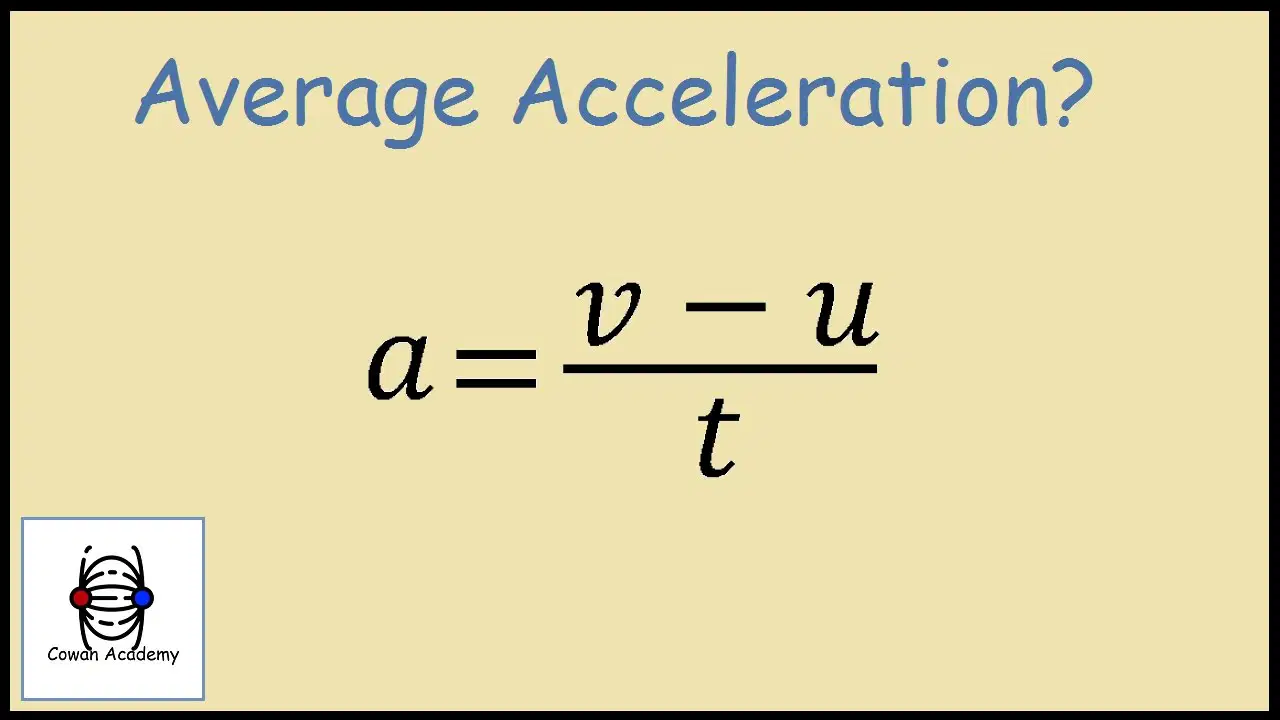
'v' in the formula for acceleration is
Final velocity
Initial velocity
Acceleration
Time
'u' in the formula for acceleration is
Final velocity
Initial velocity
Acceleration
Time
If an object has negative acceleration it is
A calculation error
Accelerating
Decelerating
Maintaining constant velocity

