
Font size
 Worksheets
Macromolecules ,pH, Properties of Water - Biology
Total questions: 77
Worksheet time: 48mins

Which macromolecule is shown?
lipid
protein
nucleic acid
carbohydrate
Lipids are made primarily of...
Each amino acid in a protein is made of...


This molecule is classified as___________________.
Triglyceride
protein
monosaccharide
polysaccharide

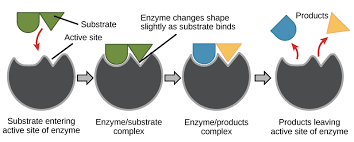
The diagram illustrates a biochemical process that occurs in organisms.
What is another name for the substance labeled "catalyst"?
hormone
enzyme
antibody
inorganic compound

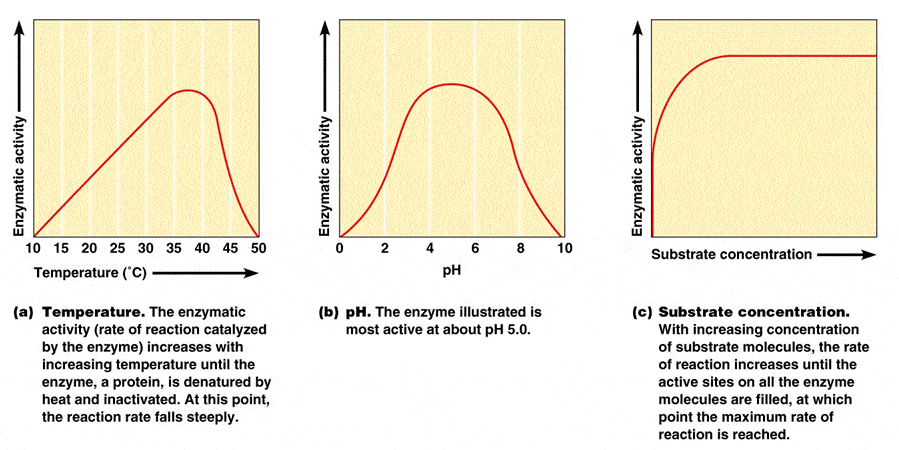
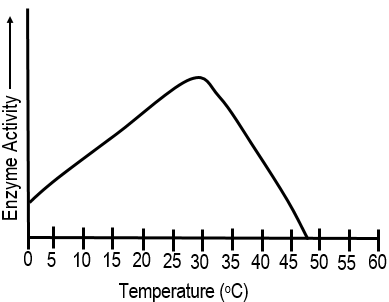
The effect of temperature on the relative rate of action of an enzyme is represented in the graph.
The optimum temperature for the action of this enzyme is approximately
50 C
22 C
37 C
15 C

What does letter "C" represent in the diagram?
Active Site
Enzyme
Substrate
Products

What does letter "B" represent in the diagram?
enzyme
substrate
active site
enzyme/substrate complex
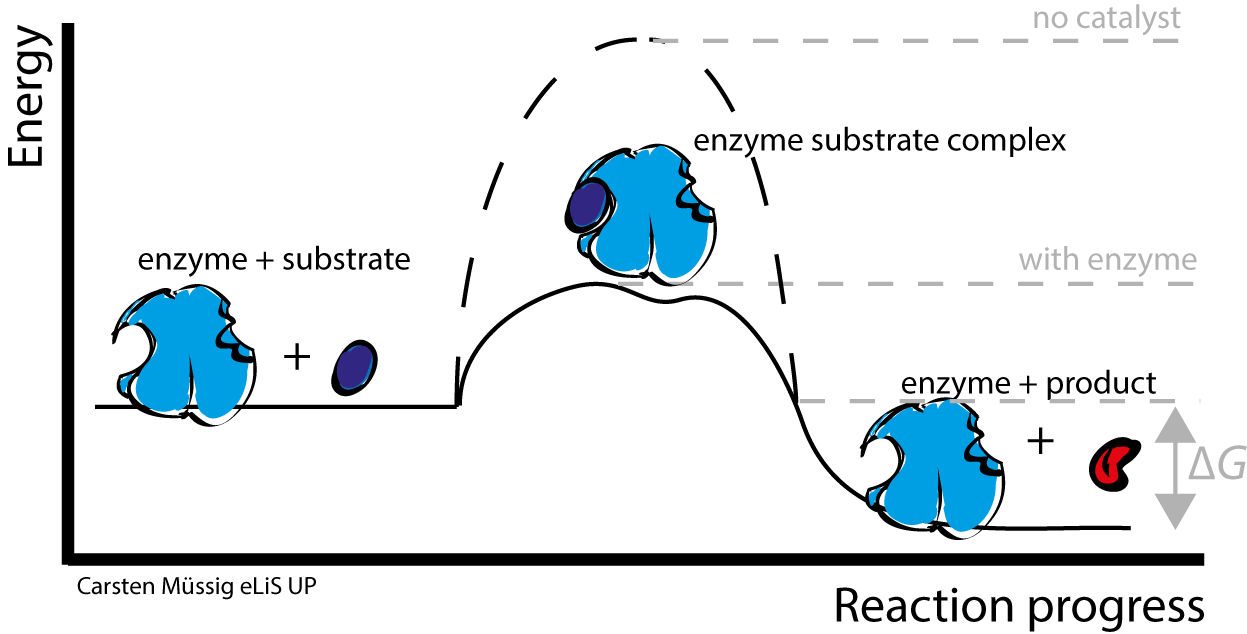
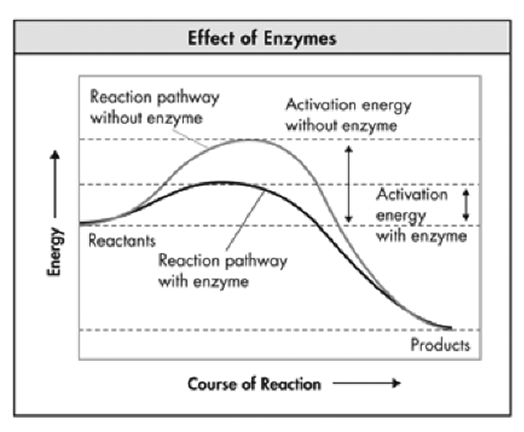
Enzymes are capable of increasing the rate of a chemical reaction within a living cell. Enzymes accomplish this through which of the following means?
reducing the activation energy
reducing the number of products
increasing the temperature of the cell
increasing the concentration of reactants
Many aquatic birds secrete waxy organic substances that repel water. The birds use these substances to coat their feathers. An analysis of these substances would reveal that they are composed mostly of
nucleic acids.
proteins.
carbohydrates.
lipids.
Macromolecules are formed by a process called polymerization, in which large compounds are built by joining smaller ones together.
The smaller units, or _____, join together to form _____.
polymers, monomers
monomers, polymers
molecules, atoms
cells, molecules
Four groups of organic compounds found in living things are
water, vitamins, minerals, air
carbon, hydrogen, oxygen, and nitrogen
sunlight, chlorophyll, photosynthesis, and glucose
carbohydrates, lipids, nucleic acids, and proteins
Which macromolecule do living things use as their main source of energy?
carbohydrates
lipids
nucleic acids
proteins
Single sugar molecules are called _____.
monosaccharides
disaccharides
triglycerides
polysaccharides
Large macromolecules formed from monosaccharides are called _____.
disaccharides
triglycerides
polysaccharides
glucose

Plants store excess sugar as starch. Many animals store excess sugar in a polysaccharide called _____.
glucose
protein
glycogen
amino acid
Which macromolecule is used to store energy and makes up a large portion of cell membranes?
carbohydrates
lipids
nucleic acids
proteins

A lipid molecule is composed of
monosaccharides and disaccharides
a glycerol molecule and 3 fatty acid chains
nucleotides (phosphate, sugar, nitrogenous base)
amino acids
Which macromolecule is used to store and transmit hereditary/genetic information?
carbohydrates
lipids
nucleic acids
proteins

Nucleic acids are composed of monomers called _____.
starch
glycerol
DNA
nucleotides

Proteins are composed of monomers called _____.
monosaccharides
glycerol molecule
nucleotides
amino acids
What is the pH range for acidic solutions?
1 to 5
7 to 14
2 to 8
0 to 6
What is buffering capacity in water and why is it important?
Ability to increase changes in pH; important for maintaining unstable pH levels
Ability to resist changes in temperature; important for maintaining stable temperature levels
Ability to resist changes in pH; important for maintaining stable pH levels
Inability to resist changes in pH; important for maintaining stable pH levels
Discuss the impact of pH on biological processes.
Biological processes are not influenced by pH
pH has no impact on biological processes
pH only affects non-essential biological functions
pH can affect the structure and function of enzymes, proteins, and other biomolecules, impacting biological processes such as metabolism, cell signaling, and gene expression.
If a substance has a pH less than 7, it is
neutral
acidic
basic
water
If a substance has a pH more than 7, it is
neutral
acidic
basic
water
When water is attracted to other water molecules, this is known as
covalent bonding
electron sharing
adhesion
cohesion
When water is attracted to non-polar molecules, this is known as
covalent bonding
electron sharing
adhesion
cohesion
What is an enzyme?
A protein that speeds up chemical reactions
A protein that breaks apart molecules
A protein needed for cell structure
A neurological protein involved in cell signaling
What is activation energy
The energy released after chemical reactions
The energy required to activate an enzyme
Energy absorbed by chemical reactions



The amount of energy required to raise the temperature of 1 gram of a substance by 1 degree Celsius is called...
polar molecule
capillary action
surface tension
specific heat

Glucose is an example of a
Carbohydrate
Lipid
Protein
Nucleic Acid
Important to the structural integrity of plant cells, this is the single most abundant polysaccharide in the world.
Starch
Glycogen
Cellulose
Chitin
What kind of macromolecule is hemoglobin?
carbohydrate
lipid
protein
nucleic acid
The parts of a nucleotide are:
nitrogen, sulfur, phosphate group
DNA, RNA, ATP
nitrogenous base, ATP, glucose
nitrogenous base, 5-carbon sugar, phosphate group
What is one of the functions of lipids?
Storing genetic information
Long Term Energy
Short Term Energy
Acting as chemical signals
What is the function of nucleic acids?
Short Term Energy
Storing Genetic Information
Long Term Energy
Speeding Up Chemical Reactions
Which of the following elements are found in all macromolecules? (Select all that apply).


Nucleic acids make up which of the two molecules listed below?
FDA
RNA
DNA
FDR

