
 Worksheets
Periodicity Review
Total questions: 67
Worksheet time: 52mins
What is the periodic table?
A) A chart of elements
B) A list of compounds
C) A table of mixtures
D) A graph of reactions
What is a basic similarity among groups on the Periodic Table?
Same number of protons
Similar chemical properties
Same atomic mass
Same color
What pattern is observed in the elements when arranged according to the Periodic Law?
No pattern
Random pattern
Periodic pattern in physical and chemical properties
Alphabetical pattern
How does the Periodic Law affect the understanding of chemical properties?
It has no effect.
It helps predict chemical properties based on atomic number.
It only affects physical properties.
It is only relevant to historical studies.
Which of the following statements is true about elements in the same group?
A) They have different atomic numbers
B) They have similar chemical properties
C) They are in the same period
D) They have the same atomic mass.
Which of the following is a property of elements in the same group?
Different chemical properties
Similar chemical properties
Same atomic mass
Different atomic numbers
What numbering system is used for groups in the periodic table?
1-10
1-18
1-20
1-8
Which statement is correct about elements in the same group?
A) They have different atomic numbers
B) They have similar properties
C) They are in the same period
D) They have the same atomic mass.

Which group on the periodic table contains elements that are all gases at room temperature?
Group 1
Group 2
Group 17
Group 18

Which element is located at the bottom of the 'staircase'?
Polonium
Astatine
Radon
Francium

Do these elements have properties in common?
yes
no

What do the elements highlighted in red have in common?
The same number of protons.
The same number of electrons.
The same number of neutrons.
The same number of electron shells.
what is the name for groups 17 on the periodic table?
Alkali metals
Alkaline earth metals
transition metals
Halogens(salt former)
noble gasses

The periodic table is organized into groups and periods of elements. The characteristics of a certain group of elements are listed in the image.
Which of these elements is in this group:
Lithium
Strontium
Aluminum
Silicon
(a) readily gain electrons
non-metals
alkali metals
alkaline earth metals
metalliods
(a) donate electrons
metals
noble gasses
halogens
non-metals

Find an element with similar chemical properties to Barium (Ba).
Ca an Ra, because they are in the same group and have similar chemical properties.
Cs and La, b/c they are in the same period number.
Ca and Y, b/c they are 90 degree angle and have similiar properties.
No elements are similar
Which elements have the most similar chemical properties?
K and Na
K and Ca
K and Cl
K and S
A group of elements that includes the most active of the elements is the -
halogens.
noble gases.
nitrogen group.
alkaline earth metals.
Highly reactive
Alkali metal
Noble gases
Rare earth metals
Neon
which group has the strong electronegative character
alkali metal
lanthanides
inert gases
halogens
Which elements have the most similar chemical properties?
Si, As, and Te
N2, O2, and F2
Mg, Sr, and Ba
Ca, Cs, and Cu
Which group of elements are known as the most reactive nonmetals?
alkali metals
noble gases
halogens
transition metals
The chemical properties of calcium are most similar to the chemical properties of —
K.
Mg.
Sc.
Ar.
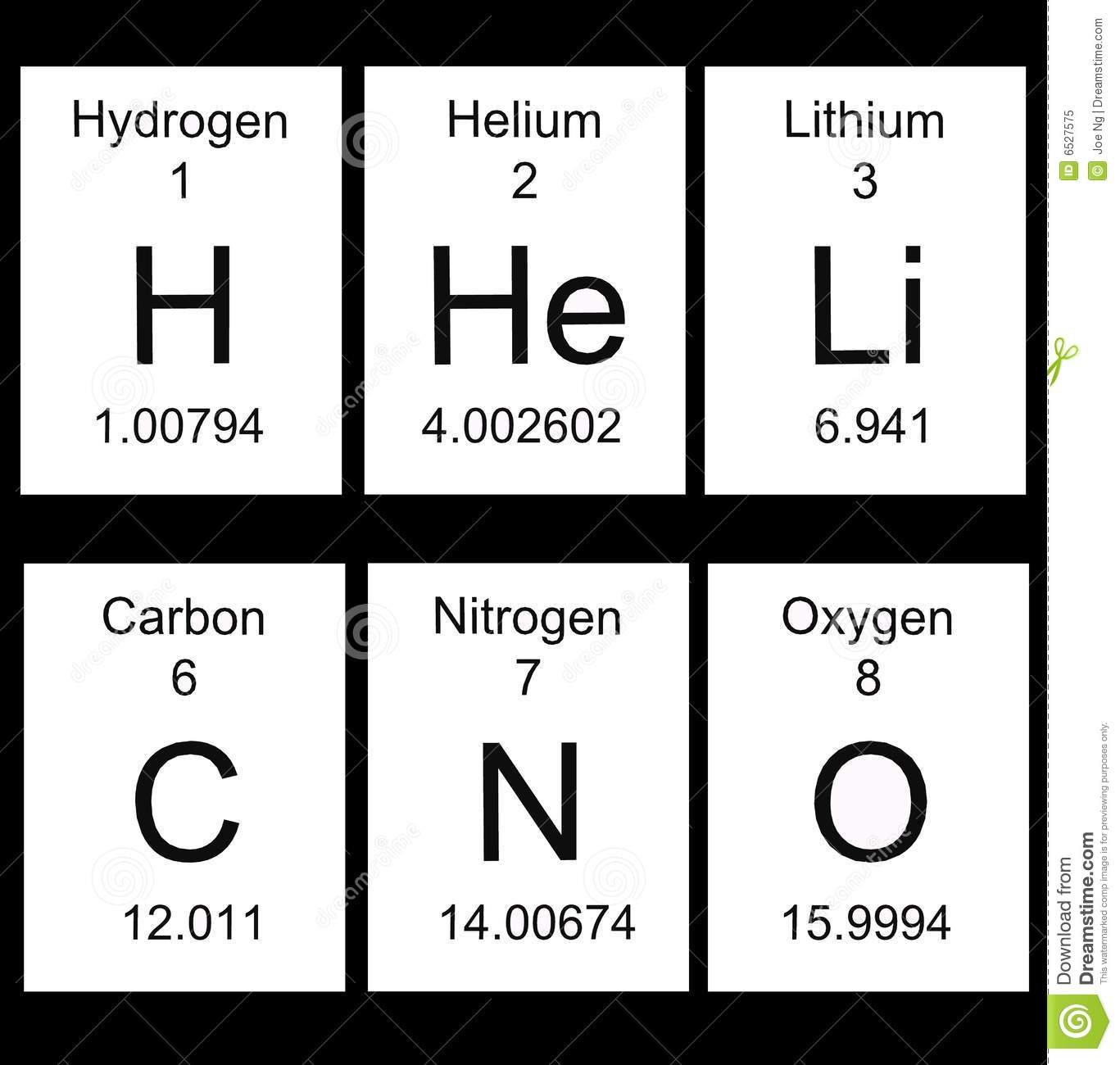
The number at the top of each square on the periodic table is the ...
atomic number
atomic mass
Chemical Symbol
Element Name
Who is the Father of Periodic Table of Elements?
Lothar Meyer
Dmitri Mendeleev
John Newlands
Henry Moseley
Who rearranged the elements in order of increasing atomic number?
Johann Dobereiner
John Newlands
Henry Moseley
Lothar Meyer
Why were there blank spaces left in Mendeleev's periodic table?
He didn't know what to put there.
Undiscovered elements not yet known.
Multiple elements could have fit
He forgot to add the elements in
Who suggested that the physical and chemical properties were related to the atomic number, rather than atomic mass?
Meyer
Mendeleev
Moseley
Newlands
Match the following
in group 1 and are the most reactive metals.
Alkali Metals
In group 2 and are the 2nd most reactive metals.
Alkaline Earth Metals
In group 17 and are the most reactive nonmetals..
Halogents
Complete, Stable!
Noble Gases
Metallic elements that have valence electrons in two shells instead of only one.
Transition Metals
Who arranged the periodic table by increasing atomic number?
Mendeleev
Rutherford
Bohr
Mosely
In the modern periodic table elements are arranged by:
atomic mass
atomic number
valence electrons
number of isotopes
Why were there blank spaces left in Mendeleev's periodic table?
He didn't know what to put there.
Undiscovered elements not yet known.
Multiple elements could have fit
He forgot to add the elements in.
Who arranged the periodic table by increasing atomic number?
Mendeleev
Rutherford
Bohr
Mosely
_______________ developed the first periodic table and arranged the elements in order of increasing atomic mass.
Stevie Wonder
Sasha Vujacic
Dmitri Mendeleev
James Mosely
Which property did Mendeleev use to order his periodic table?
Shielding effect
Eletronegitivity
Atomic Weight
Metallic Character

Ionization energy is the _____ energy required to _______ one mole of electron from one mole of gaseous atom at ground state.
maximum, remove
minimum, remove
maximum, add
minimum, add

Across a period, Ionization energy ____a____
Down a group, ionization energy ____b_____
a : increase
b: decrease
a : increase
b: increase
a : decrease
b: decrease


Which statement correctly and completely identifies a trend?
Atomic radius decreases across a period and increases down a group.
Electronegativity decreases across a period and decreases down a group.
Ionization energy increases across a period and increases down a group.
Ionic radius increases across a period and increases down a group.

Ra, Be, Ca, Rb, H
Which of the following will have a higher electronegativity than arsenic (As)?
Carbon (C)
Neon (Ne)
Antimony (Sb)
Germanium (Ge)

Which of the following halogens has the greatest electronegativity?
Chlorine (Cl)
Bromine (Br)
Iodine (I)
Astatine (At)


What is a positively-charged ion which forms when an atom loses electrons?
atom
ion
cation
anion

What is a negatively-charged ion which forms when an atom gains electrons?
cation
anion
electron
ion
Which of the following halogens has the greatest electronegativity?
Chlorine (Cl)
Bromine (Br)
Iodine (I)
Astatine (At)

similar physical & chemical properties


metalloids
characteristics of both metals and nonmetals
metals
generally shiny, malleable, ductile, and good conductors of heat and electricity
nonmetals
generally dull, brittle, and poor conductors of heat and electricity
groups/family
vertical columns on the Periodic Table that contain elements with similar properties
period
the horizontal rows of elements on the Periodic Table
Which trend is correct, going down group 1?
Melting point increases
Reactivity decreases
First ionisation energy increases
Electronegativity decreases
Which are the most reactive elements of the alkali metals and halogens?
A. Lithium and fluorine
B. Lithium and iodine
C. Caesium and fluorine
D. Caesium and iodine
Which series represents atoms in order of decreasing atomic radius?
A. N > C > Be > Mg
B. Mg > N > C > Be
C. Be > C > N > Mg
D. Mg > Be > C > N
Which ion has the largest radius?
Na+
Mg2+
P3-
S2-
What is the correct order for increasing first ionization energy?
Na < Mg < Al
Na < Al < Mg
Al < Mg < Na
Al < Na < Mg
_______________ developed the first periodic table and arranged the elements in order of increasing atomic mass.
Stevie Wonder
Sasha Vujacic
Dmitri Mendeleev
James Mosely

