wayground logo

Free Printable Worksheets

Font size

S
M
L
XL
Worksheets

Physical Science Unit 3 Review

Total questions: 85

Worksheet time: 3hrs 50mins

Name
Class
Date
1.
The particles with no charge in an atom are the _______.
a)
electrons
b)
neutrons
c)
protons
d)
protons and neutrons
2.

Which TWO of the following subatomic particles are inside the nucleus?

a)

protons

b)

electrons

c)

neutrons

d)

There are no subatomic particles in the nucleus of an atom.

3.

The negatively charged particles in an atom

a)

Proton

b)

Electron

c)

Neutron

d)

Electron Cloud

4.

The smallest part of any element. Made up of protons, neutrons and electrons.

a)

Atom

b)

AMU

c)

Ion

d)

Isotope

5.
Which is an electron?
a)
A
b)
B
c)
C
6.

A neutron has _________ charge or is ________.

a)

negative ... neutral

b)

positive .... neutral

c)

no .... negative

d)

no ... neutral

7.

An electron has a _________ charge

a)

positive

b)

neutral

c)

negative

d)

massive

8.

A proton has a ___________ charge.

a)

positive

b)

negative

c)

neutral

d)

massive.

9.

__________ are negatively charged particles that are in the orbitals around the nucleus.

a)

protons

b)

nucleus

c)

neutrons

d)

electrons

10.

The subatomic particles that make up an atom.

a)

solid, liquid, gas

b)

electrons, protons, nucleus

c)

energy, protons, nucleus

d)

electrons, protons, neutrons

11.

Atoms are made up of ________________

a)

energy

b)

electrons

c)

subatomic particles

d)

gasses

12.
What does the nucleus of an atom contain?
a)
Electrons and neutrons
b)
Protons and neutrons
c)
Neutrinos and positrons
d)
DNA and RN
13.
The positively charged particles of an atom are the ________.
a)
electrons
b)
protons
c)
neutrons
d)
protons & neutrons
14.
What is at the center of every atom?
a)
An electron
b)
A compound
c)
A molecule
d)
A nucleus
15.

All matter is made of _________.

a)
energy 
b)
atoms 
c)
electrons 
d)
compounds 
16.
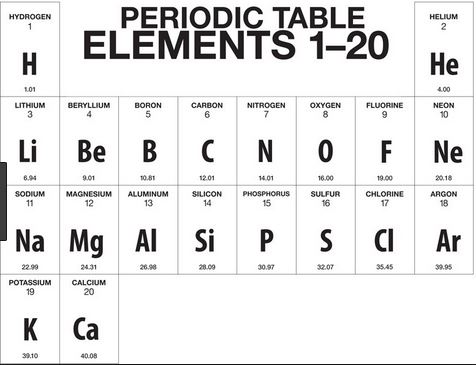
How many protons are in Beryllium?
a)
4
b)
9
c)
5
d)
2
17.
How many electrons does an Iodine atom have?
a)
53
b)
126
c)
73
d)
179
18.
How many electrons are in a gold atom?
a)
79
b)
196
c)
117
d)
275
19.

What number is circled?

a)

Number of Neutrons

b)

Atomic Number

c)

Atomic Mass

d)

Number of Electrons

20.

What is the atomic mass of Neon?

a)

10

b)

20.18

c)

10.18

d)

9.82

21.
What is this number representing?
a)
Number of protons
b)
Number of Protons and Electrons
c)

Exact number of Protons and Neutrons

d)

Average of the masses of all isotopes.

22.
What is the number highlighted?
a)
Atomic number
b)

Average Atomic mass

c)
Number of protons
d)
Number of electons
23.
How many neutrons does an Oxygen atom have?
a)
8
b)
16
c)
24
d)
7.999
24.
How many neutrons are in a Gold atom?
a)
79
b)
196
c)
118
d)
275
25.

How many electrons are in Potassium

a)

19

b)

39

c)

20

d)

58

26.

How many protons are in Neon

a)

10

b)

20

c)

21

d)

30

27.

The exact number of protons and neutrons in a single atom is called the

a)

Average atomic mass

b)

Atomic #

c)

Mass #

d)

Nuclear #

28.
What is the name of this element?
a)
Helium
b)
Hydrogen
c)
Argon
d)
Silver
29.
What is the name of this element?
a)
Lithium
b)
Boron
c)
Carbon
d)
Neon
30.
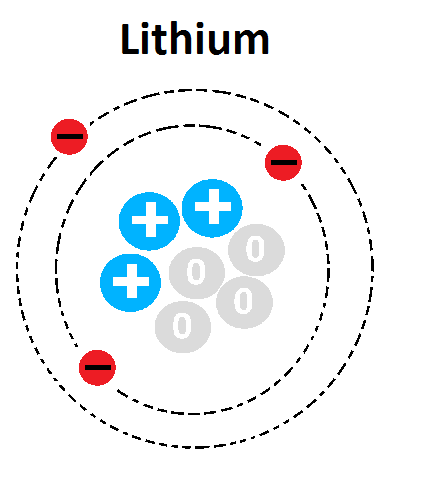
What is the mass number of this atom?
a)
1
b)
3
c)
4
d)
7
31.
What is the atomic number of this atom?
a)
2
b)
4
c)
6
d)
none of the above
32.
What group does this element belong to?
a)
Group 1: Alkali metals
b)
Group 18: Noble Gases
c)
Group 2: Alkaline-Earth Metals
d)
Group 17: Halogens
33.
How many valence electrons?
a)
2
b)
3
c)
5
d)
10
34.
What's a valence electron?
a)
electrons in the second energy level
b)
electrons in the outermost energy level
c)
the atomic number
d)
electrons in the first level
35.

On the periodic table, Groups are

a)

Horizontal rows

b)

Vertical columns

36.

On the periodic table, Periods are

a)

Horizontal rows

b)

Vertical columns

37.

The innermost energy level has a maximum of how many electrons?

a)

1

b)

2

c)

6

d)

8

38.

What is this element?

a)

Beryllium (atomic #4)

b)

Boron (atomic #5)

c)

Carbon (atomic #6)

d)

Nitrogen (atomic #7)

39.

How many valence electrons?

a)

2

b)

3

c)

4

d)

5

40.

What group does this element belong to?

a)

1

b)

2

c)

17

d)

18

41.

How many valence electrons?

a)

2

b)

4

c)

6

d)

8

42.

Which Bohr model represents Neon?

a)
b)
c)
d)
43.

Which of the following shows a correct Lewis dot structure?

a)
b)
c)
d)
44.

How would you draw a Lewis dot diagram for Magnesium?

a)
b)
c)
d)
45.

How many valence electrons does Aluminum Have?

a)

1 Valence electron

b)

2 Valence electron

c)

3 Valence electron

d)

4 Valence electron

e)

5 Valence electron

46.

This is a correct dot diagram for neon (Ne)

a)

true

b)

false

47.

This is a correct dot diagram for carbon (C)

a)

true

b)

false

48.

This is a correct dot diagram for nitrogen (N)

a)

true

b)

false

49.

How many valence electrons should Lithium have in its Lewis dot model?

a)

1

b)

2

c)

3

d)

4

50.

This could be the dot diagram of

a)

Mg

b)

Cl

c)

C

d)

O

51.

What is the goal of the Lewis Dot Structure?

a)

To determine the electron position.

b)

To show the element's valence electrons & bonding capabilities.

c)

To find the atomic mass of an element.

d)

To search for the number of electrons in an individual atom.

52.
Negative ions are called
a)
Cations
b)
Electrons
c)
Anions
d)
Neutrons
53.
When an atom loses a valence electron, it becomes a(n) _____________ ion.
a)
positive
b)
negative
c)
neutral
d)
polyatomic
54.
Positive ions form when atoms _________ valence electrons.
a)
lose
b)
gain
c)
share
d)
gain or share
55.
How many protons are in this element?
a)
79
b)
196
c)
117
d)
Cannot be determined
56.
What charge does an atom have if it LOSES an electron? 
a)
Positive (+)
b)
Negative (-)
57.
When an atom LOSES an electron it is a
a)
cation
b)
anion
58.
What is the number of protons?
a)
34
b)
16
c)
18
d)
S
59.
What is the number of neutrons?
a)
34
b)
79
c)
45
d)
35
60.
What is the charge on a lithium atom that looses 1 electron?
a)
+1
b)
0
c)
-1
d)
-2
61.
What is the net charge on the element shown above? 
(Calcium - atomic number 20)
a)
cation +1 charge
b)
cation +2 charge
c)
anion -1 charge
d)
anion -2 charge
62.

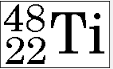
How many protons does this isotope of titanium have?

a)
48
b)
22
c)
26
d)
70
63.

An atom that has gained or lost electrons in an attempt to become stable/bond with another atom.

a)

Normal/Neutral Atom

b)

Ion

c)

Isotope

64.

To figure out the mass of an atom based on its subatomic particles you would add ______ & ________.

a)

Protons & Electrons

b)

Protons & Neutrons

c)

Neutron & Electrons

65.

In an atom, there are three types of subatomic particles. ______ are positively charged, ______ are negatively charged, and ______ are neutral.

a)

Protons, Electrons, Neutrons

b)

Electrons, Protons, Neutrons

c)

Neutrons, Protons, Electrons

d)

Electrons, Neutrons, Protons

66.

Match each definition with the correct term

a)

An atom that has lost or gained an electron

1.

Ion

b)

An atom of an element with a different amount of neutrons

2.

Isotope

c)

A positively charged atom

3.

Cation

d)

A negatively charged atom

4.

Anion

67.
Question Image

Match the following parts of the symbol to the correct term

a)

27

1.

mass number

b)

13

2.

atomic number

c)

3+

3.

ion charge

d)

14

4.

neutrons

e)

protons

5.

13

68.

How many electrons does this magnesium ion have?

a)

24

b)

12

c)

10

d)

14

69.

What happened to this Magnesium atom to make it an ion?

a)

It LOST electrons

b)

It GAINED electrons

c)

It GAINED protons

d)

It LOST protons

70.
If an element has 3 valence electrons, what charge will likely form on its ion ?  Hint:  It will lose those electrons.  What happens to the charge when it loses 3 electrons?
a)
+3
b)
+5
c)
-3
d)
-5
71.
Nitrogen will ____ valence electrons when forming an ionic bond.
a)
gain 1
b)
lose 1
c)
gain 3
d)
lose 3
72.
Ionic bonds form between two ions that have 
a)
ionic compounds
b)
negative charges
c)
positive charges
d)
opposite charges 
73.
Atoms are most stable when their outer shell is filled with electrons.
a)
true
b)
false
74.

An atom becomes _________ when it gains electrons.

a)

Positive

b)

Negative

c)

Neutral

75.
Anions are _______ that form ____________ ions and __________ electrons.
a)
nonmetals, positive, lose
b)
nonmetals, negative, gain
c)
metals, positive, gain
d)
metals, positive, lose
76.
Cations are _______ that form ____________ ions and __________ electrons.
a)
nonmetals, positive, lose
b)
nonmetals, negative, gain
c)
metals, positive, gain
d)
metals, positive, lose
77.

When an atom loses a valence electron, it becomes a(n) _____________ ion.

a)

positive

b)

negative

c)

neutral

78.
Where are metals located on the periodic table?
a)
Blue
b)
Green
c)
Red
79.
Where are the nonmetals located on the periodic table? 
a)
Blue
b)
Red
c)
Green
80.
What is the charge of an atom that has lost one electron?
a)
-1
b)
-2
c)
+1
d)
+2
81.
What is the charge of an atom that has gained one electron?
a)
-1
b)
-2
c)
+1
d)
+2
82.
What is the formula to solve for the neutron?
a)
Mass + Atomic Number= Neutrons
b)
Mass x Atomic Number = Neutrons
c)
Mass - Atomic Number = Neutrons
d)
Mass + Number of Protons = Neutron
83.
How many neutrons does oxygen have?
a)
16
b)
15.99
c)
8
d)
Doesn't contain any neutrons
84.
An atom with 19 protons, and 19 electrons and a mass of 39 has how many neutrons?
a)
19
b)
39
c)
20
d)
58
85.
How many neutrons does an element have with the atomic number of 36?
a)
36
b)
84
c)
48
d)
18