wayground logo

Free Printable Worksheets

Font size

S
M
L
XL
Worksheets

Test 6 Review

Total questions: 95

Worksheet time: 3hrs 21mins

Name
Class
Date
1.

Chemical or physical property?

COLOR

a)

Chemical

b)

Physical

2.

Chemical or physical property?

ODOR

a)

Chemical

b)

Physical

3.

Chemical or physical property?

Ability to rust

a)

Chemical

b)

Physical

4.

Chemical or physical property?

Ability to TARNISH

a)

Chemical

b)

Physical

5.

Chemical or physical property:

Melting point

a)

Chemical

b)

Physical

6.

Chemical or physical property?

Length

a)

Chemical

b)

Physical

7.

Chemical or physical property?

MAGNETISM

a)

Chemical

b)

Physical

8.

Chemical or physical property:

BOILING POINT

a)

Chemical

b)

Physical

9.

Chemical or physical property:

VOLUME

a)

Chemical

b)

Physical

10.

Chemical or physical property?

REACTIVITY

(ability to participate in a chemical reaction)

a)

Chemical

b)

Physical

11.

Chemical or physical property?

DUCTILITY

(Ability to be pulled into wires)

a)

Chemical

b)

Physical

12.

Chemical or physical property?

FLAMMABILITY

(burns easily)

a)

Chemical

b)

Physical

13.

Chemical or physical property?

ACIDITY

(the amount of acid in a substance)

a)

Chemical

b)

Physical

14.

Chemical or physical property?

LUSTER

(Shininess--especially for a metal)

a)

Chemical

b)

Physical

15.

Which of the following statements best describes gases? Gases--

a)

cannot easily change their volume by compression

b)

maintain a constant shape, regardless of the container

c)

can change shape and volume depending on the container

d)

have a fixed size and shape, regardless of the container

16.

Liquids are not easily compressible. Which characteristics of the structure of liquids makes this true? In a liquid, particles--

a)

are too close together to move any closer.

b)

have freedom and space of their container.

c)

take the shape of their container.

d)

always fill the volume of their container.

17.

Which type of substances have a definite shape and a definite/fixed volume?

a)

Solids only

b)

Liquids and solids

c)

Gases only

d)

Liquids and gases

18.

During which state does matter have a definite volume, but no definite shape?

a)

solid

b)

liquid

c)

gas

19.

What change of matter does this video illustrate?

a)

Evaporation

b)

Freezing

c)

Melting

20.

This is an example of

a)

Deposition

b)

Condensation

c)

Melting

d)

Boiling (Vaporization)

21.

List the sates of matter from LEAST to MOST energy.

a)

1.Solid 2.Gas 3.Liquid

b)

1.Gas 2.Liquid 3.Solid

c)

1.Solid 2.Liquid 3.Gas

22.

Solids have a definite shape and a(n) ____________________ volume.

a)

Definite

b)

Indefinite

23.

Liquids have an indefinite shape and a(n) ____________________ volume.

a)

Definite

b)

Indefinite

24.

Gas have an indefinite shape and a(n) ____________________ volume.

a)

Definite

b)

Indefinite

25.

Freezing describes the phase change from:

a)

Liquid to Gas

b)

Gas to Solid

c)

Solid to Liquid

d)

Liquid to Solid

26.

Vaporization describes the phase change from:

a)

Liquid to Gas

b)

Gas to Solid

c)

Solid to Liquid

d)

Liquid to Solid

27.
Which of the following terms identifies the change from a liquid to solid?
a)
Melting
b)
Condensation
c)
Vaporization
d)
Freezing
28.
Phase change from a solid to a gas.
a)
sublimation
b)
deposition
c)
condensation
d)
evaporation
29.
Phase change from a solid to a liquid.
a)
melting
b)
sublimation
c)
boiling
d)
condensation
30.
Phase change from a gas to a liquid.
a)
condensation
b)
evaporation
c)
melting
d)
deposition
31.

Change of a gas directly into a solid

a)

Sublimation

b)

Condensation

c)

Evaporation

d)

Deposition

32.

This is an example of

a)

Condensation

b)

Evaporation

c)

Sublimation

d)

Melting

33.

This is an example of

a)

Deposition

b)

Condensation

c)

Melting

d)

Boiling (Vaporization)

34.

Which of the following is an example of physical change?

a)

Mixing baking soda and vinegar together, and this causes bubbles and foam.

b)

A glass cup falls from the counter and shatters on the ground.

c)

Lighting a piece of paper on fire and the paper burns up and leaves ashes.

d)

Baking a birthday cake for your mother.

35.

Which is an example of a physical change?

a)

Metal rusting

b)

Silver tarnishing

c)

Water boiling

d)

Paper burning

36.

Getting a haircut is an example of a ______________.

a)

physical change

b)

chemical change

c)

shape change

d)

lookin-sharp change

37.
Is water melting a physical or chemical change?
a)
Physical
b)
Chemical
38.
Is salt dissolving in water a physical or chemical change?
a)
Physical
b)
Chemical
39.
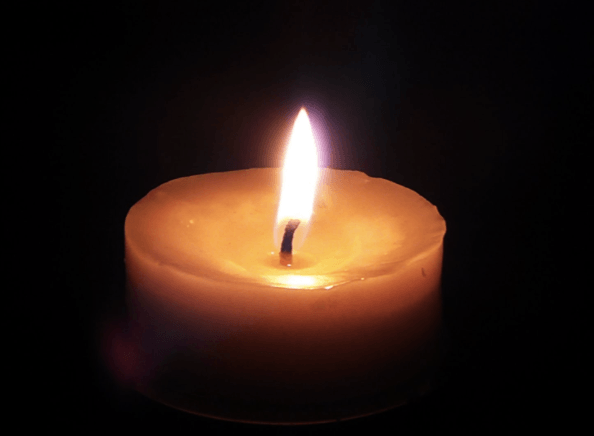
Is a burning candle a physical or chemical change?
a)
Physical
b)
Chemical
40.
Is melting iron a physical or chemical change?
a)
Physical
b)
Chemical
41.
Is sour milk a physical or chemical change?
a)
Physical
b)
Chemical
42.
Is adding sugar to your coffee a physical or chemical change?
a)
Physical
b)
Chemical
43.
When baking soda and vinegar mix it creates a bubbly mess. Is this a chemical or physical change?
a)
Physical
b)
Chemical
44.
Which of the following is NOT an example of a physical change?
a)
crumpled paper
b)
pencil sharpening
c)
shrunken clothing
d)
rust
45.
Which of the following is NOT an example of chemical change?
a)
sour milk
b)
burning wood
c)
breaking a pencil
d)
rust
46.
Freezing Juice?
a)
Physical Change
b)
Chemical Change
47.

baking a cake

a)

physical

b)

chemical

48.
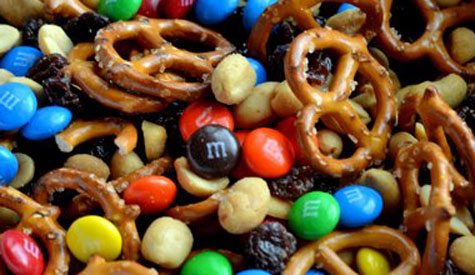
What type of mixture is this?
a)
homogenous mixture
b)
chemical
c)
heterogeneous mixture 
d)
solid mix
49.
A substance in which all the atoms are the same
a)
colloid
b)
homogeneous mixture
c)
solution
d)
element
50.
A mixture in which different materials can be identified easily
a)
element
b)
heterogeneous mixture
c)
homogeneous mixture
d)
solution
51.
Which of the following is an element?
a)
Sugar
b)
Salt
c)
Water
d)
Oxygen
52.
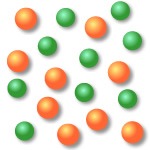
This picture represents which of the following?
a)
element
b)
compound
c)
mixture
53.
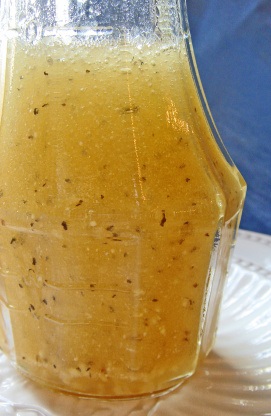
Italian Salad Dressing is a . . .
a)
heterogeneous mixture
b)
homogeneous mixture
c)
Pure Substance
d)
Compound
54.
A mixture that is so evenly mixed you can't see the parts.  Such as Kool-Aid
a)
Homogeneous Mixture
b)
Heterogeneous Mixture
c)
Pure Substance
55.
A combination that can be separated by physical processes is a .....
a)
Pure Substance
b)
Glucose
c)
Element
d)
Mixture
56.
A mixture that is NOT evenly distributed is called ....
a)
Compounded
b)
Homogenous
c)
Heterogenous
d)
Salty
57.

Aluminum (Al) is an example of a...

a)

Element

b)

Compound

c)

Homogenous Mixture

d)

Heterogeneous Mixture

58.

Milk (which contains water, proteins, fats, and vitamins) is an example of a...

a)

Element

b)

Compound

c)

Homogenous Mixture

d)

Heterogeneous Mixture

59.

I pour a bowl of cocoa puffs and milk. This breakfast is an example of a...

a)

Element

b)

Compound

c)

Homogenous Mixture

d)

Heterogeneous Mixture

60.

Two or more different types of atoms, chemically bonded together, make a...

a)

Element

b)

Compound

c)

Homogenous Mixture

d)

Heterogeneous Mixture

61.

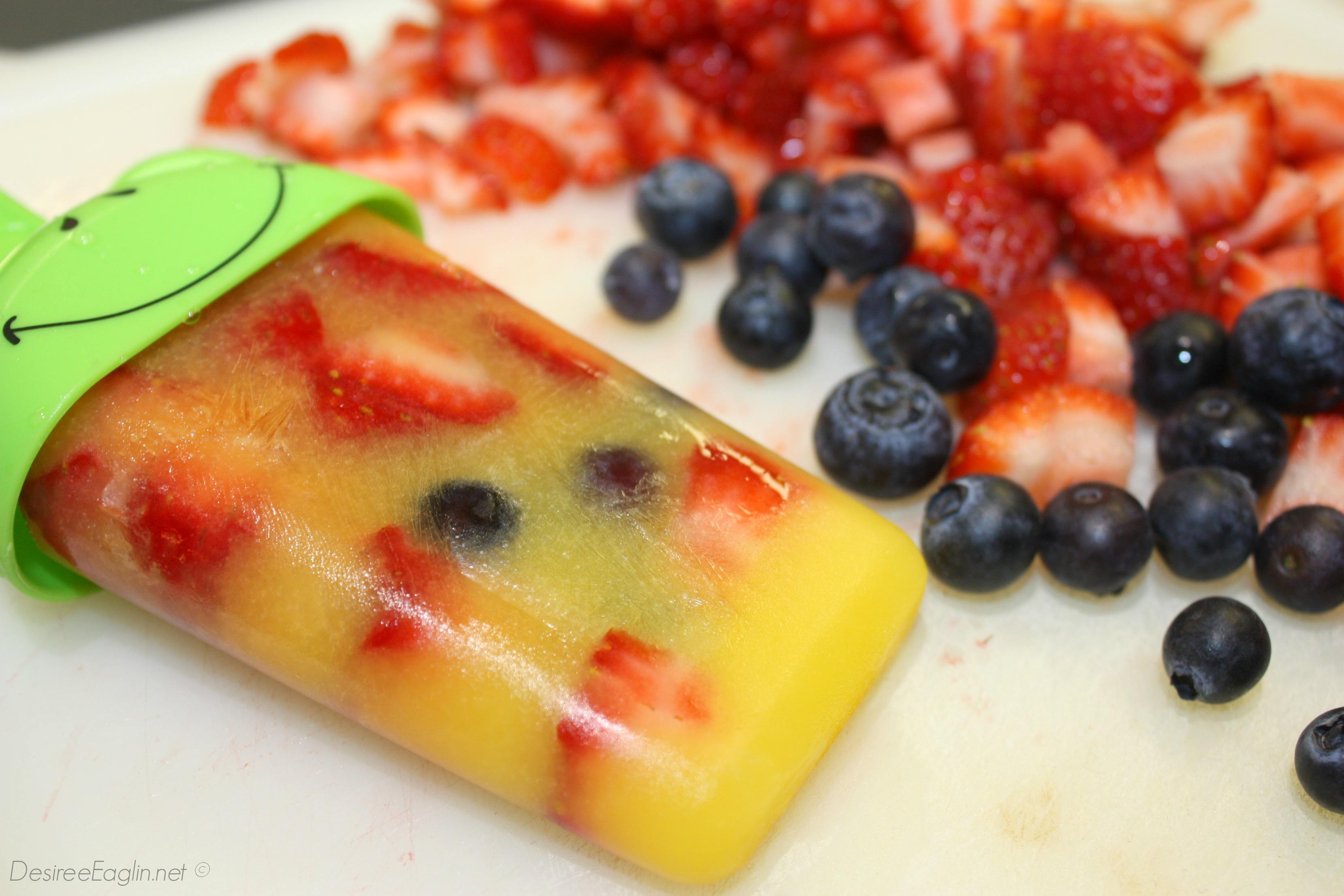
Is the following homogeneous or heterogeneous? Fruit salad

a)

homogeneous mixture

b)

heterogeneous mixture

62.

Is the following a pure substance or mixture? Baking Soda ( NaHCO3NaHCO_3

a)

pure substance

b)

mixture

63.

Is the following a pure substance or mixture? Trimix (oxygen, nitrogen, and helium) found in a scuba tank

a)

pure substance

b)

mixture

64.

Is the following an element or compound? A silicon (Si) chip.

a)

element

b)

compound

65.

Is the following an element or compound? hydrogen peroxide (H2O2)

a)

element

b)

compound

66.

Is the following a homogeneous or heterogeneous mixture? coffee mixed with cream and sugar

a)

homogeneous mixture

b)

heterogeneous mixture

67.

How would you classify this image?

a)

homogeneous mixture

b)

heterogeneous mixture

68.

Is the following a pure substance or mixture? Brass (Cu and Zn)

a)

pure substance

b)

mixture

69.

How would you classify this image?

a)

homogeneous mixture

b)

heterogeneous mixture

70.
Which of the following is not an element?
a)
water
b)
hydrogen
c)
carbon
d)
oxygen
71.
Which of the following IS a mixture?
a)
air
b)
hydrogen
c)
water
d)
sugar
72.
Which of the following would you use to separate sand from iron?
a)
a bar magnet
b)
paper
c)
hot plate
73.
Sweet Tea
a)
Element
b)
Compound
c)
Homogeneous Mixture
d)
Heterogeneous Mixture
74.

What is the smallest unit of an element that retains its chemical properties?

(a)  
Choose from the below words
Atom
Molecule
Compound
Ion
75.
 Which of the following is a pure substance?
a)
   tea
b)
   brass
c)
   ocean water
d)
 carbon dioxide
76.

NH3 is a:

a)

Mixture

b)

Element

c)

Compound

d)

Particle

77.

Water and sugar dissolved is an example of:

a)

Compound

b)

Homogeneous mixture

c)

Substance

d)

Heterogeneous mixture

78.

What mixture is an heterogeneous mixture?

a)

Soluble coffee in water

b)

Sand and water

c)

Perfume

d)

Apple juice

79.

Smaller particles pass through a filter paper, larger particles get trapped.

a)

Distillation

b)

Filtration

c)

Decantation

d)

Recrystallization

80.

One pure substance boils, escapes, condenses, and gets collected as a liquid.

a)

Distillation

b)

Filtration

c)

Decantation

d)

Recrystallization

81.
To separate a mixture of soil and water what separation method is used?
a)
Filtration
b)
Distillation
c)
Chromatography
d)
Evaporation
82.

Substances in a mixture can be separated by physical methods.

a)

TRUE

b)

FALSE

83.

The process of separating the substances from a liquid mixture by using selective boiling and condensation is called _____.

a)

Decomposition

b)

Filtration

c)

Distillation

d)

Magnetism

84.
What is the symbol for Thermal Energy in the specific heat formula?
a)
Q
b)
t
c)
m
d)
C
85.
What unit do you use to measure Thermal Energy?
a)
J/Kg ºC
b)
Kg
c)
ºC
d)
J
86.
When a  piece of aluminum foil is taken out of the oven and cools from 100° C to 50°C, What is the change in temperature?
a)
50°
b)
c)
100°
d)
150°
87.
The specific heat of aluminum is 0.21 cal/g°C.  How much heat(Q) is released when a 10 g piece of aluminum foil is taken out of the oven and cools from 100° to 50°?
a)
105 J
b)
10.5 J
c)
1.05 J
d)
50 J
88.
If 200 grams of water is to be heated from 24.0° C to  100.0° C to make a cup of tea, what is the mass and what is the change in temperature?
a)
m=100g,  ∆t= 224 C
b)
m=200g,  ∆t=124 C
c)
m=100g,  ∆t=24 C
d)
m=200g,  ∆t=76 C
89.
20 g of water. specific heat of water is 4.18 J/g°C.  temperature changes from 25° C to 20° Chow much heat energy (Q) moves from the water to the surroundings?
a)
418 Joules
b)
209 J
c)
83 J
d)
4.18 J
90.
The specific heat(c) of copper is 0.39 J/g °C. What is the temperature change(∆t) when 100 Joules of heat(Q) is added to 20 grams of copper?
a)
12.82 °C
b)
24.12°C
c)
351 °C
91.

Determine the specific heat of an unknown object that has a mass of 15g, released 2050J of heat and had a temperature change of 50C to 75C. 

a)

5.46 J

b)

5.5 J/g °\degree C

c)

768750 J

d)

768750J/g °\degree C

92.
Calculate the heat absorbed by 105.0 grams of water when it is heated to cook spaghetti. The initial temperature of the water is 20.0°C, and the final temperature of the water is 99.0°C. The specific heat of water is 4.18 J/g•°C.
a)
8778 J/g°C
b)
0.0005 J/g°C
c)
34673 J/g°C
d)
43451.1 J/g°C
93.
The temperature of an unknown piece of metal with a mass of 30.00 g changes from 25.0 °C to 35.0 °C when the metal absorbs 350.0 J of energy. What is the specific heat of the metal?
a)
1.17 J/g°C
b)
-1.17 J/g°C
c)
0.857 J/g°C
d)
-0.857 J/g°C
94.

The specific heat(c) of copper is 0.38 J/g °C. What is the temperature change(∆t) when 100.0 Joules of heat(Q) is added to 20.0 grams?

a)

13 °C

b)

13.2°C

c)

13.16 °C

95.
How many Joules of energy are required to change 10 gram of water from 20 C to 90 C?
a)
1400 J
b)
2800 J
c)
210,000 J
d)
1,400,000 J