
 Worksheets
Anatomy - Chemical Basis of Life
Total questions: 83
Worksheet time: 42mins
A water molecule is made up of
two atoms of oxygen and one of hydrogen
one oxygen atom and one hydrogen atom
one atom of chlorine and one atom of sodium
one oxygen atom and two hydrogen atoms
An ionic bond is formed as the result of
sharing electrons
sharing protons
transferring protons
transferring electrons
An covalent bond is formed as the result of
sharing electrons
sharing protons
transferring protons
transferring electrons
Characteristics of a polar water molecule include
oxygen side is slightly positive, hydrogen side slightly negative
oxygen and hydrogen sides partially positive
oxygen and hydrogen sides partially negative
oxygen side negative, hydrogen side slightly positive
Which substance dissolves in water
nonpolar solute
solvent
solution
polar solute
nucleotide is to nucleic acid as
glucose is to starch
amino acid is to protein
glycerol and fatty acid is to lipid
all of the above
Classify which of the following is a polysaccharide
glucose
fructose
glycogen
glycerol
Which organic compound is the main source of energy for living things?
nucleic acids
lipids
carbohydrates
proteins
Which is not a function of proteins?
speed up chemical reactions
short-term energy source
fight pathogens
build tissues
Which statement about enzymes is false
they work best at specific temperatures and pH
they are proteins
they are catalysts
they transmit genetic information
Nitrogen is an important atom in which macromolecules?
lipids and carbohydrates
proteins and lipids
nucleic acids and lipids
nucleic acids and proteins
The main functions of nucleic acids are to
provide long-term energy storage
provide genetic information
provide catalytic activity
provide short-term energy storage
Functions of proteins are
to store energy
to store genetic information
dependent on amino acid sequence
to provide insulation and waterproofing
Lipids are composed of which atoms?
carbon hydrogen nitrogen
carbon hydrogen sulfur
carbon hydrogen oxygen sulfur
carbon hydrogen oxygen
A large carbohydrate is composed on monomers. Which is an example of a carbohydrate?
starch
cellulose
glycogen
all of the above
Which of the following is a nonpolar substance?
water
oil
salt
magnesium chloride
Macromolecules are similar in the fact that they
have the ability to function as enzymes
contain ionic bonds
contain subunits bonded together
are base units used in the formation of plastics
Lipids are organic molecules whose role is to
metabolize sugar
oxygenate blood
store energy
build muscles
Which of the following are examples of proteins:
DNA and RNA
Saturated fats and unsaturated fats
collagen and keratin
glucose and starch
Which is least likely to dissolve in water?
carb
lipid
protein
nucleic acid
What is a compound?
an atom with more electrons than protons
a substance in which the atoms of two or more elements are combined together
an atom with more neutrons than protons
a substance in which the atoms of three or more elements are combined together
Atoms combine to form _______.
electrons
molecules
nuclei
neutrons
What is the charge on a proton?
positive
neutral
negative
What is the charge of an electron?
positive
neutral
negative
What part of the atom is responsible for determining an atom's chemical properties?
all electrons
protons
neutrons
valence electrons

Glucose (C6H12O6) contains atoms of carbon, hydrogen, and oxygen that are chemically bonded together. What type of matter is glucose?
Glucose is an element
Glucose is a compound
Glucose is a mixture
Glucose is a metal
How many neutrons in C-14?
6
7
14
8
Ionic bonds are between...
nonmetals and nonmetals
carbon and oxygen
metals and nonmentals
hydrogen and chlorine
Covalent bonds are between...
two or more nonmetals
sodium and chlorine
metals and metals
metals and nonmetals
What is the name for an ion with a positive charge?
cation
anion
onion
union
What is the name for an ion with a negative charge?
cation
anion
onion
union
What are valence electrons?
sum of the protons and neutrons
protons minus electrons
electrons in the inner shells
electrons in the outer shell
If an atom loses two electrons what charge will it have?
-2
-1
+1
+2
How many valence electrons does oxygen have?
2
4
5
6

Question: Using the figure above, order these items in order of increasing acidity:Coffee, Seawater, Ammonia, Lemon Juice, Blood
Lemon Juice, Seawater, Ammonia, Blood, Coffee
Ammonia, Seawater, Blood, Coffee, Lemon Juice
Blood, Coffee, Lemon Juice, Ammonia, Seawater
Lemon Juice, Coffee, Blood, Seawater, Ammonia

In the figure above, water is the ________________________ while Sodium Chloride (Table Salt) is the __________________________.
solvent, solute
solute, solvent
solute, solute
element, molecule
Question: What does it mean when a molecule is said to be “polar”?
The molecule has tendency to absorb a lot of heat, therefore it remains 'cold' easily
The molecule has an even distribution of charges, all parts are positive
The molecule has an even distribution of charges, all parts are negative
The molecule has an uneven distribution of charges, some parts are positive while others are negative
What atoms make up all carbohydrates?
Carbon, Sulfur, Hydrogen
Carbon, Oxygen, Phosphorus
Carbon, Oxygen, Nitrogen
Carbon, Oxygen, Hydrogen
How many sugar units make up monosaccharides?
one
two
three
zero
How many sugar units make up disaccharides?
one
two
three
zero
How many sugar units make up polysaccharides?
one
two
more than two
zero

What molecule is this
sucrose
protein
glucose
cellulose

What type of carbohydrate is this?
polysaccharide
disaccharide
monosaccharide
it isn't a carbohydrate
Which of these are examples of carbohydrates?
DNA, RNA
Fats, hormones
amino acids
starches, glucose, chitin

Single bond between Carbon and Hydrogen chains.
Tends to be solid at room temperature like butter.
Saturated Fats
Unsaturated Fats
Carbohydrates
Proteins

Double bond between Carbon and Hydrogen chains.
Tends to be liquid at room temperature like oils.
Polysaccharides
Lipids
Saturated Fats
Unsaturated Fats

A hydrocarbon chain that is sometimes considered to be a monomer of lipids.
Fatty Acids
Nucleic Acids
Proteins
Lipids
The characteristic that all lipids have in common is----
made of lots of double bonds
acidic when mixed with water
no high energy content
do not dissolve in water
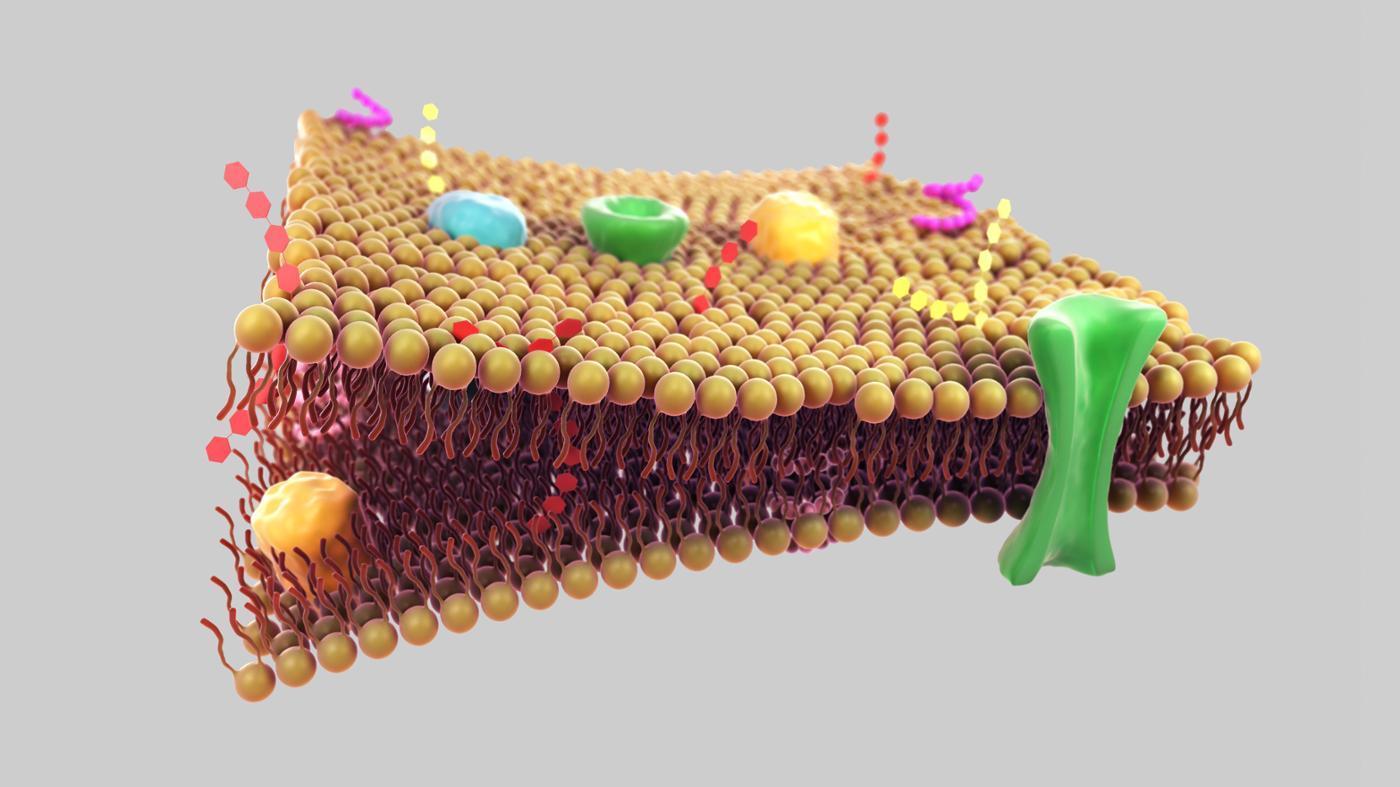
The phospholipid bilayer comprises what part of the cell?
cytoplasm
cell membrane
cytoskeleton
nuclear membrane
What is the result of bonding between three fatty acids and a glycerol?
Palmitic Acid
Trans Fats
Triglyceride
Water
Fats are
Non-polar
Polar
Hydrophilic
Hydrophobic
Which of the following bonds can NOT be found in saturated fats?
C-C
H-C
C=C
C-O
Which of the following bonds can be found in unsaturated fats?
N-O
C=C
H-H
N-N
Which diagram is a triglyceride?


What kind of lipid makes up the major portion of the cell membrane?
phosphlipids
steriods
waxes
fats
What part of a phospholipid repels water?
fatty acid (hydrophobic)
Phophate group (Hyrdophilic)
What part of a phospholipid attracts water?
Hydrophobic (fatty acid)
Hydrophilic (phosphate group)

Saturated
Unsaturated

saturated
unsaturated
What element is found in proteins that is not found in carbohydrates or lipids?
N
C
P
O


What are the monomers that make up proteins?
Monosaccharides
Amino acids
Nucleic acids
Fatty acids

What is this monomer called?
fatty acid
amino acid
monosaccharide
protein
What is the shape of a protein?
chains
folded chains
rings
honeycomb
How many levels of folding exist in a protein structure?
1
2
3
4
In RNA, adenine bonds with __________.
adnine
cytosine
thymine
uracil

I am usually a single stranded molecule
DNA
RNA
Both
I am generally found both inside and outside of the nucleus.
DNA
RNA
Both
I contain the sugar deoxyribose.
DNA
RNA
Both
I contain the sugar ribose.
DNA
RNA
Both

