
 Worksheets
untitled
Total questions: 121
Worksheet time: 3hrs 24mins
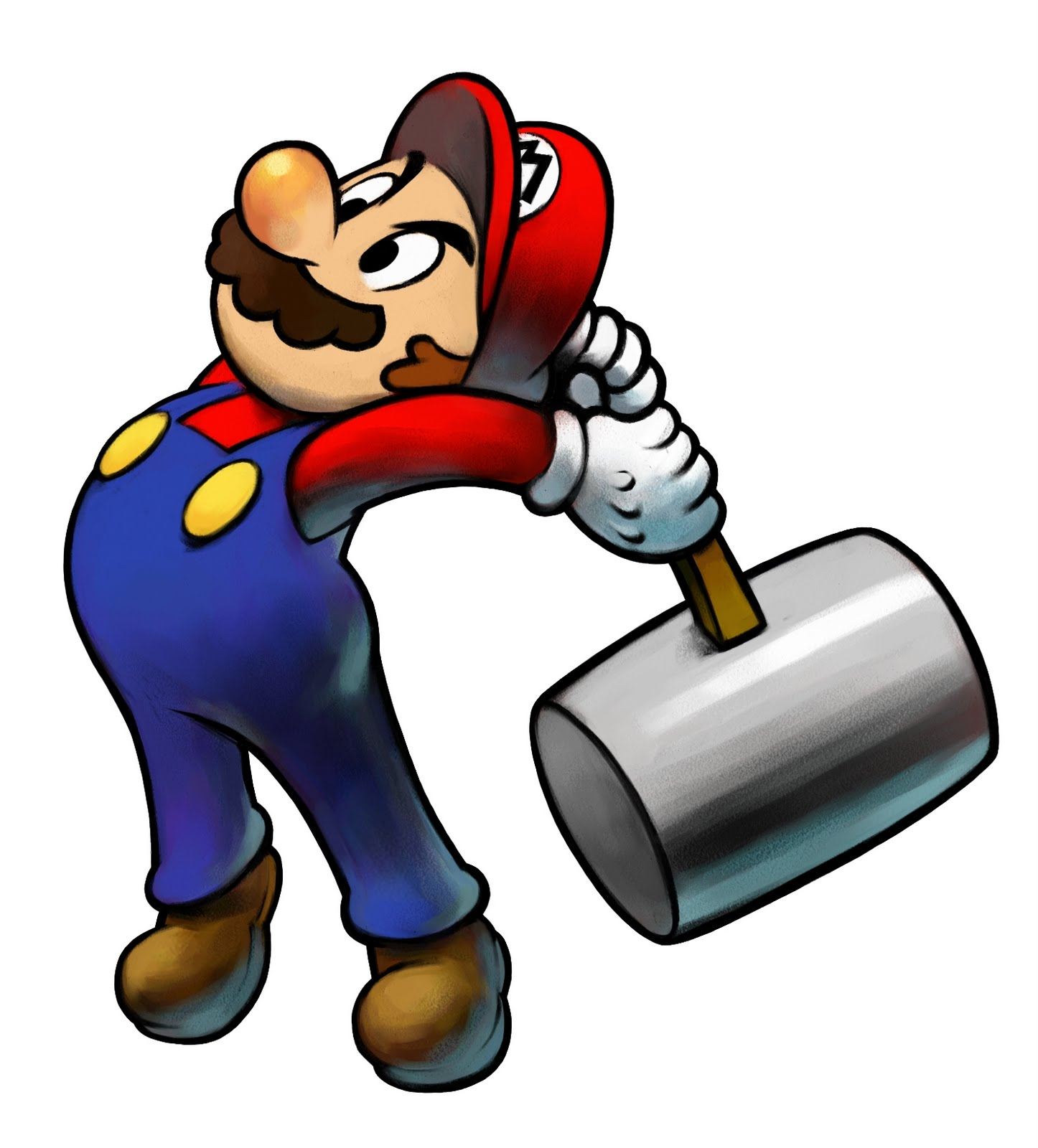
When an object changes shape when struck by a hammer it is said to be...
luster
malleable
brittle
ductile
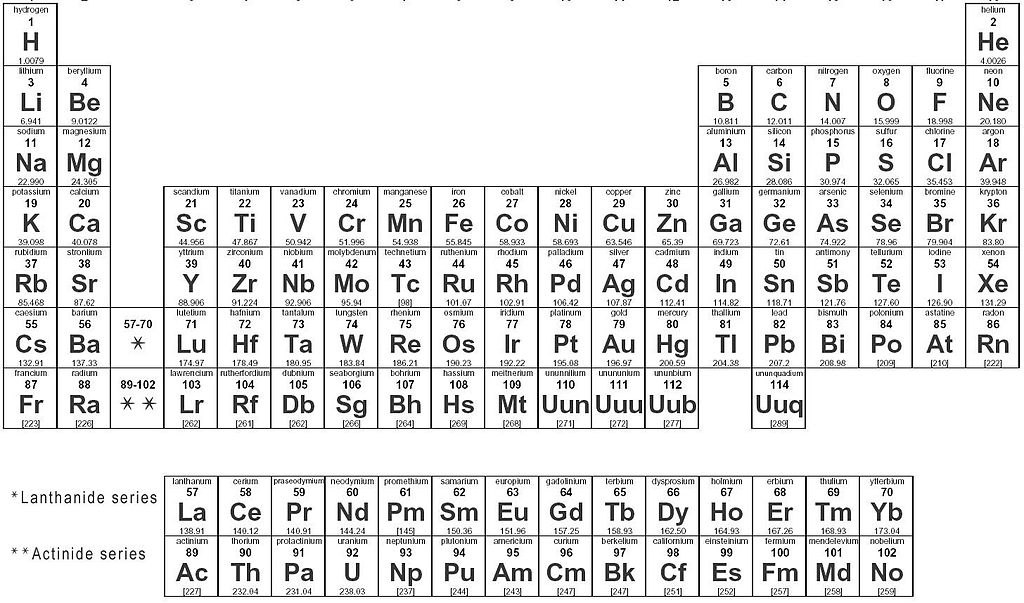
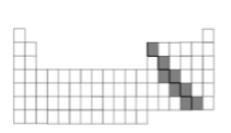
Elements in the shaded area can best be described as -
Shiny and brittle, semiconductors
Insulators
Good conductors
The elements argon, krypton, and xenon are all non-metals.What property would these elements have in common?
Good conductor of thermal energy
Poor conductor of electricity
Shiny, lustrous surface
Soft and malleable
Carbon is dull and brittle. Carbon is a
metal
nonmetal
metalloid
What does a physical change NOT do to a substance?
Change the form of a substance
Change the appearance of a substance
Change the material into a new substance
Cut or tear the substance
Which of the following is an example of a chemical change?
Cutting paper
Tearing cloth
Baking a cake
Freezing water
What happens when two or more substances combine in a chemical change?
They change form but not their properties
They change appearance only
They form a new substance with new properties
They are easily separated into original substances
What can be observed or measured without changing the composition of matter?
Chemical properties
Physical properties
Biological properties
Nuclear properties
Which of the following is NOT a physical property of matter?
Texture
Smell
Density
Flammability
Match the following descriptions of matter with their correct categories.
Size, shape, color
Descriptions that include physical appearance and can be observed without changing the matter
Size, weight, volume
Descriptions that include basic measurements and the amount of space an object occupies
Mass, volume, density
Descriptions that include intrinsic properties of matter not dependent on the object's state
Weight, height, texture
Descriptions that include physical properties related to the force of gravity and physical dimensions
What is the term used to describe the different forms that different phases of matter take on?
Chemical states
States of matter
States of energy
Matter forms
Match the following descriptions of changes with the correct type of change.
A change where the form of matter is not altered and one substance is transformed into another
A description of a chemical change
A change where the form of matter is altered and one substance is transformed into another
A description of an impossible change, as matter transformation implies a change in form or substance
A change where the form of matter is altered but one substance is not transformed into another
A description of a physical change
A change where energy is created from matter without altering its form
A description of energy conversion without matter transformation
Which of the following is an example of a physical change?
Burning wood
Chopping wood
Rusting of iron
Baking a cake
What happens to the substance in a physical change?
It changes its chemical composition
It is destroyed completely
It changes its state of matter
It remains the same substance
Match the following descriptions with whether they are examples of a physical change or not.
Changing the state of matter
Example of a physical change
Changing the color
Example of a physical change
Changing the chemical composition
Not an example of a physical change
Changing the texture
Example of a physical change
What does changing the state of matter refer to in the context of physical changes?
Transforming a substance from solid to liquid or gas
Altering the chemical bonds within a substance
Changing the color of a substance
Changing the temperature without altering the state
What does the term "Chemical Properties" relate to?
A substance's color and shape
A substance's ability to undergo changes that transform it into a different substance
The mass and volume of a substance
The temperature at which a substance melts
Which of the following is an example of a chemical property?
Density
Rustability
Boiling point
Hardness
Flammability is an example of (a) type of property?
What is a chemical change?
A change in matter that does not produce a new substance
A change in matter that produces one or more new substances
A change in matter that only affects physical properties
A change in matter that can be easily reversed
Which of the following is an example of a chemical change?
Melting ice
Boiling water
Cooking an egg
Dissolving sugar in water
At what level do chemical changes occur? (a)
Which of the following is a sign of a chemical change?
Formation of a precipitate
Change in phase from solid to liquid
Dissolving sugar in water
Cutting a piece of paper
What can be inferred from the experiment with baking soda, water, and vinegar?
Baking soda and vinegar do not react
Baking soda and water produce a gas
Baking soda and vinegar produce a color change
Baking soda and water produce a color change
Match the following observations with the correct outcome of the FeCl3 in Na2SiO3 solution experiment.
The temperature remains constant
Outcome when a physical change occurs without energy transfer
A gas is produced
Outcome when a chemical reaction releases a substance
A color change occurs
Outcome when a visible chemical reaction occurs
No reaction takes place
Outcome when reactants do not interact
What does the glowing splint test indicate in the context of chemical changes?
The presence of oxygen
The absence of a chemical reaction
The solution is acidic
The solution is basic
(a) is NOT an evidence of a chemical change.
What can indicate a chemical change has occurred if you observe a temperature change without external heating or cooling?
Expected Temp Change
No Temp Change
Unexpected Temp Change
Constant Temp Change
Match the following descriptions with the correct term.
A mixture
A homogeneous mixture of two or more substances
A solution
A type of mixture where different components can be visually distinguished
A precipitate
What is formed when a chemical change results in a solid that settles out of a liquid?
A gas
A state of matter with no fixed shape that fills the volume of its container
What is a sign of a chemical change that involves a change in color?
Expected Color Change
No Color Change
Unexpected Color Change
Periodic Color Change
What is an example of a new molecule created in a chemical reaction that radiates light differently, producing new colors?
Rusting of iron
Dissolving sugar in water
Fireworks
Freezing water
What can cause an unexpected color change in a chemical reaction?
Change in temperature
New molecules that radiate light differently
Physical mixing of substances
Change in pressure
During chemical bonding, energy is (a) , making the surroundings hotter or cooler.
Which of the following is an example of a chemical change involving an unexpected temperature change?
Freezing water to make ice cubes
Adding baking soda to vinegar causing the temperature to decrease
Melting chocolate by heating
Boiling water to produce steam
What is a natural example of an unexpected temperature change due to a chemical change provided in the learning material?
Water evaporating from the skin to cool the body
Body temperature increases to fight infections
Leaves changing color in the fall
Food being cooked on a stove
What is combustion/burning?
A physical reaction that can be reversed.
A chemical reaction between substances, usually including oxygen, accompanied by giving off heat and/or light.
A biological process that occurs in living organisms.
A change in the state of matter from solid to liquid.
Is combustion/burning a permanent change or can it be undone?
It is a temporary change that can be undone.
It is a permanent change that cannot be undone.
It is a change that only occurs in non-organic substances.
It is a reversible change with the application of a catalyst.
Which of the following is an example of combustion/burning?
Freezing water to make ice.
A nail rusting over time.
Dissolving sugar in water.
Cutting a piece of paper.
What happens when precipitates form in a chemical change?
A gas is released.
A solid suddenly appears in a solution and settles to the bottom, collects on another object, or makes the solution cloudy.
The temperature of the solution increases.
A new color appears without any solid formation.
Which of the following is an example of a precipitate forming in a chemical change?
Water boiling
Milk souring
Iron rusting
Ice melting
What is another example of a precipitate forming in a chemical change?
Sugar dissolving in water
Salt crystallizing
Bath tub rings
Leaves decomposing
What happens when gases produced in a chemical reaction are released?
A change in color occurs
Bubbles form
A change in temperature occurs
A new solid is formed
(a) is an example of a situation where bubbles form due to a chemical change.
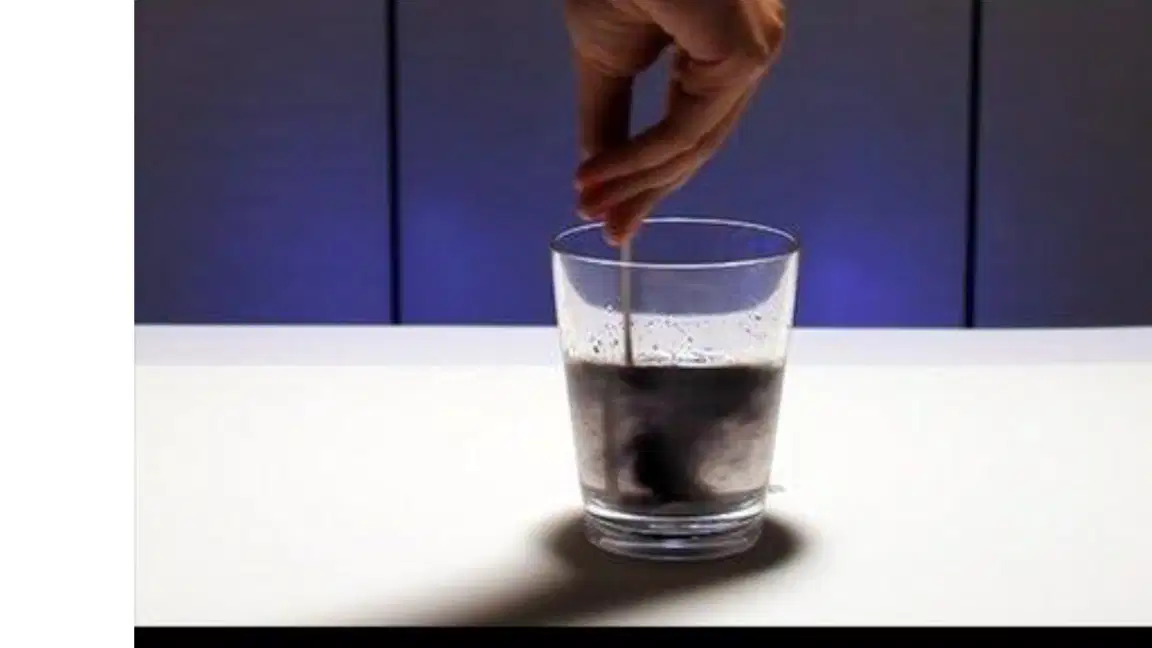
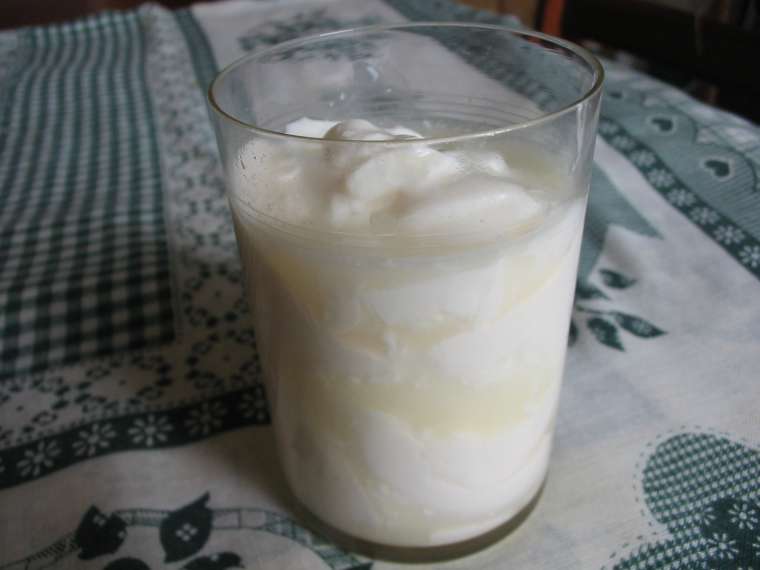
What is being demonstrated in the image?
A) A physical change
B) A chemical change
C) A state of matter change
D) A reversible change

Is this an example of a physical or chemical change?
physical
chemical

Is this an example of a physical or chemical change?
physical
chemical
Which of the following is NOT an example of a physical change?
crumpled paper
dissolving sugar in water
freezing water
burning a marshmallow

How many atoms of oxygen are in this molecule?

How many Oxygen atoms are in H2O?
1
2
0
4
How many Magnesium atoms are in 10MgCl2?
10
5
20
How many Sodium atoms are in 6NaCl?
1
12
6
How many Aluminum atoms are in Al2O3?
3
2
5
1
A subscript is the small number below the element symbol that tells the number of _______ of that element.
atoms
valence electrons
protons
elements
How many atoms are there TOTAL in H2SO4 ?
6
5
7
3
How many Nitrogen atoms are in (NH₄)₂CrO₄?
1
2
8
16
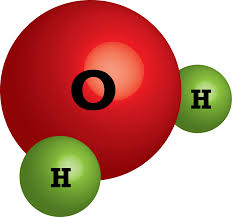
How many atoms of Hydrogen are in this compound?
1
2
3
4
How many Oxygen atoms are in Al₂(SO₄)₃?
4
12
7
24
How many Hydrogen atoms in 3(NH₄)₂CrO₄?
4
2
8
24
How many Nitrogen atoms are in the in H2C3O4N5?
2
3
4
5
cutting a piece of paper
boiling water
water freezing
cooking an egg
burning a matc
milk going sour
same composition of material
new substance is formed
Match the following

a light is seen

precipitate forms

gas is produced
increase or decrease in temperature
Temperature change

color change
cutting a piece of paper
boiling water
water freezing
cooking an egg
burning a matc
milk going sour
same composition of material
new substance is formed
When baking soda mixes with vinegar, a chemical reaction occurs. This reactivity is an example of a _______________.
Chemical Property
Physical Property
What does the o stand for in the acronym that we learned?
Gas
Light
Odor
Osmosis
COLTPIG, Match the following
C
Change in Color
O
Produced odor
L
Burning, fire
T
Release/absorbing het
P
Solid that cannot be changed back
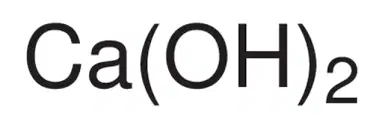
Which of the following is the CORRECT number of atoms?
calcium= 2 atoms
oxygen = 1 atom
hydrogen= 1 atom
calcium = 1 atom
Oxygen= 2 atoms
hydrogen = 2 atoms
copper = 1 atom
oxygen = 1 atom
hydrogen= 2 atoms
When wood burns this is a (a) The wood is changed into (b) . Ashes and smoke are created. Ash shows a (c) and smoke shows (d) .
Why is salt dissolving into water a physical change?
it is irreversible
it is reversible
a gas is released
a phase change occurs
Which supports a chemical change occuring?
melting of a substance
cutting into smaller pieces
a substance expands
turning into solid that is irreversible
Sodium: physical properties include soft silver color solid, melting point at 98 degrees. Chemical properties: reacts violently with water to produce gas and flames. Which would create a chemical change:
dropping it into a beaker of water
heating it to 98 degrees
mixing it with more sodium
freezing it to temperature of -33.9 degrees
if there is a change in color, production of light, production of heat, production of gas, production of smell or formation of a new substance.
physical change
chemical change
What does it mean when there is a physical change?
Matter has change from one substance into another.
Matter has changed on the molecular level
A new substance has been formed.
Matter has changed size, shape or form.
What are the products?
What are the reactants?
H2SO4
three hydrogen (H)
one sulfur (S)
four oxygen (O)
New substances are formed when the (a) of substances are rearranged during a (b) reaction. The law of (c) of mass states that the total number of atoms of each (d) is not created or destroyed during a chemical reaction. Instead, the atoms are (e) to form new substances.

How many molecules of caffeine are there?
2
5
10
24

How many atoms of hydrogen are there?
2
4
6
11
Which of the following correctly identifies the number of each element involved in the chemical formulas? NH4CO3


Which of the following examples would support that a chemical reaction has occurred?
A. After putting liquid batter into a hot pan, the batter solidifies and begins to turn brown.
B. After turning on a blender filled with fruits, the fruit is chopped up and mixed together.
C. After taking a tray filled with ice cubes out of the freezer, the cubes begin to melt.
D. After adding a spoonful of sugar to a mug of hot coffee, the sugar dissolves completely.
In the reaction 2H2+O2→2H2O , how many hydrogen atoms are there in the reactants?
1
2
4
6
Which of the following equations correctly models the law of conservation of mass
H2 + Cl2 🡪 2HCl
H2 + Cl2 🡪 HCl
H + Cl 🡪 2HCl
2H2 + Cl2 🡪 2HCl2
The reaction between hydrogen chloride and sodium hydroxide is shown below. The name and mass of each substance involved in the chemical reaction are shown. What mass of hydrogen chloride was used in this reaction?
? g 40.0 g 58.5 g 18.0 g
HCl + NaOH 🡪 NaCl + H2O
Hydrogen Sodium hydroxide Sodium Water Chloride Chloride
18.5 grams
36.5 grams
40.5 grams
116.5 grams
4Fe + 3O2 --> 2Fe2O3
H2O
2 CH2CO3OH
Number of C: (a)
Number of H: (b)
Number of O: (c)
Chose all properties of
non-metal:
Brittle
Dull
Malleable
Good Conductors
Insulator
Chose all properties of metal:
Brittle
Shiny
Malleable
Good Conductors
Ductile
Match the following images to the correct vocabulary

Physical Change

Chemical change

Chemical Property

Physical Property
We know that there was a chemical reaction occurring when 2 clear liquids were mixed together. That is because we show the production of a _____________.
solid.
precipitate.
gas.
Balanced or Unbalanced: A runner jumping over a hurdle.
balanced
unbalanced

