
 Worksheets
Review: Force & Motion
Total questions: 131
Worksheet time: 4hrs 9mins

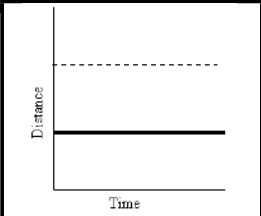
The picture of the position vs. time graph shows an object that is...
accelerating/ speeding up
moving at a constant speed
not moving
accelarating/ slowing down

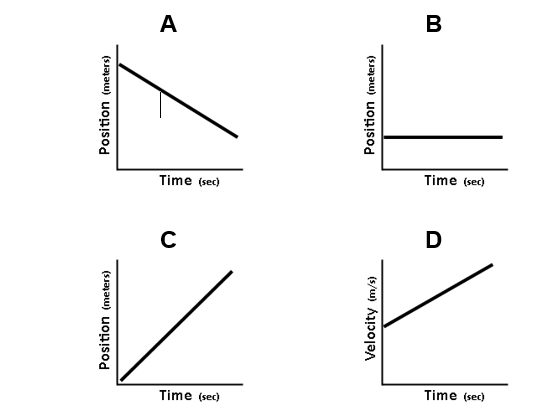
Which graph represents a students standing at their locker for a period of time.
A
B
C
D
What is the average speed?
Distance: 10m
Time: 5s
100 m/s
1/2 m/s
50 m/s
2 m/s
A train travels 100 kilometers in 4 hours is traveling at what average speed?
Remembe: speed= distance/ time
50 km/h
25 km/h
400 km/h
100 km/h
A train travels at 500 km per hour. A plane can travel at 1,100 km per hour.
Which would travel farther in 5 minutes?
both travel the same distance
the train
the plane
can't tell

This graph shows the motion of an object as it moves away from a point and then back to its starting point. Which graph shows the total distance traveled by the object?


A ball increases speed as it rolls down a ramp. What kind of forces are acting on it?
Balanced
Unbalanced

What is happening to the speed of the ball as it moves down the ramp?
It remains constant.
It is increasing.
It is decreasing.
Not enough information to tell.
When forces act in OPPOSITE directions, which mathematical operation do you use to determine net force?
Addition (+)
Subtraction (-)
Multiplication (x)
Division (/)
When forces act in the SAME direction, which mathematical operation do you use to determine net force?
Addition (+)
Subtraction (-)
Multiplication (x)
Division (/)
A net force of ZERO N means the forces are ______.
Balanced
Unbalanced
How do balanced forces affect the motion of an object?
The speed changes.
The direction changes.
There is NO change in motion.
I need more information.
What is the net force when forces are unbalanced?
Anything greater than ZERO N.
ZERO N
How do unbalanced forces affect an object's motion?
Change in speed and/or direction.
There is no change in motion.
It depends on the friction.
It depends on the mass of the object.

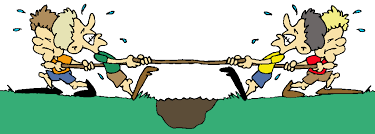
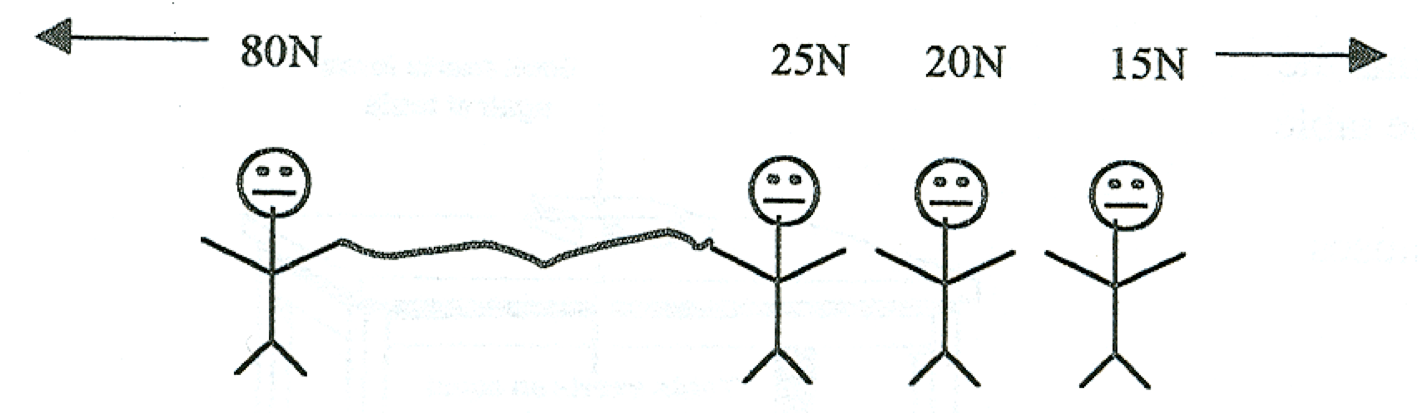
Which is the best description of the rope's movement?
The rope moves at a CONSTANT speed to the LEFT.
The rope moves at an INCREASING speed to the LEFT.
The rope moves at a CONSTANT speed to the RIGHT.
The rope moves at an INCREASING speed to the RIGHT.

Team A increases the force they are pulling with to 30N. What will happen to the rope?
There will be no change.
The rope will move to the right at a decreasing speed.
The rope will move to the left because the net force is 5N to the left.
The rope will move to the right at a constant speed.

Which way will the skydiver move?
Up
Down
Left
Right

The motorcycle moves around the ring at a constant speed. Which of the following statements is true?
The velocity does NOT change.
The velocity increases because the speed increases.
The velocity decreases because the speed decreases.
The velocity changes because the direction is changing.


What is the formula to calculate speed?
S = t/d
S = d/t
S = d x t
S = t x d


When Izzy and Zoe pull on the rope with the same amount of force, the forces are _____.
increased
unbalanced
balanced
decreased
Why did Izzy fall when playing tug of war?
he tripped
unbalanced forces
balanced forces
he was pushed


Scott travels North 5 kilometers and then goes West 3 kilometers before coming straight back South 2 kilometers. What is his distance?
10 km
7 km
8 km
6 km

If a lizard can run 8 meters across the water in 4 seconds, how fast is he traveling?
32 m/s
2 m/s
2 seconds
34 meters
If you drive from Alain to Sharjah 180 km in 2 hours , what is the speed of your car ?
180 x 2 = 360 km/h
2x180 = 360 km/h
180÷ 2 = 90 km/h
2÷180=0.02 km/h
speed with direction is called ______________
speedy
velocity
acceleration
distance
velocity is vector , because __________________
it has NO direction
it has magnitude and direction
it can be slow or fast
it has only magnitude
if car moving in the same direction and same speed , this is considered _____________________
changing velocity
constant velocity
no velocity
no direction

The figure is showing __________________
constant velocity
changing velocity ( because of change in direction)
changing velocity ( because of change in speed )
zero velocity

The figure is showing __________________
constant velocity
changing velocity ( because of change in direction)
changing velocity ( because of change in speed )
zero velocity

The figure is showing __________________
constant velocity
changing velocity ( because of change in direction)
changing velocity ( because of change in speed )
zero velocity

Using the image of the grid, if the reference point is box B, what is the location of box D?
To the left 2 boxes, up 2 boxes
To the left 2 boxes, up 1 box
Up 2 boxes, to the left 1 box
Up 2 boxes, to the left 3 boxes
Motion can be described through a change in _____.
speed
time
position
distance
To determine if an object has changed position, you need to know its position relative to another object. _______________
True
False
An object's location or _______________ is the distance from a reference point.
distance
position
acceleration
displacement

What is the position of the library compared to the Museum?
120m east from the museum
120m west from the museum
60 east from the museum
120 to the west

What is the position of the bus stop?
40m to the right from the library
40m left from the museum
80m right from the museum
80 meters right from the library
_________________ is an object's distance and direction from a reference point.
displacement
position
reference point
dimension
Which one is NOT needed when describing an object's position?
reference point
distance
dimension
direction
What does constant speed mean?
Going different speeds
Going the same speed
Going every speed
Staying Still
Velocity = _______________
Speed – direction
Speed + direction
Speed x direction
Speed / direction

What is this?
"This airplane is traveling at 500 mph, West"
Speed
Velocity
Acceleration

What is this?
A car is traveling 50 mph.
Speed
Velocity
Acceleration
Which velocity is slower?
10 km/hr southwest
1 km/hr southwest
Which velocity is faster?
2.2 m/s north
0.8 m/s north
A ship sails 5,635 km west in 3.5 months. What is the ship's velocity?
1,610 km/m
1,610 km/m west
2.2 km/hr
2.2 km/hr west
A ship sails 5,635 km west in 2,520 hours. What is the ship's velocity?
1,610 km/m
1,610 km/m west
1,610
A ball rolling west at 5 cm/s is an example of:
Speed
Velocity
A bird flying south at 64 km/hr is an example of:
Speed
Velocity
The International Space Station orbiting the Earth from west to east at 7.66 km/s is an example of:
Speed
Velocity
A robot traveling 2 m/s is an example of:
Speed
Velocity
Another way to explain the speed and direction of a object would be to describe it’s ________
Speed
Velocity
Acceleration
Which of the following is a unit of speed?
km/hr
Minutes
Centimeters
meters
Which of the following is a unit of distance?
Km/hr
Minutes
meters
seconds

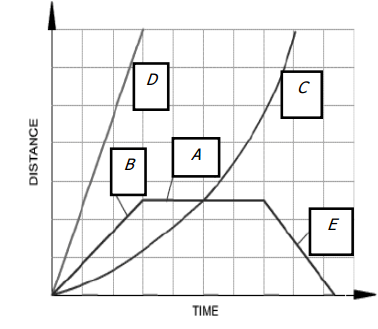


- What is the distance covered through the second segment, which is between 50 seconds, and 70 seconds?
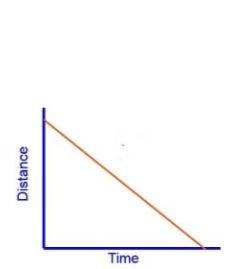
What is this line of this graph showing?
moving away from starting point at a constant speed
moving back towards the starting point at a constant speed
acceleration (getting faster)
deceleration (getting slower)
What does a straight diagonal line on a motion graph indicate?
The object is stationary
The object is moving at a constant speed
The object is accelerating
The object is decelerating
What does a horizontal straight line on a motion graph indicate?
The object is accelerating
The object is moving at a constant speed
The object is decelerating
The object is stationary
What does a curved line on a motion graph indicate?
The object is decelerating
The object is stationary
The object is moving at a constant speed
The object is accelerating
(speeding up)

Object is...
constant speed
speeding up
slowing down
stopped


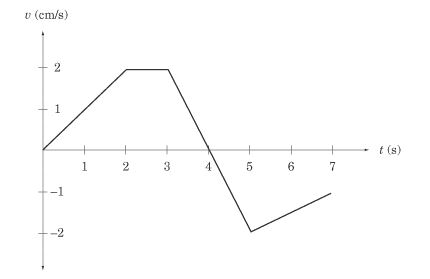
What is happening between 2 and 3 seconds?
The object is not moving.
The object is not accelerating.
The object is slowing down.
The object is speeding up.


During which interval is the object speeding up?
A to B
B to C
D to E
E to F
In which of the following graphs below are both runners moving at the same speed?


Object is...
(1) speeding up,
(2) constant speed,
(3) speeding up
(1) constant speed.
(2) stopped,
(3) constant speed
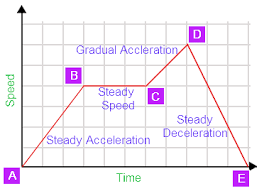
At what point is the speed the greatest?
C-D
B-C
A-B
D-E



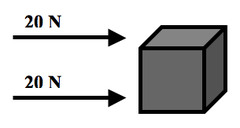
Two forces act on an object to the right at the same time. What force is required to bring the object into equilibrium?
9 N to the right
9 N to the left
3 N to the left
18 N to the left


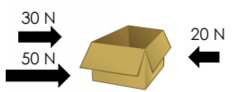
What is true about this picture?
The forces are balanced.
The net force is 10N to the right.
The net force is 3 N to the right.
The net force is 7N to the left.
What is the net force of an object that is not moving?
0 N
-100 N
Upward force
10 N

How will this object move?
It will not move.
It will move to the right.
It will move to the left.
It will move in both directions.


What can the boy do to make the girl swing higher?
Push her with less force
Push her with more force
Push her with the same amount of force
The boy cannot make the girl swing any higher

If the boy is moving toward the girls, what is most likely true about the picture?
The net force is equal to 0.
The force of the boy is greater than the force of the 2 girls combined.
The force of the boy is equal to the force of the 2 girls combined.
The girls pulling together are stronger than the boy.

. Anne and Juan rolled four different objects down a ramp. They measured the distance each object rolled and the tim e until each object came to a stop. They plotted each point and connected it with a line from origin of the graph. Which object had the greatest average speed?
A
B
C
D

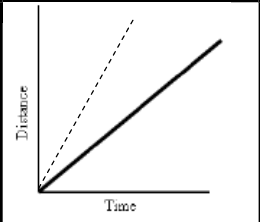
. Based on the graph, what can you conclude regarding the speed of Student A with student B?
Student A and Student B are traveling at the same speed
Student B is traveling at a speed twice as fast as student A
Student A is traveling at a speed 3X as fast as student
Student A is traveling at a speed twice as fast as student B

Which part of the following graph shows the object going at the fastest speed?
A to B
B to C
C to D
A to B and C to D are going equal speeds

The diagram below shows the motion of joggers, Kathy and Rachel. Which of the following statements most accurately describes the jogger’s motion?
Kathy and Rachel started jogging together at a variable speed.
Kathy’s speed is increasing faster than Rachel.
Rachel is not moving after 7 minutes of jogging
Both joggers had constant acceleration

In the drawing below, the arrows labeled WIND and WATER represent forces acting on a sailboat during a certain period of time. During this period of time, the force of the wind on the sailboat is stronger than the force of the water on the sailboat. The di rections of the arrows show the directions of the forces, and the lengths of the arrows represent the strengths of the forces.
The sailboat will speed up the entire time.
The sailboat will speed up for a short time and then move at constant speed
The sailboat will speed up for a short time and then slow down
The sailboat will move at constant speed the entire time

Which type of force is being used by the dog?
push
pull
gravity
friction
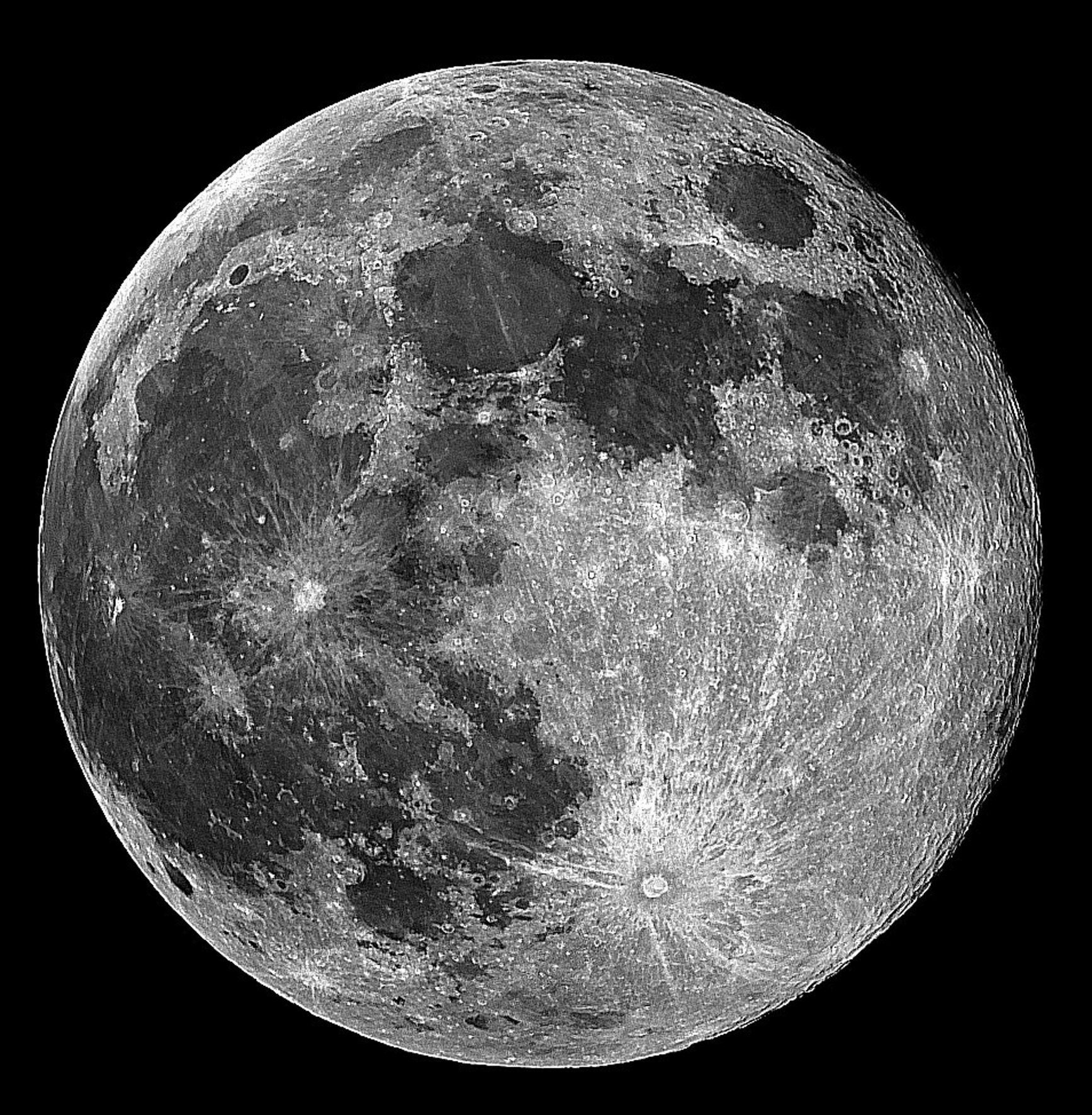
Which rolling item would be harder to stop?


Objects with greater _________ also have greater inertia.
speed
mass
force
friction
All objects have inertia
True
False

List the objects in order from least to greatest inertia.
CDBA
ABCD
BCDA
CBAD
More mass = More inertia
True
False

