
 Worksheets
Unit Test 1 Review
Total questions: 165
Worksheet time: 11hrs 40mins
Independent variable
Dependent variable
Conclusion

Maya designed an experiment to answer the following question:
How does the amount of water given to a lima
bean seed affect how tall it grows?
In this experiment, what variable should Maya CHANGE?
the amount of water
the kind of plant
the type of soil
the amount of sunlight it gets
Esther became interested in insulation while her parent’s new house was being built. She decided to determine which insulation transferred the least heat. She filled each of 5 jars half-full with water.
She sealed each jar with a plastic lid.Then she wrapped each jar with a different kind of insulation. She put the jars outside in the direct sunlight. Later, she measured the temperature of the water in each jar. What is the independent variable?
The type of insulation
The temperature of the water
Number of houses
The amount of sunlight
The type of variable that responds to the experiment and is what you measure or count to determine if your hypothesis is true.

Maintaining a stable internal
environment is called
homeostasis
equilibrium
balance
evenness
When you step out into the cold, your body shivers in order to keep its temperature at 98.6F. Which characteristic of life does this represent?
All living things use energy
All living things contain cells
All living things maintain homeostasis
All living things grow
Green plants produce their own food through the process of photosynthesis. Which characteristic of life does this represent?
All living things use energy
All living things contain cells
All living things maintain homeostasis
All living things grow
A baby song bird hatches from its egg with both parent songbirds watching. Which characteristic of life does this represent?
All living things reproduce
All living things maintain homeostasis
All living things use energy
All living things grow
A camel has eyelashes that work to keep the dust and sand out of its eyes. Which characteristic of life does this represent?
All living things adapt to their environment
All living things grow
All living things have cells
All living things use energy
Over three years, Tim's height has increased from 5'4" to 5'11". Which characteristic of life does this represent?
All living things contain cells
All living things maintain homeostasis
All living things use energy
All living things grow
Identify all of the following that are living.
Volcano
Tree
Sun
Fungus

Which characteristic of living things is represented in the picture?
Respond to stimuli
Grow and develop
Evolution
Made of cells
Viruses are living organisms
FALSE
TRUE
All viruses are different, but what are two parts that a virus must have?
Genetic Information (DNA or RNA)
a lipid membrane
a nucleus
a protein coat
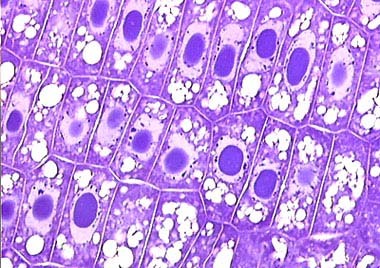
Several of the same organism living together in an area describes an
organism
community
population
ecosystem
Elephants, tigers, zebras, and giraffes that live together is an example of a
population
community
ecosystem
biosphere
Which is an example of a population?
Deer, bear and rabbits
A group of fish and sharks
A group of cows
Different kinds of bacteria
The ______ system helps you move, protects your organs, gives support to the body, and makes red blood cells.
skeletal system
muscular system
digestive system
respiratory system
The ________ system works with the skeletal system to help you move and provides shape and warmth.
skeletal
integumentary
muscular
digestive
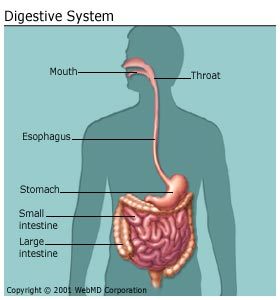
The _____ system's function is to break down food into molecules that the body (cells) can use for energy.
muscular
digestive
respiratory
endocrine
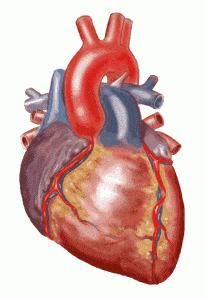
The _____ system is a transport system, carrying oxygen, carbon dioxide, and wastes to and away from cells using the heart and blood.
endocrine
circulatory
respiratory
excretory
The ______ system's function is gas exchange. It brings oxygen in and exhales carbon dioxide with the lungs, trachea, and diaphragm
endocrine
excretory
circulatory
respiratory
This system controls the body using the brain, spinal cord, and nerves.
nervous system
endocrine system
excretory system
digestive system
The ________ system is made of glands that secrete hormones into the blood to maintain homeostasis (balance)
excretory
endocrine
digestive
circulatory

What is the correct order of organization?
cells->tissue->organs->organ systems-> organism
tissue->cells->organs->organ systems-> organism
organs->organ systems-> organism->cells->tissue
_____________.
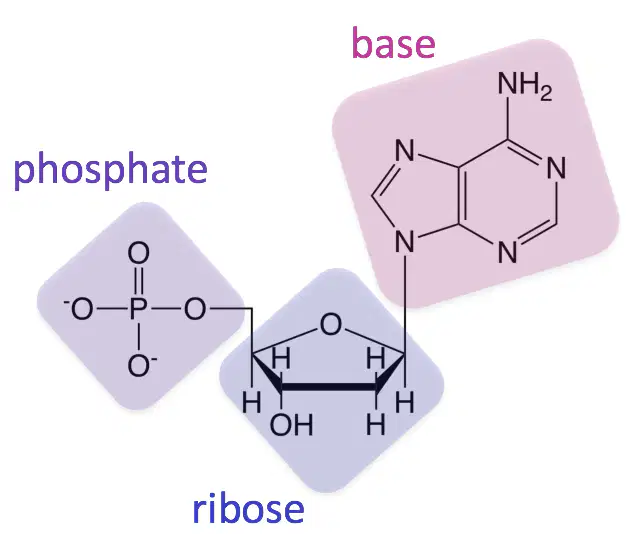
What is the role of nucleic acids in cells?
Storing and transmitting genetic information
Catalyzing reactions
Providing structural support
Transporting oxygen
How does the structure of a phospholipid contribute to its function in cell membranes?
It forms rigid structures for protection.
It forms bilayers due to hydrophilic heads and hydrophobic tails.
It provides energy storage.
It serves as a carrier for oxygen.
Which of the macromolecules below could form structural parts of the cell, be enzymes, or be involved in cell movement?
nucleic acids
proteins
lipids
carbohydrates

Which box depicts the simplest level of organization?
P
Q
R
S

Which box depicts the tissue level of organization?
P
Q
R
S
What are the four macromolecules in the human body? (choose four answers)
lipids
nucleic acids
proteins
amino acids
carbohydrates
The human digestive system is comprised of specialized cells, tissues, and organs.
Which lists the parts from least complex to most complex?
muscle tissue, muscle cell, stomach
muscle cell, muscle tissue, stomach
stomach, muscle tissue, muscle cell
stomach, muscle cell, muscle tissue
Fats are
Non-polar
Polar
Hydrophilic
Hydrophobic
Which diagram is a triglyceride?


Saturated
Unsaturated

What type of molecule is this?
protein
carbohydrate
nucleic acid
lipid
Lipids are made of...
CHO
CHON
CHONP
CHONS

Whose experiment is show in the picture?
Aristotle's
Francesco Redi's
Louis Pasteur's
Albert Einstein's
Where did Redi conclude maggots come from?
Maggots came from meat
Maggots are spontaneously generated
Maggots come from flies
Maggots come from the air


Robert Hooke
Matthias Schleiden
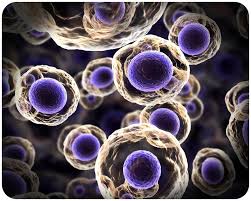


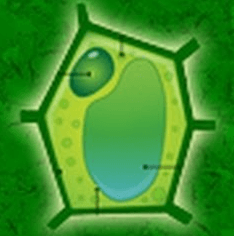


what is the function of ribosomes
to assemble amino acids to create proteins
to pack proteins
to clean proteins

The control center of cell is
the nucleus
ribosomes
chromatin

Which organelle is found inside the nucleus and produces ribosomes
Nucleolus
Cell Membrane
Lysosome
Golgi Bodies


Which organelle contains genetic material?
Endoplasmic Reticulum
Golgi Complex
Nucleolus
Nucleus
What is positive feedback in homeostasis?
Positive feedback in homeostasis is a self-correcting mechanism that brings the body back to its normal range.
Positive feedback in homeostasis is a mechanism that decreases the change or deviation from the normal range.
Positive feedback in homeostasis is a mechanism that has no effect on the body's normal range.
Positive feedback in homeostasis is a self-reinforcing mechanism that amplifies or increases the change or deviation from the normal range.
How does positive feedback affect the body's response to a stimulus?
Inhibits
Decreases
Amplifies
Neutralizes
How does positive feedback differ from negative feedback in homeostasis?
Positive feedback decreases, while negative feedback increases.
Positive feedback inhibits, while negative feedback promotes.
Positive feedback amplifies, while negative feedback counteracts.
Positive feedback stabilizes, while negative feedback disrupts.
Positive-feedback responses are common in healthy individuals.
true
false
What is homeostasis?
the process of maintaining relatively stable internal conditions
All the physical and chemical changes occurring in an organism
the process of becoming bigger
Movement of substances throughout the body
Which type of feedback system is more common in maintaining homeostasis?
positive
negative
neutral
balanced

What type of feedback system does the model represent?
positive
negative
neutral
glyogen

What is the stimulus in the model above?
body temperature
increase in body temperature
decrease in body temperature
blood vessels dilating
When glucose levels in the blood rise, your brain sends a signal to your
pancreas. The pancreas releases insulin, which opens channels in cell
membranes to allow glucose to enter the cell, lowering blood sugar levels.
Negative Feedback
Positive Feedback
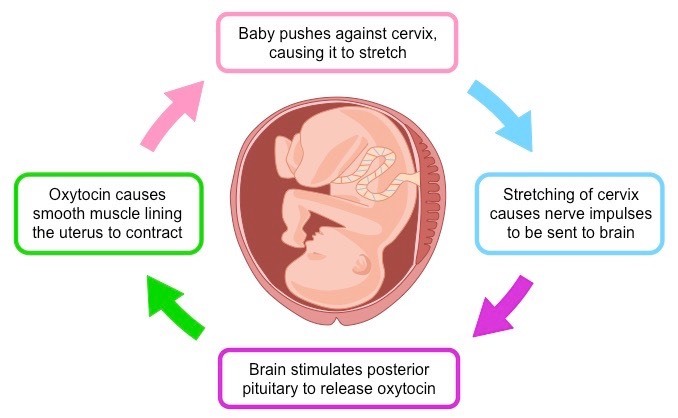
What type of feedback loop is shown?
negative
neutral
positive

According to the feedback loop, what does high blood sugar promote?
Insulin Release
Glucagon Release
Insulin Uptake
Glycogen Uptake
Which organ produces insulin?
(a)
Which of the following correctly pairs the hormone and the response that it causes
Glucagon - makes body cells take in glucose
Insulin - makes body cells take in glucose
Pancreas - makes liver release stored glucagon
Liver - makes pancreas take in stored insulin
Glucagon causes muscles and the liver to release _____ back into the bloodstream
glucose
glucagon
glycogen
insulin
Which hormone is released when blood sugar gets too low?
glucose
glucagon
glycogen
insulin

which organ will balance the glucose level in the blood by releasing hormones like insulin or glucagon?
Stomach
Small intensine
large intestine
Pancreas
What causes blood glucose levels to rise?
eating
vigorous exercise
sleeping
going to the toilet


Particle of movement from an area of lower concentration to an area of higher concentration.
Active transport
Passive transport
Which type of passive transport uses transport proteins to transport items such as glucose through the membrane?
Facilitated diffusion
Osmosis
Diffusion
Which type of passive transport focuses on the movement of water through the membrane?
Facilitated diffusion
Osmosis
Diffusion

Which type of diffusion is represented?
Facilitated diffusion
Osmosis
Diffusion
Which type of solution has the same solute concentration inside of and outside of the cell?
Hypertonic
Hypotonic
Isotonic

The cell shrunk in size, which means it was placed in a ____ solution.
Isotonic
Hypertonic
Hypotonic

The cell expanded in size to the point of lysing (bursting), which means it was placed in a ____ solution.
Isotonic
Hypertonic
Hypotonic



