
 Worksheets
Muscular System Review
Total questions: 25
Worksheet time: 15mins
Which of the following is NOT a property of muscular tissue?
A. Bendability
B. Elasticity
C. Excitability
D. Contractility
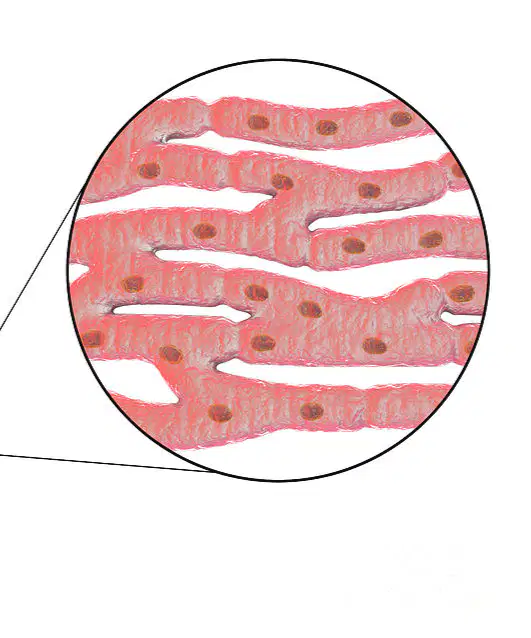
2. Label the following type of muscle tissue.
Skeletal
Cardiac
Smooth
Tendon
You could expect to find (a) muscle fibers in the body of a marathon runner.
Type IIB
Fast twitch
Anaerobic
Type IIA
The layer of connective tissue surrounding and protecting skeletal muscle fibers is known as which of the following?
Perimysium
Endomysium
Epimysium
Myofibril
The tough bands of dense connective tissue attaching skeletal muscle to bones is known as which of the following?
A. Ligaments
B. Perimysium
C. Deep fascia
D. Tendons
Which of the following pairs of cytoskeletal proteins are responsible for muscle contraction?
Actin and myosin
Actin and elastin
Myosin and elastin
Elastin and nebulin
The lever class in which weight is located between the fulcrum and the pull is known as which of the following?
Class I
Class II
Class III
Class IV
Which of the following would you expect to be the name of a two-headed muscle located on a lower limb?
Biceps femoris
Triceps femoris
Biceps brachii
Bilateral femoris
A muscle which has fibers extending outward from a common point of attachment is characteristic of which of the following muscles?
Convergent
Circular
Parallel
Pennate
Which of the following muscle shapes creates a sphincter?
Unipennate
Straight
Circular
Multipennate
The muscles of the trunk are responsible for aiding in moving and supporting the vertebral column, respiration and core body movements.
True
False
Which of the following muscles involved in chewing is the most powerful?
Levator anguli oris
Masseter
Medial pterygoid
Inferior rectus
Match the muscle classification to its description.
Pennate
Have fibers arranged concentrically around an opening or recess
Parallel
Have central tendons running through the length of the muscle, with fibers attached to the tendon at an angle
Circular
Have fibers extending outward from a common point of attachment
Convergent
Have fibers running the same direction as the long axis of the body
17. _______________ is the prime mover that is responsible for an action.
Agonist
Antagonist
Synergist
Fixator
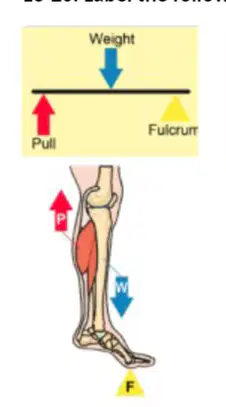
Identify the class of lever from the following diagram
Class I
Class II
Class III
Class M
Fill in the blank: _____________ ability to respond to stimulus.
Irritability
Flexibility
Adaptability
Stability
Fill in the blank: _____________ ability to be stretched.
Extensibility
Flexibility
Durability
Compressibility
Fill in the blank: _____________ ability to bounce back after being stretched.
Elasticity
Rigidity
Flexibility
Fragility
Fill in the blank: _____________ ability to shorten to generate a pulling force.
Contractility
Flexibility
Elasticity
Rigidity
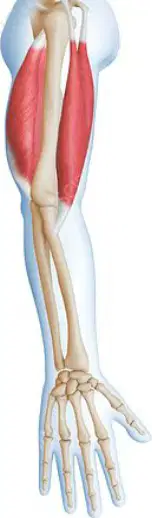
Identify the agonist and antagonist muscles for Elbow Extension.
Agonist: Triceps, Antagonist: Biceps
Agonist: Biceps, Antagonist: Triceps
Agonist: Deltoid, Antagonist: Latissimus Dorsi
Agonist: Quadriceps, Antagonist: Hamstrings
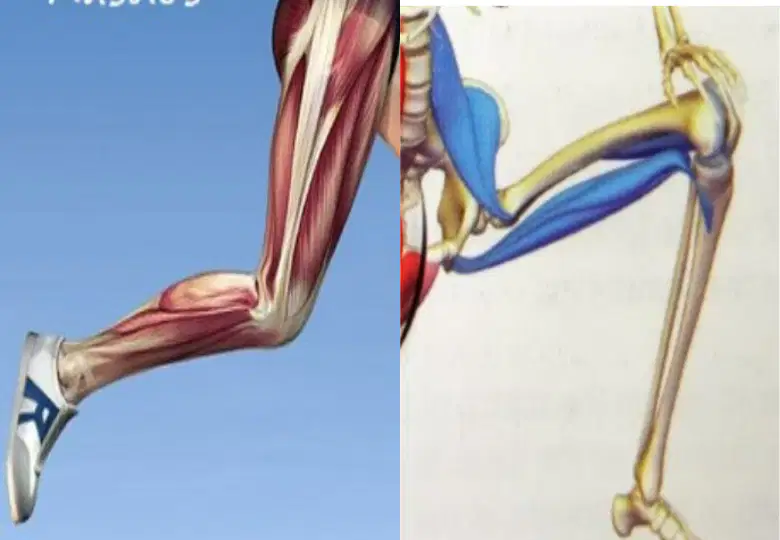
Identify the agonist muscle for Knee Flexion.
Quadriceps
Hamstrings
Gluteus Maximus
Gastrocnemius
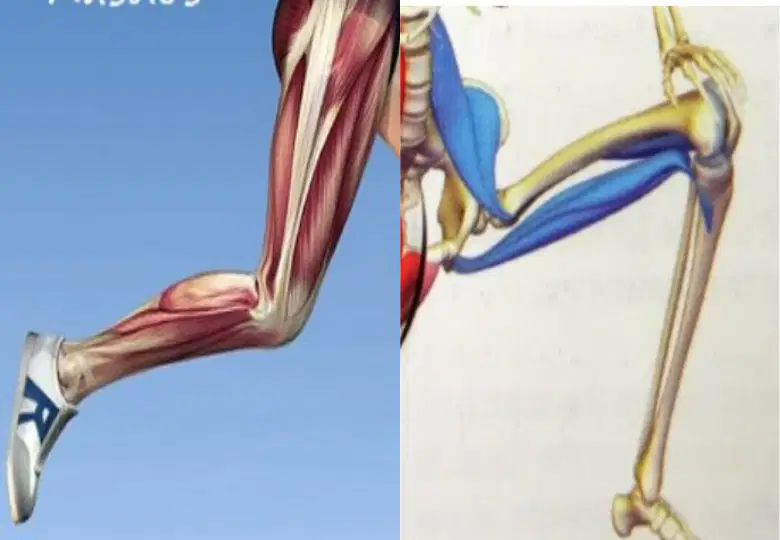
Identify the agonist and antagonist muscles for Hip Flexion.
Agonist: Iliopsoas, Antagonist: Gluteus Maximus
Agonist: Quadriceps, Antagonist: Hamstrings
Agonist: Hamstrings, Antagonist: Quadriceps
Agonist: Gluteus Maximus, Antagonist: Iliopsoas
What is the main property shared by all muscle tissue types?
Converting the chemical energy in DNA into mechanical energy of motion
Converting the chemical energy in RNA into mechanical energy of motion
Converting the chemical energy in ATP into mechanical energy of motion
Converting mechanical energy into chemical energy of motion

The connective tissue surrounding each fascicle, as pictured in #3, is called:
perimysium
epimysium
endomysium
myofibril
Organize these options into the right class of levers:



