
 Worksheets
Grade 8- Atoms and the Periodic Table Review
Total questions: 81
Worksheet time: 1hrs 26mins
Lithium (Li), Sodium (Na), Rubidium (Rb) and Cesium (Cs) are in the same column in the periodic table. Why are these elements in the same column in the periodic table?
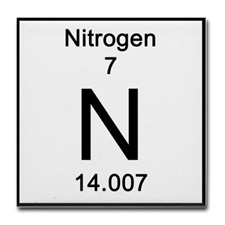
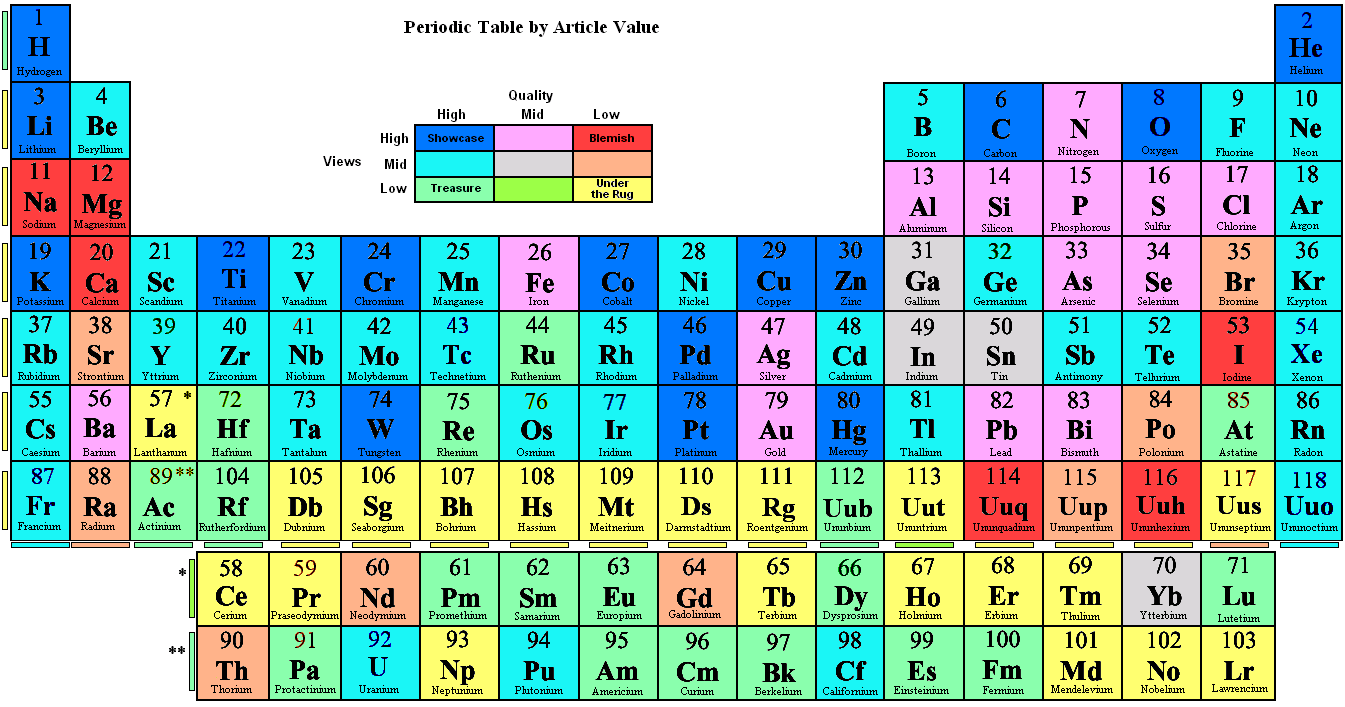
Which TWO of the following subatomic particles are inside the nucleus?
protons
electrons
neutrons
There are no subatomic particles in the nucleus of an atom.
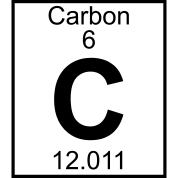

Why is the overall charge of an atom neutral (0)?
They have the same number of protons and neutrons.
They have the same number of protons and electrons.
They have the same number of electrons and neutrons.

Choose the correct number of valence electrons for Barium (Ba)
1
2
3
4

How many valence electrons does Lithium (Li) have?
1
2
3
4

How many valence electrons does Neon (Ne) have?
18
8
10
2


The periods in the periodic table are…
The vertical columns of the periodic table
The horizontal rows of the periodic table.
Group or family on the periodic table is….
The vertical columns of the periodic table
The horizontal rows of the periodic table.
Metalloids on the periodic table are…
An element that has some characteristics of both metals and non-metals.
An Element that lacks most of the properties of a metal.
A class of elements characterized by physical properties that include shininess and conductivity.
What happens to atomic number as you go left to right across the periodic table?
It decreases
It stays the same
It increases
It increases and then Decreases
These are the SMALLEST subatomic particles
Proton
Neutron
Electron
What is the highest number of valence electrons an atom can have?
4
6
8
10

What does the arrow going across the periodic table represent?
A group
A period
A column
A family

Which atom below is in the same group as the picture?


What metal group on the periodic table is the most reactive?
Group 1
Group 2
Group 17
Group 18
What group on the periodic table is the least reactive and why?
Group 1, because all of the elements in it have so few valence electrons.
Group 2, because all the elements in it are metals.
Group 17, because it has 17 valence electrons in each element.
Group 18, because all of the elements in this group have a full valence level.

This Scientist model is the most common. They said electrons orbit nucleus at fixed energy levels
Ernest Rutherford
Niels Bohr
John Dalton
JJ. Thompson


A) Ernest Rutherford
B) J.J. Thomson
C) John Dalton


What are the names for the bottom two rows below the main table in the picture?
Main-block transition elements
Metalloids
Synthetic Series
Lanthanide and Actinide Series
Which is NOT true of most metals?
Solid at room temperature
good conductors of electricity
shiny luster
good insulators

What is the atomic number of this atom?
7
14
21
9
Describe the physical property of malleability.
the ability to shine or reflect light
the ability to conduct thermal heat and electricity
the ability to be hammered or rolled into sheets
the ability to be pulled into thin wires
Metals (select all that apply - choose 3 answers!!)
are found on the right side of the periodic table.
are found on the left side of the periodic table.
are good conductors of heat and electricity.
are brittle.
are malleable and ductile.
Which group of elements are known as halogens?
Group 2
Group 17
Group 18
Group 12

Look at this picture- Which type of diagram is shown which has all the electrons in the different energy levels.
Bohr's Diagram
Lewis Dot Diagram

This type of diagram shows only the electrons located in the elements outer most energy level.
Bohr Diagram
Lewis Dot Diagram
This picture shows that Lithium has this many electrons in it's outer shell.
zero
1
If Lithium has only 1 electron in its outer level, then what Group number is Lithium in?
Group 8
Group 14
Group 2
Group 1
What is a notable historical event associated with the reactivity of hydrogen?
The sinking of the Titanic in 1912
The Hindenburg Disaster in 1937
The eruption of Mount Vesuvius in 79 AD
The Great Fire of London in 1666
Where is hydrogen located on the periodic table?
Upper right corner
Lower left corner
Upper left corner
Lower right corner
What is an ion?
An atom or group of atoms with no charge
An atom or group of atoms with either a positive or negative charge
An atom or group of atoms with only a positive charge
An atom or group of atoms with only a negative charge
How is an ionic bond formed?
Sharing of electrons
Delocalised electrons
Transfer of electrons

What type of bonding does this picture show?
Ionic
Covalent
When an atom loses an electron, it becomes a
positive ion
negative ion
neutral ion
neutral atom
A bond between a nonmetal and a nonmetal is called a(n)
covalent bond
ionic bond
metallic bond
transfer bond

What type of bonding does this picture show?
Ionic
Covalent
Covalent compounds can have (select all that apply)
Single Bonds
Double Bonds
Triple Bonds
Quadruple Bonds
In a polar covalent bond, the electrons are shared ________________
equally
unequally

Is the following molecule polar or nonpolar?
polar
nonpolar
Draw the Bohr Model of the following atoms, then deduce the Electrons dot diagram of each
1- Cl (17)
2- P (15)
3- Mg (12)

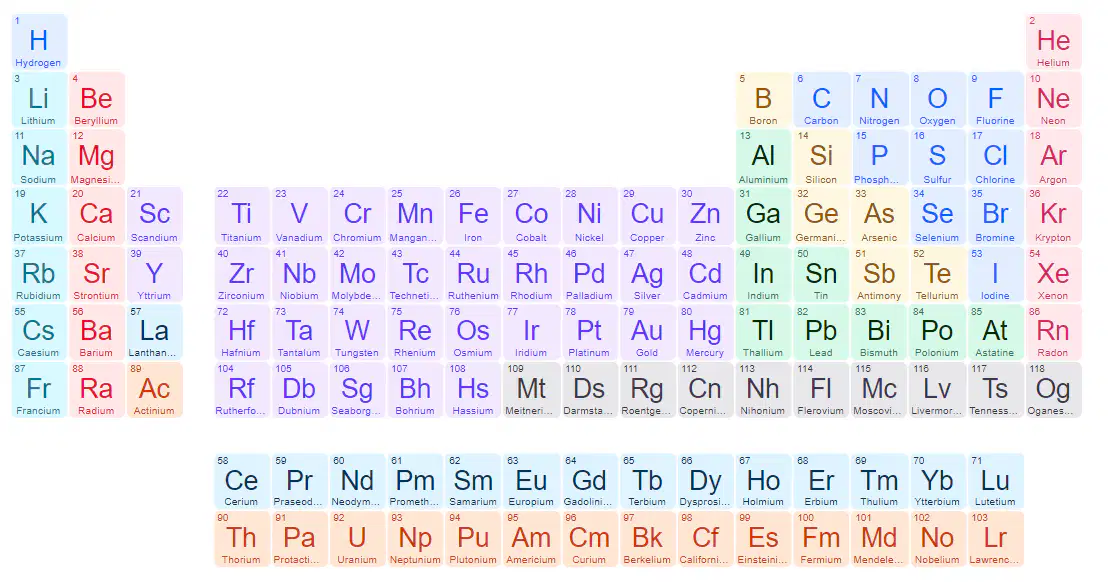
Write the electron dot diagram of the following atoms, and indicate the name of the groups they belong to.
1- K (19)
2- Ca (20)
3- Br (35)
4- Kr (36)
Differentiate between Metals and Non-metals.
Neutral solutions have a pH of:
0
1
7
14
Which is true?
pH of less than 7 is basic; pH of more than 7 is acidic
pH of less than 7 is acidic; pH of more than 7 is basic
A substance is found to have the following characteristics:
Very bitter taste
Feels slippery to the touch
Produces OH- ions when dissolved in water
In what category would the substance be classified?
acid
base
enzyme
fatty acid
When acids react with carbonates, what gas will be produced?
Hydrogen
Carbon Dioxide
Oxygen
Nitrogen gas
Mixing an acid and a base causes a __________ reaction
replacement
resurfacing
neutralization
simplification

