Wayground logo

Free Printable Worksheets

Font size

S
M
L
XL
Worksheets

Chemistry Unit 3 Exam Study Guide

Total questions: 128

Worksheet time: 4hrs 55mins

Name
Class
Date
1.

These shaded elements are

a)

metals

b)

nonmetals

c)

metalloids

2.

These shaded elements are

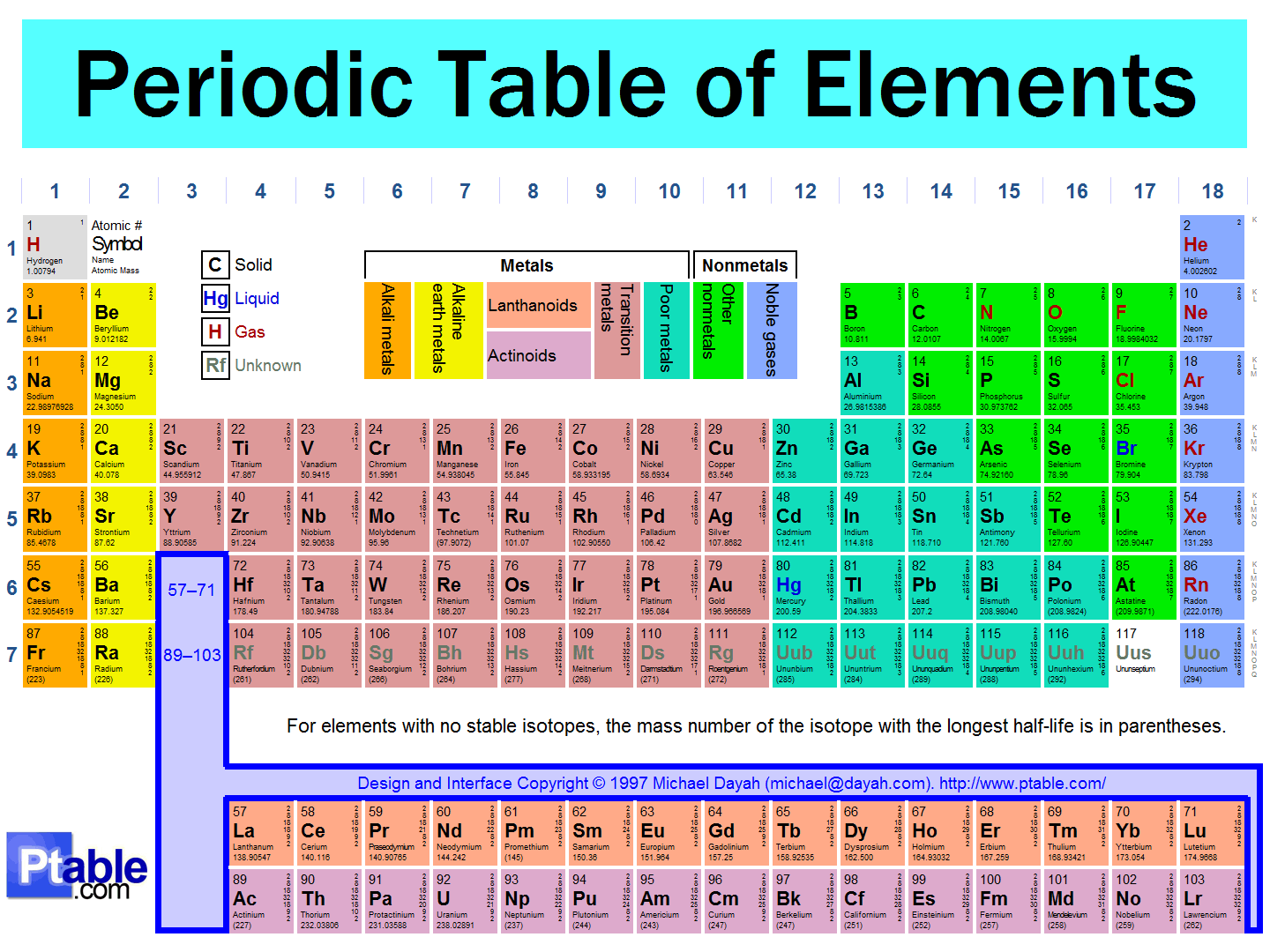
a)

metals

b)

nonmetals

c)

metalloids

3.

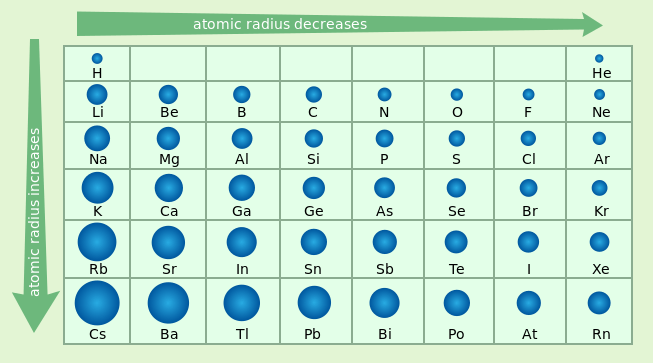
These shaded elements are

a)

metals

b)

nonmetals

c)

metalloids

4.
Each column in the periodic table is called a 
a)
period
b)
group
c)
cluster
d)
unit
5.

What are the Vertical Columns in the Periodic Table?

a)

Period

b)

Group

c)

Family

6.

Which 2 are examples of Families?

a)

Alkali Metals

b)

Halogen Gasses

c)

Helium

d)

Lovely Elements

7.

Where, within the atom, are electrons found?

a)

Electron cloud

b)

nucleus

c)

floating in the space

d)

atoms don't have electrons

8.
The atomic mass is the ______________ + ____________ in the atom.
a)
neutrons + electrons
b)
protons + electrons
c)
protons + neutrons
d)
electrons
9.
Metalloids have ___________________
a)
Only properties of a metal
b)
Only properties of a non-metal
c)
Can have properties of both metals and non-metals
10.

The atomic number tells us the number of ____________?

a)

Neutrons

b)

Protons

11.
How many electrons does an atom with 8 protons have?
a)
8
b)
16
c)
15.99
d)
24
12.
An element has 52 protons, how many electrons does it contain?
a)
52 electrons in the extremely dense nucleus
b)
52 electrons floating in the negatively charged orbital
c)
52 electrons floating in the positively charged orbital
d)
52 electrons in the negatively charged nuclues
13.
Which of the following elements has 18 electrons?
a)
Flourine
b)
Helium
c)
Argon
d)
Chlorine
14.
Sodium has an atomic number of 11, how many protons does this atom have?
a)
22
b)
11
c)
12
d)
2
15.

What is at the center of every atom?

a)

An electron

b)

A compound

c)

A molecule

d)

A nucleus

16.
Which two particles make up the nucleus of an atom?
a)
Protons and Electrons
b)
Protons and Neutrons
c)
Molecules and Compounds
d)
Neutrons and Electrons
17.
In an atom, what is the number of protons equal to?
a)
The number of electrons.
b)
The number of neutrons.
c)
The number of molecules.
d)
The number of nuclei.
18.
Elements can have the same number of protons?
a)
True
b)
False
19.
What charge does a neutron have?
a)
positive
b)
negative
c)
no charge
d)
neutral
20.
An electron is a _____ charged particle.
a)
Positively
b)
Negatively
21.
A proton is a _____ charged particle.
a)
Negatively
b)
Positively
22.
How many neutrons does Argon have in it's nucleus?
a)
39.948
b)
58
c)
22
d)
18
23.
Which element has an atomic number of 1?
a)
Lithium
b)
Oxygen
c)
Hydrogen
d)
Francium
24.
A section of the Periodic Table of Elements is provided. What is the chemical symbol for magnesium?
a)
12
b)
Mg
c)
24.31
d)
Magnesium
25.
Which number here is my atomic number?
a)
5
b)
10.811
26.
How many Electrons
a)
2.5
b)
5
c)
6
d)
10.81
27.
How many protons does this atom have?
a)
2.5
b)
6
c)
5
d)
10.811
28.
How many neutrons does this atom have?
a)
2.5
b)
5
c)
6
d)
10.81
29.
How many protons are in this element?
a)
79
b)
196
c)
117
d)
Cannot be determined
30.
What does the 1.00794 stand for?
a)
Hydrogen
b)
atomic number
c)
atomic mass
d)
atomic explosion
31.
As you move down the periodic table atoms get bigger.  This is because ____________.
a)
The atoms have more mass.
b)
The atoms have more protons.
c)
The atoms have more energy levels
d)
The atoms have more nuetrons
32.
As you move across the periodic table atoms tend to get smaller because, ______________.
a)
the atoms have more mass.
b)
the atoms have less mass
c)
the atoms have more protons.
d)
the atoms have less electrons.
33.
Metals are good conductors of heat and electricity.
a)
true
b)
false
34.
Which periodic group has the smallest atomic radius?
a)
Alkali metals
b)
Halogens
c)
Noble Gases
d)
Transition metals
35.
Atomic radius generally increases as we move __________.  
a)
down a group and from right to left across a period 
b)
up a group and from left to right across a period 
c)
down a group and from left to right across a period 
d)
up a group and from right to left across a period 
36.
The more protons there are, the  ____ .
a)
Weaker the pull
b)
Smaller the electrons
c)
Stronger the pull
d)
The bigger the electrons
37.

Which element's atom is larger? Nitrogen or Phosphorus?

a)

Nitrogen

b)

Phosphorus

38.

As you move ______ a group, more energy levels are added, which increases the size of the atom

a)

down

b)

up

c)

diagonal

d)

away

39.

Within periods on the periodic table: Size decreases as you go down a group

a)

Flase

b)

True

40.

Which element's atom is the smallest?

a)

Rhodium

b)

Silver

c)

Cadmium

d)

Tin

41.

Which of these best explains the reasoning behind the trend that as you go across a period, size decreases?

a)

As you go across a period, more energy levels are added, which shrinks the atom.

b)

The added electrons in the nucleus give the atom a negative charge, which shrinks the atom.

c)

The added protons in the nucleus pull the electrons closer to them, which shrinks the atom.

d)

All of the above

42.

Which order is correct from largest to smallest atomic radius?

a)

Thallium, Indium, Gallium, Boron

b)

Boron, Thallium, Indium, Gallium

c)

Boron, Gallium, Indium, Thallium

d)

Thallium, Gallium, Indium, Boron

43.
As you move down the periodic table atoms get bigger.  This is because ____________.
a)
The atoms have more mass.
b)
The atoms have more protons.
c)
The atoms have more energy levels
d)
The atoms have more nuetrons
44.
As you move across the periodic table atoms tend to get smaller because, ______________.
a)
the atoms have more mass.
b)
the atoms have less mass
c)
the atoms have more protons.
d)
the atoms have less electrons.
45.
So far, we have learned that the elements are arranged in the periodic table according to their atomic number and that there is a rough correlation between the arrangement of the elements and their electron configuration. We will further explore the trends of the periodic table in this section.
Why do elements in the same family (or group) generally have similar properties?
a)
They have the same number of valence electrons, therefore react the same way
b)
Elements in the same family have different numbers of valence electrons, therefore we do not know how they react.
46.
Which of the following elements has the smallest atomic radius: Li, O, C, F?
a)
Li
b)
O
c)
C
d)
F
47.
Of the elements Ca, Be, Ba, and Sr, which has the largest atomic radius?
a)
Be
b)
Ba
c)
Ca
d)
Sr
48.
A cation is a ____ ion.
a)
negative
b)
positive
c)
neutral
d)
ficticious
49.
A anion will be a ____ ion.
a)
negative
b)
positive
c)
neutral
d)
ficticious
50.

What is formally known as the distance from the nucleus of an atom and to the valence shell?

a)

Atomic radius

b)

Electron Affinity

c)

Ionization Energy

d)

Electronegativity

51.
As you move down a group, atomic radius increases because - 
a)
you add more and more neutrons
b)
you add more and more protons
c)
you add more and more shells (energy levels)
d)
you add more atomic mass
52.
As you move across the periodic table from left to right, the atomic radius decreases.  This is because - 
a)
the number of protons increases, so attraction to electrons increases
b)
the number of energy levels increases
c)
the number of electrons increases
d)
the atomic mass increases
53.
Atomic Radius is...
a)
the relative size of the atom's nucleus
b)
the relative size of the atom's electron cloud
c)
the energy required to shield the outer electrons from the nucleus
d)
a measure of the ability of an atom to attract electrons
54.
Which of the following will have a larger radius than Zinc?
a)
Gallium
b)
Aluminum
c)
Magnesium
d)
Strontium
55.
Which periodic group has the smallest atomic radius?
a)
Alkali metals
b)
Halogens
c)
Noble Gases
d)
Transition metals
56.
Order the following in increasing atomic radii: 
Ra, Be, Ca, Rb, H
a)
Ra, Be, Rb, H, Ca
b)
Rb, H, Ca, Be, Ra
c)
Ra, Rb, Ca, Be, H
d)
H, Be, Ca, Rb, Ra
57.
Which of the following will have a larger radius than Zinc?
a)
Gallium
b)
Aluminum
c)
Magnesium
d)
Strontium
58.
The more protons there are, the  ____ .
a)
Weaker the pull
b)
Smaller the electrons
c)
Stronger the pull
d)
The bigger the electrons
59.
The atom with the largest atomic radius in Group 18 is - 
a)
Ar
b)
He
c)
Kr
d)
Rn
60.
Of the elements Ca, Be, Ba, and Sr, which has the largest atomic radius?
a)
Be
b)
Ba
c)
Ca
d)
Sr
61.

Which of the following elements is expected to have the largest atomic radius?

a)

Ca

b)

Rb

c)

K

d)

I

62.

As you move down a group in the periodic table, atomic size generally __________.

a)

increases

b)

decreases

c)

varies randomly

d)

remains the same

63.

As the number of electrons added to the same principal energy level increases, atomic size generally ___________.

a)

increases

b)

decreases

c)

varies randomly

d)

remains the same

64.

Which of the following elements has the smallest atom

a)

Na

b)

Mg

c)

Si

d)

Cl

65.

Which of the following correctly lists the elements Ca, Mg and Be in increasing order of their atomic radii?

a)

Be < Ca < Mg

b)

Mg < Be < Ca

c)

Be < Mg < Ca

d)

Ca < Mg < Be

66.
True or False - Protons and Neutrons have about the same mass.
a)
True - They have about the same mass
b)
False - They do not have about the same mass
67.
Which subatomic particle has a positive (+) charge?
a)
Neutron
b)
Proton
c)
Electron
68.
Which subatomic particle has a negative (-) charge?
a)
Proton
b)
Electron
c)
Neutron
69.
Which two subatomic particles make up the nucleus of an atom?
a)
Protons and Electrons
b)
Neutrons and Electrons
c)
Electrons and Protons
d)
Protons and Neutrons
70.

I am a nonmetal


I am in period 2


I am in group 16/6A

a)

Ba

b)

Si

c)

Ba

d)

O

71.
Which atom has the largest atomic radius?
a)
potassium
b)
rubidium 
c)
francium
d)
cesium
72.
The atom with the largest atomic radius in Group 18 is - 
a)
Ar
b)
He
c)
Kr
d)
Rn
73.
As you move down the periodic table atoms get bigger.  This is because ____________.
a)
The atoms have more mass.
b)
The atoms have more protons.
c)
The atoms have more energy levels
d)
The atoms have more nuetrons
74.
As you move down the periodic table atoms get bigger.  This is because ____________.
a)
The atoms have more mass.
b)
The atoms have more protons.
c)
The atoms have more energy levels
d)
The atoms have more nuetrons
75.
As you move across the periodic table atoms tend to get smaller because, ______________.
a)
the atoms have more mass.
b)
the atoms have less mass
c)
the atoms have more protons.
d)
the atoms have less electrons.
76.
Which atom has the largest atomic radius?
a)
potassium
b)
rubidium 
c)
francium
d)
cesium
77.
The atom with the largest atomic radius in Group 18 is - 
a)
Ar
b)
He
c)
Kr
d)
Rn
78.
Which periodic group has the smallest atomic radius?
a)
Alkali metals
b)
Halogens
c)
Noble Gases
d)
Transition metals
79.
Ionization energy is...
a)
the energy required to add an electron to a specific atom
b)
how much energy it takes to remove an electron from an atom
c)
the energy required to shield the outer electrons from the nucleus
d)
a measure of the ability of an atom to attract electrons
80.
Which of the following will have a lower ionization energy than Scandium (Sc)?
a)
Helium (He)
b)
Titanium (Ti)
c)
Calcium (Ca)
d)
Magnesium (Mg)
81.
Which of the following will have a higher ionization energy than arsenic (As)?
a)
Gallium (Ga)
b)
Neon (Ne)
c)
Antimony (Sb)
d)
Germanium (Ge)
82.

Atomic size generally increases as we move __________.

a)

down a group and from right to left across a period

b)

up a group and from left to right across a period

c)

down a group and from left to right across a period

d)

up a group and from right to left across a period

83.

As you move from left to right on the periodic table, the number of valence electrons.......

a)

Increases

b)

Decreases

c)

Remains the same

84.

As you move down a group on the periodic table, the number of valence electrons....

a)

Increases

b)

Decreases

c)

Remains the same

85.

Which of the following would be most similar to Phosphorus? (select all that apply)

a)

Nitrogen

b)

Sulfur

c)

Silicon

d)

Germanium

e)

Antimony

86.

An electron that resides in the outermost energy level of an atom

a)

periodic trend

b)

electron shell

c)

ionic radius

d)

valence electron

87.

What makes a valence electron less attracted to the nucleus?

a)

less distance between the nucleus and having less protons

b)

less distance between the nucleus and having more protons

c)

more distance between the nucleus and having less protons

d)

more distance between the nucleus and having more protons

88.

The period that an element is in on the periodic table, tells you what?

a)

Number of protons

b)

Number of electrons

c)

Number of valence electrons

d)

Number of energy levels

89.

Are anions typically smaller or bigger than their parent atom?

a)

smaller

b)

bigger

90.
Which is smaller... Mg or Mg2+ ?
a)
Mg because it gains an energy level
b)
Mg due to extra electron repulsion
c)
Mg2+ because of extra electron repulsion
d)
Mg2+ because it loses an energy level
91.

Cations have a ______ charge because they have _____ electrons.

a)

negative, lost

b)

negative, gained

c)

positive, lost

d)

positive, gained

92.

Anions have a _____ charge because they have ______ electrons.

a)

negative, lost

b)

negative, gained

c)

positive, lost

d)

positive, gained

93.

If an atom GAINS electrons, it would be _______.

a)

larger

b)

smaller

c)

the same size

94.

If an atom LOSES electrons, it would be _______.

a)

larger

b)

smaller

c)

the same size

95.

Which is LARGER: O or O2- ?

a)

O

b)

O2-

c)

Neither

96.

Which is LARGER: Na or Na+ ?

a)

Na

b)

Na+

c)

Neither

97.
Which has the greater EN: 
H or F?
a)
H
b)
F
98.
Which has the greater EN: 
N or C?
a)
C
b)
N
99.
Which has the greater EN: 
Cl or Al?
a)
Cl
b)
Al
100.
The element with the largest electronegativity in the halogens is - 
a)
At
b)
F
c)
Cl
d)
Br
101.
The element with the lowest electronegativity in Period 3 is - 
a)

Na

b)

Cl

c)

Mg

102.
 Which of the following generally applies to the noble gases? 
a)
high ionization energy, low electronegativity, high reactivity
b)
high ionization energy, high electronegativity, high reactivity
c)
low ionization energy, low electronegativity, low reactivity
d)
high ionization energy, low electronegativity, low reactivity 
103.
Elements closer to the noble gases have stronger attraction for electrons.
a)
True
b)
False
104.
Which of the following is the least electronegative element?
a)
oxygen
b)
potassium
c)
fluorine
d)
nitrogen
105.
Which of the following is the most electronegative element?
a)
nitrogen
b)
phosphorus
c)
arsenic
d)
lithium
106.
What elements have zero electronegativity?
a)
metals
b)
nonmetals
c)
metalloids
d)
noble gases
107.

Which of the following correctly identifies which has the higher electronegativity, Sn or Te, and supplies the best justification?

a)

Sn, because of its higher nuclear charge

b)

Sn, because of the closer distance between nucleus and bonded electrons

c)

Te, because of its higher nuclear charge

d)

Te, because of the closer distance between nucleus and bonded electrons

108.

As you move across a period, the outer electrons are ________ to the nucleus, so the nucleus of the atom is ________ to attract electrons in a bond.

a)

closer, more able

b)

closer, less able

c)

further, less able

d)

further, more able

109.

Why does electronegativity decrease as you go down a group?

a)

As you go down a group, the outer electrons are further away from the nucleus

b)

As you go down a group, the nucleus is less able to attract electrons in a bond

c)

Both of these

d)

None of these

110.
Electronegativity is...
a)
how good an atom is at attracting electrons
b)
the ability of an atom to lose electrons
c)
the energy required to remove an electron from a specific atom
d)
how easy it is to make friends. 
111.
Which of the following will have a higher electronegativity than arsenic (As)?
a)
Carbon (C)
b)
Neon (Ne)
c)
Antimony (Sb)
d)
Germanium (Ge)
112.
As atoms of elements in group 16 are considered in order from top to bottom, the electronegativity of each successive element....
a)
decreases
b)
increases
c)
remains the same
d)
none of the above
113.
What term is used to describe "A measure of the size of an atom"
a)
chemical reactivity
b)
atomic radius
c)
energy levels
d)
orbit
114.
What term is used to describe "The energy required to remove an electron from gaseous atoms"
a)
excitation energy
b)
ionization energy
c)
polarization energy
d)
electrolytic energy 
115.
Electronegativity __________ from left to right within a period and __________ from top to bottom within a group.
a)
decreases, increases 
b)
increases, increases
c)
increases, decreases 
d)
stays the same, increases
116.

The vertical (up and down) columns in the Periodic Table are called

a)

groups

b)

towers

c)

periods

d)

atomic numbers

117.
Which has the greater Electronegativity: 
N or C?
a)
C
b)
N
118.

When atom gains an electron, the size will

a)

increase

b)

decrease

c)

have no change

d)

smaller

119.

Which element has a greater ELECTRONEGATIVITY, sulfur (S) or tellurium (Te)?

a)

sulfur

b)

tellurium

120.

Which element has a greater ELECTRONEGATIVITY, aluminum (Al) or sulfur (S)?

a)

aluminum

b)

sulfur

121.

Match the following

a)
1.

Group

b)
2.

Period

c)

1969 Periodic Table was organized by:

3.

Atomic Mass

d)

Modern Periodic Table is organized by:

4.

Atomic Number

122.

Which ion has the largest radius?

a)

Ga3+

b)

K+

c)

Ca2+

d)

Cl-

e)

S2-

123.
Which is larger:
P or P-3
a)
P
b)
P-3
c)
both are same size
124.

Which is larger

a)

Na

b)

Na+

125.

Which is larger

a)

I

b)

I-

126.

Which ion is larger

a)

Cu+

b)

Cu2+

127.
Why are cations larger and anions smaller than their respective atoms?
a)
Cations are larger than their respective atoms because of decreased electron repulsion
b)
Cations are larger than their respective atoms because of increased electron repulsion
c)
Anions are smaller than their respective atoms because of increased effective nuclear charge
128.
Which has the greater EN: 
H or F?
a)
H
b)
F