
 Worksheets
Chapter 3 Review (Science 5)
Total questions: 114
Worksheet time: 2hrs 1mins
Characteristics of matter that can be PHYSICALLY observed, measured, or changed without changing matter
conductivity
solubility
physical properties
volume
Two objects are placed in water. One sinks and the other one floats. What conclusion can be drawn from the data?
One object is magnetic and the other is not.
One object is a solid and the other a liquid.
One object has a greater density than the other.
One object is much lager than the other
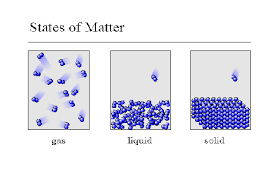
Take the shape of their container, filling the bottom of the container first; has the ability to flow
solid
liquid
gas
insulator
A combination of two or more substances that can be easily separated in some physical way
mixture
solution
liquid
mass
A state of matter in which the substance expands to take both the shape and the volume of its container
solid
liquid
gas
mass
Definite shape and size
solid
liquid
gas
relative density
Anything that has mass and takes up space
matter
mass
liquid
insulator
The forms matter can take, such as solid, liquid, and gas; sometimes called phases of matter
physical properties
gas
states of matter
relative density
A measure of how much space an object takes up
Relative Density
Volume
Mass
Solubility
A process that happens when heat is added to matter until it changes from a liquid into a gas
Evaporation
Condensation
Melting
Freezing
Used to observe and describe matter.
dissolving
physical properties
magnetism
relative density
Atom
True


A Mixture is defined as
A combination of two or more substances that are not chemically combined
A combination of compounds that are chemically bonded
2 or more elements chemically bonded
Another way of stating a homogenous mixture is :
heterogeneous
solution
pure substance
chemically united mixture
Two examples of pure substances are
mixtures and substances
atoms and elements
elements and compounds
compounds and mixtures
Is water, H2O, a mixture, element, or compound?
mixture
element
compound
An atom is:
a substance that has only one type of atom
a group of two or more atoms held together by chemical bonds
basic unit from which all matter is made
substance made of two or more elements that are chemically combined
A compound is:
a substance that has only one type of atom
a group of two or more atoms held together by chemical bonds
basic unit from which all matter is made
substance made of two or more elements that are chemically combined
An element is:
a substance that has only one type of atom
a group of two or more atoms held together by chemical bonds
basic unit from which all matter is made
substance made of two or more elements that are chemically combined
To separate a mixture of salt and water what separation tool/method is used?
Filter
Sieve
Magnet
Evaporation

What is this tool used for?
To separate mixtures
To test if an object is a magnet
To look at an object closter
To weigh an object
When a mixture is created it creates a __________ change.
emotional
chemical
good
physical
What are TWO tools you can use to separate a mixture?
magnet
scale
saw
heat
weights
In a saltwater solution, the salt is the __________.
solvent
molecule
part
solute
In a saltwater solution, the water is the _________
solvent
mixture
combination
solute
The amount a solute can dissolve in a liquid is its ___________
ability
mixing
solubility
dilution
Mixtures CANNOT be separated.
True
False
Milk is a homogenous mixture.
True
False
Cereal is a homogenous mixture
True
False
What is the volume of a box with the following dimensions: height - 10 cm, width . - 2 cm, length - 5 cm ?
50 cubic cm
100 cm
100 cubic cm
1000 cubic cm
What is the volume of a toy car that displaces water from 25 ml to 50 ml?
20 ml
25 ml
75 ml
1000 ml
What is the density of object with a volume of 35 ml and a mass of 140 grams?
105 grams/ml
4900 grams/ml
0.25 grams/ml
4 grams/ml
An object's weight will always be the same anywhere on Earth.
True
False
Which tool would you use to find the volume of a box?
Triple Beam Balance
Metric Ruler
Spring Scale
Graduated cylinder
__________ is the amount of matter in an object.
Volume
Mass
Weight
Gravity
LxWxH=
Volume
Mass
Density
Weight
M/V=
Volume
Weight
Density
Mass
Measured by water displacement.
Mass
Density
Weight
Volume
Has mass and takes up space.
Mass
Matter
Weight
Volume
Density
Term for the amount of space an object takes up.
Mass
Matter
Weight
Density
Volume
The measure of the amount of gravitational pull on an object.
Mass
Volume
Weight
Density
If Earth's mass was cut in half, what would happen to your weight?
Increase because gravitational force increases
decrease because gravitational force decreases
decrease because gravitational force increases
nothing, weight is not affected by gravitational force
The amount of heat energy in a substance is called
volume
mass
weight
temperature
A thermometer is used to measure
mass
weight
volume
temperature
A graduated cylinder and beaker are used to measure
solid volume
liquid volume
mass
weight
A balance is used to measure
temperature
mass
weight
volume
A scale is used to measure
weight
mass
solid volume
temperature
Degrees Fahrenheit and Degrees Celsius are the units used when measuring
liquid volume
temperature
solid volume
mass
Grams and kilograms are the units used when measureing
volume
weight
mass
temperature
Which unit is used to measure liquid volume?
Cubic inches
Pounds
Cubic feet
Gallons


heat
A block has the following dimensions:
length 9 cm, width 2 cm, and height 2 cm.
What is it's volume?
True or false? Physical properties are things that can be observed about matter.
true
false
Molecules in a ______ have no shape and no volume.
solid
liquid
gas
neither
Molecules in a ________ have definite shape and definite volume.
solid
liquid
gas
neither
Molecules in a _____ have definite volume and no shape(they take the shape of their container).
solid
liquid
gas
neither
Anything that has mass and takes up space.
mass
matter
atom
molecule

Physical property that describes how matter feels
color
texture
hardness
shape
A physical property that describes how hot or cold an object is
Mass
Volume
Temperature
Texture
what is volume?
the amount of stuff in matter
the amount of space matter takes up
how heavy matter is
if matter sinks or floats
A physical property that describes how hot or cold an object is
Mass
Volume
Temperature
Texture
A characteristic of a type of matter that can be observed or measured
Description
Physical Property
Investigation
Measurable physical properties
Temperature, Mass, Texture, Volume
Temperature, Mass, Volume, Length
Mass, Texture, Color, Length
sink or float -the measure of how closely packed matter is in an object
solid
liquid
magnetism
density
Solid, liquid, gas
state of matter/phase of matter
magnetism
density
volume
a change from one state of matter to another when heat is added or taken away
conductor
insulator
phase change
weight
The phase of matter that has a definite shape and definite volume
gas
solid
liquid
solubility
A phase of matter that does not have a definite shape or volume
solid
density
insulator
gas
Changing matter from a solid to a liquid is called:
condensation
evaporation
freezing
melting
What is the process called when a solid changes to a liquid?
Freezing
Evaporation
Melting
Condensation
evaporation
liquid to gas
liquid to solid
gas to liquid
solid to liquid
MELTING
liquid to gas
liquid to solid
solid to liquid
solid to gas
FREEZING
liquid to gas
liquid to solid
solid to liquid
solid to gas

What process is shown?
evaporation
condenstation
freezing
When you take away heat from a gas it is
condensation
freezing
boiing
evaporation

What change is taking place to the ice cream?
evaporation
boiling
melting
freezing

