
 Worksheets
Unit 5 Review
Total questions: 75
Worksheet time: 1hrs 16mins
Which organelle supports and protects the cell?
Which of the following is NOT a part of the cell theory
All cells are made of atoms
All living things are made of cells
All cells come from pre-existing cells
Cells are the basic structure and function of life
The ___________ is the basic structure of life
atom
molecule
cell
organism
All cells come from ___________ cells
A cell that contains a nucleus is a ___________.
A cell that does not have a nucleus is a __________.
All of the following apply to eukaryotic cells except:
All of the following apply to prokaryotic cells except:
They have the ability to reproduce
They have DNA
The following kingdoms all contain eukaryotes except:
Which of the following kingdoms contains prokaryotes?
Eubacteria
True or false? The structure of a cell is directly related to its function.
True
False
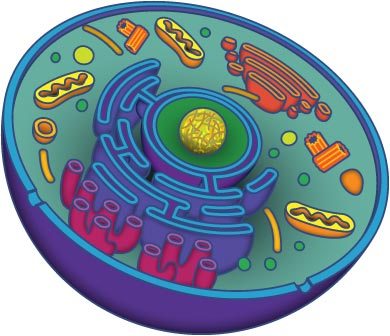
All living things are made up of...
cells
tissues
organ
organ systems
What is the basic structural and functional unit of all living things?
atom
cell
bacteria
animalcules

Robert Hooke, Anton van Leeuwenhoek, Theodor Schwann, Rudolf Virchow, and Matthias Schliden were all responsible for what theory?
The Theory of Gravity
The Theory of Relativity
The Cell Theory
The Theory of Continental Drift
Who discovered and named cells while looking at cork?
Captain Hook
Robert Hooke
Matthais Schleiden
Rudolf Virchow
This early cell theory scientist looked in a microscope and discovered "animalcules" in the gunk from his teeth and pond water.
Schleiden
Leeowenhoek
Hooke
Virchow
Schwann
Which instrument is credited for helping scientists develop cell theory?


A cell without a true nucleus
Prokaryotic
Eukaryotic
Match the following components of Cell Theory with their correct descriptions.
All organisms are composed of one or more cells
Describes the composition of organisms in terms of cells.
The cell is the basic unit of life
Defines the fundamental structural unit of life.
All cells come from preexisting cells
Explains the origin of new cells.
Alll of the above
Summarizes the principles of Cell Theory.
A long time ago, some people believed that living things could come from non-living things. This theory was called (a) . Now, scientists know that all cells come from existing cells. This is part of a theory called (b) .
Organisms that are composed of many cells are called as _____________ organisms.

Students use a microscope to look for structures present in four different cells. The students placed an X for each structure that was viewed for each cell on the table shown. Which cell that was viewed is most likely a prokaryote?
Cell W
Cell X
Cell Y
Cell Z
Which of the following has a cell membrane?
prokaryotes
eukaryotes
prokaryotes and eukaryotes
neither prokaryotes nor eukaryotes

What is the function of the cell membrane?
To control what comes in and out of the cell
To break down food inside the cell
to serve as a barrier
to eat the cells food

Which organelle produces the energy a cell needs to carry out its function
Mitochondria
Golgi Bodies
Cytoplasm
Nucleus

Which organelle is found inside the nucleus and produces ribosomes
Nucleolus
Cell Membrane
Lysosome
Golgi Bodies

What is the function of the Vacuoles
Store food, water and waste
Receive proteins
Assembles amino acids
Found inside the nucleus

What is a fun way to remember what lysosomes do?
I clean things up!
Make something sweet
The control center
Tin of information

Which organelle receives proteins and materials from the ER, packages them and distributes them
Vacuoles
Golgi Bodies
Nucleus
Chromatin

Which cell contains Chloroplasts?
Animal
Plant

What is a fun way to remember what the Endoplasmic Reticulum does?
transportER
I am a mighty powerhouse
Im the control center

what is the function of ribosomes
to assemble amino acids to create proteins
to pack proteins
to clean proteins

The control center of cell is
the nucleus
ribosomes
chromatin
Surrounds the plant cell and maintains the cell shape and structure.
Cell wall
Cell membrane
Nucleus
Ribosome
Makes food for the plant cell.
Ribosome
nucleus
chloroplast
cytoplasm
The "garbage can" of the cell; digestion and waste removal.
cell wall
cell membrane
lysosome
nucleus
Controls what goes in and out of the cell.
cell membrane
cell wall
organelle
cell
Houses gel-like fluids that support cell organelles and holds them in place.
cytoplasm
endoplasmic reticulum (e.r.)
golgi bodies
nucleus
The control center for the cell.
ribosome
cytoplasm
nucleus
cell membrane
Place where materials are processed and moved around inside the cell.
endoplasmic reticulum (e.r.)
mitochondria
cytoplasm
chloroplast
The "powerhouse" of the cell; breaks down food to make energy for the cell.
organelles
cell
mitochondria
cytoplasm
The basic unit of structure and function in living things.
cell
cell wall
plant cell
cell membrane
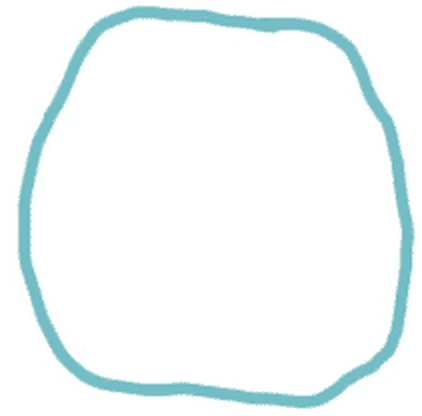
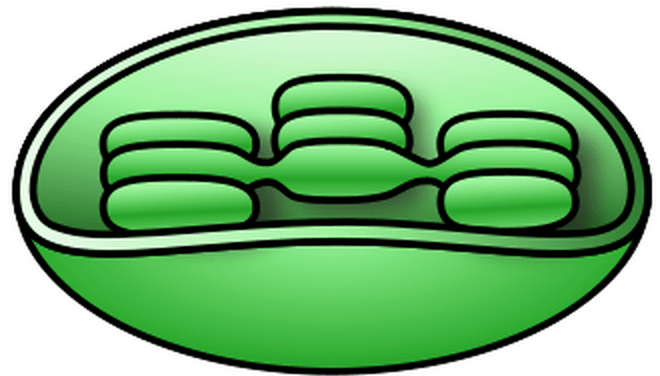

Choose the correct label for the image
hypertonic
isotonic
hypotonic

Choose the correct label for the image
hypertonic
isotonic
hypotonic

Choose the correct label for the image
hypertonic
isotonic
hypotonic
Movement across the cell membrane that does not require energy is called ___ transport.
active
passive

The cell membrane is composed of proteins embedded in a ___ bilayer.
phospholipid
molecular
If there is a concentration gradient, substances will move from an area of high concentration to an area of ____ concentration.
equal
low
The cell membrane is ___.
selectively permeable
impermeable
___ is the simplest type of passive transport.
Equilibrium
Diffusion

The diffusion of water through a selectively permeable membrane is called ___.
osmosis
diffusion

The process of taking material into the cell by infolding of the cell membrane is called ___.
endocytosis
exocytosis

In ___ diffusion, membrane proteins help molecules across the membrane.
facilitated
molecular
The lipid bilayer describes ___.
a type of transport
the cell membrane

What is the fluid mosaic model?
describes the phospholipid bilayer only
describes the 4 parts of the cell membrane that can move around
describes the 4 parts of the cell membrane but they do not move around
describes the cellulose that provides structure and protection to the cell

Identify the structure in the diagram.
Phospholipid
Cholesterol
Triglyceride
Carbohydrate
Which part of the phospholipid is the hydrophobic portion (repels water)?
Glycerol
Fatty acids
Water
Glycogen

In the diagram, what is letter A?
Phospholipid
Phospholipid bilayer
Cholesterol
Carbohydrate
Carrier or transport protein

What is the structure labeled "H"?
Cholesterol
Peripheral protein
Integral (channel) protein
Carbohydrate

What is the structure labeled "A"?
Integral (channel) protein
Peripheral protein
Cholesterol
Carbohydrate
Which of the following are embedded in the phospholipid bilayer and help substances pass through?
Carbohydrates
Cholesterol
Lipids
Proteins
Which of the following is the function of the cell membrane? Select all that apply.
Breaks down waste and other compounds.
Regulates the passage of compounds in and out of the cell.
Provides instructions to the cell and other organelles.
Allows cells to communicate and interact with other cells.
Protects the cell from its environment.

What is the structure labeled "E"?
Integral (channel) protein
Cholesterol
Carbohydrate
Peripheral protein

