
 Worksheets
All Vocab So Far Review
Total questions: 175
Worksheet time: 3hrs 58mins
1/1,000 or one thousandth
kilo
centi
deci
milli
1,000 or one thousand
milli
kilo
centi
deci
1/100 or one hundredth
milli
kilo
centi
deci
What is the base unit for length?
inch
foot
meter
centimeter
What is the base unit for volume?
cup
liter
gallon
milliliter
What is the base unit for mass?
gram
pound
kilogram
ounce
What is mass?
What is volume?
How much mass fills a given amount of space?
volume
matter
density
The amount of space an object takes
one cubic centimeter is equal to
3 cm
3 mL
1 cm
The variable the scientist changes in an experiment is the
The variable that is measured or observed for change is the
In science, what is a fair test?
An experiment with a clear hypothesis
An experiment in which only one variable is changed by the scientist
An experiment where each variable is changed equally
What is a control group?
The group under normal circumstances, that the test group is compared to
The one variable that is changed by the scientist in the experiment
Variables that are kept the same
The variable that is measured or observed for change
The Greek root "bio" means
The Greek root "meter" means
Which line is the X Axis on a graph?
The vertical line
The horizontal line
Which line is the Y Axis on a graph?
The horizontal line
The vertical line
A line that goes from side to side is called
vertical
Y axis
horizontal
What is momentum?
Momentum is the mass times the velocity of an object.
Which is an example of Newton's Third Law of Motion in a car crash?
Passengers continue moving forward when the car stops suddenly.
Which is an example of Newton's First Law in a car crash?
The car and the object exert equal and opposite forces on each other during the crash.
Seat belts are a safety feature most related to which of Newton's Laws of Motion?
Seatbelts are made to "give" on impact. This feature is related to which of Newton's Laws of Motion?
Why is it important to lengthen the time of impact in a car crash?
What is an example of impulse in a car crash?
How many collisions does one body experience during a car crash?
Two collisions, first between the car and object, next between the body and the car
Three collisions, first between the car and object, next between the body and the car, third between the organs, tissues and bones inside the body.
One collision between the car and the object
What is impulse in science?
Impulse is the force times the time over which it acts, resulting in a change in momentum.
Impulse is the mass times the speed of an object in motion.

The diagram shows three vehicles travelling along a straight road at 14 m/s.
Which vehicle has the greatest momentum?
Motorcycle
Semi Truck
Delivery Van


What is a crumple zone?
What does the Greek root "micro" mean?
Large
Small
Fast
Slow
What does the Latin root "macro" mean?
Tiny
Large
Quick
Weak
What does the prefix "sub" mean?
Above
Below
Inside
Outside
What does the prefix "super" mean?
Under
Over
Beside
Within
Which of the following words means "small organism"?
Macrobiotic
Microorganism
Macroscopic
Microphone
Which of the following words means "large view"?
Microscope
Macroscope
Microchip
Macromolecule
Identify the word that uses the root "micro" to mean "a small sound device".
Microphone
Macrophage
Microbe
Macromedia
Identify the word that uses the root "macro" to mean "large molecule".
Microchip
Macromolecule
Microfilm
Macrophage
Which of the following best describes the term "microscope"?
A device to view large objects
A device to view small objects
A device to amplify sound
A device to measure speed
Which of the following best describes the term "submarine"?
A vehicle that flies above the sea
A vehicle that travels below the sea
A vehicle that travels on the sea
A vehicle that travels beside the sea
What does the root hyper mean?
What does the root hypo mean?

Determine the momentum of 1000-kg car moving southward at 20 m/s.........
20000 Kg * m/s north
10000 kg * m/s north
20000 Kg * m/s south
10000 kg * m/s south
Which of the following has the greatest momentum?
a child running
a parked semi-truck
more information is needed
In order for an object to have momentum it must be ________
moving
motionless
asleep

Which of the following best describes kinetic energy?
Energy stored in an object due to its position
Energy an object possesses due to its motion
Energy stored in chemical bonds
Energy stored in a compressed spring
What type of energy is stored in a stretched rubber band?
Kinetic energy
Gravitational potential energy
Elastic potential energy
Chemical potential energy
What happens to the potential energy of an object as it is lifted higher above the ground?
It decreases
It remains the same
It increases
It converts to kinetic energy
Which of the following is an example of chemical potential energy?
A moving car
A compressed spring
A battery
A rock at the top of a hill
How does the speed of an object affect its kinetic energy?
Kinetic energy does not depend on speed
Kinetic energy decreases when speed increases
Kinetic energy increases when speed increases
Which of the following best describes the law of conservation of energy?
Energy can be created and destroyed, it is just very hard to do
Energy can be transformed from one form to another, or transferred to another object
Energy is always lost as heat
Energy is only conserved in closed systems
A ball is dropped from a height. As it falls, what happens to its potential and kinetic energy?
Potential energy increases, kinetic energy decreases
Potential energy decreases, kinetic energy increases
Both potential and kinetic energy increase
Both potential and kinetic energy decrease
Which of the following is an example of gravitational potential energy?
A stretched rubber band
A book on a shelf
A moving bicycle
A charged battery
If two objects have the same speed but different masses, which one has more kinetic energy?
The object with less mass
The object with more mass
Both have the same kinetic energy
It depends on the direction of motion
What type of energy transformation occurs when a battery powers a flashlight?
Kinetic to potential energy
Chemical to light energy
Gravitational to kinetic energy
Elastic to thermal energy
What happens to the energy in a system according to the law of conservation of energy?
It increases over time
It decreases over time
It remains constant
It is converted entirely to heat
When a spring is compressed, what type of energy is stored in it?
Kinetic energy
Gravitational potential energy
Elastic potential energy
Chemical potential energy
Which items would have this energy transformation: electrical energy -> thermal energy and light energy?
toaster
candle burning
windmill turning
Iron for your clothes

The electrical energy of the stove is transferred to _____ energy.
Solar
Thermal
Potential
Electrical
Which form of energy is found by combining an object's potential energy and its kinetic energy?
Chemical
Thermal
Electrical
Mechanical

At which point on this roller coaster is the Kinetic Energy the greatest?
W
X
Y
Z
"Plants grow faster in sunlight," is an example of...
Evidence
Claim
Reasoning
Quantitative Observation
What is true about the Claim in a CER?
It explains why something is true.
It gives examples that support the answer.
It is a one-sentence answer to the question.
It can be more than one sentence.
The claim in a CER must...
restate the question
contain evidence
include an explanation
include data
The plant has spiky leaves and a bitter smell. What type of observations are these?
Quantitative
Qualitative

Which is an example of a qualitative observation?
There are 13 trees
There are red, blue, and yellow birds
Which of these is a quantitative observation?
The apples are red.
There are some apples.
There are 20 apples.
The apples are fresh.
Discovering that a tree grows 10.75 centimeters in a month is what type of observation?
Quantitative
Qualitative

Your teacher has asked you to explain the difference between quantitative and qualitative observations. Which statement is correct?
Quantitative observations use measurement, qualitative observations use the senses.
Quantitative observations use the senses, qualitative observations use numbers.
Quantitative observations use measurement, qualitative observations use numbers.
Quantitative observations use colors, qualitative observations use the senses.
Choose the reasoning that best explains the evidence:
Claim: People should eat apples
Evidence: Apples have a lot of vitamin C
Vitamin C keeps the immune system strong. Apples contain vitamin C, so people should eat apples.
Apples contain 8.4 milligrams of vitamin C, or 14% of the recommended daily amount
Apples taste great with caramel
It has also been shown that apples reduce the risk of heart disease

Evidence is ___________________
A statement that answers a question
Data that supports the claim
A logical explanation that connects the claim with the evidence
Can include a big scientific idea such as a scientific law, theory, or definition.
Claim
Evidence
Reasoning
All
Which of the following answers the original problem or question?
claim
evidence
reasoning
What does CER mean?
Create Evaluate Respond
Consider Relevant Evidence
Claim Evidence Reasoning
Cause Examine Real Life

What evidence could BEST be used to support this claim:
High school students should be required to wear uniforms.
All in all, a school uniform could end up costing more than $200.
A student reported: "Allowing us to wear our own clothes gives us the opportunity to show our unique style and independence, and that is really important."
In a school that recently required students to wear uniforms, attendance rates increased and behavior incidents decreased.
School uniforms can be ordered online.
Frequency of a wave means
The number of waves per second.
Magnetism is an example of a(n)
electromagnetic force
chemical reaction
type of energy
contact force
Which of the following is not an electromagnetic force?
Electricity
Friction
Magnetism
A material that electrons can move through easily is called a(n)
conductor
insulator
Which two materials are electrical conductors? Choose two.
Steel
Copper
Which two materials are electrical insulators? Choose two.
Rubber
Plastic
What is electric current?
A pathway that allows electrons to flow
resistor
battery
circuit
insulator
All magnetic objects are made of metal, but not all metals are magnetic.
True
False
A magnetic field is
the north or south poles of a magnet
a property of all metal
a form of kinetic energy that surrounds a magnetic object
the area around a magnet that has magnetic force
The same poles of two magnets will
Every magnetic object, no matter how small, has
The root chron means
distance
space
time
volume
The prefix 'pre' means
before
between
during
after
The prefix 'post' means:
after
between
during
before
The root anno means
month
year
day
decade
Series Circuit
In a series circuit, components are connected in a single path.
Parallel Circuit
A circuit in which the electric current cannot flow.
Short circuit
Closed circuit
Bypass circuit
Open circuit

What type of circuit is shown?
Closed Circuit
What is an electromagnet?
A magnet created by electric current flowing through a coil of wire.
A device that uses an electric current to produce motion
Battery charger
Solar panel
Electric motor
Electric generator
The root "ped/pod"
hand
leg
arm
foot
The Latin root "corp"
mind
soul
spirit
body
the root "dent/dont"
the root "gastro"
heart
brain
leg
the greek root "derm"
stomach
the root "cardio"
skin
the latin root "neur" means
the latin root "man" means
person
mind
the root "osteo" means
heart
Paint with black pigment __________ all wavelengths of visible light.
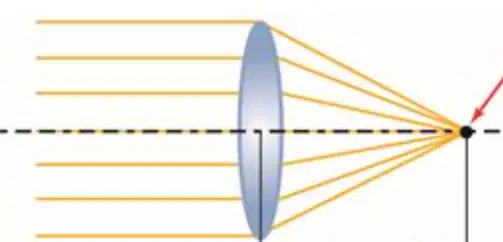
The point where light waves converge to a single point is called the _________ point.
reflection
focal
pointy
diffraction
Which image shows a concave lens?


Which image shows a convex lens?
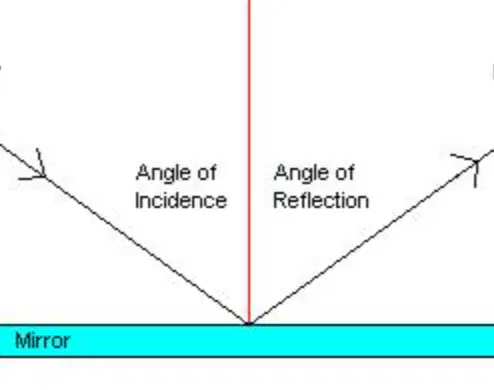
What is the name of the line drawn perpendicular to the surface where a light ray strikes?
Which color of visible light has the shortest wavelength?
Light travels fastest through what?
Light bends as it passes from air to glass because of ___________.
transmission
White light contains which colors of visible light?
An apple looks red because it ____________ red light.
The prefix 'trans'
within
below
before
across
Parallel means
Lines that cross at a right angle.
Lines or surfaces that are equidistant and never meet
Surfaces that are curved and meet at one point
Lines that are randomly spaced and cross
Perpendicular
Lines that cross or meet at a right angle.
Mechanical Waves
When we study waves, a medium is
empty space through which a wave travels
Wave mediums can be
anything at all, even empty space
only liquids
A wave in which the disturbance of the medium moves perpendicular to the direction of wave energy
A wave in which the disturbance of the medium moves parallel to the direction of wave energy
Compressional wave
Sound waves are
Sound waves are compressional waves.
Wave energy always travels away from the
medium
Mechanical waves require a medium
Waves will travel as long as
there is energy to carry them
Waves carry ______ as they travel away from the source.
energy and matter
molecules of the medium
energy only
water
Wavelength
The distance between neighboring crests of a wave.
The distance of the crest of a wave from resting point.
The number of waves that pass a point in a given amount of time
The highest point of a transverse wave
The lowest point of a transverse wave
Matter is
anything that has mass and takes up space
A characteristic that can be observed or measured without changing the substance.
A characteristic that describes a substance’s ability to react and form new substances.
Chemical property
Electrical property
Physical property
Thermal property
What is mass?
The amount of space an object takes up is its
The amount of mass in a given volume (mass ÷ volume).
Energy
What is an element?
An element is made of only one type of atom.
A substance made of two or more elements chemically combined.
The smallest unit of an element is called what?
electron
A positively charged particle in the nucleus of an atom.
Particle
A neutral particle in the nucleus of an atom.
A negatively charged particle that orbits the nucleus of an atom.
An example of a physical property of matter is
Magnetism
Flammability
Rusting
Reactivity
An example of a chemical property of matter is
magnetism
What happens to the density of a substance when its temperature increases?
Density increases
Density decreases
Density remains the same
Density becomes zero
Which of the following best describes kinetic energy?
Energy stored in an object
Energy of motion
Energy from chemical reactions
Energy from nuclear reactions
Which method of heat transfer involves the movement of fluids?
Conduction
Convection
Radiation
Insulation
How does the motion of particles change as the temperature increases?
Particles move slower
Particles stop moving
Particles move faster
Particle motion remains unchanged
Which of the following is an example of radiation?
Heat from a stove warming a pot
Sunlight warming your skin
Warm air rising in a room
Ice melting in water
Which of the following is NOT a method of heat transfer?
Conduction
Convection
Radiation
Reflection
Which state of matter has particles that are most tightly packed (higher density)?
Solid
Liquid
Gas
Plasma
What is the melting point?
The temperature at which a liquid becomes a gas
The temperature at which a solid becomes a liquid
The temperature at which a gas becomes a solid
The temperature at which a liquid becomes a solid
Which of the following is an example of conduction?
Heat from the sun warming the Earth
A spoon getting hot from a cup of coffee
Warm air rising to the ceiling
A fan blowing cool air
How does the density of a liquid compare to that of a gas?
Liquids are less dense than gases
Liquids are more dense than gases
Liquids and gases have the same density
Density cannot be compared
Which method of heat transfer does not require a medium?
Conduction
Convection
Radiation
Conduction and Convection
Which of the following is an example of convection?
A pot of water boiling on a stove
A metal spoon heating up in hot soup
Sunlight warming a beach
A microwave heating food
Which of the following is an example of conduction?
Warm air rising in a room
A metal rod heating up when placed in a fire
The sun warming the Earth
A fan circulating air
Which of the following is an example of radiation?
Heat from a campfire warming your hands
A heater warming the air in a room
A hot pan warming a countertop
A refrigerator cooling food
Heat always transfers from
Does a hot air balloon rise due to conduction, convection, or radiation?
all of them
What happens to the volume of a liquid when it is heated?
What does temperature measure?

