wayground logo

Free Printable Worksheets

Font size

S
M
L
XL
Worksheets

Earth and Space Science Final Review

Total questions: 77

Worksheet time: 1hrs 12mins

Name
Class
Date
1.
All stars start as gas and dust in a(n)
a)
nebula
b)
black hole
c)
red giant
d)
black dwarf
2.
After the main sequence, a low mass star becomes a
a)
black dwarf
b)
protostar
c)
red giant
d)
supergiant
3.
After the main sequence, a high mass star becomes a
a)
black dwarf
b)
protostar
c)
red giant
d)
supergiant
4.
After a supergiant, a high mass star explodes and forms a
a)
supernova
b)
red giant
c)
black hole
d)
planetary nebula
5.
A high mass star can end as this stage, which is so dense that not even light can escape!
a)
black dwarf
b)
white dwarf
c)
supernova
d)
black hole
6.

Most stars are?

a)

Red giants

b)

White dwarfs

c)

Main sequence

d)

Supergiants

7.

What type of stars are the hottest?

a)

yellow

b)

white

c)

red

d)

blue

8.

Hydrogen is the most common chemical element in most stars?

a)

False

b)

True

9.

Our sun

a)

Is a low mass star

b)

High mass star

c)

Supernova

d)

White dwarf

10.

What is the primary source of energy that keeps the core of a star hot during its main sequence phase?

a)

Chemical Reactions

b)

Nuclear Fusion

c)

Solar Radiation

d)

Geothermal Heat

11.
Planets orbit the Sun in a shape called a(n)
a)
circle
b)
ellipse
c)
focus
d)
perihelion
12.
What does Kepler's 2nd Law state? 
a)
during a planet's orbit, the planet will sweep out equal areas in its orbit in equal amounts of time
b)
all areas are equal in space
c)
triangles have equal areas
d)
no two points in a planet's orbit are equal
13.
What does Kepler's 1st Law state? 
a)
all planets move in elliptical shaped orbits around the sun
b)
all ellipses have foci
c)
not all ellipses have the same eccentricity
d)
the sun is located at one of the foci
14.

The change in the wavelength of light due to an object moving away from the observer.

a)

Big Bang Theory

b)

Blue Shift

c)

Red Shift

d)

Violet Shift

15.

The displacement of the spectrum to shorter wavelengths in the light coming from distant celestial objects moving toward the observer.

a)

Big Bang

b)

Blue Shift

c)

Red Shift

d)

Violet Shift

16.

An example of the "Doppler Effect" Red Shift of Light would be which of the following?

a)

Energy is found in the universe

b)

A police siren sounds different when it moves away from us

c)

Satellites orbit the Earth

d)

The Sun goes through an eclipse

17.

Why is Hydrogen and Helium so important when we talk about evidence of the Big Bang?

a)

it is components of the Sun

b)

they were the 1st elements from following the Big Bang

c)

they're on the Periodic Table

d)

they created atoms following the Big Bang

18.
In which layer of the atmosphere does weather occur?
a)
Mesosphere
b)
Thermosphere
c)
Stratosphere
d)
Troposphere
19.
What decreases as you go up in the atmosphere?
a)
Altitude
b)
Atmosphere
c)
Meteors
d)
Air Pressure
20.
Which of the following is the correct order of the atmosphere layers from Earth to space?
a)
troposphere, stratosphere, mesosphere, thermosphere, exosphere
b)
troposphere, mesosphere, thermosphere, exosphere, stratosphere
c)
thermosphere, stratosphere, mesosphere, troposphere, exosphere
d)
troposphere, stratosphere, mesosphere, exosphere, thermosphere
21.
The warming of the atmosphere by the trapping of heat being radiated to space is called
a)
evaporation
b)
condensation
c)
the greenhouse effect
d)
radiation
22.

What happens when temperature gets warm and cold?

a)

When air gets warm it's warm and when air gets cold it's cold.

b)

When air gets warm it expands and falls and when air gets cold it gets less dense and ries

c)

when air gets warm it expands and rises and when air gets cold it becomes more dense and falls

d)

When air gets cold it's cold

and when it gets cold it's cold

23.

What is air pressure

a)

How hot or cold the air is

b)

Air pressure is the measure of a force with which air molecules push on a surface

c)

Air pressure is pressure

d)

Air pressure is the weight of air

24.

What is humidity

a)

The ability to hold rocks

b)

Ability to hold gas

c)

The ability to hold water vapor

d)

The ability to hold apples

25.
How is air pressure measured?
a)
Thermometer
b)
Barometer
c)
Psychrometer
d)
Wind vane
26.
How is temperature measured?
a)
Wind vane
b)
Thermometer
c)
Barometer
d)
Rain guage
27.
What is precipitation?
a)
Any form of water that falls to Earth's surface from the clouds.
b)
Amount of water vapor in the air.
c)
Force of air molecules pushing on an area.
d)
Wind speed
28.
How do we measure wind speed?
a)
Wind vane
b)
Anemometer
c)
Cumulus
d)
Barometer
29.

Weather conditions in a certain area over a long period of time is referred to as...

a)

Weather

b)

Climate

c)

Relative Humidity

d)

Precipitation

30.

What is the horizontal or parallel movment of air that is caused as air moves from areas of high pressure to areas of low pressure.

a)

Air pressure

b)

Relative Humidity

c)

Visibility

d)

Wind

31.
Located at the leading edge of a warm air mass. Brings gentle rain or light snow, followed by warmer, milder weather.  
a)
Warm Front
b)
Cold Front 
c)
Occluded Front 
d)
Stationary Front 
32.
Located at the leading edge of a temperature drop off. Bring heavy thunderstorms, rain, and hail. Cool, fair weather is likely to follow.  
a)
Warm Front
b)
Cold Front
c)
Occluded Front
d)
Stationary Front 
33.
Where the warm and cold air meet and stall, clouds and fog form, and it may rain or snow.  It could bring many days of clouds and precipitation.  
a)
Warm Front
b)
Cold Front
c)
Occluded Front 
d)
Stationary Front 
34.
When a cold front overtakes a warm front, the temperature drops as the warm air mass is cut off from the ground and pushed upward.  It can bring strong winds and heavy precipitation. 
a)
Warm Front
b)
Cold Front
c)
Occluded Front
d)
Stationary Front 
35.
This is the symbol for a... 
a)
Cold Front
b)
Warm Front
c)
Stationary Front
d)
Occluded Front 
36.
This is the symbol for a... 
a)
Occluded Front
b)
Stationary Front
c)
Warm Front
d)
Cold Front 
37.
This is the symbol for a... 
a)
Stationary Front
b)
Occluded Front
c)
Cold Front
d)
Warm Front
38.
This is the symbol for a... 
a)
Stationary Front
b)
Occluded Front
c)
Cold Front
d)
Warm Front 
39.
The boundary  between two air masses is known as:
a)
front
b)
storm
c)
climate
d)
flood
40.

What is the difference between a hurricane and a typhoon?

a)

A hurricane is larger

b)

A typhoon does not have an "eye"

c)

They are the same type of storm in different parts of the world

d)

They spin in different directions

41.

Severe weather develops from ____ pressure systems.

a)

high

b)

low

c)

both

d)

neither

42.

When warm moist air at a cold front is pushed rapidly upward into cold air you get ___.

a)

a snow storm

b)

a thunderstorm

c)

a hurricane

d)

a dust storm

43.

Where does the energy for a hurricane come from?

a)

Cold jet streams

b)

Warm ocean water

c)

Cold ocean water

d)

Warm jet streams

44.

The average conditions of an area over a long period of time is:

a)

climate

b)

weather

c)

biodiversity

d)

global warming

45.

How are climate and weather different?

a)
Climate and weather are the same thing.
b)
Climate is short-term, weather is long-term.
c)
Climate is long-term, weather is short-term.
d)
Climate and weather have no relation.
46.

The increase in burning of fossils fuels has led to an ____________ in carbon dioxide in the atmosphere.

a)

increase

b)

decrease

47.

Earthquakes are most common around plate boundaries.

a)

True

b)

False

48.

Evidence of continental drift includes:

a)

plants and animals match

b)

the shape of the continents

c)

the oceans are close together

d)

rocks match

49.

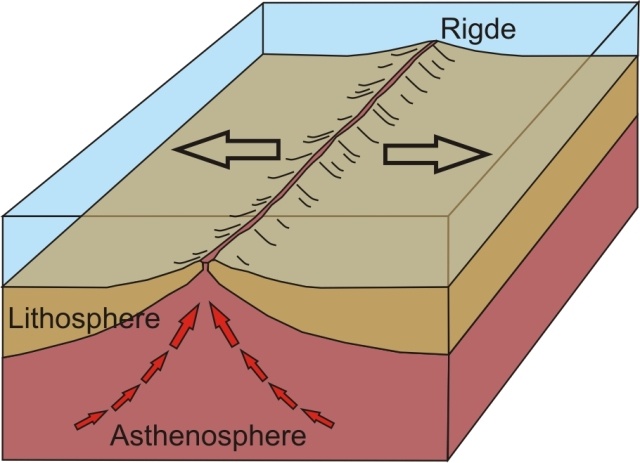
Ridges are the sites where plates move

a)

together

b)

apart

50.

When plates sink together we get _________.

a)

trenches

b)

ranges

c)

mountains

d)

volcanoes

51.
Who is the person credited with developing the theory of continental drift?
a)
Harry Hess
b)
Galileo
c)
Alfred Wegener
d)
Newton
52.
What does the theory of continental drift state?
a)
The continents were once joined in a super-continent and have moved over time
b)
Continents are stationary and do not move
c)
The Earth is broken into lithospheric plates that move due to convection currents
d)
none of the above
53.
Why did no one believe Wegener's thoery?
a)
He could not explain HOW the continents moved
b)
He didn't have evidence
c)
His data was wrong
d)
He didn't use the right technology to gather data
54.
What two specific continents fit together most noticeably?
a)
Africa and North America
b)
South America and Europe
c)
South America and Africa
d)
Antartica and Africa
55.
What is the force that moves the continents? 
a)
Conduction 
b)
Convection 
c)
Radiation 
d)
Conveyor belts 
56.
What are the two types of crust?
a)
continental and oceanic
b)
ocean and basin
c)
lower and upper
d)
thick and thin
57.
What type of evidence was NOT used by Alfred Wegener to support his continental drift hypothesis?
a)
evidence from landforms
b)
evidence from fossils
c)
evidence from human remains
d)
evidence from climate
58.
The geological theory that states that pieces of Earth's lithosphere are in constant, slow motion is the theory of
a)
subduction
b)
plate tectonics
c)
evolution
d)
seafloor spreading
59.
What kind of plate boundary is shown here?
a)
divergent
b)
convergent
c)
transform
d)
submergent
60.
What kind of plate boundary is shown here?
a)
divergent
b)
convergent
c)
transform
d)
subducting
61.
What kind of plate boundary is shown here?
a)
divergent
b)
convergent
c)
transform
d)
strike slip
62.
What geologic feature/event would you most likely to find at a divergent boundary between two pieces of oceanic crust?
a)
Rift Valley
b)
Mid-Ocean Ridge
c)
Island Arc
d)
Flat land
63.
What geologic feature/event would you most likely to find at a divergent boundary between two pieces of continental crust?
a)
Mid-Ocean Ridge
b)
Mountain
c)
Rift Valley
d)
Island Arc
64.
A subduction zone is formed...
a)
when one tectonic plate sinks below another
b)
at every type of convergent plate boundary
c)
at every type of divergent plate boundary
d)
at transform boundaries
65.
What geologic feature/event would you most likely to find at a convergent boundary between two pieces of continental crust?
a)
Volcano
b)
Mountain
c)
Rift
d)
Island Arc
66.
In which type of boundary do the plates move away from each other?
a)
convergent
b)
normal
c)
divergent
d)
transform
67.
Plates slide past one another at ____________ boundaries.
a)
divergent
b)
convergent
c)
transform
d)
submergent
68.

Which layer of Earth is solid and made of iron and nickel?

a)

Crust

b)

Mantle

c)

Outer Core

d)

Inner Core

69.

Which layer of Earth has strong convection currents, which are responsible for the crust’s movement?

a)

Crust

b)

Mantle

c)

Outer Core

d)

Inner Core

70.

Which of the following best describes Earth's asthenosphere?

a)

Liquid rock that can reach the surface

b)

Solid rock that is broken into plates

c)

Dense molten rock that moves the crust

d)

Metal rock at the center of the Earth

71.

Chemical layers of the Earth are separated based on:

a)

the types of atoms and molecules in each layer

b)

the physical properties of the layers

c)

the state of matter of each layer

d)

the temperature of the layer

72.

Earth's physical layers are separated based on: (choose two)

a)

how the layers interact with each other

b)

their chemical composition

c)

their state of matter

d)

their temperature

73.

Which of the following elements/molecules is the crust largely composed of?

a)

Silica

b)

Magnesium

c)

Iron

d)

Nickel

74.

Which of the following elements/molecules is the mantle largely composed of?

a)

Silica

b)

Magnesium

c)

Iron

d)

Nickel

75.

Which of the following molecules/elements is the core largely composed of?

a)

Silica

b)

Iron

c)

Magnesium

d)

Nickel

76.

Which layers are considered Earth's chemical layers?

a)

lithosphere, asthenosphere, mesosphere, outer core, inner core

b)

crust, mantle, outer core, inner core

c)

crust, mantle, core

d)

lithosphere, asthenosphere, mesosphere, core

77.

Which layers are considered Earth's physcial layers?

a)

lithosphere, asthenosphere, mesosphere, outer core, inner core

b)

crust, mantle, outer core, inner core

c)

crust, mantle, core

d)

lithosphere, asthenosphere, mesosphere, core