
 Worksheets
Term 1 Final
Total questions: 150
Worksheet time: 3hrs 20mins
What is the scientific method? List the steps in order.
Observation, Hypothesis, Experiment, Conclusion
Hypothesis, Observation, Experiment, Conclusion
Experiment, Observation, Hypothesis, Conclusion
Conclusion, Experiment, Hypothesis, Observation
Define observation.
A guess based on intuition
A detailed examination using the senses
A conclusion drawn from data
A hypothesis about an experiment
What is the dependent variable in the tree ring study?
Age of trees
Average thickness of annual rings
Type of forest
Environmental situation
What are covalent bonds?
Bonds formed by the transfer of electrons
Bonds formed by the sharing of electrons
Bonds formed by the attraction of opposite charges
Bonds formed by the sharing of protons
What is the monomer of proteins?
Amino acids
Nucleotides
Monosaccharides
Fatty acids
Which macromolecule is responsible for storing genetic information?
Nucleic Acids
Carbohydrates
Lipids
Proteins
Which macromolecule is not primarily used for energy storage?
Nucleic Acids
Lipids
Carbohydrates
Proteins
What type of bond holds the hydrogen and oxygen atoms together in a water molecule?
Covalent bond
Ionic bond
Hydrogen bond
Metallic bond
Which macromolecule is primarily responsible for forming cell membranes?
Lipids
Proteins
Carbohydrates
Nucleic Acids
What is an enzyme?
A type of carbohydrate.
A protein that speeds up chemical reactions.
A lipid that stores energy.
A nucleic acid that stores genetic information.
What is the difference between exergonic and endergonic reactions?
Exergonic reactions absorb energy, endergonic release energy.
Exergonic reactions release energy, endergonic absorb energy.
Both absorb energy.
Both release energy.
Which graph represents an exergonic reaction?
Graph A
Graph B
Both graphs
Neither graph
What is a dehydration reaction?
A reaction that adds water.
A reaction that removes water.
A reaction that splits water.
A reaction that combines water.
What is the difference between aerobic and anaerobic respiration?
Aerobic uses oxygen, anaerobic does not.
Anaerobic uses oxygen, aerobic does not.
Both use oxygen.
Neither use oxygen.
What is the energy molecule used by cells?
ATP
DNA
RNA
NADH

Directs all cell activities through the DNA located there.
Lysosomes
Nucleus
ribosomes
Mitochondria

In which part of the plant cell does photosynthesis take place?
Nucleus
Mitochondria
Chloroplast
Ribosome
"Osmosis" is the movement of which substance across the membrane?
food
energy
oxygen
water
Which of the following is TRUE about active transport?
it requires energy
it does not require energy
It moves substances down their concentration gradient.
It moves substances from a high to a low concentration.
Oxygen moves from the lungs into red blood cells without the use of energy.
What type of transport describes the movement of oxygen into cells?
osmosis
simple diffusion
active transport
Which cell structure helps organisms maintain homeostasis by controlling what substances may enter or leave cells?
vacuole
nucleus
cell membrane
cell wall
Which of the following is NOT found in passive transport?
concentration gradient
osmosis
motion
energy

The picture shows molecules moving into a cell through a protein channel.
What type of transport is shown?
Facilitated diffusion
Active transport
Diffusion
Osmosis

The Cell Membrane is shown.
What is represented by letter D in the diagram?
Phospholipid
Lipid Membrane
Channel Protein
The Cell Membrane is shown. What is represented by letters C and E in the diagram?
Lipids
Transport Proteins
Channel Proteins

Which of the following describes the movement of molecules AGAINST their concentration gradient?
Simple diffusion
Facilitated diffusion
Active transport
Osmosis

Water moves to dilute.
In which direction would water move through the semipermeable membrane separating sides A and B?
From A to B
From B to A
Neither, the concentration of solute is equal
This takes large substances into a cell with the use of energy
endocytosis
exocytosis
protein pump
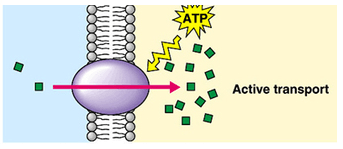
ATP is a form of energy used in what type of transport?
Passive Transport
Active Transport

A plant cell will take on water and swell, if placed in what type of solution?
hypotonic solution
hypertonic solution
isotonic solution

Water is leaving the cell.
What type of solution is this cell in?
Isotonic solution
Hypertonic solution
Hypotonic solution

The diagram shows equal movement of water in and out of a red blood cell.
What type of solution is this cell in?
Isotonic solution
Hypertonic solution
Hypotonic solution

What macromolecule is shown?
Protein
Nucleic Acid
Carbohydrate
Lipid

What macromolecule is shown?
Protein
Nucleic Acid
Lipid
Carbohydrate
What is the monomer of a lipid?
Amino Acid
Fatty Acid
Monosaccharides
Glucose
What is the function of carbohydrates?
Short term energy
Long term energy
Storing genetic information
Speeding up chemical reactions
What is one of the functions of lipids?
Storing genetic information
Long Term Energy
Short Term Energy
Acting as chemical signals
What is the function of nucleic acids?
Short Term Energy
Storing Genetic Information
Long Term Energy
Speeding Up Chemical Reactions

What macromolecule is shown?
Nucleic Acids
Lipids
Proteins
Carbohydrates

What macromolecule is shown?
Carbohydrate
Nucleic Acid
Protein
Lipid
What is one of the functions of proteins?
Long Term Energy
Short Term Energy
Storing Genetic Information
Speeding Up Reactions in Cells

What macromolecule is shown?
Carbohydrates
Lipids
Nucleic Acids
Proteins

What macromolecule is shown?
Lipids
Proteins
Carbohydrates
Nucleic Acids

What macromolecule is shown?
Proteins
Nucleic Acids
Lipids
Carbohydrates
Which of the following is a function of carbohydrates?
Long Term Energy
Storing Genetic Information
Creating the structures that supports plants
Speeding Up Chemical Reactions
What element if the building block of life?
Carbon
Hydrogen
Oxygen
Nitrogen
Which of the following is NOT a macromolecule?
Fiber
Carbohydrates
Amino Acid
Monosaccharides


Which of the following is not true?
Enzymes can only break substances down.
Substrate is the molecule which enzymes act on.
The active site is where the substrate fits into the enzyme.
Some people lack the enzyme lactase

A substance that is more basic has a _____ pH than a substance that is acidic.
In a test of pH levels, a baking soda has a pH of 9 and bleach has a pH of 12. What is true about there relationship?
Both of the solution are Bases
Both of the solution are Acids
The Baking soda is an acid and the Bleach is a base
The baking soda is a base and the Bleach is an Acid.
A base is a substance
That releases OH- ions when dissolved in water
That releases H+ ions when dissolved in water
Does not release any ions when dissolved in water
None of the above
A pH of 3 is how many times more acidic than a pH of 5?
2
20
10
100

The picture below shows the relative concentrations of H+ and OH- in a solution. Is the solution an acid or a base?
acid
base
An acid
is a substance that releases H+ ions when dissolved in water
is a substance that does not release any ions when dissolved in water
is a substance that releases OH- when dissolved in water
releases an equal amount of OH- and H+ ions when dissolved in water
Water has a neutral because
it has more H+ ions than OH-
it has more OH- ions than H+
it does not produce any ions
it has an equal amount of H+ and OH- in solution


What is the molecular structure of water?
1 Hydrogen
2 Oxygen
1 Hydrogen
1 Oxygen
2 Hydrogen
2 Oxygen
2 Hydrogen
1 Oxygen

Which side of the water molecule has a slightly positive charge?
Oxygen
Hydrogen
It's all positive
It's all negative

Which side of the water molecule has a slightly negative charge?
It's all negative
It's all positive
Hydrogen
Oxygen
What is the amount of heat required to raise the temperature of one gram of a substance by one degree Celsius?
Surface Tension
Density
Polarity
Specific Heat Capacity

What is the property of the surface of a liquid that allows it to resist an external force, due to the cohesive nature of its molecules?
Cohesion
Surface Tension
Adhesion
Polarity

What is Cohesion?
Water molecules ability to stick to each other
Water molecules ability to stick to other surfaces
Water molecules ability to conduct electricity
Water molecules ability to melt
What is Adhesion?
Water molecules ability to stick to each other
Water molecules ability to stick to other surfaces
Water molecules ability to conduct electricity
Water molecules ability to melt

What water phenomenon can be observed in this photo?
Water dissolving
Capillary Action
Chemical Reaction
Photosynthesis

Which TWO water properties can be observed in this picture?
Capillary Action
Cohesion
Adhesion
Freezing
Which organelle contains genetic material?
Endoplasmic Reticulum
Golgi Complex
Nucleolus
Nucleus

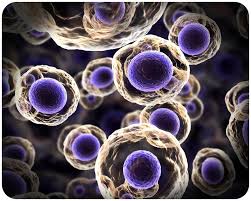


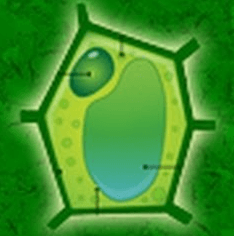


What is cellular respiration?
the breakdown of glucose to release ATP
the breakdown of glucose to release carbon
Which statement about photosynthesis is correct?
Plants get the energy they need for photosynthesis from water.
Plants get the energy they need for photosynthesis from soil.
Plants get the energy they need for photosynthesis from sunlight.
Plants do not require energy to perform photosynthesis.
Which of the following is the correct equation for PHOTOSYNTHESIS?
6CO2 + 6H2O → 6O2 + C6H12O6
6CO2 + C6H12O6 + 6H2O → O2
6O2 +6H2O → 6CO2 +C6H12O6
C6H12O6 + 6O2 → 6H2O + 6CO2
What gas is released by plants during photosynthesis?
nitrogen
carbon dioxide
oxygen
hydrogen
Select all that are inputs for Photosynthesis.
Water
Carbon Dioxide
Oxygen
Sunlight (Light Energy)
Glucose (Sugar/food)
Select all that are outputs of Photosynthesis.
Water
Carbon Dioxide
Oxygen
Sunlight (Light Energy)
Glucose (Sugar/food)
Select all that are outputs of Cellular Respiration.
Water
Carbon Dioxide
Oxygen
ATP (Cellular Energy)
Glucose (Sugar/food)
Select all that are inputs for Cellular Respiration.
Water
Carbon Dioxide
Oxygen
Sunlight (Light Energy)
Glucose (Sugar/food)
What is the best prediction of the relationship between light distance and the rate of photosynthesis?
There is no relationship between light distance and the rate of photosynthesis.
Distance between the light and the algae does not affect the rate of photosynthesis
The more distance between the light and the algae the greater the rate of photosynthesis.
The less distance between the light and the algae the greater the rate of photosynthesis.
Explain the how the process of photosynthesis and cellular respiration cycle matter
The outputs of photosynthesis are the inputs for cellular respiration
The inputs of photosynthesis are the inputs of cellular respiration
The inputs of cellular respiration are the inputs of photosynthesis
The outputs of cellular respiration are the outputs of photosynthesis

BTB was used to indicate the amount of carbon dioxide present in the test tubes. A plant was placed in each test tube. The test tube on the left was placed in the dark and the one on the right was in the light. Which of the following best explains the results?
The solution in the right test tube became more blue because the algae was doing more photosynthesis and using carbon dioxide.
The solution in the right test tube became more blue because the algae was doing more photosynthesis and producing carbon dioxide.
The solution in the right test tube became more blue because the algae was only doing cellular respiration and producing carbon dioxide.
The solution in the right test tube became more yellow because the algae was only doing cellular respiration and using carbon dioxide.
If the amount carbon dioxide is increased what happens to the rate of photosynthesis?
it increases
it decreases
it doesn't change
it is not affected
If the amount of glucose is increased for an animal cell, what will happen?
the cell will produce less ATP
the cell will produce no ATP
the cell will produce more ATP
the cell will produce the same amount of ATP

The 3 parts of the Cell Theory are...?
All living things are composed of cells
Cells are the basic units of structure and function in living things
All cells are produced from other cells
All living things are composed of cells
Cells are the basic units of dance and vibes in living things
All cells are destroyed from other aliens
All living things are composed of Jell-O
Cells are the basic units of structure and function in living things
All cells are produced from factories in Canada
All living things are composed of cells
Cells do karate and practice eating whole pies in their free time
All cells are produced from other cells



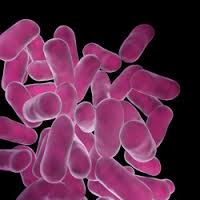
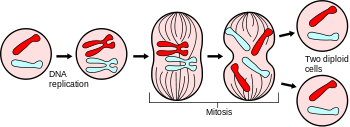
When cells are damaged, new cells are created by cell a process called cell division. How does the cell theory support this fact?
It states that all cells have a nucleus which divides.
It states that all living things are made up of one or more cells.
It states that cells come from previously existing cells.
It states that the basic units of structure and function are cells.


What type of organisms does the cell theory apply to
bacteria
multicellular organisms
plants and animals
all of the above

