
 Worksheets
Biology Ch. 2 & 3 Ecology
Total questions: 145
Worksheet time: 2hrs 51mins
Name
Class
Date
1.
An organism that produces its own food supply from inorganic compounds is called a(an)
a)
heterotroph
b)
consumer
c)
detritivore
d)
autotroph
2.
What is the original source of almost all energy in most ecosystems?
a)
carbohydrates
b)
sunlight
c)
water
d)
carbon
3.
What is the term for each step in the transfer of energy and matter within a biological community?
a)
energy path
b)
food web
c)
trophic level
d)
food pyramid
4.
Autotrophs make up the _______ level in all ecosystems.
a)
First
b)
Second
c)
Third
d)
Fourth
5.

which symbiosis is this
a)
parasitism
b)
mutualism
c)
commensalism
d)
nonalism
6.

symbiotic relationship in which both organisms benefit
a)
competition
b)
Mutualism
c)
nitrogen fixation
d)
energy pyramid
7.

A living relationship between two species in which one organism is harmed is called...
a)
mutualism
b)
commensalism
c)
parasitism
d)
niche
8.

What does a food web represent?
a)
All connections of energy flow throughout all organisms in a habitat.
b)
The specific ways that mutualism is carried out.
c)
A single pathway or energy flow between organisms.
d)
How carnivores get their food.
9.

The image provided is an example of a(n):
a)
Carnivore
b)
Herbivore
c)
Producer
d)
Autotroph
10.

The image provided is an example of a(n):
a)
Producer
b)
Autotroph
c)
Consumer
d)
Insect
11.
The amount of energy that usually transfers from one trophic level to the next...
a)
10%
b)
20%
c)
80%
d)
50%
12.
Which of the following would be the definition of a detritivore?
a)
Animals that eat insects.
b)
Organisms that feed on rocks, recycling the nutrients back into the ground.
c)
Organisms that eat only pants
d)
Things that feed on dead organisms, recycling the nutrients back into the ground.
13.
An illustration that uses arrows to show the many possible directions in which matter and energy can pass through the organisms in an ecosystem.
a)
Food chain
b)
Food web
c)
Energy Pyramid
d)
Succession Map
14.
The nonliving aspects of an ecosystem.
a)
Abiotic factors
b)
Biotic factors
15.
The living portions of the ecosystem.
a)
Biotic factors
b)
Abiotic factors
16.
Water temperature would be an example of ...
a)
A biotic factor
b)
An abiotic factor
17.
A collection of organisms that belong to different populations but all live in the same area and interact with one another.
a)
Population
b)
Ecosystem
c)
Community
d)
Ecosphere
18.
A place where an organism lives.
a)
Terrain
b)
Habitat
c)
Community
d)
Population
19.
A collection of organisms that make up a community as well as all of the nonliving aspects of the environment.
a)
Population
b)
Community
c)
Habitat
d)
Ecosystem
20.
Organisms that can capture energy from inorganic, nonliving sources.
a)
Producers
b)
Consumers
c)
Detritivores
d)
Carnivores
21.
Organisms that feed on both living producers and other consumers.
a)
Carnivores
b)
Omnivores
c)
Herbivores
d)
Detritivores
22.
The general name for organisms like animals and fungi that get their energy from eating other organisms.
a)
Producers
b)
Consumers
c)
Detritivores
d)
Carnivores
23.
An organism at the second trophic level would be considered a...
a)
Top carnivore
b)
Producer
c)
Herbivore
d)
Carnivore
24.
A graphic illustration that shows each trophic level and the amount of useable energy contained within.
a)
Food chain
b)
Food web
c)
Energy Pyramid
d)
All of these
25.
True or False: It is possible for a carnivore to be a producer.
a)
False
b)
True
26.

relationship in which two species live closely together
a)
resource
b)
mutualism
c)
succession
d)
symbiosis
27.

The rabbit in this food web would be considered a:
a)
Decomposer
b)
Producer
c)
Secondary Consumer
d)
Primary Consumer
28.

In this Food Web Pyramid Which type of consumer gets only 10% of the energy stored in plants?
a)
Herbivore
b)
Carnivore
c)
Omnivore
d)
Secondary Consumer
29.
A graphic illustration that shows each trophic level and the amount of useable energy contained within.
a)
Food chain
b)
Food web
c)
Energy Pyramid
d)
All of these
30.
As you move upward, from level to level, in an energy pyramid, energy _____.
a)
increases
b)
decreases
c)
stays the same
d)
increases exponentially
31.

What are the Abiotic factors in this image?
a)
water, sunlight, dirt, air
b)
birds and plants
c)
birds, water, dirt
d)
plants, water
32.

An individual belonging to a specific species
a)
Biotic
b)
Community
c)
Organism
d)
Reptile
33.

The study of how living things interact with one another and with their environment.
a)
Biology
b)
Lithology
c)
Ecology
d)
Farmacology
34.

Organisms that look similar and can produce fertile offspring
a)
Species
b)
Fish
c)
Community
d)
Trees
35.
Two or more members of a particular species living and interacting in the same area
a)
Community
b)
Population
c)
Organisms
d)
Biosphere
36.

The area between the highest mountain and the deepest ocean where life can be found
a)
Biosphere
b)
Biome
c)
Farm
d)
Ecosystem
37.
Which of the following is NOT important cycle of matter in the environment?
a)
helium cycle
b)
water cycle
c)
carbon cycle
d)
nitrogen cycle
38.
A local company dumped sewage into the wetlands. As a result, most fish in the wetlands died. This decrease in the number of fish will probably result in
a)
fewer mice
b)
fewer birds
c)
fewer spiders
d)
fewer insects
39.
Which of the following is NOT an abiotic environmental factor?
a)
air
b)
animals
c)
soil
d)
water
40.
Sometimes a population cannot grow to its biotic potential due to environmental factors. What are these environmental factors called?
a)
limiting factors
b)
biomes
c)
ecological pyramids
d)
carrying capasity
41.
Which order of these shows the food chain in the correct order?
a)
Zooplankton--->Bear--->Salmon
b)
Salmon--->Zooplankton--->Bear
c)
Zooplankton-->Salmon--->Bear
d)
Bear--->Zooplankton--->Salmon
42.
The change in the physical state of water from gas to liquid is called?
a)
Evaportation
b)
Run off
c)
Condensation
d)
Precipitation
43.
Which of the following is NOT a form of precipitation?
a)
Snow
b)
Sleet
c)
Rain
d)
Fog
44.
Which of the following is an example of mutualism?
a)
tick and dog
b)
Nemo and sea anemome
c)
flatworms and horseshoe crab
d)
mistletoe and tree
45.
What is the symbiotic relationship called which one organism is helped and the other organism is unharmed?
a)
mutualism
b)
parasitism
c)
commensalism
d)
consumer
46.
Which of the following organisms are typical decomposers?
a)
grasses and ferns
b)
bacteria and mushrooms
c)
mice and deer
d)
lions and snakes
47.
Much of Canada is covered in pine spruce forests. The winter is cold and long. What is this biome?
a)
tundra
b)
taiga or boreal forest
c)
deciduous forest
d)
grassland
48.
An organism's specific role in its habitat is called its
a)
consumer
b)
niche
c)
birth right
d)
mutalism
49.

How would the removal of the earth worms affect the other organisms.
a)
The number of bass will increase
b)
The number of crayfish will decrease
c)
The crayfish will get their energy directly from the sun
d)
The number of bass and ospreys will increase
50.

The sun's energy is most directly available to people through
a)
Path A
b)
Path B
c)
Path C
d)
Path D
51.

Similar ecosystems on earth together.
a)
Ecosystem
b)
Biome
c)
Biosphere
d)
Population
52.

The maximum number of organisms that can survive in a particular ecosystem.
a)
carrying capacity
b)
birth rate
c)
limiting factor
d)
death rate
53.

What can limit an area's carrying capacity?
a)
Lack of predators
b)
abundance of food
c)
disease
d)
all of the above
54.

The temperature and amount of rainfall in a particular environment.
a)
Climate
b)
Precipitation
c)
Temperature
d)
Biome
55.

If the temperature and amount of rainfall changes in an area from what is normal, this can also change the population.
a)
True
b)
False
56.

Organisms require a certain amount of food, water, space, and shelter in order to survive and reproduce.
a)
True
b)
False
57.

If a disease destroying barley plants in a field swept through an ecosystem, what would happen to the barley eating bird population in the the field ?
a)
The bird population would stay the same
b)
The bird population would infinitely increase
c)
The bird population would decrease
58.

When a population grows past the ecosystem's carrying capacity, what happens to the population?
a)
Continues to grow
b)
The population starts to die off to return to carrying capcity
c)
The population will go extinct due to lack of resources
d)
The population grows then finds a new carrying capacity
59.

What is the carrying capacity of the graph?
a)
around 500
b)
more than 500
c)
less than 500
d)
around 600
60.

Which of the following best describes a community?
a)
sharks, groupers, anemones and shrimp on a coral reef
b)
decorator crabs on the seafloor
c)
loggerhead sea turtles in Atlantic
d)
prairie grassland in Wyoming
61.
What is an heterotroph?
a)
An organism that can produce its own form of energy (via the Sun)
b)
An organism that consumes only plants for energy
c)
Various organisms that consume other organisms for energy
d)
An organism that decomposes other organisms
62.
What is the major difference between a community and an ecosystem?
a)
A community involves only the biotic, not the abiotic
b)
An ecosystem only includes herbivores and carnivores-- no decomposers
c)
An ecosystem involves only the biotic, AND THE abiotic
d)
An ecosystem is just a larger community
63.
What are the correct types of Trophic levels?
a)
Producers
Primary
Secondary
Primary
Secondary
b)
Primary
Secondary
Secondary
c)
Producers
Consumers
Decomposers
Consumers
Decomposers
d)
Producers
Primary
Secondary
Tertiary
Primary
Secondary
Tertiary
64.
What are the major differences between a species and a population?
a)
Populations consist of ALL of the individual organisms within a species in a given area/ecosystem that are fertile
b)
Populations are a collection of many different types of species that are not related to each other
c)
Populations are just a larger amount of individuals
d)
Populations are the number of individuals within a species that are identical
65.

What makes Fungi so unique when it comes to trophic levels?
a)
They are producers so they can be high or low
b)
They are consumers of only plants
c)
They are consumers of all types of organisms because they decompose
d)
They are consumers of only the primary trophic level
66.

In the energy pyramid here, which organisms have the most energy available?
a)
Producers
b)
Carnivores
c)
Herbivores
d)
Top Predator
67.
An animal that is hunted and eaten for food is a
a)
predator
b)
prey
68.

a relationship between two in which one species, the predator, feeds on the other species, the prey
a)
chemosynthesis
b)
predation
c)
cellular respiration
d)
commensalism
69.

A pond ecosystem is shown in the diagram below. Which statement describes an interaction that helps maintain the dynamic equilibrium of this ecosystem?
Which statement describes an interaction that helps maintain the dynamic equilibrium of this ecosystem?
Which statement describes an interaction that helps maintain the dynamic equilibrium of this ecosystem?
a)
The frogs make energy available to this ecosystem through the process of photosynthesis.
b)
The algae directly provide food for both the rotifers and the catfish.
c)
The green-backed heron provides energy for the mosquito larvae.
d)
The catfish population helps control the populations of water boatman and waterfleas.
70.
Which biome is characterized by low temperatures and low amounts of rainfall?
a)
tundra
b)
desert
c)
temperate deciduous forest
d)
tropical rain forest
71.
Which biome covers most of the land mass near the Earth's equator?
a)
tundra
b)
desert
c)
grassland
d)
tropical rainforest
72.
Which biome, because of its climate, has the largest number of species of plants and animals?
a)
tundra
b)
desert
c)
tropical rainforest
d)
pine forest
73.
One characteristic feature of tundra is that only the surface thaws in the summer and refreezes in the winter, leaving a layer of permanently frozen subsoil. This characteristic is known as
a)
glaciation
b)
permafrost
c)
crystallization
d)
soilfrost
74.
Which type of trees is found in a temperate forest?
a)
deciduous
b)
evergreen
c)
ginko
d)
palm
75.
Which major biome is home to cacti, mesquite, white thorn, pack rats, small reptiles, and coyotes?
a)
desert
b)
taiga
c)
tundra
d)
grassland
76.
Which biome receives between 0 to 25 centimeters of rain per year, has a temperature range of 0 to 50 degrees Celsius, has poor soil, and is home to lizards, scorpions, and snakes?
a)
desert
b)
mountain
c)
taiga
d)
tundra
77.
Which biome contains large populations of grazing herbivores, few species of birds, and deep, rich soil?
a)
taiga
b)
tundra
c)
deciduous forest
d)
grassland
78.
This biome contains mostly spruce trees and Douglas firs, which are both evergreen. The winters are long and cold and the summers are short and rainy. The soil is very rich. Moose and elk live here. This biome is classified as a
a)
taiga
b)
tundra
c)
deciduous forest
d)
temperate forest
79.
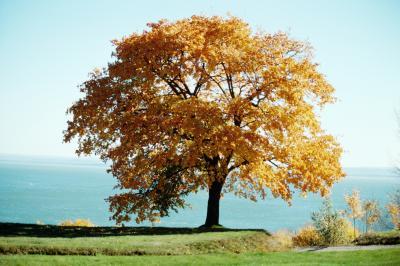
The biome known for trees with broad leaves that fall off the trees in the winter.
a)
Coniferous Forests
b)
Deciduous Forests
c)
Deserts
d)
Tropical Rain Forests
80.
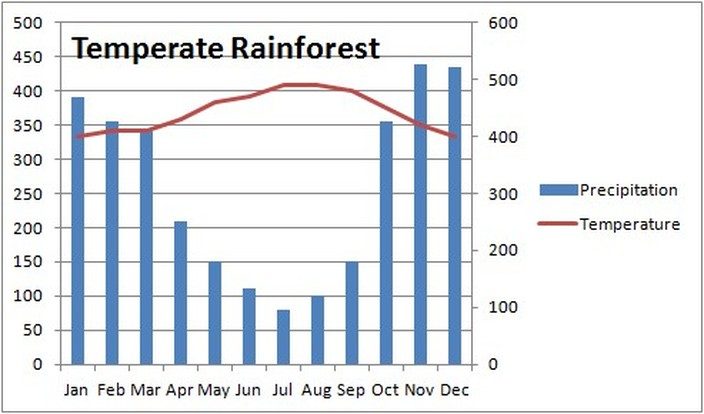
The most important abiotic factors when studying biomes are...
a)
Food and Water
b)
Water and Sunlight
c)
Temperature and Oxygen
d)
Water and Temperature
81.
The greatest biodiversity on earth is found in the __________ biome.
a)
taiga
b)
grassland
c)
temperate deciduous forest
d)
tropical rainforest
82.
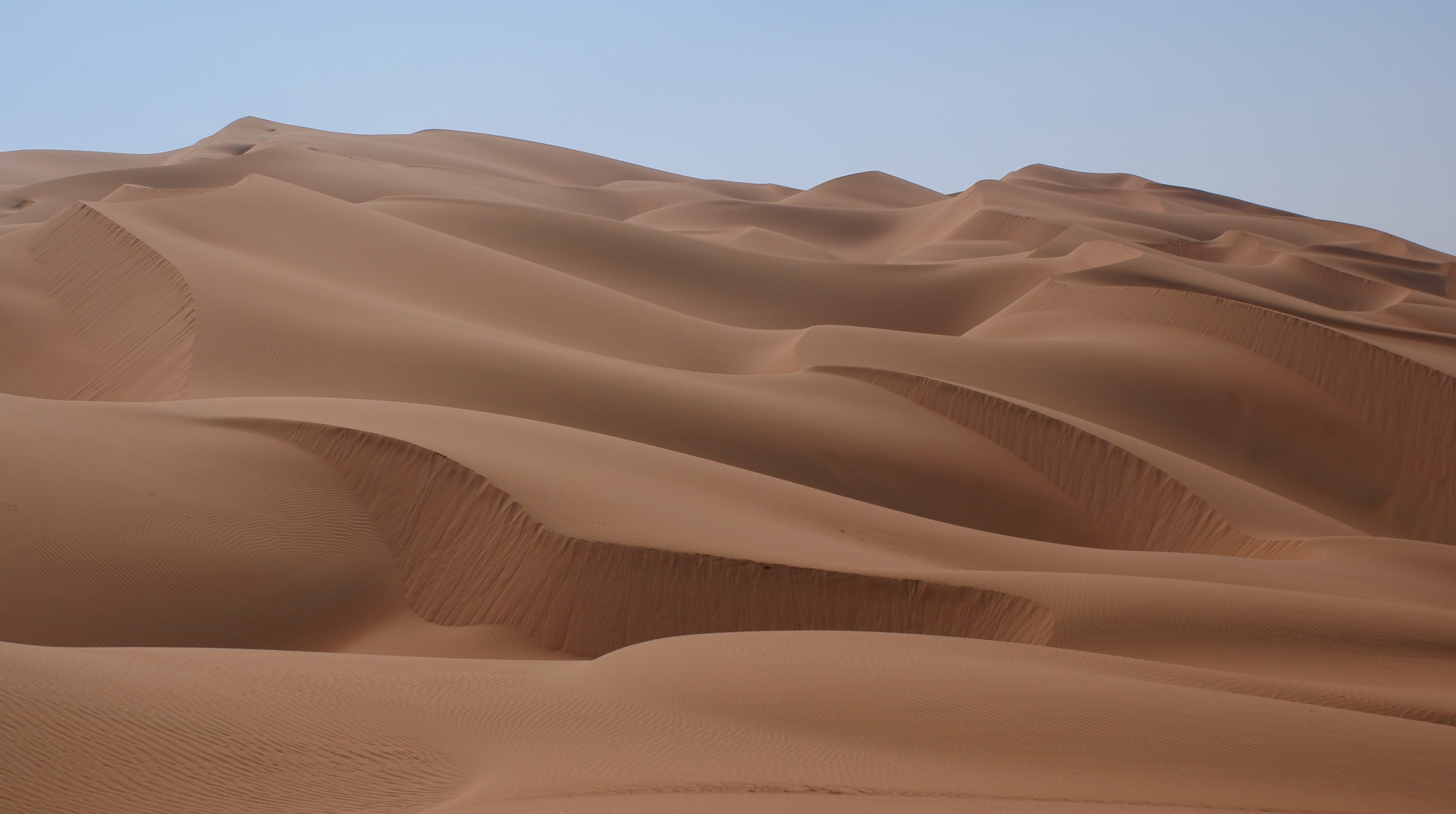
Which biome is MOST LIKE the "desert" in terms of precipitation?
a)
tropical rainforest
b)
temperate deciduous forest
c)
tundra
d)
coniferous forest
83.
Areas defined by their geographical location and ecological similarity are called?
a)
ecozones
b)
biotopes
c)
biomes
d)
biodomes
84.
Which is NOT a type of aquatic ecosystem?
a)
ocean
b)
estuary
c)
monastery
d)
wetland
85.
Rivers are larger, deeper and flow ___ than streams.
a)
slower
b)
faster
86.
When soil washes into a river from a stream or from land, what is added to the water?
a)
dirt
b)
oxygen
c)
rocks
d)
nutrients
87.
What are areas where freshwater meets saltwater called?
a)
wetlands
b)
estuaries
c)
coastal byways
d)
intertidal zones
88.
Which is NOT a freshwater ecosystem?
a)
stream
b)
lake
c)
ocean
d)
river
89.
What are coral reefs?
a)
rock
b)
deposits of bones of dead fish
c)
plants
d)
outside skeletons of tiny, soft-bodied animals
90.
What special adaptations do intertidal species have?
a)
to resist UV rays
b)
to survive exposure to air
c)
to survive heavy waves
d)
Exposure to air AND survive heay waves
91.
Which statement is true about ponds but NOT lakes?
a)
plants surround the shore
b)
surface water contains organisms that use sunlight for photosynthesis
c)
sunlight reaches the bottom of the body of water
d)
people fill them in with sediment to create land for houses and buildings
92.
Aquatic ecosystem that has a thin layer of water covering soil that is wet most of the time is called ____.
a)
wetland
b)
estuary
c)
lake
d)
puddle
93.
This includes several types of ecosystems, including continental shelves and intertidal zones.
a)
coral reefs
b)
tropical oceans
c)
open oceans
d)
coastal oceans
94.
This area starts several kilometers from the coast.
a)
intertidal zone
b)
coral reef
c)
continental shelf
d)
open ocean
95.
The photic zone
a)
extends to the bottom of the open ocean
b)
extends to a depth of about 200 meters
c)
is deep, cold, and permanently dark
d)
is where chemosynthetic bacteria are the producers
96.
The aphotic zone is
a)
the ocean's dark lower layer where photosynthesis cannot occur
b)
the sunlit upper layer of the ocean where photosynthesis occurs
c)
on the bottom of lakes, streams, and oceans.
d)
where benthos are found
97.
The intertidal zone of oceans
a)
surrounds continents
b)
is on the coastline
c)
has tides that rise and fall each day
d)
is the open ocean
98.

Which zone supports the least amount of life?
a)
photic
b)
aphotic
c)
neritic
d)
ocean
99.

What is the water cycle?
a)
the 3 forms of water
b)
the movement of water on, above, or below the surface of the Earth
c)
when water melts
d)
when clouds form
100.
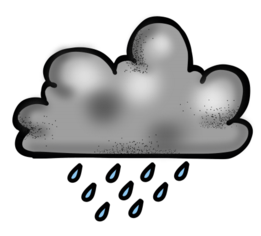
What part of the water cycle does this picture show?
a)
condensation
b)
precipitation
c)
evaporation
101.
Snow, sleet, hail, and rain are all examples of ________________.
a)
evaporation
b)
condensation
c)
accumulation
d)
precipitation
102.

What is it called when WATER is FORMED from an LIQUID to a WATER VAPOR Oor an [GAS]?
a)
EVAPORATION
b)
PRECIPITATION
c)
TRANSPIRATION
103.

What is it called when plants give off water vapor as a waste product?
a)
condensation
b)
evaporation
c)
sublimation
d)
transpiration
104.

How much of the atmosphere is composed of nitrogen gas?
a)
87%
b)
38%
c)
78%
d)
21%
105.

How do plants get the nitrogen they need?
a)
from the air
b)
from the soil or water in which they live
c)
from the Sun
d)
from broken-down rocks
106.

Organisms that break down dead plants & animals and release nitrogen back into atmosphere...
a)
bacteria
b)
plants
c)
animals
d)
producers
107.
Which environmental issue occurred in 1986 in Chernobyl, Ukraine.
a)
Smog
b)
Noise Pollution
c)
Nuclear Power Plant Explosion
d)
Acid Rain
108.

Nitrogen fixing bacteria, lives in nodules on the root of a plant called
a)
Broccoli
b)
Legumes
c)
Beats
d)
Carrots
109.
Animals obtain the nitrogen they need directly from the
a)
soil in their habitat
b)
air they breathe
c)
plants they eat
d)
bacteria living within them
110.
When humans burn fossil fuels, most of the carbon quickly enters the as carbon dioxide.
a)
Water
b)
Atmosphere
c)
Sun
d)
Air
111.
How do living organisms return carbon to the atmosphere in the carbon cycle?
a)
respiration and photosynthesis
b)
decomposition and respiration
112.

In the carbon cycle, producers take in the gas __
a)
carbon dioxide
b)
oxygen
c)
nitrogen
d)
carbon monoxide
113.
oxygen is a gas produced by _____ and used by ________
a)
plants and animals
b)
photosynthesis and carbon dioxide
c)
animals and plants
d)
carbon dioxide and photosynthesis
114.
Which is a true statement?
a)
Humans depend on oxygen, plants depend on carbon dioxide
b)
Plants produce carbon dioxide
c)
Humans depend on carbon dioxide, plants depend on oxygen
d)
Humans don't depend on plants for the air they need
115.
Which of the following is known as the "sedimentary" cycle because its reservoir is sedimentary rock?
a)
Sulfur cycle
b)
Nitrogen cycle
c)
Phosphorus cycle
d)
Carbon cycle
116.
N03 is also known as
a)
ammonia
b)
nitrite
c)
nitrogen
d)
nitrate
117.
Which of the following statements is true of the phosphorus cycle?
a)
Phosphorus enters the atmosphere as phosphates.
b)
The phosphorus cycle utilizes the processes of erosion, and weathering.
c)
Phosphates are used in carbohydrate and glucose storage.
d)
The phosphorus cycle utilizes bacteria to breakdown phosphates and make them available for plants.
118.

Identify the cycle pictured.
a)
The Water cycle
b)
The Carbon cycle
c)
The Nitrogen cycle
d)
The Phosphorus cycle
119.

Identify the cycle pictured.
a)
The Water cycle
b)
The Carbon cycle
c)
The Nitrogen cycle
d)
The Phosphorus cycle.
120.

What is the order of succession shown in this figure?
a)
A, B, C, D
b)
B, A, D, C
c)
C, D, A, B
d)
D, A, B, C
121.
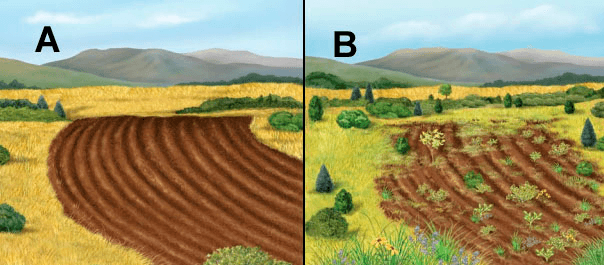
What type of succession is shown going from figure A to figure B?
a)
primary succession
b)
ecological succession
c)
secondary succession
d)
intermediate
122.
What is the goal of the pioneer species in Primary Succession?
a)
To kill the dead materials after a disaster
b)
To rebuild soil
c)
To feed Johnny
d)
To put fresh oxygen into the air
123.
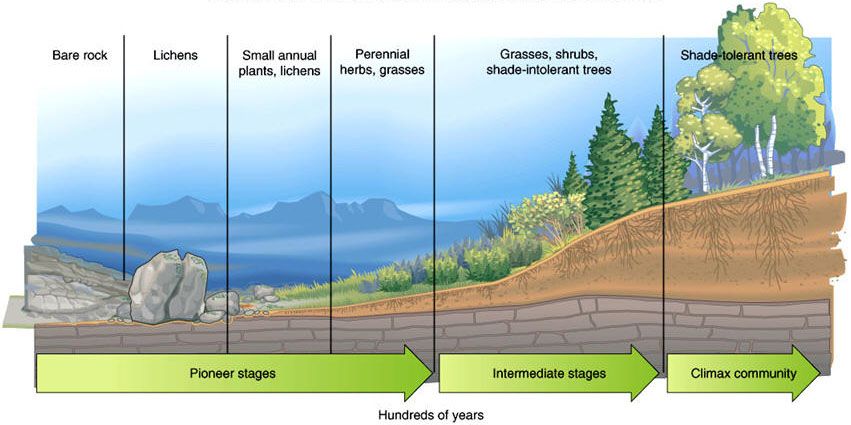
The picture shows what type of succession?
a)
primary
b)
secondary
c)
tertiary
d)
quadanary
124.
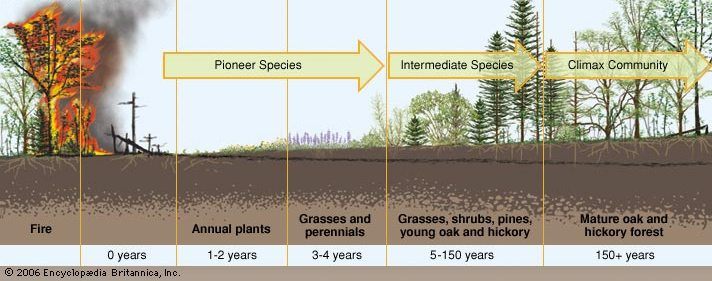
The picture shows what type of succession?
a)
primary
b)
secondary
c)
tertiary
d)
quadanary
125.
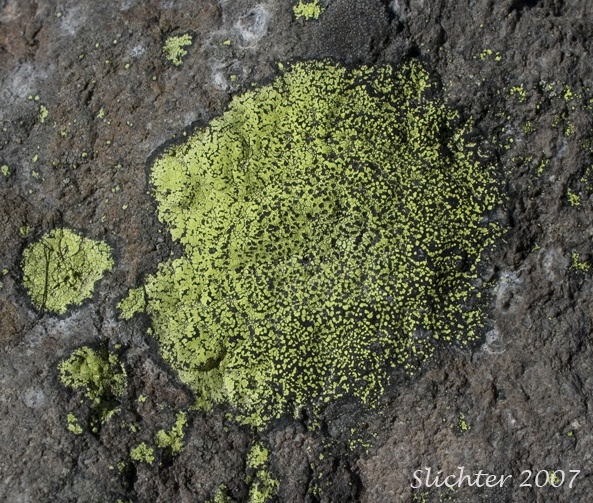
What is the name given to lichen or algae after a primary succession?
a)
pioneer species
b)
volunteer species
c)
founder species
d)
conqueror species
126.
After a volcanic eruption, lava covers the land. What is the order that plants grow to repopulate the area?
a)
Lichens → Shrubs → Grasses → Trees
b)
Lichens → tree → shrubs→Grasses
c)
Grasses → Lichens → Shrubs → Trees
d)
Lichens → Grasses → Shrubs → Trees
127.
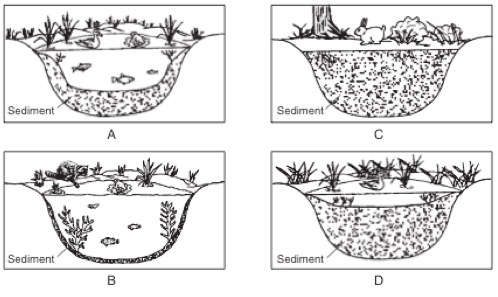
What is the correct order from oldest (happened first) to youngest (happened last) in this pond succession?
a)
A, B, C, D
b)
D, C, B, A
c)
B, A, D, C
d)
C, D, A, B
128.
Reaches a climax community quicker because soil is already present
a)
primary succession
b)
secondary succession
c)
both types of succession
129.

Final illustration (#8) shows
a)
pioneer species
b)
climax community
c)
only biotic factors
d)
only abiotic factors
130.

Succession type?
a)
primary succession
b)
secondary succession
c)
tertiary succession
d)
variable succession
131.

A pioneer species is...
a)
a large organism
b)
the first organisms to adapt to a new environment
c)
The best organism
d)
Abiotic organisms
132.
Succession that occurs in an area with NO SOIL
a)
ecological succession
b)
primary succession
c)
secondary succession
d)
pioneer speciles
133.
the process of change in the living parts of the ecosystem
a)
ecological succession
b)
primary succession
c)
climax community
d)
pioneer speciles
134.

What is this called?
a)
Food Web
b)
Food Chain
c)
Abiotic Factors
135.

What is this called?
a)
Food Web
b)
Food Chain
c)
Abiotic Factors
136.
If a frog is the prey, what could be the predator?
a)
Grass
b)
Insect
c)
Snake
d)
Snail
137.
What does a Primary Consumer eat?
a)
Tertiary Consumers
b)
Secondary Consumers
c)
Producers
138.

An organism that lives by breaking apart dead organic matter into simpler parts is...
a)
scavenger
b)
consumer
c)
decomposer
d)
carnivore
139.
In a food web, arrows point at:
a)
who gets energy.
b)
who gets eaten.
140.

Which organism recieves the least amount of energy from the producer?
a)
Owl
b)
Grasshopper
c)
Lilypad
d)
Mouse
141.

Which level will contain plants?
a)
A
b)
B
c)
C
d)
D
142.
Temperature, light, air, water, and soil are all _____ parts of the environment
a)
alive
b)
biotic
c)
abiotic
d)
living
143.
Which of the following is not an abiotic factor?
a)
sun
b)
temperature
c)
soil
d)
grass
144.
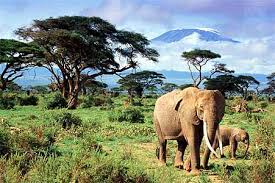
What are the biotic factors in this image?
a)
sunlight, elephants, and grasses
b)
sunlight, water, and air
c)
elephants, plants, trees
145.
The study of relationships between biotic and abiotic factors interacting in the same area.
a)
Ecology
b)
Biology
c)
Zoology
d)
Botany
100 %

