Wayground logo

Free Printable Worksheets

Font size

S
M
L
XL
Worksheets

Review Test 2 Part 2

Total questions: 83

Worksheet time: 1hrs 12mins

Name
Class
Date
1.

What Are The Three Main Types Of Rocks?

a)

Igneous, Depository, Metamorphic

b)

Depository, Igneous, Sedimentary

c)

Metamorphic, Igneous, Depository

d)

Igneous, Metamorphic, Sedimentary

2.

How are metamorphic rocks formed?

a)

Heating and cooling

b)

Deposition

c)

Heating and pressure

d)

Materials gathering and pressing together

3.

How are sedimentary rocks formed?

a)

Heating and pressure

b)

Sediment forming together

c)

Weathering

d)

Cooling

4.
What geologic process changes pieces of rocks, minerals and other materials into sedimentary rocks?
a)
Compacting and Cementing
b)
Cooling
c)
Heat and Pressure
d)
Melting
5.
Which type of rock is heated and pressurised but does NOT melt?
a)
igneous
b)
hard rock
c)
metamorphic
d)
sedimentary
6.
Each rock type can follow only one pathway of the rock cycle.
a)
True
b)
False
7.
Which type of rock results from melting and cooling of magma?
a)
Igneous
b)
Metamorphic
c)
Sedimentary
d)
Extrusive
8.
Which type of rock forms from extreme heat and pressure?
a)
Igneous
b)
Sedimentary
c)
Organic
d)
Metamorphic
9.
This rock was found near the mouth of a volcano. What type of rock is this?
a)
Sedimentary
b)
Igneous
c)
Metamorphic
10.
This rock was formed by smaller pieces of rock that settled at the bottom of a lake millions of years ago. What type of rock is this?
a)
Sedimentary
b)
Igneous
c)
Metamorphic
11.
This rock started as lava that cooled and then was heated and put under pressure over time. What type of rock is this?
a)
Sedimentar
b)
Igneous
c)
Metamorphic
12.
Hot, molten rock inside the earth is called ...
a)
lava
b)
magma
c)
igneous rock
d)
minerals
13.
Fossils are often found in ____________ because it is formed from the remains of once living things.
a)
metamorphic
b)
magma
c)
igneous
d)
sedimentary
14.
A never ending process by which rocks are changed from one type to another.  
a)
weathering and erosion
b)
rock cycle
c)
heat and pressure
d)
pressing and cementing
15.
How do metamorphic rocks form? 
a)
Heat and Pressure
b)
Compaction & Cementation
c)
Cooling of Magma
d)
Sediments & Glue
16.

The color of a rock is a result of its chemical composition?

a)

True

b)

False

17.

The Mount Rushmore National Monument is carved from the granite (formed from magma underground) of South Dakota's Black Hills. What type of rock is granite?

a)

Igneous

b)

Metamorphic

c)

Sedimentary

d)

None of the above

18.

The seated sculpture of President Lincoln inside the Lincoln Memorial was carved out of white Georgia marble (formed from Earth's pressure and heat). What type of is marble?

a)

Igneous

b)

Metamorphic

c)

Sedimentary

d)

None of the above

19.
True/False: Igneous rocks can only turn into metamorphic rocks.
a)
True
b)
False
20.
The process in which dissolved minerals crystallize and glue sediment together.
a)
compaction
b)
deposition
c)
organic rock
d)
cementation
21.
When sediments are pressed together tightly, this is called ____________.
a)
Compaction
b)
Cementation
c)
Weathering
d)
Erosion
22.

Which is the process that breaks up rock on Earth’s surface?

a)

deposition

b)

melting

c)

compaction

d)

weathering

23.
An igneous rock can become ______.
a)
metamorphic
b)
sedimentary
c)
igneous
d)
all of these
24.
The name rock is given when it is broken down into smaller pieces.
a)
texture
b)
weathering
c)
sediment
d)
erosion
25.
When you watch a volcano erupt molten rock, you are seeing _____
a)
Lava
b)
Magma
c)
Mineral Crystals
d)
Igneous Rocks
26.
Rocks are formed by
a)
minerals
b)
other metals
c)
small particles
d)
sediments
27.
Which pathway CANNOT be taken by an igneous rock?
a)
compaction and cementation
b)
melting
c)
weathering and erosion
d)
heat and pressure
28.
All rocks can be...
a)
melted, compacted, and cooled
b)
melted, transformed, and eroded
c)
cooled, transformed, and eroded
d)
cooled, compacted, and transformed
29.
How does pumice become sandstone?
a)
weathering and erosion to sediment, then compaction 
b)
melting into magma, then cooling
c)
transformed by heat and pressure
d)
cooling into sediment, then transformed
30.

Sedimentary Rock --> ____________--> Sediment

a)

compaction and cemetation

b)

weathering and erosion

c)

heat and pressure

d)

melting and cooling

31.

Which is NOT accurate?

a)

Igneous -->Melting --> Magma

b)

Sediment --> Compaction --> Sedimentary

c)

Metamorphic --> Heat and Pressure --> Sedimentary

d)

Magma --> Cooling --> Igneous

32.

Click on the part of the rock cycle that represents a MAGMA.

33.

Click on the part of the rock cycle that represents a SEDIMENT.

34.

Drag and drop the rock types with the numbers that indicate what the rock type forms from.

35.
What is the relative age of a rock?
a)
The age determined by the things around it.
b)
The age of an igneous rock.
c)
The age determined by radioactive dating.
d)
The time it takes for 1/2 of the radioactive atoms to decay in an element.
36.
What is the absolute age of a rock?
a)
The age determined by the things around it.
b)
The age of an igneous rock.
c)
The age determined by radioactive dating.
d)
The time it takes for 1/2 of the radioactive atoms to decay in an element.
37.

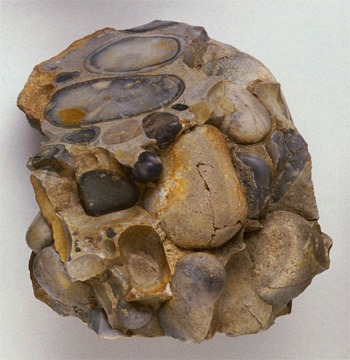
What type of rock is pictured?

a)

Extrusive Igneous Rock

b)

Foliated Metamorphic Rock

c)

Nonfoliated Metamorphic Rock

d)

Sedimentary Rock

38.

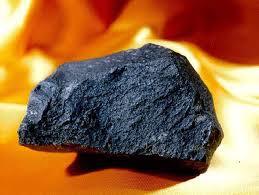
What rock is this?

a)

basalt

b)

obsidian

c)

pumice

d)

granite

39.

What rock is this?

a)

granite

b)

basalt

c)

gabbro

d)

rhyolite

40.

What rock is this ?

a)

granite

b)

rhyolite

c)

gabbro

d)

obsidian

41.

The rocks in Volcanoes National Park Hawaii are forming as the hot lava coming out of the volcanoes cools. These rocks are definitely...

a)

extrusive

b)

intrusive

c)

coarse grained

d)

forming very slowly

42.

Igneous rocks form from...

a)

compacted sediments

b)

cooling magma or lava

c)

high heat and pressure

d)

weathering and erosion

43.

Granite is an intrusive igneous rock, which tells us that it formed...

a)

below the surface of the Earth

b)

from a volcano

c)

at Earth's surface

d)

at the bottom of the ocean

44.

According to the law of conservation of matter....

a)

new matter is always being made

b)

matter cannot be created or destroyed

c)

matter only lasts for a finite amount of time

d)

the universe is constantly making more matter

45.

Some examples of igneous rocks are...

a)

marble, slate, gneiss

b)

sulfur, mica, fluorite

c)

sandstone, shale, conglomerate

d)

granite, pumice, obsidian

46.
Coarse or Fine
a)
coarse
b)
fine
47.
Coarse or Fine?
a)
coarse
b)
fine
48.

Which type of sedimentary rock is formed from the remains of plants and animals?

a)

metamorphic sedimentary rock

b)

igneous sedimentary rock

c)

inorganic sedimentary rock

d)

organic sedimentary rock

49.

What is the main characteristic of clastic sedimentary rocks?

a)

Created through chemical precipitation

b)

Formed from organic remains

c)

Composed of volcanic ash

d)

Composed of fragments of pre-existing rocks or minerals

50.

What is the process called when sediments are compacted and cemented together to form sedimentary rocks?

a)

erosion

b)

weathering

c)

deposition

d)

lithification

51.

Which of the following is an example of an organic sedimentary rock? A) Conglomerate B) Sandstone C) Limestone D) Coal

a)

C) Basalt

b)

D) Coal

c)

B) Shale

d)

A) Granite

52.

What are the three main types of sedimentary rocks?

a)

igneous, metamorphic, and volcanic

b)

granite, limestone, and sandstone

c)

clastic, chemical, and organic

d)

hard, soft, and medium

53.

Which type of sedimentary rock is formed from the evaporation of water?

a)

metamorphic

b)

igneous

c)

clastic

d)

evaporite

54.

What is the main characteristic of chemical sedimentary rocks?

a)

Formed from the accumulation of organic matter

b)

Formed from volcanic activity

c)

Formed from weathering and erosion of pre-existing rocks

d)

Formed from precipitation of minerals

55.

What are fossils?

a)

Imprints left by aliens on Earth

b)

Artificially created replicas of ancient organisms

c)

Fossils are not real, they are a myth

d)

Preserved remains or traces of ancient organisms

56.

Why are fossils important in sedimentary rocks?

a)

Fossils provide evidence of past life and help scientists understand the history of the Earth.

b)

Fossils are used to study the chemical composition of sedimentary rocks.

c)

Fossils are used to identify different types of sedimentary rocks.

d)

Fossils are used to determine the age of sedimentary rocks.

57.
Putting pressure on sediments underground is called . . . 
a)
cementation
b)
compaction
c)
weathering
d)
erosion
58.
When sediments stick together its called . . . 
a)
cementation
b)
compaction
c)
deposition
d)
erosion
59.

Which diagram models the process of compaction leading to the formation of sedimentary rock? (5.7A)

a)
b)
c)
d)
60.
Which layer of sedimentary rock is the oldest?
a)
A
b)
B
c)
D
d)
F
61.
When water, wind, ice or gravity removes pieces of rock, __ has occurred.
a)
Elaboration
b)
E-filing
c)
Eliminating
d)
Erosion
62.
The forces that are involved in producing sediments are
a)
Weathering and Erosion
b)
Ebb and Flow
c)
Spring and Neap
d)
Round and Round
63.
When an agent of erosion loses energy, it drops sediments:
a)
Desalination
b)
Disagregation
c)
Deposition
d)
Delimination
64.
Small, solid pieces of materials from rocks or living things
a)
sediment
b)
clastic rock
c)
organic rock
d)
deposition
65.
Clastic rocks are grouped by the ______________ of the rock fragments of which they are made.
a)
Size
b)
Formation
66.

Which of these are Sedimentary Rocks?

Choose 2

a)

Chalk

b)

Granite

c)

Sandstone

d)

Basalt

67.

Coal is made of

a)

Plants

b)

Sediments

c)

Crystals

d)

Dirt

e)

Seashells

68.

Rock salt is made of

a)

Halite

b)

Dolomite

c)

Carbon

d)

Gypsum

e)

Quartz

69.
Metamorphic rocks form from ___.
a)
igneous rocks
b)
other metamorphic rocks
c)
sedimentary rocks
d)
all types of rocks
70.
What are the two main types of metamorphic rocks and how are they different?
a)
intrusive and extrusive; intrusive rocks are formed inside the earth and extrusive rocks are formed on the surface
b)
foliated and nonfoliated; foliated rocks do not have visible bands/layers and nonfoliated rocks do have visible bands/layers
c)
intrusive and extrusive; intrusive rocks are formed on the earth's surface and extrusive rocks are formed in the Earth
d)
foliated and nonfoliated; foliated rocks have visible bands/layers and nonfoliated rocks do not have visible bands/layers
71.
The difference between regional metamorphism and contact metamorphism is that regional metamorphism is caused by _____ from __________ and contact metamorphism is caused by _________ from _______ intruding into other rock.
a)
heat, tectonic plates, pressure, magma
b)
pressure, tectonic plates, heat, magma
c)
heat, magma, pressure, tectonic plates
d)
pressure, magma, heat, tectonic plates
72.
__________  metamorphic rocks have mineral grains that are not arranged in distinct bands.
a)
Conglomerate
b)
Non-foliated
c)
Foliated
d)
Permeated
73.
How do metamorphic rocks form? 
a)
Heat and Pressure
b)
Compaction & Cementation
c)
Cooling of Magma
d)
Sediments & Glue
74.
Which texture best describes the rock above?
a)
porphyritic 
b)
nonfoliated
c)
foliated
d)
clastic
75.
Morph means what?
a)
change
b)
alter
c)
switch
d)
rearrange
76.
The deeper a rock is buried, the greater the pressure is on it
a)
True 
b)
False
77.
Igneous intrusions cause which type of metamorphism?
a)
contact
b)
regional
78.
Marble is formed from what sedimentary rock?
a)
limestone
b)
granite
c)
shale
d)
conglomerate
79.
Where do we usually find regional metamorphism?
a)
ocean floor
b)
mountain
c)
plate boundaries
d)
deserts
80.
If a metamorphic rock has layers, what is it?
a)
foliated
b)
nonfoliated
81.
Because the foliated metamorphic rock __________ splits easily into flat pieces, it is used for roofing material.
a)
marble
b)
slate
c)
sandstone
82.
__________ metamorphism occurs when magma heats the surrounding rock and changes it.
a)
Regional
b)
Forced
c)
Igneotrophic
d)
Contact
83.
__________ metamorphism occurs when rock formations in the crust collide and build pressure
a)
Regional
b)
Forced
c)
Igneotrophic
d)
Contact