
 Worksheets
PHYSCI - Chemical Reaction Quiz
Total questions: 65
Worksheet time: 52mins

How can a chemical equation be balanced?
changing subscripts
erasing elements as necessary
adding coefficients
adding elements as necessary

What are the products in this equation?
Zn and CuSO4
Zn and Cu
ZnSO4 and Cu
Zn only
The following are the evidences that chemical reaction took place, EXCEPT:
evolution of gas
formation of precipitate
formation of new element
change in the intrinsic properties
Lily is conducting an experiment in her chemistry class. She learns that chemical equations are balanced by placing the appropriate ___________ before the symbols or formulas of reactants and products.
subscript
exponent
letter
coefficient
Which of the following is the balanced equation for Zn + HCl --> ZnCl2 + H2?
Zn + HCl --> 2ZnCl2 + H2
Zn + 2HCl --> ZnCl2 + H2
2Zn + HCl --> 2ZnCl2 + H2
Zn + 2HCl --> 2ZnCl2 + H2
Which of the following sets of coefficients can be used to balance the equation, CH4 + O2 --> CO2 + H2O?
1,1,2,1,
1,2,1,2
2,1,2,1
2,2,1,1
Which of the following is a balanced chemical reaction?
2C3H8 + 10 O2 → 6CO2 + 8H2O
C3H8 + O2 → CO2 + H2O
C3H8 + O2 → 3CO2 + 2H2O
C3H8 + 5O2 → 3CO2 + 4H2O

Which of the following chemical reaction shows the production of water from hydrogen gas and oxygen gas?
2 H2O → 2 H2 + O2
2 H2 + O2 → 2 H2O
3 H2 + O2 → 3 H2O
3 H2O → H2 + 3 O2
Which of the following sets of coefficients can be used to balance the equation, Al + O2 --> Al2O3
2,3,2
2,3,4
4,3,2
2,1,4

The Law of Conservation of Mass states that in a chemical reaction,
mass of the reactants and mass of the products are equal
new elements are formed
new atoms are created
atoms are destroyed
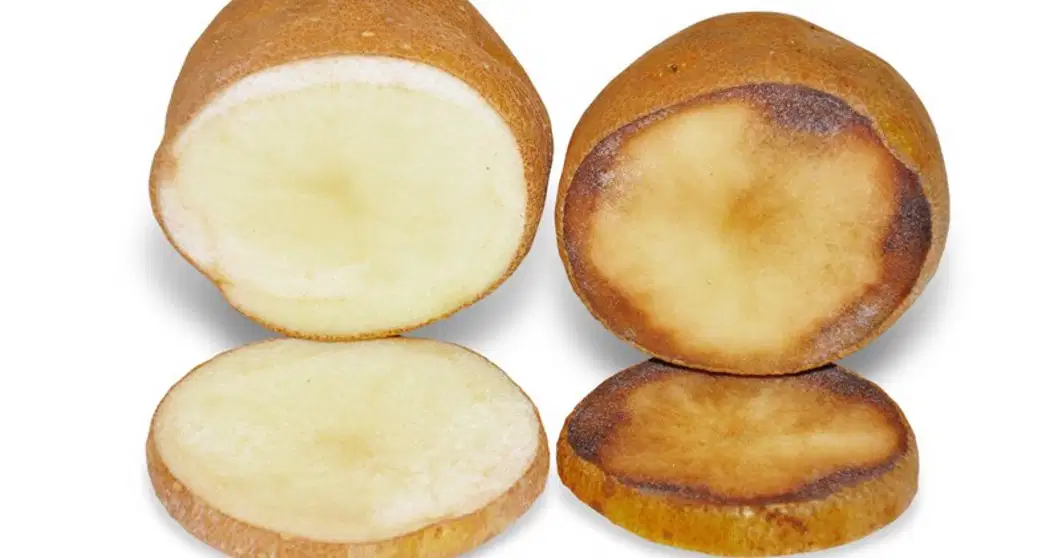
Identify the indicator of chemical reaction.
Change in temperature
Production of gas
Change in color
Formation of precipitate

Identify the indicator of chemical reaction.
Change in temperature
Production of gas
Change in color
Formation of precipitate
Name the following ionic compound: BeCl2
beryllium chlorine
beryllium II chloride
beryllium chloride
beryllium dichloride
It refers to the substance(s) that are considered to be "ingredients" of a chemical reaction.
reactants
products
catalysts
enhancers
In an endothermic reaction, energy is _________.
absorbed
released
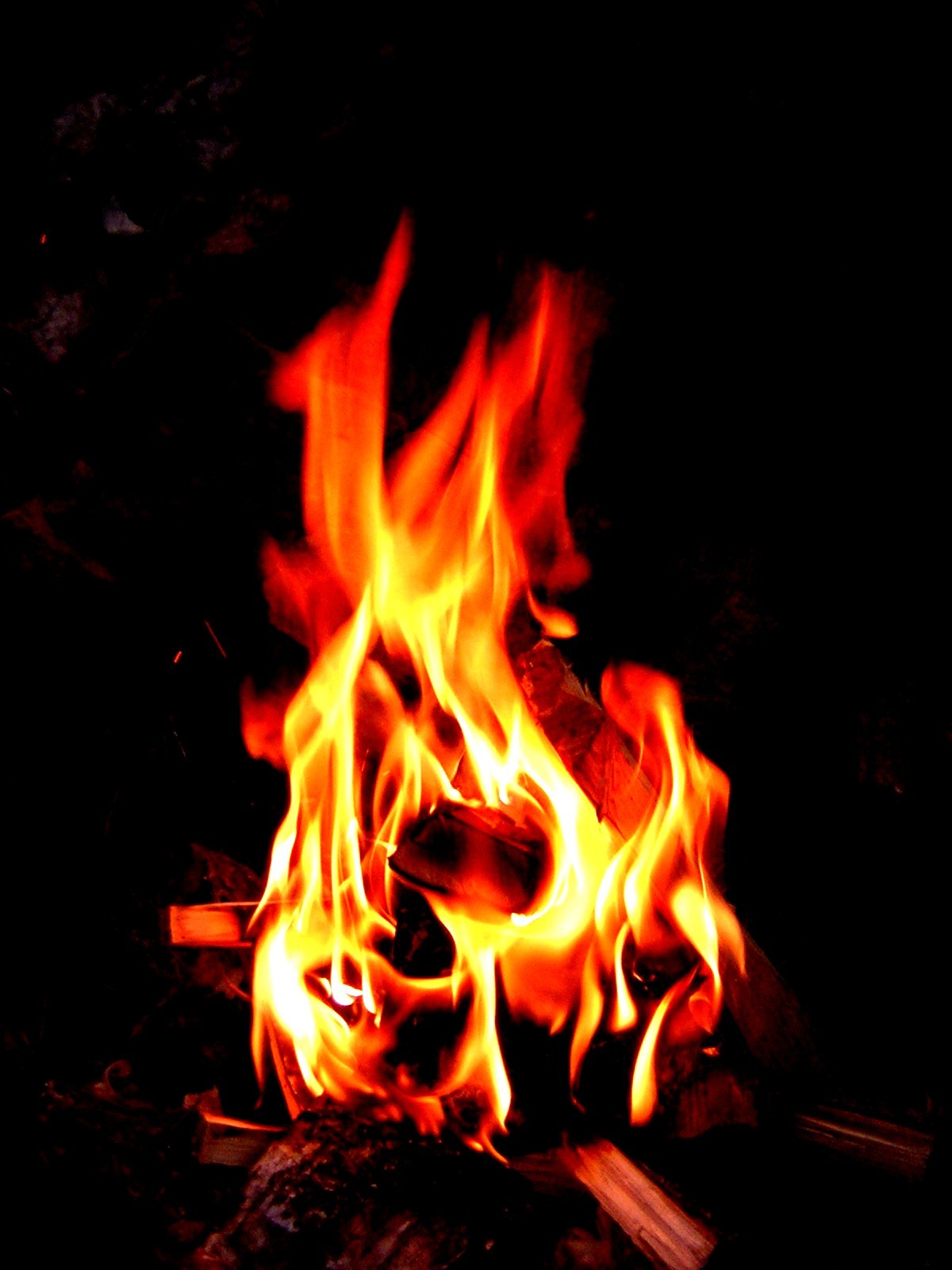
_____ reactions usually feel hot!
endothermic
exothermic

Your family uses candles to see when the electricity goes out.
exothermic
endothermic

A sunflower makes food during photosynthesis.
exothermic
endothermic

You freeze juice to make ice pops.
exothermic
endothermic
A substance that is formed as the result of a chemical reaction is a __________________
Product
Reactant
Starters
Enders
A change in the shape of an object is an example of _________________.
a chemical change
energy
an endothermic change
a physical change
In the equation 2Mg+O2 → 2MgO which are the reactants?
It is a process where a particular substance or substances change into one or more new substances.
a. Chemical Reaction
b. Chemical Change
c. Physical Change
d. Chemical Equation
This theory states that the rate of reaction is directly proportional to the number of collisions of molecules per second.
a. Bigbang theory
b. Bigbang theory
c. Collision theory
d. Atom theory
It is the minimum energy needed to initiate a chemical reaction.
Activity Energy
Activation energy
Active energy
Addition Energy
This factor affects the rate of reaction by increasing or decreasing of kinetic energy.
a. Temperature effects
b. Concentration
c. Surface area
d. Effects of catalyst
This factor affects the rate of reaction by increasing or decreasing of reactant particles.
a. Temperature effects
b. Concentration
b. Surface area
d. Effects of catalyst
Explain how an increase in temperature affects the rate of a chemical reaction.
An increase in temperature only affects the color of a chemical reaction.
An increase in temperature has no effect on the rate of a chemical reaction.
An increase in temperature generally increases the rate of a chemical reaction.
An increase in temperature generally decreases the rate of a chemical reaction.
How does the concentration of reactants impact the rate of a chemical reaction?
Higher concentration of reactants generally leads to a faster reaction rate.
The impact of concentration of reactants on the rate of a chemical reaction depends on the type of reactants.
Concentration of reactants has no impact on the rate of a chemical reaction.
Lower concentration of reactants generally leads to a faster reaction rate.
Give an example of a chemical reaction where temperature plays a crucial role in controlling the rate.
The reaction between baking soda and vinegar
The reaction between sodium and chlorine to form salt
The reaction between hydrogen and oxygen to form water
The reaction between iron and oxygen to form rust
Discuss the role of surface area in increasing the rate of a chemical reaction in everyday life.
Surface area only affects physical changes, not chemical reactions
Surface area increases the contact between reactant particles, leading to more collisions and a higher reaction rate.
Surface area has no impact on the rate of a chemical reaction
Increasing surface area decreases the rate of a chemical reaction
If the concentration of a reactant is increased, the reaction rate will ___________.
increase
decrease
stay the same
Decreasing the concentration of the reactants increases the collision frequency between reacting particles.
TRUE
FALSE
Increasing the concentration of a substance increases the kinetic energy of the particles that make up the substance
TRUE
FALSE
Increasing the surface area of the reactant, increases the rate of the reaction.
TRUE
FALSE
Raising the temperature of the reaction increases the rate of the reaction by increasing the energy of the collisions between reacting particles.
TRUE
FALSE
If the reactant particles collide with less than the activation energy, the particles bounce back, and no reaction will occur
TRUE
FALSE
Which of the following would NOT increase the rate of reaction?
Increasing the temperature
Adding catalyst
Increasing the volume
Increasing the concentrations
Suppose you dissolve Zinc (Zn) in Hydrochloric acid (HCl) and add more acid than usual. Then drop pieces of Zinc. What factor does NOT affect the rate of the reaction?
Surface area of the Zinc
Concentration of the reactant
Temperature of the solution
Amount of Hydrochloric acid
Why does a candle burn more rapidly when placed in an open jar than in air?
What accounts for this reaction?
Higher Oxygen concentration
Greater surface area of the jar
Increasing the surrounding temperature
Length of the candle
Does the presence of catalyst will change the amount of product?
Yes
No
The glow stick glowed brighter in hot water because
the chemical reaction slowed down in hot water
the chemical reaction speed up in hot water
temperature has no effect on the glow stick chemical reaction
all of the above
Increasing the temperature will increase the kinetic energy of particles, therefore increasing the collisions between particles.
false
true
When a sugar cube is crushed up, the particles get smaller. How has the surface area of the particles changed?
the surface area increases
the surface area decreases
the surface area remains constant
How does increasing the concentration affect a reaction rate?
makes it go faster (increases rate)
makes it go slower (decreases rate)
How does increasing concentration increase the rate of a reaction?
fewer collisions occur among reactants
more kinetic energy is provided to the reactants
more collisions occur among reactants
less kinetic energy is provided to the reactants

How many Iron (Fe) atoms are in this chemical formula?
Ferrous sulfide is reacted with Oxygen, to form Ferric oxide and Sulfur dioxide. What is the balanced equation?
FeS+3O₂ -> 2FeO+SO₂
4FeS+7O₂ -> 2Fe₂O₃+4SO₂
2FeS+3O₂ -> 2FeO+2SO₂
4FeS+O₂ -> Fe₂O₃+4SO₂
Aluminum is reacted with Sulfuric Acid, to form Aluminum Sulfate and Hydrogen gas. What is the balanced equation?
2Al + 2H2SO4 -> Al2(SO4)2 + 2H2
Al + 3H2SO4 -> Al3(SO4)3 + 3H2
4Al + 6H2SO4 -> 2Al2(SO4)3 + 6H2
2Al + 3H2SO4 -> Al2(SO4)3 + 3H2
Is the following equation balanced?
Al + O2 ---> 2Al2O3
YES
NO
Is the following equation balanced?
2C2H2 + 5O2 ---> 4CO2 + 2H2O
YES
NO
Is the following equation balanced?
4Fe + 3O2 ---> 2Fe2O3
YES
NO
Is the following equation balanced?
NaHCO3 ---> Na2CO3 + H2O + CO2
YES
NO
Is the following reaction balanced?
2CH3OH + 3O2 ---> 2CO2 + 4H2O
YES
NO
Which of the following equations are correctly balanced?
12CO2 + H2O ---> C6H12O6 + O2
CO2 + H2O ---> 3C6H12O6 + O2
CO2 + 9H2O ---> C6H12O6 + O2
6CO2 + 6H2O ---> C6H12O6 + 6O2
Balance this equation:
H2 + Cl2 ---> HCl
It is balanced.
H2 + Cl2 ---> 2HCl
3H2 + Cl2 ---> 6HCl
H2 + 3Cl2 ---> 6HCl
Balance this equation:
HgO ---> 2Hg + O2
It is balanced.
2HgO ---> 2Hg + O2
2HgO ---> Hg + O2
HgO ---> Hg + 2O2

