
Font size
 Worksheets
Cells and Organelles Review
Total questions: 85
Worksheet time: 57mins

What does the nucleus do?
Breaks down food and waste
Moves things around the cell
Creates energy from food
Controls everything and stores DNA
What does the nucleus do?
Breaks down food and waste
Moves things around the cell
Creates energy from food
Controls everything and stores DNA

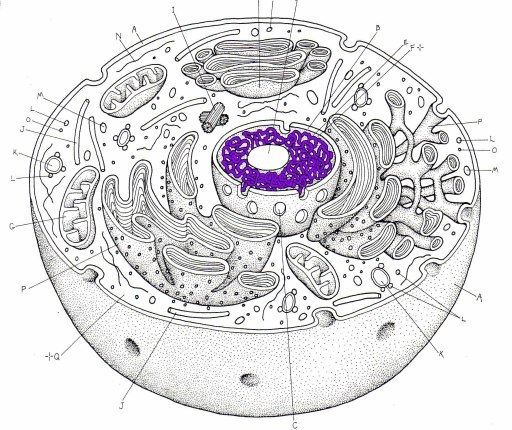
What part of a cell is "A" in the diagram?
nucleus
cytoplasm
cell membrane

Letter "B" is what part of a cell?
cytoplasm
cell membrane
nucleus

What is number 1 pointing to?
cell wall
ribosomes
lysosomes
chloroplast

What is number 5 pointing to?
cell wall
Nucleus
cytoplasm
cell membrane

In both the animal and plant cells, what is the letter B pointing to?
chloroplast
ribosomes
nucleus
mitochondria

What is number 6 pointing to?
chloroplast
cytoplasm
nucleus
cell wall


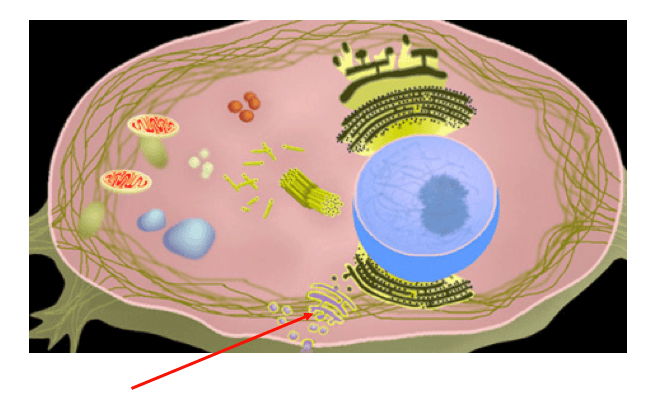
Identify the structure that the arrow is pointing to.
Endoplasmic Reticulum
Golgi Body
Ribosome
Mitochondria
What is unicellular?
one cell
many cells
no nucleus
DNA
The basic unit of life is called a(n)
atom
compound
cell
energy
Which of the following does have a nucleus?
prokaryotes
eukaryotes
prokaryotes and eukaryotes
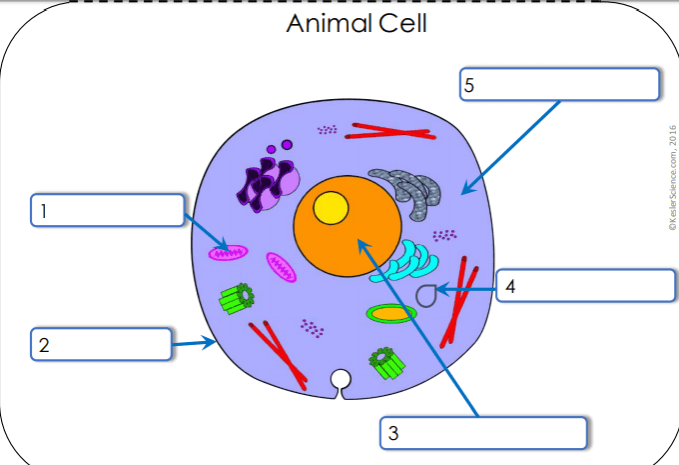
What is #1 in the diagram?
nucleus
cell wall
cytoplasm
mitochondrion

A rigid layer that lies outside the cell's membrane is...
Cell Wall
Cell membrane
Cell gate

What does organelle number 4 represent on the diagram?
Chloroplast
Cell Wall
Cell Membrane
Mitochondria
Structures in the cytoplasm that help the cell with life
Cytoplasm
Nucleus
Organs
Organelles
Which of the following is the smallest unit of life that can carry out all life functions?
Cell
Organ
Water
Nucleus

The diagram shown is a useful scientific model because it shows:
An animal cell as it really looks.
A plant cell as it really looks.
The structures of a typical plant cell.
How the structures of a cell function.

A rigid structure that gives protection, support, and shape to plants, algae, fungi and some bacteria.
cell wall
cell membrane
cytoskeleton
cytoplasm

Plant and animal cells are both eukaryotic cells and have many cell organelles in common. However, the cells do have a few differences. Which statement below is true?
Plant and animal cells do not both have a cell membrane.
Plant cells have a rigid outer cell membrane while the membrane of animal cells is thin and permeable.
Animal cells only have a cell membrane while a plant cell only has a cell wall.
Animal cells have a cell membrane and plant cells have a cell membrane and an outer cell wall.
Explain how the cell membrane contributes to the regulation of substances entering and exiting the cell.
The cell membrane allows all molecules to pass through without restriction.
The cell membrane selectively permits certain molecules to enter or leave the cell.
The cell membrane blocks all molecules from passing through.
The cell membrane only allows ions to pass through.
The cell wall is found only in plant cells
True
False
Which statement is part of the cell theory?
All cells react to stimulus
The cell is the basic unit of all organisms
The cell can be large or small
The cell is either prokaryotic or eukaryotic
Which statement is part of the cell theory?
All cells can reproduce
All organisms are either unicellular or multicellular
All organisms are made of 1 or more cells
All cells grow and develop
What type of organisms does the cell theory apply to
bacteria
multicellular organisms
plants and animals
all of the above
A living thing that is made up of organ systems.
cell
tissue
organ
organ system
organism
Two or more different kinds of tissues that work together are called...
cell
tissue
organ
organ system
organism
The smallest unit of a living thing
cell
tissue
organ
organ system
organism
Groups of similar cells that work together.
cell
tissue
organ
organ system
organism
Two or more organs that work together are called...
cell
tissue
organ
organ system
organism
Which is the correct order for levels of organization from simple to complex?
cell, organ , tissue, organ system, organism
organism, organ system, tissue, cell, organ
cell, tissue, organ, organ system, organism
organ, tissue, cell, organism, organ system

This organelle controls what goes in and out of plant and animal cells.
Cell Wall
Cell Membrane
Chloroplasts
Cytoplasm
The _____________ stores food, water, wastes, and other materials in both plant and animal cells.
Vacuole
Mitochondria
Cytoplasm
Nucleus
The _____________ holds the DNA, and controls the functions of eukaryotic cells.
Nucleus
Nuclear Membrane
Mitochondria
Chloroplast
The _____________ is a gel-like fluid that fills plant and animal cells. It holds the organelles in place and gives each cell its shape.
Cytoplasm
Cell Membrane
Cell Wall
Chloroplast
What can only be found in plant cells?
Cell membrane
Vacuole
Chloroplast
Mitochondria
Mitochondria are found in

A large central vacuole is found in a _____ cell.
animal
plant


Cell with no membrane-bound structures and no
nucleus
Eukaryote
Prokaryote
Plant
Animal
Cell with membrane-bound organelles and a
nucleus
prokaryote
eukaryote
bacteria
peroxisome
Organisms whose cells do not have a nucleus are called
Eukaryotes
Multicellular
Prokaryotes
Unicellular
An organism made of only one cell is called
Eukaryotes
Monocellular
multicellular
Unicellular
The ____________is a densely packed area in a cell that contains genetic material-DNA- for controlling the cell's activities.
Chloroplast
Nucleus
Mitochondria
Vacuole
Organisms with cells that have a nucleus are called
Archaea
Bacteria
Eukaryotes
Prokaryotes
The basic unit of structure and function in an organism is the
cell
chloroplast
lysosome
unicellular
A _____________ organism is made of many cells, each specialized to do certain jobs.
Eukaryotic
multicellular
Prokaryotic
Unicellular
This outermost layer protects and supports the cells of plants and some other organisms.
cell membrane
cell wall
cytoplasm
Golgi apparatus
This structure surrounds the cytoplasm of all cells and controls what enters and leaves the cell.
Cell Membrane
cellophane
Cell Wall
cellulose
This fluid in the cell is where the organelles are found. It contains water and chemicals the cell needs.
Blood
Cytoplasm
Plasma
Vacuole
These organelles convert the energy in food molecules to a form the cell can use.
Chloroplasts
Mitochondria
Lysosomes
Ribosomes
These tiny cell structures assemble protein molecules from amino acids. Usually referred to as the protein factory.
Carbohydrates
Lipids
Nucleic Acids
Ribosomes
These organelles in plants capture light energy and store it in glucose molecules to be used as food.
Chloroplasts
Mitochondria
Endoplasmic Reticulum
Vacuoles
Tiny structures found within a cell that allow it to function.
Organs
Systems
Parts
Organelles
Photosynthesis happens in the __________. This organelle takes in _______________energy and converts it to food for the plant.
Mitochondria; Food
Glucose; Chloroplast
Nucleus; Sunlight
Chlorolast; Sunlight
This organelle is the pathway that proteins travel through to various other parts of the cell. An analogy may refer to it as roads or highways.
Cytoplasm
Endoplasmic Reticulum
Golgi Bodies
Cell Wall
This organelle repackages proteins into smaller amounts to be sent to various places throughout the cell. An analogy would be to compare it to a post office or a UPS store.
Golgi Bodies
Endoplasmic Reticulum
Ribosomes
Nucleus
This organelle is a storage compartment that holds water, some food, and waste. A plant cell has only one or two large ones, while an animal cell has many small ones.
Ribosomes
Nucleus
Lysosomes
Vacuoles
This organelle breaks down dead and damaged parts of the cell and disposes of them. It can be referred to as the cleanup crew.
Chromosomes
golgi Bodies
Ribosomes
Lysosomes
All of the following organelles can be found in the plant cell except (choose the one that does not belong to the plant).
Cell Wall
Cell Membrane
Lysosomes
Chloroplast
All of the following can be found in an animal cell except (choose the one that does not belong).
Endoplasmic Reticulum
Ribosomes
Chloroplast
Cytoplasm

