
Font size
 Worksheets
Anatomy SI Session 3
Total questions: 51
Worksheet time: 37mins
Ready for exam 3?
No
yes
maybe?
I dont wanna talk about it
What structures can you find in the aortic hiatus? (Choose all that apply)
aorta
Azygous artery
Azygous vein
thoracic duct
Caudal Subclavian artery
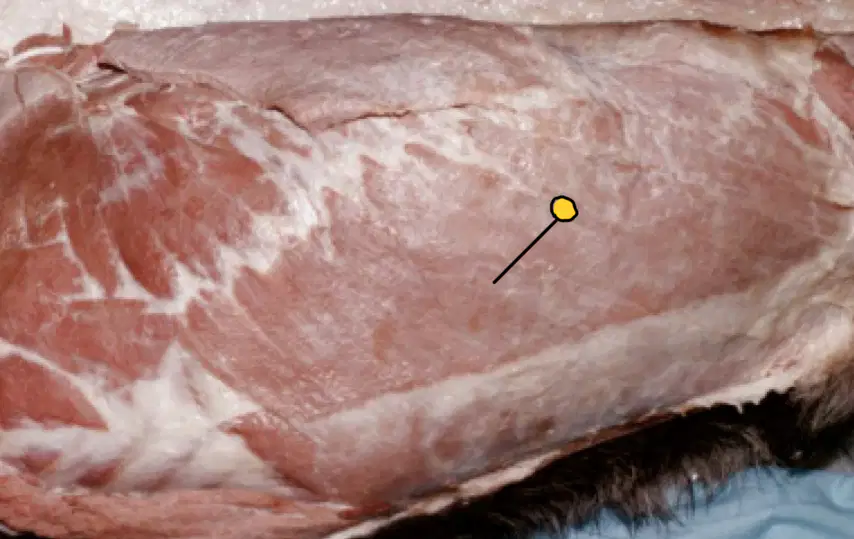
What is the fiber direction of the muscle indicated by the yellow pin?
Internal Abdominal Oblique, Cranioventrally
Internal abdominal oblique, caudoventrally
External abdominal oblique, caudoventrally
External abdominal oblique, cranioventrally
The pylorus should it on which side of the body?
Right side
left side
cranially
caudally
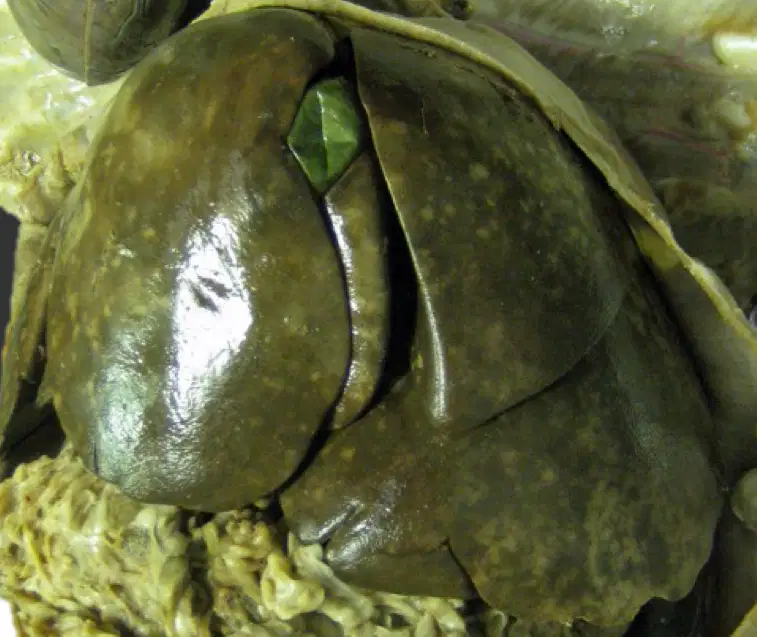
The gallbladder sits between which liver lobes?
Right medial, right lateral
Left medial, left lateral
Right medial, Quadrate lobe
left medial, Quadrate lobe
What fetal remnant can be found in the falciform ligament?
(a)

Identify the structures labeled in the picture provided.
A. Accessory Duct
B. Pancreatic Duct
A. Minor papilla
B. Major papilla
A. Major Duodenal Papilla
B. Minor Duodenal Papilla
A. Major jejunal papilla
B. Minor jejunal papilla
What structures empty into the minor duodenal papilla?
Accessory pancreatic duct
bile duct
cystic duct
pancreatic duct
Which pancreatic structure do cats rely on to aid them in digestion?
Accessory pancreatic duct
bile duct
Pancreatic duct
Hepatic ducts
What is the name of the connecting peritoneum, where you will find the left lobe of the pancreas?
superficial leaf of the lesser omentum
deep leaf of the lesser omentum
deep leaf of the greater omentum
Superficial leaf of the greater omentum
Where can you find the body of the pancreas?
along the greater curvature of the stomach
along the descending duodenum
at the caudal duodenal flexure
at the cranial duodenal flexure
What is the name of the artery that grossly distinguishes the ileum from the jejunum?
Mesenteric jejunal artery
Antimeseneteric jejunal artery
Antimesenteric ileal artery
Mesenteric ileal arterty
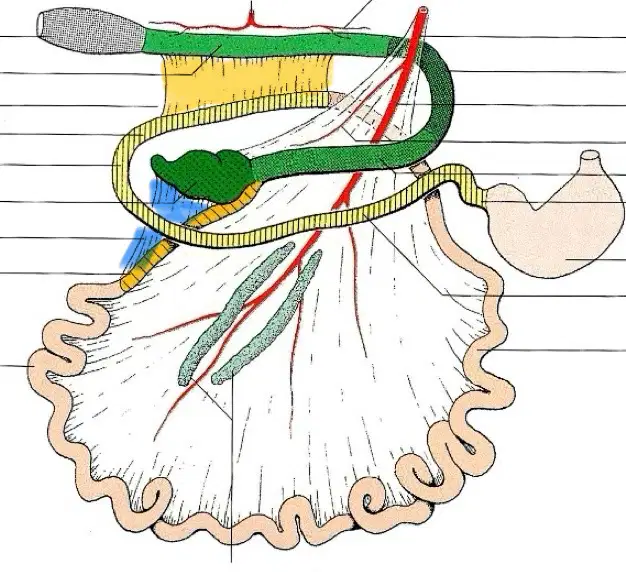
Identify both folds indicated by the yellow and blue coloring in the image.
(a)
Where does the spleen lie in the dog? (Be as specific as possible)
(a)
Which fold contains the artery that indicates where the ileum is located?
(a)
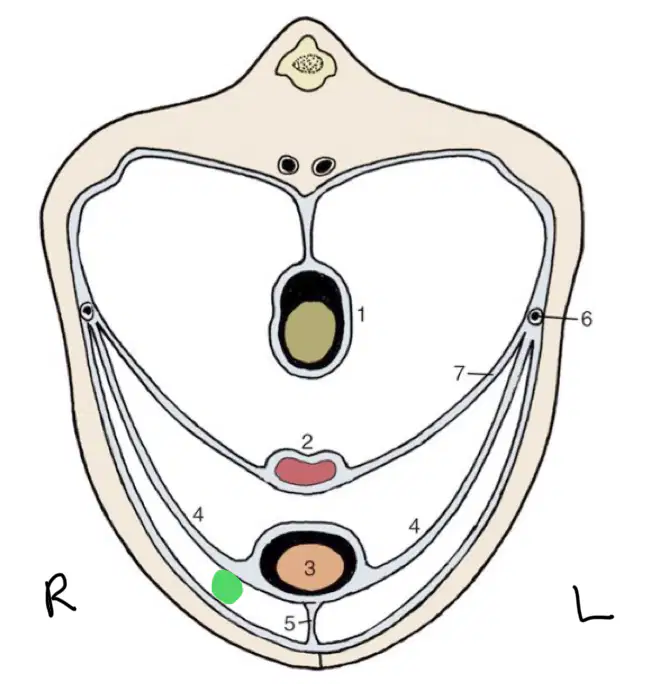
The green circle can be found in which peritoneal pouch/cavity?
Right pararectal fossa
Right vesicogenital pouch
right pubovesicle pouch
right rectogenital pouch

What anatomical structures should you see when you find the epiploic foramen? (Choose all that apply)
Descending duodenum
caudate process of the caudate lobe
portal vein
caudal vena cava
Spleen
Where can you find the cell body of a pre-ganglionic sympathetic neuron that innervates the spleen?
(a)
Where are the cell bodies of a GVA (general visceral afferent) Neuron located?
(a)
Where are the cell bodies of a GSE (general somatic efferent) neuron located?
(a)
What artery branches off the splenic artery to supply the stomach?
(a)
The major splanchic nerve contains what type of neurons?
Pre- ganglionic parasympathetic Neurons
Pre- ganglionic sympathetic neurons
post-ganglionic parasympathetic neurons
post-ganglionic sympathetic neurons

The nerve indicated by the highlighted number 2 in the image, contains what type of neurons?
Pre-ganglionic parasympathetic
post-ganglionic parasympathetic
pre-ganglionic sympathetic
post-ganglionic sympathetic
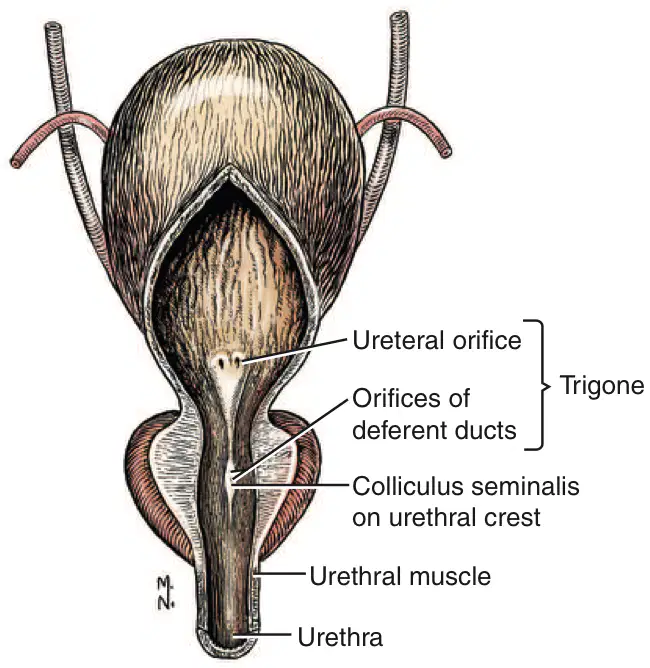
The urethral muscle (urethralis muscle) contains what type of neurons?
post ganglionic parasympathetic
GSE
GSA
post ganglionic sympathetic

What is the name of the structure indicated by the yellow pin? (Ignore the word “structure?” and the blue arrow in the image)
(a)

What is the artery indicated by the letter A. ?
(a)

What is the artery indicated by the letter B.?
(a)
Which vein is commonly used for vein puncture in the cat?
(a)
What is the terminal lymph node of the hind limb?
popliteal lymph nodes
Superficial inguinal lymph nodes
jejunal lymph nodes
Medial iliac lymph nodes
The lymphatics of the testicles drain to which lymph nodes?
superficial inguinal lymph nodes
popliteal lymph nodes
medial iliac lymph nodes
lumbar aortic lymph nodes
If there was damage to the femoral nerve, what injuries would be expected? (Choose all that apply)
inability to extend the genual joint
inability to bear weight of the lumbar spine
inability to bear weight on pelvic limb
inability to flex the genual joint
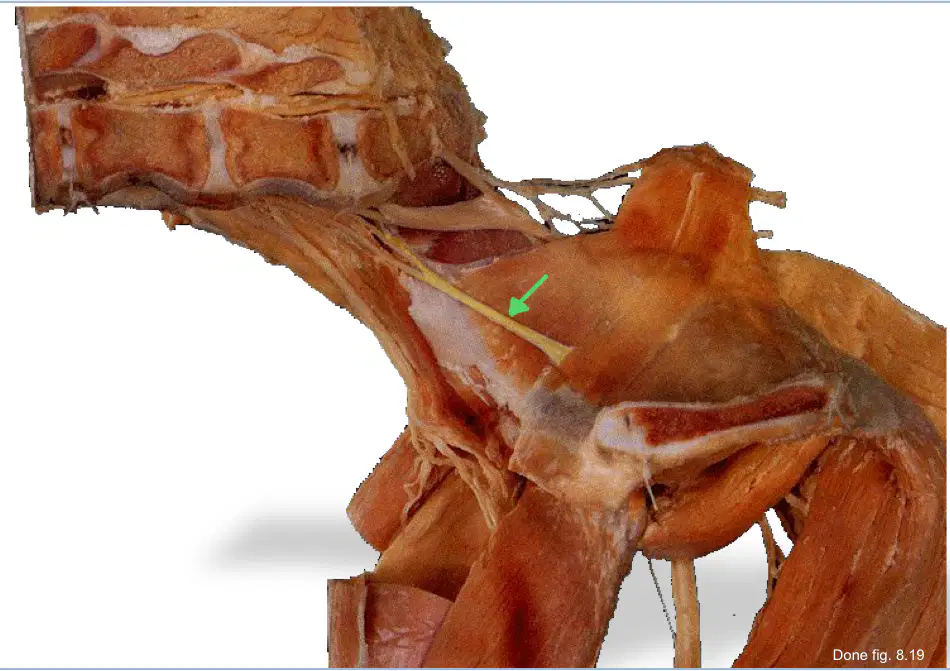
If the nerve (indicated by the green arrow) was damaged what injuries would you expect?
Inability to bear weight
inability to lift leg
inability to adduct limb
Inability to abduct the limb
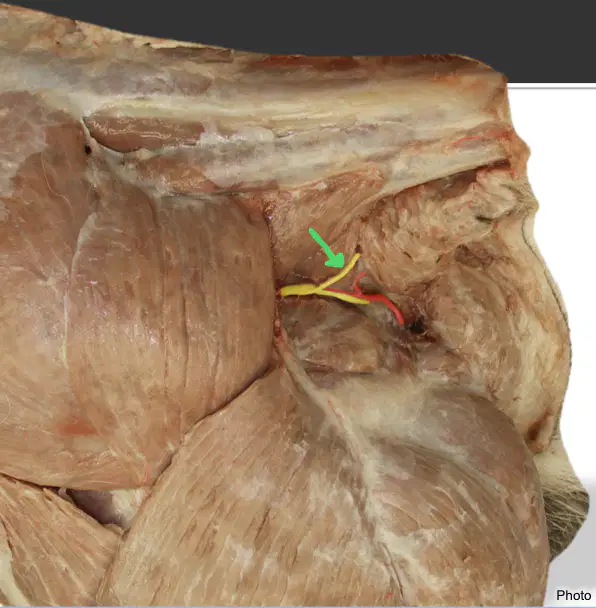
What does the nerve indicated by the green arrow innervate?
(a)

Which nerve innervates the muscle indicated by the green arrow?
caudal cutaneous femoral nerve
lateral cutaneous nerve
Deep femoral nerve
genitofemoral nerve
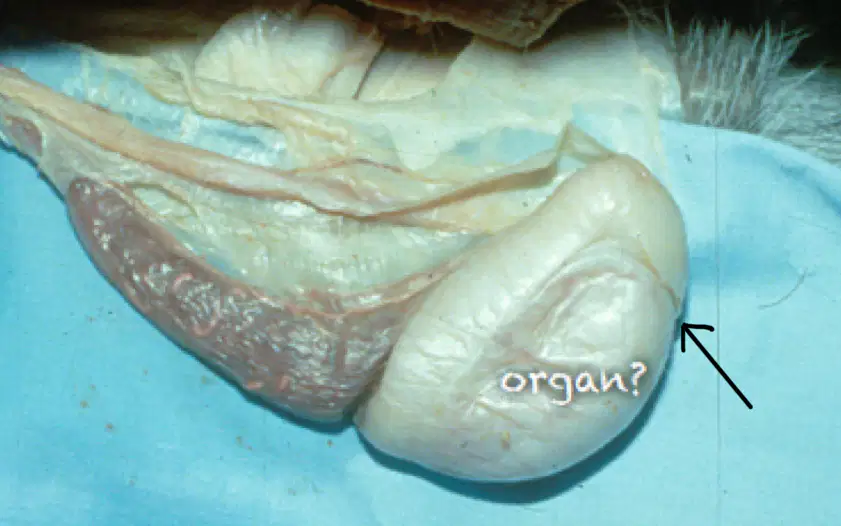
What is the name of the gubernaculum remnant indicated by the black arrow. (Ignore the word “organ?”)
(a)
What structure(s) need to be broken down during a spay? (Choose all that apply)
suspensory ligament of ovary
Lateral ligaments
Broad ligament
median ligament

Which structures are remnants of the gubernaculum? (Your answer should be a letter(s), choose all that apply.
A
B
C
D

Name the structures of remnants of the gubernaculum.
(a)
What is unique about the left ovarian vein?
it empties directly into the portal system
it empties into the cranial vena cava
it empties into the left renal vein
It empties into the right renal vein

The probe is in what structure?
External vestibular orifice
External cervical orifice
Vaginal orifice
external urethral orifice
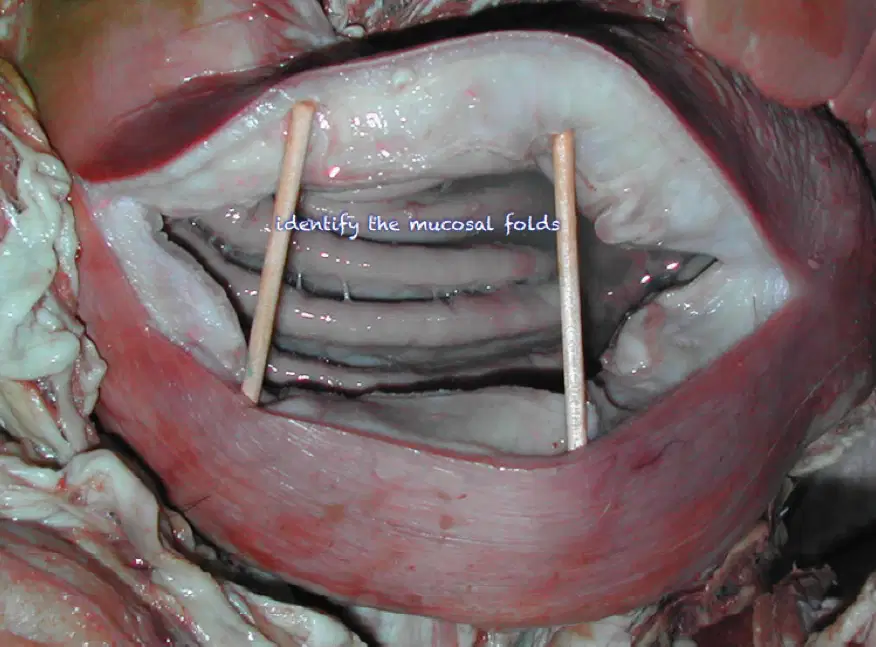
Identify the mucosal folds as shown in the image.
(a)
What structure(s) make up the broad ligament? (Choose all that apply)
mesovarium
Proper ligament of the ovary
mesosalpinx
mesometrium
Round ligament of the uterus

Identify the artery indicated by the word “identify” as shown in the image.
External iliac artery
Internal iliac artery
femoral artery
pudendoepigastric artery

The artery indicated by the green arrow originates from what artery?
(a)
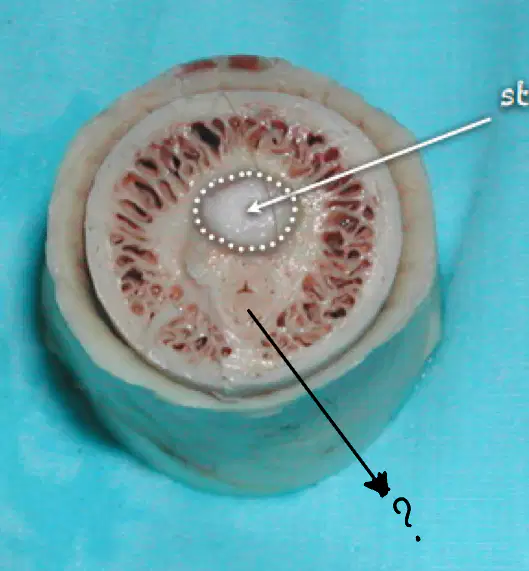
What is the structure indicated by the black question mark?
Corpus spongiosum
corpus cavernosum
tunica albuginea
musculocavernous
The caudal cutaneous femoral nerve provides cutaneous innervation to what part of the hind limbs?
Skin over the cranial aspect of the thigh
Skin over the medial aspect of the thigh
Skin over the lateral aspect of the thigh
Skin over the caudal aspect of the thigh
The pelvic nerve contains what type of neurons?
(a)
The caudal mesenteric ganglion contains cell bodies of what type of neuron?
Post ganglionic parasympathetic
pre ganglionic sympathetic
pre ganglionic parasympathetic
post ganglionic sympathetic
Damage to the common fibular nerve would result in what type of injury? (Choose all that apply)
inability to flex tarsal joints
inability to extend digital joints
knuckled over
loss of sensation over dorsum of paw
In ability to abduct the limb
The sciatic nerve terminates as what nerve(s)?
Femoral nerve
tibial nerve
Genitofemoral nerve
common fibular nerve
Where does the suspensory ligament attach?
(a)

