
Font size
 Worksheets
Unit 3 Test Review
Total questions: 60
Worksheet time: 1hrs 21mins

Which scientist was the first person responsible for proposing the discovery of the electron?
Democritus
John Dalton
Ernest Rutherford
J.J. Thomson
Niels Bohr

Which scientist was the first person responsible for proposing the discovery of the nucleus?
Democritus
John Dalton
Ernest Rutherford
J.J. Thomson
Niels Bohr

Which scientist claimed that the atom was a small, dense, solid sphere?
Democritus
John Dalton
Ernest Rutherford
J.J. Thomson
Niels Bohr

Which scientist's model is referred to as the Plum Pudding Model?
Democritus
John Dalton
Ernest Rutherford
J.J. Thomson
Niels Bohr

Which scientist proposed the idea that the electrons orbited the nucleus on fixed paths with designated energies?
Democritus
John Dalton
Ernest Rutherford
J.J. Thomson
Niels Bohr
Which man proposed that the atom was indivisible using the word "atomos"?
Democritus
John Dalton
Ernest Rutherford
J.J. Thomson
Niels Bohr

What were J. J. Thomson's three contributions to the atomic theory?
Discovered the electron
Discovered the nucleus -did the gold foil experiment
Used the cathode ray tube in his discovery
Created a model of the atom with electrons moving around the nucleus in fixed orbits
Created the "plum pudding" model of the atom

What were Ernest Rutherford's three contributions to atomic theory?
Discovered that the atom is mostly empty space
Discovered the nucleus- did the gold foil experiment
Used the cathode ray tube in his discovery
Discovered the electron
Discovered that the nucleus (and later the protons specifically) had a positive charge

Discovered neutral particles IN the nucleus of atoms.
In other words, he found the neutrons.
Subatomic particles with a negative charge
Electrons
Neutrons
Protons
Quarks

What two particles would you find in the nucleus of an atom?
Protons and electrons
Neutrons and electrons
Protons and neutrons
Electrons and negatrons
The cloud model is what we use for the atomic theory now. What does the cloud model look like?
A ring with gold foil in the middle.
Electrons orbiting the nucleus like the planets around the sun.
A cloud of electrons floating around the nucleus.
A scoop of chocolate chip ice cream. It had electrons scattered within a ball of positive charge.
What is the smallest unit of matter? It is composed of protons and neutrons, held together in the nucleus, and electrons around the nucleus in different electron orbitals, which form an electron cloud.
cell
nucleus
atom
electron
What is a subatomic particle without an electric charge, located in the nucleus of an atom?
neutron
proton
electron
valence electron


Dalton's atomic theory did NOT include the postulate that
Matter is made of small particles called atoms
Atoms contain electrons protons and neutrons
Atoms are neither created nor destroyed in a chemical reaction
Compounds always contain the same relative numbers and kinds of atoms
Which one is the Dalton model of the atom?


Dalton had 4 points about an atom, which were ended up being incorrect?
Atoms combine in whole ratios and can be rearranged during a chemical reaction
An atom of the same element are identical
All mater is composed of small particles called atoms
Atoms are indivisible (can't be divided into smaller things)
Label the following item
What does the atomic number identify?
The number of neutrons.
The number of protons.
The number of protons + neutrons.
The number of electrons.
The number of protons + neutrons in the nucleus is referred to as what?
Atomic number
Atomic mass
Mass number
Isotope number
Atoms of the same element with a different number of electrons are called ___________.
elements
isotopes
ions
neutral
Which subatomic particle is used to identify the atom, as it never changes?
Protons
Neutrons
Electrons
An ion with a positive charge has __________.
the same number of protons and electrons.
lost a proton.
lost an electron.
gained an electron.
Atoms of the same element with a different number of neutrons are called _________.
elements
isotopes
ions
neutral
Average Atomic mass is __________. Select all that apply
a whole number
protons + neutrons
the mass found on the periodic table
the weighted average of all the isotopes of a given element
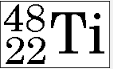


What is the mass number for the isotope shown?
29
34
63
92
Which is the correct symbol for Fluorine-18?


Match the following
Atomic number
number of protons
Mass Number
protons + neutrons
Charge
protons - electrons
neutrons
mass# - atomic#
positive (+) Ion
negative (-) ion
Neutral
can be either neutral or ion
results from losing electrons
results from gaining electrons
always has equal numbers of protons and electrons
has different numbers of neutrons
has more protons
has more electrons
atoms of the same element with different mass numbers
Rubidium has two common isotopes, 85Rb and 87Rb. If the abundance of 85Rb is 72.2% and the abundance of 87Rb is 27.8%, what is the average atomic mass of rubidium?
85.468 amu
37 amu
85.6 amu
86.4 amu
Match the following scientist to their model of the atom.
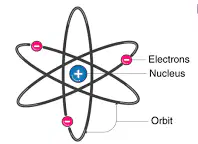
Rutheford's Nuclear Model
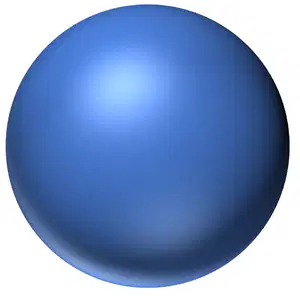
Dalton's Billiard Ball Model

Bohr's Planetary Model
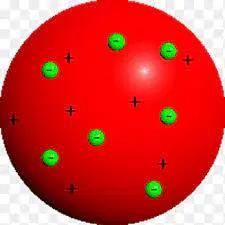
Thomson's Plum Pudding Model
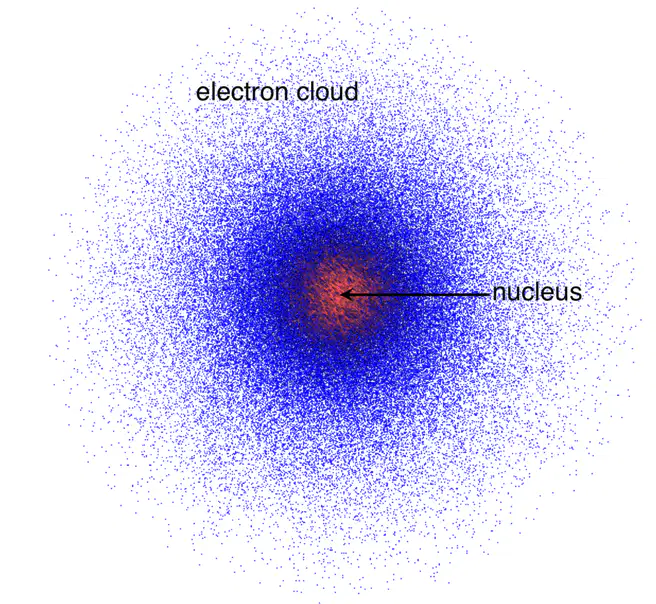
Current Model: Electron Cloud Model
Arsenic - 75 is has (a) protons and (b) neutrons. If it were gain 1 proton it would become (c) if it were to lose 1 proton it would become (d) . If arsenic gains a neutron it would have a mass of (e) .

How many electrons does the following ion have?
3
7
10
14

The vertical (up and down) columns in the Periodic Table are called
groups
towers
periods
atomic numbers
period
Elements that occur in vertical columns on the periodic table.
A horizontal row of elements in the periodic table
Found in group two of the periodic table; highly reactive
A subatomic particle that has a negative charge
The elements on the right side of the Periodic Table are classified as ________________.
Metals
Nonmetals
Group 18: Unreactive nonmetals. All are colorless, odorless gases at room temperature. These elements have a full outer energy level, usually 8 valence electrons, except for Helium which only has 2 valence electrons.
Nitrogen Group
Oxygen Group
Noble Gases
Halogens
Group 1: These metals are extremely reactive. They all have one valence electron. They are shiny and silver in color. They are soft and can be cut with a knife.
Transition Metals
Alkali Metals
Alkaline Metals
Lanthanides
This element does not match the properties of any other group so it stands alone. It is placed above Group 1 but it is not part of that group. It is very reactive, colorless, odorless, and a gas at room temperature.
Hydrogen
Helium
Nitrogen
Oxygen
The _______________electrons are the electrons on the outer most energy level of the atom.
valence
core
excited
ground state
The _________________ are a small group of elements that have both metallic and nonmetallic properties.
Oxygen Group
Nitrogen Group
Metalloids
Halogens

The alkaline earth metals have
1 valence electron
2 valence electrons
7 valence electrons
8 valence electrons

What charge will an Oxygen ion have? and why?
+2 from losing two electrons
+2 from gaining two protons
-2 from gaining two electrons
-2 from losing two protons

