
Font size
 Worksheets
periodic table
Total questions: 90
Worksheet time: 53mins
In 1869, _____________ created the first accepted version of the periodic table.
Isaac Newton
Dmitri Ivanovitch Mendeléev
In what year Dmitri Ivanovitch Mendeléev created the first accepted version of the periodic table.
1896
1869
Mendeleeve grouped elements according to their __________, and as he did, he found that the families had similar chemical properties
atomic number
atomic mass
________were left open to add the new elements he predicted would occur.
filled spaces
blank spaces
The most abundant element in the earth’s crust is
carbon dioxide
oxygen
gold
Elements are organized on the table according to their
electronic configuration
atomic mass
atomic number
The (a) refers to how many protons an atom has
The atomic number is unique to that element. No two elements have the same atomic number.
false
true
are good conductors of heat and electricity
(a)
Metals can be stretched into thin wires, so it means it is
malleable
ductile
Metals can be pounded into thin sheets
ductile
malleable
A chemical property of metal is its reaction with water which results in
erosion
corrosion
are poor conductors of heat and electricity
metals
non-metals
halogens
_____ are not ductile or malleable
metals
non-metals
Solid nonmetals are brittle and break easily
false
true
metals are
shiny
dull
metals are on the left of the line of periodic table except for __________ which is considered non-metal.
oxygen
fluorine
copper
hydrogen
Many non-metals are
solids
liquids
gases
have properties of both metals and nonmetals.
(a)
They are solids that can be shiny or dull
(a)
They conduct heat and electricity better than non-metals but not as well as metals
halogens
metalloids
They are ductile and malleable.
non metals
metalloids
metals
the ____ are to the upper right of the periodic table separated by metalloids
metals
non-metals
elements in the periodic table are also grouped into families which are the________
rows
periods
columns
Elements in each family have similar but not identical properties
true
false
elements in families have dissimilar properties
false
true
Columns of elements are called
(a)
lithium (Li), sodium (Na), potassium (K), and other members of family have dissimilar properties
true
false
All elements in a family have the same number of
protons
electrons
neutrons
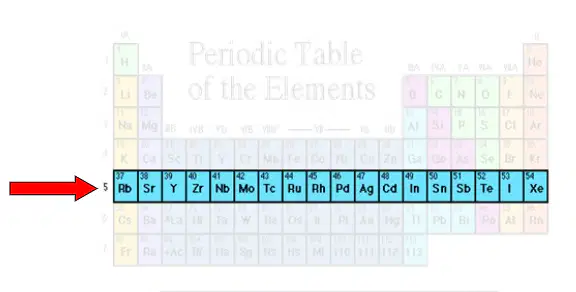
Each horizontal row of elements in the periodic table is called
group
period
The elements in a period are NOT alike in properties.
TRUE
FALSE
The first element in a period is always an
inactive gas.
extremely active solid
The last element in a period is always
inactive gas
extremely active solid
It’s a gas at room temperature
(a)
the _____ square sits atop Family IA, but it is not a member of that family. It is in a class of its own.
oxygen
nitrogen
hydrogen
carbon dioxide
It has one proton and one electron in its one and only energy level.
(a)
It ONLY needs 2 electrons to fill up its valence shell.
(a)
The _________ family is found in the first column of the periodic table.
Alkaline earth metals
Alkali metals
They are the most reactive metals.
They react violently with water.
They are always bonded with another element.
alkaline earth metals
alkali metals
What makes an element reactive?
select all that applies
an incomplete valence electron level
atoms bond until this level is complete
all atoms (except hydrogen) want to have 8 electrons in their very outermost energy level (this is called the rule of octet)
if the forces among the particles that makeup the nucleus are balanced
They are never found uncombined in nature
Noble gases
Alkaline Earth Metals
They have two valence electrons.
Alkaline Earth Metals
Alkali Metals
Elements with two valence electrons are typically found in Group 2 of the periodic table, also known as the___________
These elements include:
Beryllium (Be) - Atomic number 4
Magnesium (Mg) - Atomic number 12
Calcium (Ca) - Atomic number 20
Strontium (Sr) - Atomic number 38
Barium (Ba) - Atomic number 56
Radium (Ra) - Atomic number 88
Alkali Metals
Alkaline earth metals
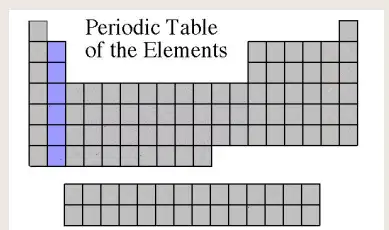
the purple colored metals on the figure is group of
Alkali Metals
Crystallogens
Alkaline earth metals
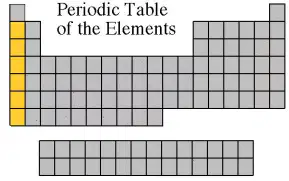
yellow colored is family of
Noble gases
Rare earth metals
Alkali Metals
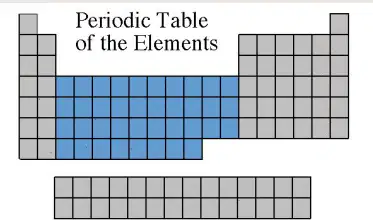
They are good conductors of heat and electricity
Transition Metals
Alkaline earth metals
These are the metals you are probably most familiar with: copper, tin, zinc, iron, nickel, gold, and silver.
Pnictogens
Transition Metals
Alkaline Earth Metals
The compounds of (a) are usually brightly colored and are often used to color paints
________are elements that have 1 or more valence electrons, which they lose when they form bonds with other atoms
Alkali metals
Transition metals
__________ have properties similar to one another and to other metals, but their properties do not fit in with those of any other family
Alkaline earth metals
Transition metals
Copper, silver, and gold are transition metals in group 11 of the periodic table and are also known as_________
They are a group of three metals used to make coins
alkali metals
coinage metals
(a) combine chemically with oxygen to form compounds called oxides.
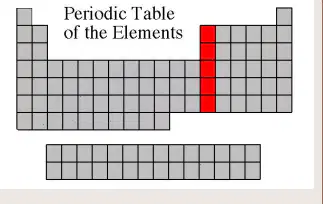
This family includes the most abundant metal in the earth’s crust
Halogens
boron family
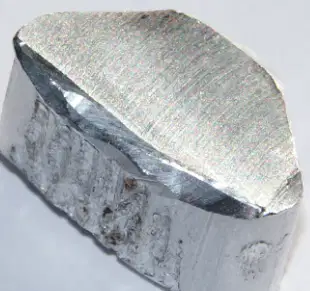
is the most abundant metal in the Earth's crust, making up 8.23% of its elements
copper
gold
aluminum
sulfur
The most abundant naturally occurring gas is __________ , which makes up about 78% of air
oxygen
nitrogen
this family contains the semi-metal boron (B) and metals aluminum (Al), gallium (Ga), indium (In), and thallium (Tl).
Noble gases
Boron
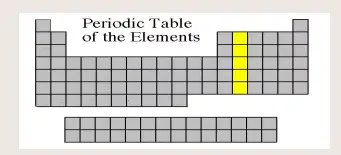
boron family
carbon family
Atoms of this family have 4 valence electrons.
boron family
carbon family
is called the "basis of life" because it's a fundamental component of all living things
carbon
oxygen
There is an entire branch of chemistry devoted to carbon compounds called (a)
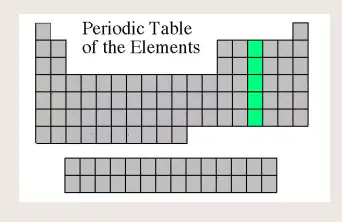
This family includes non-metals, metalloids, and metals
Nitrogen Family
Carbon Family
Atoms in this family have 5 valence electrons. They tend to share electrons when they bond
nitrogen family
boron family
carbon family
Group 15 elements are also called the _____________. It includes nitrogen, phosphorus, arsenic, antimony and bismuth elements.
Carbon Family
Nitrogen Family
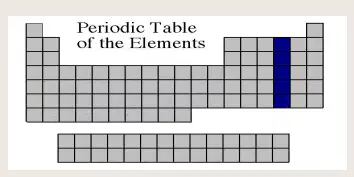
________is the most abundant element in the earth’s crust. It is extremely active and combines with almost all elements.
nitrogen
oxygen
Atoms of this family have 6 valence electrons
carbon
oxygen
boron
Chalcogens also known as
oxygen family
nitrogen family
also called the chalcogens, consists of the elements found in Group 16 of the periodic table and is considered among the main group elements. It consists of the elements oxygen, sulfur, selenium, tellurium and polonium
nitrogen
oxygen
carbon
The elements in this family are fluorine, chlorine, bromine, iodine, and astatine.
Halogen Family
Carbon Family
have 7 valence electrons, which explains why they are
the most active non-metals
(a)
_______react with alkali metals to form salts
nitrogen
oxygen
halogens
Halogen atoms ONLY need to gain 1 electron to fill their outermost energy level.
false
true
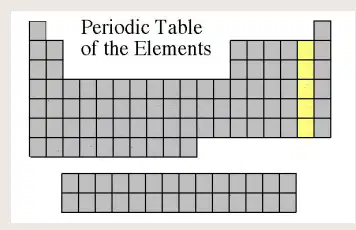
Halogens react not only reacts with metals to form salts, also with __________ to form acids
oxygen
nitrogen
hydrogen
are the only group of elements that exist in all three main states of matter at standard temperature and pressure: solid, liquid, and gas.
(a)
The word _______ means "salt former" or "salt maker"
nitrogen
halogen
oxygen
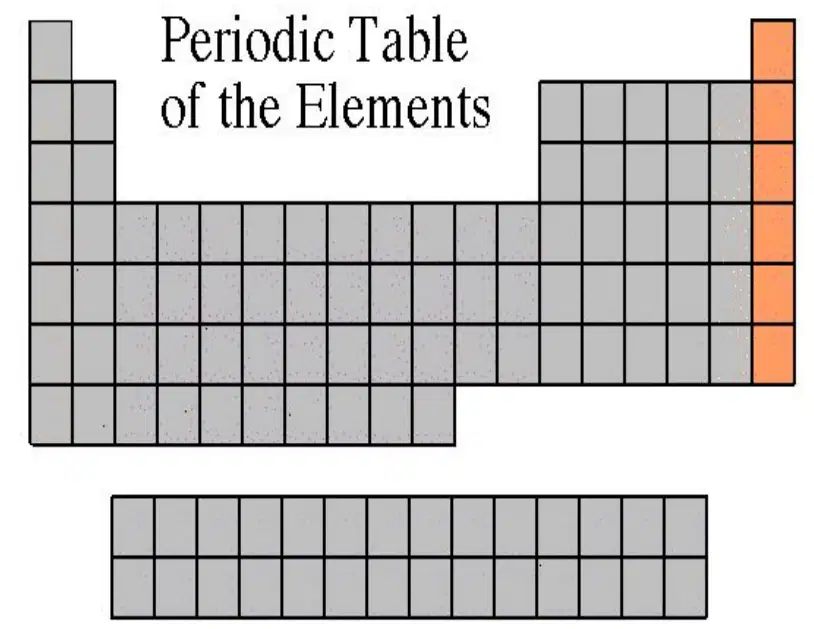
nitrogen
halogen
noble gases
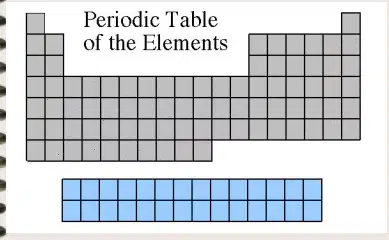
Rare Earth Elements
Crystallogens
The thirty rare earth elements are composed of the__________series.
Lanthanide and actinide
Lanthanum and mercury
One element of the lanthanide series and most of the elements in the actinide series are called _________, which means synthetic or man-made.
neptunium
trans-uranium
are colorless gases that are extremely unreactive
(a)
The family of noble gases includes
phosphorus, arsenic, antimony, and bismuth
helium, neon, argon, krypton, xenon, and radon
They are inactive because their outermost energy level is full
(a)
Because they do not readily combine with other elements to form compounds, the noble gases are called________it means they do not react with other elements to form chemical compounds
active
operating
inert
All the noble gases are found in large amounts in the earth's atmosphere.
true
false
Hydrogen can be stored physically as either a gas or a liquid.
true
false
______is the lightest element
oxygen
nitrogen
hydrogen
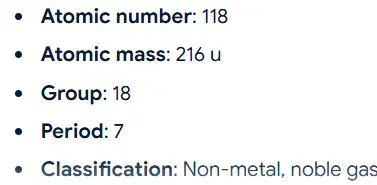
has the highest atomic number and highest atomic mass of all known elements as of 2024
sulfur
gold
oganesson
argon
Burst into flames when come in contact with water
Alkali Metals
Metalloids
Boron Family
Nitrogen Family
We take “last element” to mean the element with the highest atomic number.
true
false
is the most widely used metal on the periodic table, making up 90% of all refined metal. It's used in many applications, including electronics and automobiles
copper
silver
iron
mercury
is considered the most dangerous element on the periodic table because of its toxicity, radioactivity, and reactivity
potassium
plutonium
helium

