
Font size
 Worksheets
Earth's Formation & Earth's Layers
Total questions: 38
Worksheet time: 26mins

According to Will Smith, our world was born from __________________.
violence
another planet
momma and dadda worlds

When the asteroid hit Earth, it created a crater. How deep is the impact crater?
12 feet deep
12 miles deep
110 feet deep
110 miles deep

67 million years ago an asteroid hit Earth. What did the asteroid hit and how did that impact the earth?
A sulfur reserve... it sent a cloud of polluting gas in the air blocking out the sun.
A sulfur reserve... it caused the dinosaurs to run into it.
The ocean... it sent a cloud of polluting gas in the air blocking out the sun.
The ocean... it drowned the dinosaurs.

What would have happened if the asteroid that hit the sulfur reserve would have hit seconds later?
It would have hit the sea and there would be no dinosaur extinction.
It would have hit Antarctica and there would be no dinosaur extinction.
It would have hit the sea and there would be no land.
It would have hit Russia and there would be no dinosaur extinction.

What makes carbonaceous chondrite meteorites so valuable?
They contain the oldest form of solid material in the galaxy.
They contain the diamonds.
They contain emeralds.
They contain the newest form of solid material in the galaxy.

Once the planet was formed, what was in short supply?
Water

Where did the water on Earth come from?
Water on Earth came from icy comets and asteroids colliding with Earth.

How did the earth differ from Venus and Mars?
Earth kept its water unlike Venus and Mars.

Why are we considered the Goldilocks planet?

When did we discover evidence of the violent collision of Earth with its twin?
When astronauts went to the moon
“4.5 billion years ago we started with a (a) that created a (b) that made our (c) that gave us the rhythms of (d) but more than that it gave us the (e) of life we see around us.” ~ Will Smith

What is unique about the water on our planet?

What threatened the existence of Earth?
Earth's twin: Theia
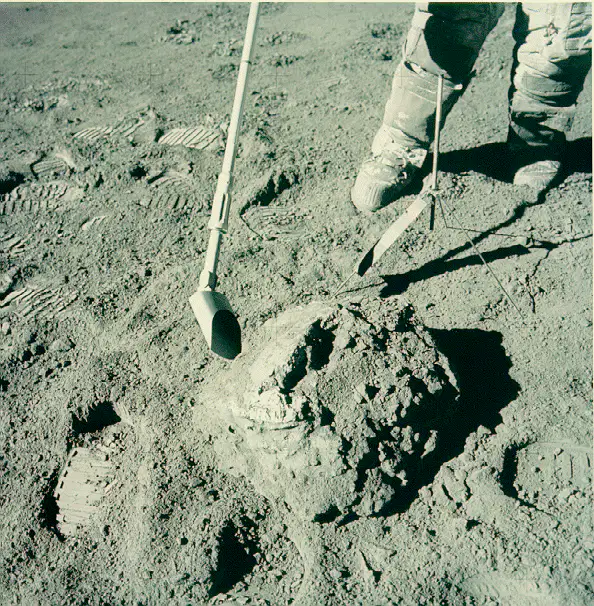
What was surprising about moon rock and rock from the earth?
Moon rocks are very similar to Earth rocks in composition.
Moon rocks have no similarities to Earth rocks.

What happened when Earth and Theia made contact?

What is the power of the moon?
The power of the moon lies in its influence of the tides.

Why is the tilt important?
What would the earth be like without a tilt?
Nearly half of the planet would be frozen year round.

What is the outermost layer of the Earth called?
Crust
Mantle
Core
Inner Core

Which layer of the Earth is located beneath the crust?
The layer of the Earth located beneath the crust is the mantle.
The layer of the Earth located beneath the crust is the core.
The layer of the Earth located beneath the crust is the lithosphere.
The layer of the Earth located beneath the crust is the asthenosphere.

What is the innermost layer of the Earth?
Inner Core
Mantle
Crust
Outer Core

Which layer of the Earth is composed mostly of solid iron and nickel?
The inner core.
The outer core.
The mantle.
The crust.

Which layer of the Earth is the outermost layer?
Crust
Mantle
Outer Core
Inner Core

Which layer of the Earth is located between the crust and the outer core?
Crust
Mantle
Outer Core
Inner Core

What is the state of the Earth's mantle?
Liquid
Mostly solid
Gas
Plasma

Where does the Earth's mantle lie?
Between the crust and the ocean
Between the core and the crust
Above the crust
Below the core

What is the outer core of the Earth primarily made of?
Iron and nickel in liquid form.
Silicon and oxygen
Magnesium and aluminum
Iron and nickel in solid form.

What is the lithosphere made up of?
Only the crust
Only the mantle
The crust and the upper-most region of the mantle
The core
The lithosphere is subdivided into the ________ plates.
tectonic
continental
oceanic
crustal
What is the region directly below the lithosphere called?
Lithosphere
Asthenosphere
Upper Mantle
Core
The asthenosphere is made up of the _________.
upper mantle
crust
outer core
inner core
What allows the plates to move on the Earth's surface?
The lithosphere floats on the asthenosphere
The core heats the mantle
The crust is flexible
The ocean currents
Which point is the crust?
Which point is the Outer Core?
Reorder the following layers of the Earth from the inner most to the outer most:
Inner Core
Outer Core
Mantle
Crust
Reorder the following from least dense (1) to most dense (4)

Crust

Mantle

Outer Core

Inner Core

As you travel from the crust to the core, how would temperature, pressure and density of the material change?
They would all increase
They would all decrease.
Nothing, the layers are made of the same material throughout
Temperature would decrease, but pressure and density would increase

