
 Worksheets
SCIENCE QUIZ
Total questions: 70
Worksheet time: 1hrs 23mins
How many planets in our solar system?
7
8
12
10
It takes ________ days for the Earth to orbit the Sun.
366 days
366 1/2 days
365 1/4 days
300 days
The Earth spins on its imaginary line called ______________.
Orbit
Equator
Axis
Line
Which of the outer planets has the longest orbit?
Jupiter
Saturn
Uranus
Neptune
Which planet has a red surface color due to the high iron content of its soil?
Saturn
Mars
Neptune
Earth
Which planet is the largest and has a giant storm?
Neptune
Mercury
Jupiter
Earth
Which planet is the hottest and is covered with volcanoes and canyons?
Mercury
Venus
Earth
Mars
What are the reasons for the seasons on Earth?
A) Earth's rotation
B) Earth's revolution
C) Earth's tilt on its axis
D) Both B and C
What is the order of the planets from the Sun?
Venus, Mercury, Earth, Mars, Saturn, Jupiter, Uranus, Neptune
Mercury, Venus, Earth, Mars, Neptune, Uranus, Saturn, Jupiter
Neptune, Uranus, Saturn, Jupiter, Mars, Earth, Venus, Mercury
Mercury, Venus, Earth, Mars, Jupiter, Saturn, Uranus, Neptune
What are any of several small angular bones that in humans make up the wrist called?
vertebrae
carpals
tarsals
phalanges
Another name for the skull, the part enclosing the brain?
mandible
scapula
femur
cranium
What is the strong bone in the center of your chest that holds your ribs together?
scapula
sternum
sacrum
skin
What are the two bones in the lower arm called?
radius/ulna
carpals/tarsals
tibia/fibula
Frank/Joe
What is the upper arm bone that runs from the shoulder to the elbow?
femur
cranium
sternum
humerus
What is the longest and strongest bone in your body?
spine
pelvis
cranium
femur
What is the bowl-shaped structure to which your legs are attached?
cranium
spinal column
pelvis
cranium
Which body system gives our body structure and protects the major organs?
Muscular System
Respiratory System
Circulatory System
Skeletal System

What bone is highlighted?
Skull (Cranium)
Scapula
Clavicle
Mandible

What bone is highlighted?
Skull (Cranium)
Mandible
Scapula
Clavicle

What bone is highlighted?
Skull (Cranium)
Mandible
Clavicle
Scapula

What bone is highlighted?
Radius
Ulna
Humerus
Carpals
Which of the following body systems work together for support, protection, and movement?
respiratory and circulatory
skeletal and muscular
skeletal and respiratory
digestive and respiratory


What is C?
Skull
RIbs
Backbone
Handbone

What is the main function of A?
To protect the brain
To protect the internal organs
To provide support of the body
To help human movement

What is the main function of D?
To protect the brain
To protect the internal organs
To provide support of the body
To help human movement

Where is the position of Joint B?
Elbow
Knee
Hips
Neck

What is joint involved to make the movement in the picture possible?
joint at the elbow
joint at the neck
joint at the backbone
joint at the shoulder

Based on the picture, what happen if we does not have skeletal system?
Our internal organs will injured
We cannot move
We will floating on air
We cannot sleep
This joint allows for back and forth movement.
hinge joint
ball and socket joint
pivot joint
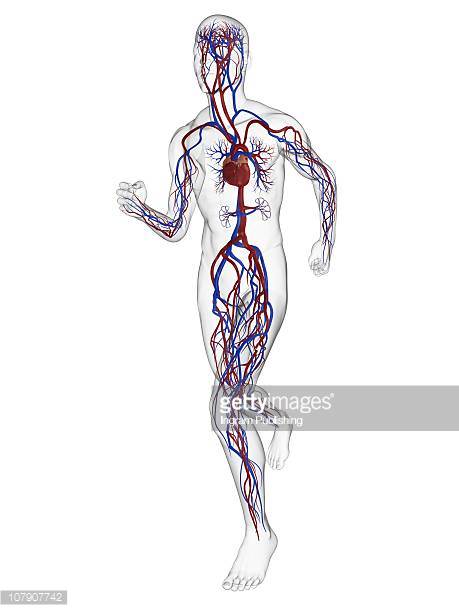
What is the main organ of the circulatory system?
small intestine
bone
lungs
heart
Arteries carry oxygen rich blood away from the heart.
True
False
The job of the heart is to . . .
pump blood around the body.
send food to the small intestines.
break down food.
give energy to the body.
Veins carry oxygen poor blood back to the heart.
False
True
The heart is about the size and shape of your . . .
head
fist
hand
foot
How does the heart work?
It pumps blood first to the lungs, back to the heart and then around the rest of the body.
It pumps blood first to the rest of the body, back to the lungs and then to the heart.
It pumps blood around the rest of the body, back to the heart and then to the lungs,
When these parts contract, they push the blood out of the heart.
Heart
Aorta
Ventricles
Septum
Guess what! The liquid part of your blood has a main component. Can you tell what it is?
Red blood cells
White blood cells
Plasma
Platelets
Which of these is the symbol for a motor?


Which of these is the symbol for an open switch?


Which of these is the symbol for a battery?


Which of these is the symbol for a light bulb?


Which of these is the symbol for a cell?


Shorter wires will make bulbs brighter. True or False?
True
False
What is the function of an ammeter in a circuit?
Measures the length of the wires in a circuit.
Measures the current in a circuit.
Measures how heavy the components are.
Which of these is the symbol for a buzzer?


A circuit will not work if….
there is no battery or cell.
the switch is on.
there is not a break in the circuit.
there is no buzzer.

This circuit will not work. True or False?
True
False

The image shows Earth's solar system with the planets numbered in sequence. Which planets have rocky surfaces?
planets 1, 2, 3, and 4
planets 2, 3, 4, and 6
planets 4, 5, 6, and 7
planets 5, 6, 7, and 8
Adam measures his pulse rate before running. What is the changes on his pulse rate after running ?
Increases
Decreases
No changes
Why does your pulse rate increase after exercise?
Because your heart stops beating
Because your body needs less oxygen
Because you are dehydrated
Because your heart needs to pump blood more quickly
What does a faster pulse rate indicate?
Increased physical activity
Dehydration
Low energy levels
Good health

Your heart beats automatically, therefore it isn't a muscle.
True
False
(the heart is a muscle)
How many chambers does your heart have?
2
6
4
3

The upper chamber of the heart are called the left atrium and right atrium. What are the lower two chambers called?
aorta
right and left kidneys
right and left ventricles
What carries blood AWAY from your heart?
veins
arteries
lymph system
What type of muscle is the heart?
Smooth
Cardiac
Skeletal
What is the main organ of the circulatory system?
Brain
Lungs
Heart
Blood Vessels
Which blood vessel carries blood toward the heart?
Arteries
Veins
Capillaries
What is the wall of the heart mainly made from?
fat tissue
skin tissue
nerve tissue
muscle tissue
Which of the following best describes the structure of the heart?
A single chamber with valves
Two chambers with one-way valves
Two chambers with two-way valves
Four chambers with valves

