
Font size
 Worksheets
Electricity and Magnetism
Total questions: 92
Worksheet time: 1hrs 23mins
Magnetism is a force due to (a) motion and can be applied to (b) materials at a distance.
(a) and (b) are both possible because all matter is composed of (c) , which are composed of particles with both positive and negative charges.
(a) (b) are inside the (c) and cannot escape.
(a) (b) orbit around (c) of the nucleus of the atom and (d) escape.
(a) can be added to or removed from certain atoms, giving the atom a net positive or negative charge.
(a) can be added to or removed from certain atoms, giving the atom a net positive or negative charge. For example, one electron in sodium is loosely bound to the atom. The electron is easily removed, giving the sodium atom a (b) charge. Conversely, each chlorine atom tends to attract an extra electron, giving the chlorine atom a negative charge. A charged atom is called an (c)
(a) or table salt, forms because positive sodium ions attract and stick to negative chlorine ions.
(a) occurs when the electrons from one material rub off one material and onto the other material. The two materials are (b) charged and "cling" together.
____ occurs when the negative charges in clouds are attracted to positive charges on the ground.
Not everything has a net charge. A ____material has an equal number of positive and negative charges.
Neutral materials do react to other neutral charges.
True
False
Neutral materials do not react to other neutral charges. However, neutral materials DO attract all charged objects, whether positive or negative.
True
False
A balloon rubbed on wool gathers electrons from the wool and the balloon now has a negative charge. The charged balloon sticks to a neutral wall. Why? The electrons on the balloon attract the (a) atoms in the wall by pushing (b) in the wall just a bit further away from the balloon than the (c) nuclei in the wall. The balloon sticks as if the wall were positively charged.
(a) is not the same as electricity, but the two are related. While (b) has to do with the presence of charges and their movement, it is a force resulting from the (c)
an ____ is created by allowing electrons to flow through wire coils
a (a) applies a magnetic force because most of the material's electron spins (b)
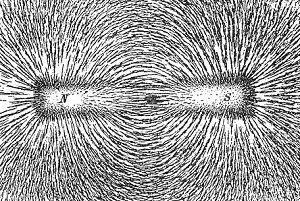
Put a strong magnet under a table and a paperclip on top. The magnet pulls on the paper clip through the table. The area of magnetic influence that surrounds a magnet is called its (a)
A common misconception is that a magnet can be broken into one north and one south magnet. However, it would just become two smaller magnets, each with one north and one south pole. Another misconception is that the north and south poles of a magnet are (a) and (b) electrical charges.
Opposite poles (north and south) (a) each other, and similar poles (south and south, or north and north) (b) . A compass needle is a tiny (c) ; the (d) is a great big magnet. The (e) of a compass needle points toward the earth's north geographic pole.
Given the definition, select the correct vocabulary word: a property of certain kinds of materials that causes them to attract ion or steel
net force
magnetism
gravitational field
magnetic field
Elisha and Abbott are working on a school project to build a small electric motor and a generator. Which two areas of physical science should they focus on to understand the principles behind these devices?
sound and light
electricity and sound
light and magnetism
electricity and magnetism
What two forces are required for generators and electric motors to work?
magnetism and thermal
electricity and thermal
electricity and magnetism
magnetism and radiant
Lightning is considered (a) because it is caused by a buildup of electrical charges within a (b) , where (c) collide and separate, creating a significant charge imbalance that eventually discharges as a (d)

If a glass plate is placed over a magnet and iron filings are sprinkled over the glass, a pattern will be visible. What does this pattern indicate?
The magnetic field
The electrostatic field
The piezoelectric effect
The chemical reaction of the magnet and the filings
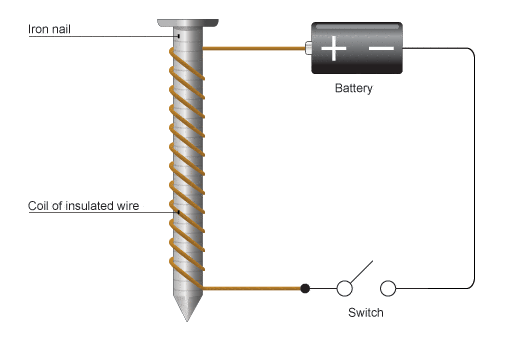
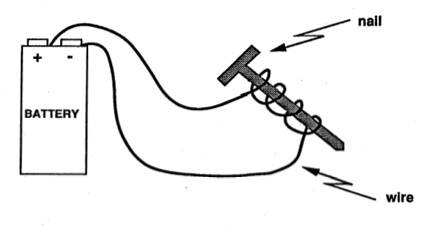
What are the components of the electromagnets?
battery, wire and bulb
battery , copper wire and plastic bottle
battery, copper wire and iron nail
battery, wire and aluminum

What would happen if you took one end of the wire off the battery?
The nail will be a magnet.
The nail would no longer be a magnet
Nothing will happened.
The nail will heats up.

Which electromagnet is stronger?
A
B

Which electromagnet is stronger?
A
B
A device that transforms electrical energy to mechanical energy
electric motor
transformer
electromagnet
generator
when electrons all spin in the same direction, they create an invisible force known as
electricity
magnetism
motor
electrons
An example of an electromagnet
water bottle
paper
motor
glass
This force occurs when ions/atoms create attractive and repulsive forces.
Magnetic
Electric
Electromagnetism
Which of these forces works only by combining electric and magnetic forces?
Magnetic
Electric
Electromagnetism
What is static electricity?
The accumulation of excess charge
The ability to move electric charge through a resistance
The movement of electric charges
The flow of electrons through a resistance
What happens when you rub a balloon in your hair?
The balloon becomes transparent
The electrons and protons are being moved from one object to another
The balloon becomes heavier
The balloon becomes lighter
What is the unit of electric current?
I
V
A
R
What is the movement of electric charges in a single direction called?
Voltage difference
Potential difference
Resistance
Electric current
Which type of electricity flows in one direction?
Alternating current (AC)
Direct current (DC)
Excess charge electricity
Static electricity
How can you increase resistance in a circuit?
Using a thicker wire
Using a conductor
Using an insulator
Using a shorter wire
What is the formula for calculating voltage?
V = I * R
V = I + R
V = I/R
V = IR
A 3-V battery sends a current of 0.10 A through a light bulb. What is the resistance of the filament of the bulb?
.033 Ω
30 Ω
.3 Ω
300 Ω
Ohm's law is the relationship between...
Circuits, switches and resistors
Voltage, Amps and Circuits
Amps, Ohms and Volts
Voltage, Current and Resistance

This graph is for a filament lamp. What is the reason for the shape of the line shown on the graph?
Filament lamps are variable resistors. So we can use a sliding scale to change their resistance, which will change the current going through them.
Filament lamps cool down when current runs through them, their resistance increases causing the current to decrease over time.
Filament lamps heat up as current runs through them, this increases resistance causing the current to decrease over time.
Filament lamps heat up as current runs through them, this increases resistance causing the current to increase over time.

Which graphs follow Ohm's law?
Graph B only
Graph A and C only
Graph A only
None of the graphs
Which graph is for a diode?
Graph C
None of the graphs
Graph B
Graph A
Select all of the following that correctly describe what a volt meter measure?
A volt meter measures the potential difference (or voltage) passing through a circuit element.
A voltmeter measures the electric current across a circuit element.
A volt meter measures the potential difference (or voltage) across a circuit element.
A voltmeter measures the electric current passing through a circuit element.
An electric fan is connected to a 60-V battery. An ammeter is used to measure the current which reads 2A. What should the ammeter read if the fan was connected instead to a 120-V outlet?
2A
4A
30A
60 A
Which of the following graphs best represents the relationship between current and voltage?


What is Ohms Law?
R=V/I
V=R*I
I=V/R
N/A
What is the SI unit for RESISTANCE
ohms
volts
amps
What is the SI unit for VOLTAGE
ohms
volts
amps
What is the SI unit for CURRENTS
ohms
volts
amps
What unit is used to measure resistance?
Ohms
Omega
Volts
Amps

Which of the following is true about voltage?
Voltage resists the flow of electrons
The voltage is responsible for moving or pushing electrons through the circuit
Voltage measures the rate at which charge flows through the circuit
The lower the voltage, the brighter the bulbs in a circuit

Electrons flow:
Randomly in all directions
Towards each other
From areas of low potential to areas of high potential
From areas of high potential to areas of low potential
What is the current of a series circuit with a total resistance of 10 ohms and a voltage of 110 V?
0.09
11.0
1100.0
10.0
What is the voltage needed to run a 9.2 ohm toaster on a 5.5 amps?
9.2 V
5.06 V
34.14 V
50.6 V
A 10 ohms resistor is powered by a 5-V battery. The current flowing through the source is:
10 A
50 A
2 A
0.5 A
So im going to say the ohms times the amp = voltage
so volts/amp= ohms
and volts/ ohms=amp
Voltage = Ohms x Amps if this true then
when have the V, you would divide with v on top.
If you don't have V, you multiply

(I X R)

Voltage divided by Resistance
(V / R)
Current
Power
Ohms
Watts

Voltage divided by Current
(V / I)
Current
Power
Resistance
Watts


If the battery produced 12.6 Volts, what would be the current flow be for a 6 Ohm resistor?
2.1 Amps
2.4 Amps
1.71 Amps
15 Amps

What potential difference is required to pass 2.0 A of current through a 3.0 Ω resistor?
4 V
6 V
2 V
5 V
What potential difference is required to pass 2.5 A of current through a 4.0 Ω resistor?
7 V
8 V
9 V
10 V
A bulb draws 0.5 amperes from a 120-volt supply. What is the resistance of the bulb?
200 Ω
240 Ω
250 Ω
300 Ω

