
Font size
 Worksheets
1st Semester Review
Total questions: 100
Worksheet time: 2hrs 26mins
Which of the following is true?
A physical property can only be seen.
A physical property describes how matter can change when exposed to air.
A physical property is something that can be observed about the substance by itself.
A physical property can only be observed when two types of matter interact.
A chemical property describes how matter __________.
smells
reacts with another type of matter
looks under a microscope
dissolves when made into a solution
When you increase the energy by heating a liquid what happens to the motion of the molecules
They slow down
They speed up
Heat doesnt change the motion of the molecules

Is this an example of a physical or chemical change?
physical
chemical
Which is an example of a chemical change?
baking a cake
ripping paper
stretching a rubber band
chopping wood
Combination of two or more different kinds of substances that keep their own physical properties and can be easily separated.
Solution
Mixture
Solubility
Miscibility
A solution that contains the maximum amount of solute at a given temperature
Saturated
Unsaturated
Supersaturated
In a chemical reaction, the _________ (left side of the equation) are the substances you START with.
product
reactant
In a chemical reaction, the _________ (right side of the equation) are the substances that are FORMED.
product
reactant
A coefficient tells us how many ____________ are present.
molecules
atoms
sentences
When two substance react, the total number of atoms on the product side is always...
the same as the reactant side
less than the reactant side
greater than the reactant side
The ___________ in a chemical equation shows how many atoms of a specific element are present in a compound.
subscript
coefficient
molecules
The Law of Conservation of Matter states that...
matter cannot be created or destroyed
matter cannot be created
matter cannot be destroyed
Na + Cl → NaCl What is the product?
Na + Cl
Cl
NaCl
Na + Cl → NaCl What is the reactant?
Na + Cl
NaCl
An ___________ reaction absorbs more energy from its surroundings than it releases.
endothermic
exothermic
An ____________ reaction releases more energy than is needed to get the reaction started.
exothermic
endothermic
Represented by a chemical symbol (Ex: Na, C, H, O)
element
compound
mixture
Represented by a chemical formula (Ex: NaCHO)
element
compound
mixture
In sweet tea, what are the SOLUTES?
water and sugar
water only
sugar and tea
tea and water
In sweet tea, what is the SOLVENT?
water
tea
sugar
tea and sugar
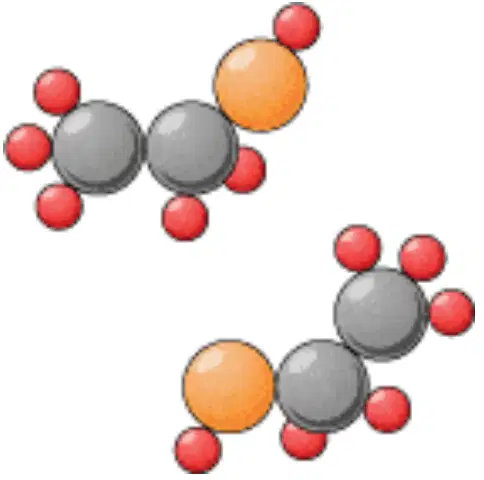
What is the picture showing?
element
compound
mixture
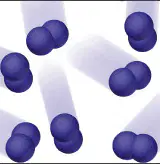
What is the picture showing?
element
compound
mixture
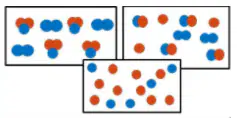
What is the picture showing?
element
compound
mixture

What part of the atom is the arrow pointing to?
Proton
Neutron
Electron

What part of the atom is the arrow pointing to?
Proton
Neutron
Electron

What part of the atom is the arrow pointing to?
Proton
Neutron
Electron

What is the atomic number of this element?
O
8
16
How many protons does this element have?
16
8
0

What is the atomic mass of this element?
13
26.982
Al
Before starting an investigation or lab procedure, you should
try an experiment on your own
open all containers and packages
read all directions and make sure you understand them
handle all the equipment to become familiar with it
When pouring liquids between containers, you should hold the containers over
the floor or a waste basket
a fire blanket or oven mitt
an eyewash station or a water fountain
a sink or your work area
If you get hurt or injured in any way, you should
tell your teacher immediately
find bandages or a first aid kit
go to the principal's office
get help after you finish the lab
If your glassware is chipped or broken, you should
use it for only solid materials
give it to your teacher
put it back in the materials area
increase the damage so that it is obvious
If you have unused liquids after finishing your procedure, you should
mix them together in a bucket
put them back into their original containers
put them away where your teacher tells you to put them
If electrical equipment has a cord or plug that appears damaged, you should
unplug the equipment by pulling on the cord
let the cord hang over the side of a counter or table
tell your teacher about the problem immediately
wrap tape around the cord to repair it
If you need to determine the odor of a chemical or a solution, you should
use your hand to bring fumes from the container to your nose
bring the container under your nose and inhale deeply
tell your teacher immediatly
When working with materials that might fly into the air and get into your eyes or someone else's eyes, you should wear
goggles
an apron
gloves
a hat
When working with a flame or heat source, you should
tie back long hair that hangs in front of your eyes
heat substances or objects inside a closed container
touch an object with your bare hand and see how hot it is
throw hot objects into the trash when you are done with them
Goofing around in the lab is acceptable
True
False
When heating a test tube, it is important to point the test tube
towards your partner
towards yourself
away from you and others
downward
How should long hair be worn in the lab?
curly and down
tucked under a lab coat
tied back with a rubber band
hidden with a hat
What type of shoes should you wear in a lab?
flip flops
purple pumps
closed toed shoes
none, go barefoot
If you do not understand a step in the lab procedure, what should you do?
walk across the room and ask another lab group
try different methods until you get it right
ask the teacher
A statement that answer the question.
claim
evidence
reasoning
The scientific data and details that support your claim
claim
evidence
reasoning
Explains 'how' or 'why' the evidence supports the claim.
claim
evidence
reasoning
Claim:
Bouncy balls bounce to different heights on different surfaces
The ball bounced to 70 cm on the floor, 40 cm on the rug, and 10 cm on the dirt
Different surfaces absorb different amounts of energy which causes the ball to lose different amounts of energy for bouncing.
Evidence:
Bouncy balls bounce to different heights on different surfaces
The ball bounced to 70 cm on the floor, 40 cm on the rug, and 10 cm on the dirt
Different surfaces absorb different amounts of energy which causes the ball to lose different amounts of energy for bouncing.
Reasoning:
Bouncy balls bounce to different heights on different surfaces
The ball bounced to 70 cm on the floor, 40 cm on the rug, and 10 cm on the dirt
Different surfaces absorb different amounts of energy which causes the ball to lose different amounts of energy for bouncing.
Claim:
Objects with a density greater than water will sink, while those with a lower density will float.
The coin sinks to the bottom of the container, while the piece of wood and the bottle cap float on the surface.
Density is the amount of mass per unit volume. Objects denser than water have more mass packed into a given volume and thus sink, while less dense objects displace enough water to stay afloat.
Evidence:
Objects with a density greater than water will sink, while those with a lower density will float.
The coin sinks to the bottom of the container, while the piece of wood and the bottle cap float on the surface.
Density is the amount of mass per unit volume. Objects denser than water have more mass packed into a given volume and thus sink, while less dense objects displace enough water to stay afloat.
Reasoning:
Objects with a density greater than water will sink, while those with a lower density will float.
The coin sinks to the bottom of the container, while the piece of wood and the bottle cap float on the surface.
Density is the amount of mass per unit volume. Objects denser than water have more mass packed into a given volume and thus sink, while less dense objects displace enough water to stay afloat.
The basic metric unit for mass is the ...
gram (g)
meter (m)
liter (L)
Celcius (°C)

The vertical axis of a line graph is called the __________.
slope
line of best fit
x-axis
y-axis

The horizontal axis of a line graph is called the __________.
slope
line of best fit
x-axis
y-axis
What is an independent variable?
the variable that changes because another variable changes
independent variables are only found on pie charts.
a variable most often found on the y-axis
the variable the experimenter changes or manipulates.
What is a dependent variable?
the variable the experimenter changes or manipulates.
the variable that changes because another variable changes
dependent variables are only found on pie charts
a variable most often found on the x-axis
Which type of graph best represents data that shows a change over a period of time?
line
bar
table
circle
You have been asked to make a graph which represents everyone's favorite video game system in your class. Which type of graph would work best?
line
bar
circle
table
What type of graph would you make to show how many of your classmates were born in each month of the year?
line
bar
circle
scatter plot

What reaction has the following general formula:
A + CD --> C + AD
Combination
Decomposition
Single Replacement
Double Replacement
Combustion
What reaction has the following general formula:
AB --> A + B
Combination
Decomposition
Single Replacement
Double Replacement
Combustion
What reaction has the following general formula:
A + B --> AB
Combination
Decomposition
Single Replacement
Double Replacement
Combustion
What type of reaction is the following:
BaCl2+2KI −> 2KCl + BaI2
Combination
Decomposition
Single Replacement
Double Replacement
Combustion
What type of reaction is the following:
2KI −> 2K + I2
Combination
Decomposition
Single Replacement
Double Replacement
Combustion
What type of reaction is the following:
2NaHCO3−> Na2CO3+CO2+H2O
Combination
Decomposition
Single Replacement
Double Replacement
Combustion
What type of reaction is the following:
Zn + 2HCl −> ZnCl2+H2
Combination
Decomposition
Single Replacement
Double Replacement
Combustion

What type of reaction involves one element replacing another element in a compound?
Single Displacement Reaction
Double Displacement Reaction
Synthesis Reaction
Decomposition Reaction
What type of reaction involves ions from 2 compounds exchanging places to form 2 completely new compounds?
Single Displacement Reaction
Double Displacement Reaction
Synthesis Reaction
Decomposition Reaction

What are the reactants in the chemical equation pictured?
CH4 and CO2
CH4 and O2
CO2 and H2O
O2 and H2O

What are the products of the chemical reaction pictured?
CH4 and CO2
CH4 and O2
CO2 and H2O
O2 and H2O
What type of chemical reaction is this one?
CUO + CO2 --> CuCO3
Decomposition
Combustion
Synthesis
Single Replacement
What type of chemical reaction is this one?
Ca + MgCl2 --> CaCl2 + Mg
Decomposition
Combustion
Synthesis
Single Replacement

