
 Worksheets
Biology Midterm Review 24-25
Total questions: 213
Worksheet time: 5hrs 18mins
Which of the following is a difference between a Prokaryote and a Eukaryote?
Prokaryotes have a nucleus, Eukaryotes do not.
Eukaryotes have membrane-bound organelles, Prokaryotes do not.
Prokaryotes are multicellular, Eukaryotes are unicellular.
Eukaryotes have circular DNA, Prokaryotes have linear DNA.
What do prokaryotic cells and eukaryotic cells have in common?
Both have a nucleus.
Both have a cell membrane.
Both have mitochondria.
Both have chloroplasts.
I am a cell that is one of the most ancient cells on this planet, I have DNA and ribosomes, but no membrane bound organelles, what am I?
Prokaryotic cell
Eukaryotic cell
Animal cell
Plant cell


The control center of cell is
the nucleus
ribosomes
chromatin

Do all cells include the structure labeled as 1?
Yes, chloroplasts are found in all cells
No, This structure is found in all cells
Yes, all cells contain a mitochondria
No, Not all cells contain a Nucleus
Which organelle is responsible for photosynthesis in plant cells?
Mitochondria
Chloroplast
Nucleus
Ribosome
What structure is found in plant cells but not in animal cells?
Cell wall
Mitochondria
Nucleus
Ribosome
Which part of the cell is responsible for protein synthesis?
Nucleus
Ribosome
Golgi apparatus
Lysosome

the thin boundary which allows movement of material into and out of the cell
cell wall
plasma membrane
nuclear envelope
golgi apparatus

system of interconnected channels and folded sacs responsible for lipid synthesis; #8 in diagram
rough ER
smooth ER
Golgi apparatus
nucleus

system of folded sacs and interconnected channels responsible for making ribosomes; #5 in diagram
rough ER
smooth ER
Golgi apparatus
nucleolus

organelles made of microtubules that function during cell division in animal cells
centrioles
lysosomes
ribosomes
chloroplasts

cellular energy generators which convert sugars into usable energy; # 9 in diagram
chloroplasts
lysosomes
ribosomes
mitochondria

organelles which capture light energy and convert it into chemical energy; #13 in diagram
mitochondria
nucleolus
chloroplasts
ribosomes
What is the primary function of ribosomes in a cell?
Energy production
Protein synthesis
Photosynthesis
DNA replication
This type of inhibition blocks the active site of an enzyme:
competitive inhibition
allosteric inhibition
noncompetitive inhibition
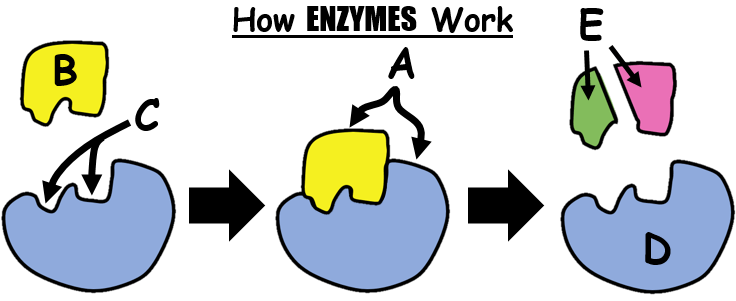
A --> B + C
Anabolic
Catabolic
A + B --> C
Anabolic
Catabolic
Net release of energy
endergonic
exergonic
Net intake of energy
endergonic
exergonic
A + B --> AB + Energy
This is what type of reaction?
exergonic
endergonic
Where is energy stored in ATP?
in the bonds between phosphate
in oxygen
in sugar
in nitrogenous base
6H2O + 6CO2 → C6H12O6 + 6O2
6H2O + 6CO2 → C6H12O6 + 6O2


Jackson, Rohan, and Aria are studying plant cells in their biology class. They are asked to identify a key feature that would best distinguish a plant cell from an animal cell. What would that be?
cell membrane
cell wall
DNA
cytoplasm
Noah, Anika, and Ethan were studying for their biology test. They were discussing the differences between plant and animal cells. Anika asked, 'How are vacuoles in plant cells different than vacuoles in animal cells?'
Ethan suggested, 'In animal cells, vacuoles are larger than in plant cells.'
Noah thought, 'In plant cells, vacuoles are smaller than in animal cells.'
Anika wondered, 'Vacuoles are the same size in both plant and animal cells.'
But Noah corrected, 'In plant cells, vacuoles are larger than in animal cells.'
Mason, David, and Aria are working on a school project about the differences between plant cells and animal cells. They are discussing the unique features of plant cells that are not found in animal cells. Which of the following do they mention as unique to plant cells?
cytoplasm
cell walls
chloroplasts
large central vacuole
mitochondria

Aiden, Elijah, and Jackson are looking at an image of cells under a microscope. What type of cells are they observing?
plant cells
animal cells
prokaryotes
protists

Priya is looking at an image under a microscope. She wants to identify the type of cells in the image. What type of cells could they be?
plant cells
animal cells
prokaryotes
protists
Avery and Benjamin are studying plant cells in their biology class. Anika asks them to identify an organelle that is found only in plant cells. Which organelle should they mention?
Cell Membrane
Mitochondrion
Chloroplast
Nucleus

Abigail is studying the structure of an animal cell and she needs to identify the components that are not present in it. Which of the following is not a part of an animal cell?
Nucleus
Lysosome
Cell Wall
Endoplasmic reticulum

Mia, Abigail, and Zoe are studying cells in their biology class. They come across a type of cell that has no nucleus, no organelles, and is smaller and less complex. What type of cell is this?
Prokaryotes
Eukaryotes

Evelyn is studying cells under a microscope and comes across a cell with a nucleus and membrane-bound organelles. Which term best describes this cell?
Prokaryotes
Eukaryotes
Sophia is studying about different types of cells in her biology class. She comes across bacteria and wonders what type of cell it is. Can you help Sophia identify the type of cell bacteria is?
Prokaryotic Cells
Eukaryotic Cells
Both Prokaryotic & Eukaryotic Cells
Emma, Avery, and Ava are studying for their biology exam. They come across a question about cell biology. They want to know which types of cells have ribosomes.
Prokaryotic
Eukaryotic
Both Prokaryotic & Eukaryotic

Priya, Arjun, and Oliver are studying different types of cells for their biology project. They observe the characteristics of three different cells under a microscope. They find that Cell 1 matches the characteristics of a _____.
prokaryote
eukaryote
Aria, Avery, and Daniel discover a fossilized cell during their field trip. They find evidence suggesting that the cell reproduced on its own and had DNA, but a membrane did not enclose its DNA. Which type of organism would this cell most likely belong to?
prokaryote
eukaryote
plant cell
animal cell

Liam, William, and Elijah are observing pond water under a microscope and find a unicellular organism called Euglena. They notice that it moves around using a flagella and can perform photosynthesis when needed. It also contains many organelles. What type of cell is Euglena?
Animal Cell
Prokaryotic Cell
Eukaryotic Cell
Plant Cell
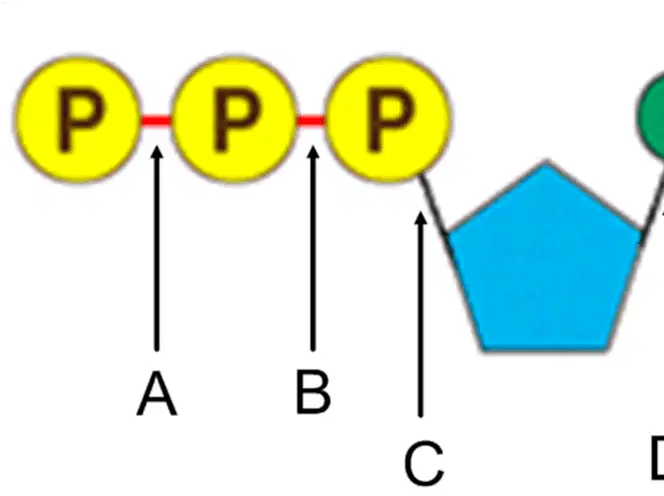
A
B
C
A, B and C
In the whole molecule
In the Adenine group
In the Phosphate bonds
In the Bank
What does ATP stand for?
Adenosine diphosphate
Adenosine triphosphate
How is ADP converted back to ATP?
Phosphate group is removed.
Phosphate group is added.

Which of these organisms produce ATP through cellular respiration?
Plants
Animals
Both
Neither

What is used or released when ATP becomes ADP?
phosphate released / energy used
phosphate used / energy released
phosphate released / energy released
phosphate used / energy released

What is used / released when ADP becomes ATP?
phosphate released / energy used
phosphate used / energy used
phosphate released / energy released
phosphate used / energy released

What is ATP used for?
It is recharged to be used later.
As a backbone for DNA.
Special cell actions that require large amounts of energy.
Any cellular process requiring energy.

What is the full name of the molecule ADP?
Adenine Diphosphate
Adenosine Diphosphate
Adenine Triphosphate
Adenosine Triphosphate

What does ATP become whenever energy is released?
The molecule is completely used up.
An adenine and two phosphates attached together.
Nothing changes and it remains Adenosine Triphosphate.
ATP breaks into its two main parts.

What is ADP used for?
It is recharged with a phosphate and energy.
As a backbone for DNA.
Special cell actions that require large amounts of energy.
Any cellular process requiring energy.
What is the building block for carbohydrates?
monosaccharide
fatty acid
amino acid
nucleotide
What is the building block for lipids?
monosaccharide
fatty acid
amino acid
nucleotide
What is the building block for protein?
monosaccharide
fatty acid
amino acid
nucleotide
What is the building block for nucleic acids?
monosaccharide
fatty acid
amino acid
nucleotide
Which macromolecule is a source of quick energy?
carbohydrates
lipids
proteins
nucleic acids
Which macromolecule makes up cell membranes?
carbohydrates
lipids
proteins
nucleic acids
Which macromolecule includes genetic material, like DNA?
carbohydrates
lipids
proteins
nucleic acids
Which macromolecule builds tissues, like muscles?
carbohydrates
lipids
proteins
nucleic acids
Which macromolecule is a source of long term energy?
carbohydrates
lipids
proteins
nucleic acids
Which organic compound stores energy in plants?
starch
glycogen
insulin
hemoglobin
Which organic compound stores energy in animals?
starch
glycogen
insulin
hemoglobin
Which organic compound removes extra sugar from our blood after we eat?
starch
glycogen
insulin
hemoglobin
Which organic compound carries oxygen on our red blood cells?
starch
glycogen
insulin
hemoglobin
What are the two types of nucleic acids?
DNA and RNA
DNA and cellulose
carbohydrates and lipids
carbon and hydrogen

Which macromolecule is a fatty acid?
A
B
C
D
Which macromolecule is a nucleotide?
A
B
C
D
Which macromolecule is an amino acid?
A
B
C
D
Which macromolecule is a monosaccharide?
A
B
C
D
Which of the following is an example of a lipid?
meat and beans
DNA and RNA
pasta and bread
oil and butter
Which of the following is an example of a carbohydrate?
meat and beans
DNA and RNA
pasta and bread
oil and butter
Which of the following is an example of a protein?
meat and beans
DNA and RNA
pasta and bread
oil and butter
Which of the following is an example of a nucleic acid?
meat and beans
DNA and RNA
pasta and bread
oil and butter
Ovalbumin is a protein found in eggs. Which of the following best describes the molecular structure of ovalbumin?
a group of six carbon atoms joined in a ring
a chain of amino acids folded and twisted into a molecule
a set of three fatty acids attached to a molecule of glycerol
a sequence of nitrogenous bases attached to a sugar-phosphate backbone
When lactose is digested by the human body, each lactose molecule is broken down into smaller molecules. To which of the following categories of molecules do these smaller molecules belong?
Amnio Acids
Monosaccharide
Nucleic acids
Polypeptide
Some bacteria live in hot springs. Their cells contain enzymes that function best at temperatures of 70°C or higher. At a temperature of 50°C, how will the enzymes in these bacterial cells most likely be affected?
The enzymes will be destroyed by lysosomes.
The enzymes will lose their bond structure and fall apart
The enzymes will require less energy to function than at 70°C.
The enzymes will not increase the rate of reactions as much as they would at 70°C
The molecule ATP is composed of elements commonly found in organic molecules. Which of the following is one of these elements?
Aluminum
Tin
Phosphorus
Mercury

The diagram above represents a fat molecule.
A fat molecule belongs to which category of organic molecules?
Protein
Nucleic acids
Carbohydrate
Lipid
Which of the following is a primary function of carbohydrates?
storage of energy
transmission of genetic material
acceleration of chemical reactions
transport of molecules across membranes
If scientists search other planets for possible life, they are likely to focus on the presence of molecules containing which of the following elements?
Lithium
Calcium
Carbon
Potassium
In red blood cells, the compound carbonic anhydrase increases the rate at which carbon dioxide is converted to bicarbonate ions for transport in the blood. In red blood cells, carbonic anhydrase acts as which of the following?
Enzyme
a Hormone
Lipid
a Sugar
Many plants have waxy coatings on some surfaces. This coating reduces water loss because it is not water-permeable. This waxy coating is which of the following types of organic molecule?
Protein
Lipid
Carbohydrate
Nucleic acid

A typical egg contains about 2% dissolved solids. Douglas places de-shelled eggs in four unknown solutions provided by his biology teacher. Based on this fact, predict which solution contains 10% saltwater, from the observations of the egg. (size is referring to mass)
Solution A
Solution B
Solution C
Solution D

Which of the following describes the liquid compared to the cell in the middle beaker?
Hypotonic
Hypertonic
Isotonic
None of the above
Diffusion is the movement of molecules from
an area of low concentration to an area of high concentration.
an area of high concentration to an area of low concentration.
an area of equilibrium to an area of high concentration.
all of the above
Homeostasis will be most affected by the removal of the
vacuole
cell wall
chloroplast
cell membrane
A plant has been removed from its natural environment and placed into a body of water that contains a higher concentration of salt than the inside of each plant cell. The plant promptly wilts. This situation is most similar to which event?
seaweed put into fresh water
a land plant put into tap water
a freshwater plant put into sea water
a freshwater plant put into distilled water
The diffusion of water across a selectively permeable membrane is called
osmotic pressure.
osmosis.
facilitated diffusion.
active transport.
Jim is in a crowd of people at the mall looking for his girlfriend Tammy, who was supposed to meet him for dinner. Jim realizes Tammy is across the room as he catches a whiff of her overpowering perfume, 'Paris #6'.
Which process explains why Jim is able to smell the perfume?
Osmosis
Diffusion
Active Transport
Facilitated diffusion

The cell membrane forms a protective barrier between the external environment and internal environments. It is referred to as ___, because it allows some substances to cross more easily than others and blocks other substances from crossing into the cell.
impermeable
a fluid mosaic
a plasma membrane
selectively permeable

Which two processes does this diagram most directly model?
Energy conversion and synthesis of a new molecule
Synthesis of new molecules and homeostasis
Transport of molecules and energy sources
Homeostasis and transport of molecules
All cells contain cell membranes. Which of the following describes the composition of cell membranes?
Cell membranes are composed of carbohydrate chains, which allow all materials to enter and leave the cell.
Cell membranes are composed of cellulose, which provide rigidity for the cell
Cell membranes are composed of cytoplasm, which allows proteins to be excreted by the cell.
Cell membranes are composed of lipid molecules, which provide a flexible structure.

The model shows a substance crossing a cell membrane.
The model shows the process of active transport because the solute particles are moving from an area of low concentration to an area of high concentration.
The model shows the process of bulk transport because the solute particles are moving from an area of low concentration to an area of high concentration.
The model shows the process of diffusion because solute particles are moving from an area of high concentration to an area of low concentration.
The model shows the process of osmosis because the solute particles are moving from an area of high concentration to an area of low concentration.

The illustration shows a model of the transport of solute particles from outside the cell to inside the cell.
The model illustrates active transport because energy is required for solute particles to cross the cell membrane.
The model illustrates diffusion because solute particles are moving from an area of higher concentration to an area of lower concentration.
The model illustrates facilitated diffusion because protein channels allow solute particles to cross the cell membrane.
The model illustrates osmosis because water molecules are moving from an area of higher concentration to an area of lower concentration.

Cell drinking; cell eating. Both are modeled here and are examples of
Osmosis
Diffusion
Endocytosis
Exocytosis
Proteins built into the cell membrane which assist with the movement of materials are called
receptor proteins
transport proteins
channel proteins
marker proteins
Which of the following is NOT a characteristic of active transport?
It moves substances against a concentration gradient
it requires energy from the cell
it involves facilitated diffusion
it may use carrier protenins that often function as the sodium potassium pump
Molecules that are too large to be moved through the cell membrane can be transported INTO the cell by
osmosis
exocytosis
endocytosis
diffusion
If the concentration of sugar in a solution is lower outside the cell than inside the cell, which of the following will happen by OSMOSIS?
Water will move into the cell
Sugar will move into the cell
Water will move out of the cell
Sugar will move out of the cell
Active transport can be used to transport substances from _______ to ________ concentrations.
High to Low
Low to High
Large to Small
Equilibrium to Gradient
Cell environments that are equal in the amount of solutes in relation to the inside of the cell are
Hypotonic
Hypertonic
Isotonic
Eukaryotic
A cell produced a large protein that needs to exit the cell. It will most likely be transported OUT of the cell via the process of
Endocytosis
Exocytosis
Carrier Proteins
Pumps
Structures that carry the genetic information from generation to generation are called
centrioles
Chromosomes
ribosomes
spindle fibers
uncontrolled division of cells that results in growth
tissues
mitosis
anaphase
cancer
during what phase of the cell cycle do the chromosomes condense and thicken and are now separate distinct structures
Prophase
metaphase
anaphase
telophase
When a cell divides, they make what type of cells
mother
father
daughter
son
G1, S, G2 are known as
mitosis
cytokinesis
interphase
sister chromatids are attached to one another by
spindle fibers
centromere
centriole
cleavage furrow
during which phase of the cell cycle does the nucleolus disappear
anaphase
cytokinesis
prophase
metaphase
In which stage of the cell cycle does the nucleus and its contents divide
mitosis
G1
G2
S

Name structure A
chromosomes
centrioles
spindle fibers
nucleolus

Name structure B
cell membrane
nuclear membrane
cytoplasm
nucleolus

Name structure D
spindle fibers
chromosomes
nucleus
centrioles

P
M
A
T

prophase
telophase
Metaphase
anaphase

P
M
A
T

P
M
A
T

Which phase does the picture represent
P
M
A
T
The cell spends the majority of its time in what stage?
Mitosis
Interphase
Cytokinesis
Prophase
Spindle fibers are created (and attached to)
sister chromatids
centromeres
centrioles
chromosomes
Structure that hold the chromosomes together
centromere
chromatid
chromosome
centrioles
Pulls chromatids apart
centrioles
spindle fibers
DNA
centromere
Chromatids are pulled to opposite sides during what stage
P
M
A
T
This forms in an animal cell during telophase
Cell Plate
spindle fibers
cleavage furrow
DNA
chromosomes line up at the middle
P
M
A
T
During this phase the nucleolus disappears
P
M
A
T
2 nuclei have been formed during this stage
M
A
T
cytokineses
What helps regulate cell division
chromosomes
ribosomes
chromatids
proteins
Mitosis is the division of the
chromosomes
nucleus
cytoplasm
DNA
Cytokinesis is the division of
Cytoplasm
nucleus
chromosomes
spindle fibers
liver cells divide frequently throughout our lives
True
False
mitosis in animal cells aides in
growth
repair
both
neither
mitosis in a unicellular animal results in
growth and repair
new organism
both
neither
This Cell Theory states all the following EXCEPT
The cell is the basic unit of life
All cells reproduce sexually
All cells come from existing cells
All living organisms are made from cels
The ________ is made of phospholipids.
Cell Wall
Cytoplasm
Cell membrane
Nucleus
Which organelle contains all the genetic information and instruction for protein synthesis?
Mitochondria
Nucleus
Ribosomes
ER
Which organelle that controls materials entering and exiting the cell?
Cell Wall
Cytoplasm
Cell Membrane
Vacuole
The __________ is located around the nucleus and is responsible for protein stynthesis and lipid production?
Mitochondria
Endoplasmic Reticulum
Ribosomes
Nucleus
Rough ER
DNA
Smooth ER
Chloroplast
Enzymes that break down and get rid of waste within the cell
Protein
Ribosomes
Vacuoles
Lysosomes
Cell Respiration
Cell Theory
Photosynthesis
Protein Synthesis
The ______ breaks down glucose to make energy in the form of ATP
through ____
Chloroplast, Photosynthesis
Mitochondria, cellular respiration
Endoplasmic Reticulum, Photosynthesis
Ribosomes, cellular respiration
Cytoplasm
Chlorophyll
Chloroplast
Cell Wall

Animal or Plant? Prokaryote or Eukaryote?
Animal, Prokaryote
Plant, Prokaryote
Animal, Eukaryote
Plant, Eukaryote
The cell wall is made of -----
Phospholipids
Cellulose
Protein
Fatty Acids

Animal or Plant? Prokaryote or Eukaryote?
Animal, Prokaryote
Plant, Eukaryote
Plant, Prokaryote
Animal, Eukaryote


Which of the following would be the definition of a scavenger/detritivore?
Animals that eat insects.
Organisms that feed on rocks, recycling the nutrients back into the ground.
Organisms that eat only plants
Things that feed on dead, rotting organisms (roadkill)

