
 Worksheets
Biology Comprehensive Semester Exam
Total questions: 68
Worksheet time: 3605secs
At a doctor's appointment, a one month old baby weighs 8 lbs and is 18 inches long. That baby was 7 lbs and 17 inches long at birth. This is an example of ...
all living things being made of cells.
all living things maintaining homeostasis.
all living things growing and developing.
all living things responding to stimuli.
An adult hydra is producing its offspring through budding. Which characteristic of life does this represent?
All living things use energy
All living things reproduce
All living things contain cells
All living things grow
A camel has eyelashes that work to keep the dust and sand out of its eyes. Which characteristic of life does this represent?
All living things adapt to their environment
All living things grow
All living things have cells
All living things use energy
Stimulus is
organisms that are made up of more than one cell
a membrane-covered structure that contains all of the materials necessary for life.
a change that affects the activity of an organism.
the maintenance of a stable internal environment.

Raul observed a tiny organism under the microscope in his biology class. He learned that this organism is made of one cell. Such organisms are called
unicellular
multicellular
The combination of chemical reactions through
which an organism builds up or breaks down
materials as it carries out its life processes is called ...
absorption
metabolism
digestion
consumption
Which of the following is an example of homeostasis?
adapting to your environment
maintaining an appropriate respiration rate
the sum of all of your chemical reactions
being composed of more than one cell
Which of the following is a response?
a flashlight shined into the eye
a rubber band popping your hand
your pupils constricting when exposed to bright light
blood glucose levels drop significantly
Which organelles are involved in storing and digesting food molecules within cells?
Vacuoles & lysosomes
Golgi bodies & flagella
Centrioles & ribosomes
Chloroplasts & cell walls
Which of the following pairs of organelles show structures that work together during protein synthesis within eukaryotic cells?
Cilia & flagella
Lysosomes & nucleolus
Mitochondria & chloroplasts
Ribosomes & endoplasmic reticulum
Watermelon plants in the summer produce many sugars to store in the growing fruit. Which cell organelle would be very active during the summer, to produce enough sugars to fill the fruit's cells?
Lysosomes
Ribosomes
Chloroplasts
Mitochondria
Which cell structures work together to produce and export proteins out of the cell?
Nucleus, nucleolus, lysosomes, and vacuoles
Cilia, flagella, microtubules, and microfilaments
Chloroplasts, mitochondria, centrioles, and cell wall
Endoplasmic reticulum, ribosomes, Golgi, and membrane
If a cell’s lysosomes become damaged, which of the following would MOST LIKELY occur?
The cell would produce excessive proteins.
The cell would be less able to break down molecules within the cell.
The cell would slow down the process of photosynthesis.
The cell would be less able to regulate the amount of fluid in its cytoplasm.

Which organelle is colored in this picture?
Endoplasmic reticulum
Gogli body
Lysosomes
Cell mebrane
Which of the following is not a monomer/polymer pairing?
monosaccharide/polysaccharide
amino acid/protein
deoxyribonucleotide/DNA
triglyceride/polysaccharide
The element present in all organic molecules is
Hydrogen
Oxygen
Carbon
Nitrogen
Select all of the following classes of biological molecules that consist of both small molecules and macromolecular polymers?
lipids
carbohydrates
proteins
nucleic acids
Which of the following is true regarding fatty acids?
They are a monomer of carbohydrates.
They are a monomer of lipids.
They are a monomer of proteins.
They are a monomer of nucleic acids.
Which of the following descriptions best fits the class of molecules known as nucleotides?
They are monomers of carbohydrates.
They are monomers of lipids.
They are monomers of proteins.
They are monomers of nucleic acids.
Which element is found in proteins but not carbohydrates or lipids?
C
B
N
O
A recipe says to mix 100 g of sugar, a pinch of salt, and 1 cup of water in 113 g of butter. Which ingredient is the solvent?
sugar
butter
salt
water
The monomers of carbohydrates are called
monosaccharides
polysaccharides
fatty acids
amino acids
Which macromolecule helps build cell membranes?
Carbohydrates
Lipids
Proteins
Nucleic acids
Enzymes help lower the energy needed for metabolic chemical reactions. Which macromolecule group is it a part of?
Carbohydrates
Lipids
Protein
Nucleic acids
Which macromolecules are built with C, H, O, N, and P?
Carbohydrates
Lipids
Proteins
Nucleic acids
The monomers that form proteins are called ___.
monosaccarides
nucleotides
glycerol
amino acids

All of the following are main functions of proteins in the cell EXCEPT . . . .
build muscle
make enzymes
storage of energy
maintain the body

Another name for proteins is . . . .
fatty acids
polypeptides
nucleic acids
carbohydrates
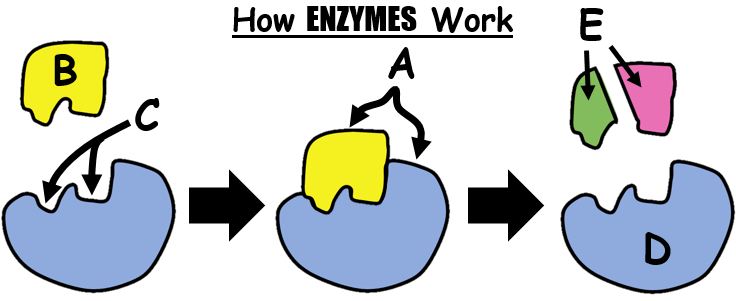
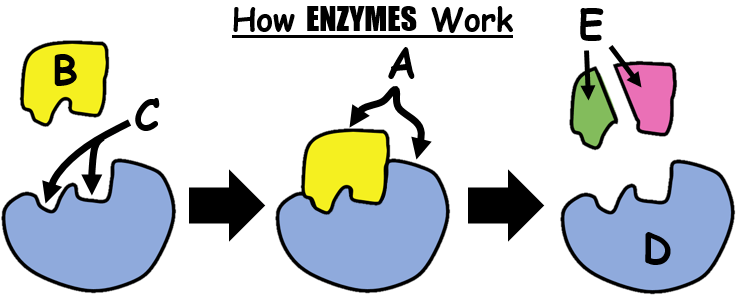
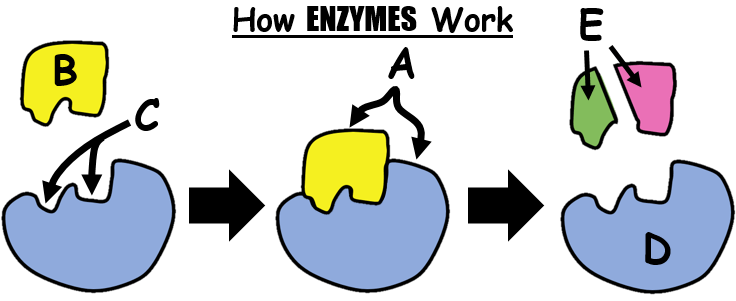
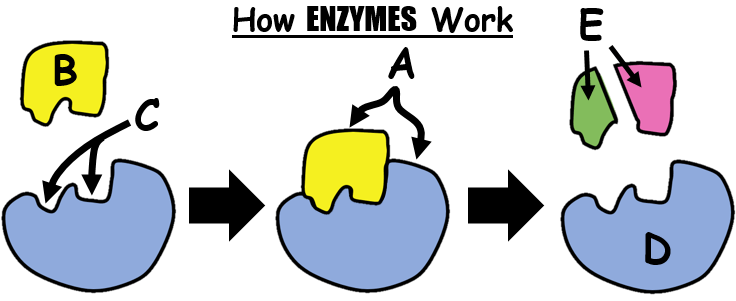
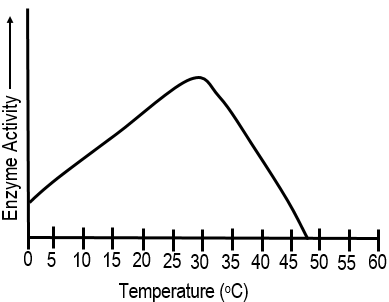
What happens when enzymes are heated to a high temperature?
The enzymes die.
The shapes of the enzyme are altered.
The enzymes' amino acid sequence changes.
The enzymes remain the same


What process is shown in the diagram below to move molecules across the membrane?
Passive Transport
Active Transport
Diffusion
Osmosis

Which process is demonstrated in the diagram?
Osmosis
Active Trasnport
Diffusion
Phagocytosis

The diagram shows that water molecules are moving into the cell to make it bigger. What process is being demonstrated here?
Active transport
Diffusion
Osmosis
Phagocytosis

Which row in the chart best describes the active transport of molecule X through a cell membrane?
1
2
3
4


What will happen to the organism in this situation? Salty water is poured onto eggplant.

In the given scenario what will happen? An egg is placed in distilled water (no solutes) for 48 hours.
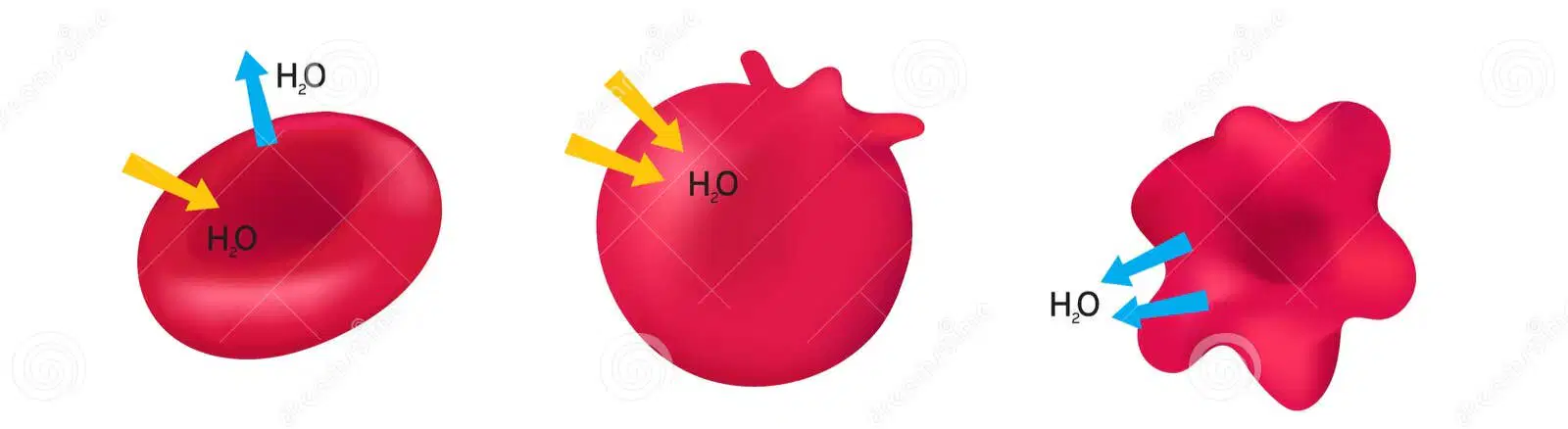
Water will move INTO a cell in a(n) ___ solution


The structure labeled c is a ______________ and the structure labeled d is the _______________.
granum, thylakoid
thylakoid, granum
stroma, thylakoid
thylakoid, stroma
The first step of photosynthesis is called the ________________ the second step is called the ________________________.
light dependent reaction, Calvin Cycle
Calvin Cycle, light dependent reaction
light independent reaction, Calvin Cycle
Krebs cycle, Calvin Cycle

The answers for a, b, and d are
a. glucose b. water d. light
a. ATP b. light d. oxygen
a. light b. water d. oxygen
a. light b. carbon dioxide d. oxygen

e and f are
e. ADP f. ATP
e. ATP f. NADPH
e. NADP+ f. NADPH
e. light b. chlorophyll

g and i are
g. water i. glucose
g. carbon dioxide i. oxygen
g. ATP i. NADPH
g. carbon dioxide i. glucose

Which energy molecule is diagrammed here?
ATP
ADP

Which energy molecule is diagrammed here?
ATP
ADP
What are the products of cellular respiration? Check all that apply:
ATP
O2
H2O
Glucose
CO2
What are the reactants of cellular respiration? Check all that apply:
H2O
O2
Glucose
CO2
ATP
What types of cells perform cellular respiration? Check all that apply:
All Eukaryotes
Plant Cells
Animal Cells
Prokaryotes
Bacteria
Where does anaerobic respiration occur in the cell?
Mitochondria
Cytoplasm
Chloroplasts
Ribosomes
Where does aerobic respiration occur in the cell?
Mitochondria
Chloroplasts
Cytoplasm
Vacuoles
What is the difference between aerobic and anaerobic respiration?
Aerobic respiration does not require oxygen, anerobic does
Aerobic respiration occurs in the cytoplasm, anaerobic occurs in the mitochondria
Aerobic respiration requires oxygen, anaerobic does not
Aerobic respiration only occurs during exercise, anerobic occurs during marathons

