
 Worksheets
Unit 3 Summative Review
Total questions: 132
Worksheet time: 1hrs 11mins
What type of bond is responsible for the cohesion of water molecules?
Ionic bond
Covalent bond
Hydrogen bond
Metallic bond
Which of the following is NOT one of the four main biomolecules?
Carbohydrates
Lipids
Proteins
Vitamins
What is the monomer of proteins?
Monosaccharides
Fatty acids
Amino acids
Nucleotides
What is the primary function of nucleic acids?
Energy storage
Genetic information storage and transfer
Structural support
Catalyzing reactions
Which of the following best describes the structure of lipids?
Rings of carbon, hydrogen, and oxygen
Fatty acids connected by a glycerol backbone
Chains of amino acids
Nucleotides with a sugar, phosphate, and nitrogenous base
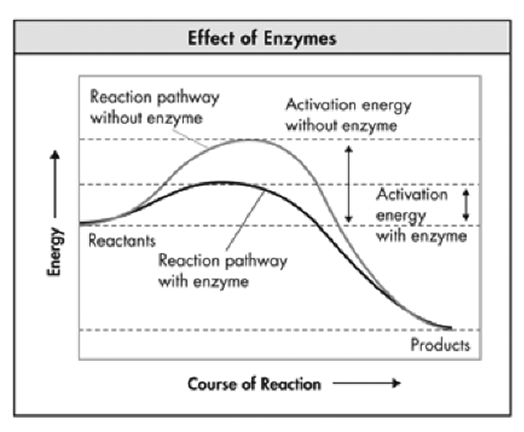
What is the role of enzymes in chemical reactions?
Increase the activation energy
Decrease the activation energy
Provide energy for the reaction
Act as a reactant
Which organelle is responsible for energy production in eukaryotic cells?
Nucleus
Mitochondria
Ribosome
Golgi apparatus
What is the main difference between prokaryotic and eukaryotic cells?
Presence of a cell wall
Presence of a nucleus
Ability to photosynthesize
Size of the cell
What is facilitated diffusion?
Movement of molecules against the concentration gradient
Movement of molecules through a membrane without energy
Movement of molecules through a membrane with the help of proteins
Movement of water molecules only
What did Hershey and Chase's experiment demonstrate?
DNA is the genetic material
Proteins are the genetic material
RNA is the genetic material
Lipids are the genetic material
According to Chargaff’s Rule, which nitrogenous bases pair together in DNA?
Adenine and Cytosine, Guanine and Thymine
Adenine and Thymine, Guanine and Cytosine
Adenine and Guanine, Cytosine and Thymine
Adenine and Uracil, Guanine and Cytosine
What is the function of DNA polymerase during DNA replication?
Unzips the DNA strands
Synthesizes new DNA strands
Joins Okazaki fragments
Adds RNA primers
What is the purpose of gel electrophoresis in DNA fingerprinting?
To cut DNA into fragments
To separate DNA fragments by size
To replicate DNA
To sequence DNA
What is a telomere?
An enzyme that synthesizes DNA
The end of a chromosome
A type of nucleotide
A protein that binds to DNA
What is the role of restriction enzymes in biotechnology?
To replicate DNA
To cut DNA at specific sequences
To synthesize proteins
To join DNA fragments
Hydrogen bonds occur between a slightly positive hydrogen atom and ____.
Another hydrogen atom in the same molecule
Another hydrogen atom in a different molecule
A slightly negative atom in the same molecule
A slightly negative atom in a different molecule


Which type of cell?
Prokaryote
Eukaryote
What structure in the cell converts glucose to ATP energy?

(Select ALL that apply)
Plant and animal cells both have
a cell membrane
cytoplasm
a nucleus
a cell wall

Which type of cell?
Prokaryote
Eukaryote

This organelle controls what goes in and out of plant and animal cells.
Cell Wall
Cell Membrane
Chloroplasts
Cytoplasm

Requires ATP
Active Transport
Passive Transport
Which 3 processes do not require the use of ATP?
Diffusion
Osmosis
Active Transport
Passive Transport
Why is ATP considered essential for cell function?
ATP is required for cell growth
ATP is required for cellular processes
ATP is required for DNA replication
ATP is required for cell structure
What is the molecule called that carries genetic information?
Protein
Carbohydrate
DNA
Lipid
Which component of DNA determines the traits that are inherited?
Sugar molecules
Phosphate groups
Nitrogenous bases
Hydrogen bonds
The bond that forms between OXYGEN and HYDROGEN within a water molecule is called
Polar covalent Bond
Ionic Bond
Hydrogen Bond
Nonpolar covalent bond
What is the function of lipids?
Perform cell's functions/tasks
Fast energy
Energy storage and cell membranes
Alter other biomolecules
Store information for cells
What is the function of proteins?
provides quick energy
stores energy
helps with growth and repair of tissues
stores genetic information
What causes water to be a polar molecule?
Absence of hydrogen bonds
Unequal sharing of electrons between hydrogen and oxygen
Equal sharing of electrons between hydrogen and oxygen
Presence of ionic bonds
How does water's polarity affect its properties?
It makes water a good solvent for nonpolar substances
It allows water to form hydrogen bonds with other molecules
It prevents water from forming hydrogen bonds
It makes water a poor conductor of electricity
Which of the following is a result of water's polarity?
Water has a low boiling point
Water cannot dissolve salts
Water is a nonpolar solvent
Water has a high surface tension
What is the primary function of carbohydrates in the body?
Insulate organs
Build muscle tissue
Store genetic information
Provide energy
Which macronutrient is primarily responsible for the growth and repair of tissues?
Vitamins
Proteins
Fats
Carbohydrates
What is the main role of fats in the human body?
Build enzymes
Transport oxygen
Store energy and insulate the body
Provide quick energy
What is the monomer of nucleic acids?
Amino acids
Monosaccharides
Nucleotides
Fatty acids
Which of the following is the monomer of carbohydrates?
Monosaccharides
Fatty acids
Amino acids
Nucleotides
What is the monomer unit of lipids?
Monosaccharides
Amino acids
Fatty acids
Nucleotides
Which element is most abundant in biomolecules?
Oxygen
Carbon
Nitrogen
Hydrogen
What type of bond is primarily responsible for the structure of proteins?
Hydrogen bond
Covalent bond
Ionic bond
Peptide bond
Which of the following atoms is not typically found in carbohydrates?
Carbon
Hydrogen
Nitrogen
Oxygen
Which atom is commonly found in nucleotides but not in most lipids?
Carbon
Hydrogen
Oxygen
Nitrogen
Which of the following atoms is present in nucleotides but not typically in proteins?
Oxygen
Phosphorus
Hydrogen
Carbon
How does polarity affect the solubility of a substance in water?
Polar substances are less soluble in water due to hydrogen bonding
Polarity has no effect on solubility in water
Non-polar substances are more soluble in water due to hydrogen bonding
Polar substances are more soluble in water due to hydrogen bonding
What is the primary reason non-polar substances do not dissolve well in water?
Non-polar substances cannot form hydrogen bonds with water
Non-polar substances are too large to dissolve in water
Non-polar substances are more dense than water
Non-polar substances form strong ionic bonds with water
What role do hydrogen bonds play in the structure of DNA?
They provide energy for replication
They stabilize the double helix structure
They form the backbone of the DNA strand
They catalyze the formation of nucleotides
Which nitrogenous base pairs with cytosine in DNA through hydrogen bonds?
Uracil
Guanine
Adenine
Thymine
What is the primary role of enzymes in biological reactions?
To increase the rate of reactions
To change the products of reactions
To provide energy for reactions
To act as a reactant in reactions
How do enzymes affect the activation energy of a reaction?
They have no effect on activation energy
They decrease the activation energy
They eliminate the need for activation energy
They increase the activation energy
Which of the following is a characteristic of enzyme activity?
Enzymes can catalyze any reaction
Enzymes are specific to substrates
Enzymes are consumed in the reaction
Enzymes work at any temperature
How does pH affect enzyme activity?
Enzymes are not affected by pH
Enzymes are only active in basic conditions
Enzymes work best at a specific pH range
Enzymes are only active in acidic conditions
Which of the following conditions can denature an enzyme?
Optimal temperature
Extreme pH levels
Low substrate concentration
High enzyme concentration
How does temperature affect enzyme activity?
Enzymes are not affected by temperature
Enzymes are only active at freezing temperatures
Enzymes work best at extremely high temperatures
Enzymes have an optimal temperature range for activity
What happens to enzymes when the pH level is too high or too low?
Enzymes replicate faster
Enzymes are unaffected by pH changes
Enzymes denature and lose their function
Enzymes become more active
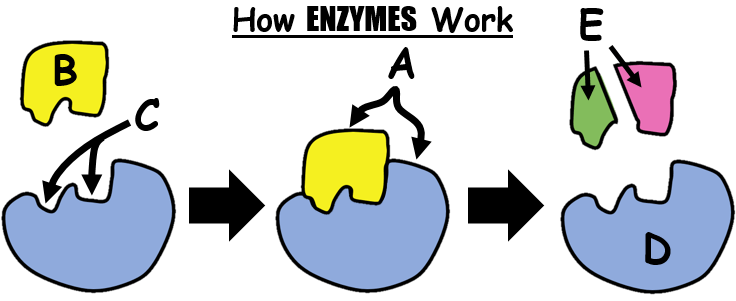
What is the role of the active site in an enzyme?
It transports the enzyme to the reaction site
It inhibits the enzyme activity
It provides energy for the reaction
It binds to the substrate and catalyzes the reaction
How do enzymes lower the activation energy of a reaction?
By increasing the temperature of the reaction
By changing the pH of the environment
By providing an alternative reaction pathway
By increasing the concentration of reactants
Which factor does NOT affect enzyme activity?
Color of the enzyme
Temperature
pH
Substrate concentration
How does a substrate interact with an enzyme's active site?
By forming a covalent bond
By fitting into the active site like a key in a lock
By being repelled by the active site
By altering the enzyme's genetic code
Which of the following factors can affect the binding of a substrate to an enzyme's active site?
Temperature and pH
Color and odor
Amount of sunlight
Size and shape of the cell
Which of the following structures is present in eukaryotic cells but not in prokaryotic cells?
Ribosomes
Nucleus
Cell membrane
DNA
What is a key difference in the genetic material of prokaryotic and eukaryotic cells?
Both have circular DNA.
Both have linear DNA.
Prokaryotic cells have circular DNA, while eukaryotic cells have linear DNA.
Prokaryotic cells have linear DNA, while eukaryotic cells have circular DNA.
Which of the following is a characteristic of prokaryotic cells?
Presence of a cell wall
Presence of mitochondria
Presence of a nucleus
Presence of chloroplasts
Which of the following is a similarity between prokaryotic and eukaryotic cells?
Both have chloroplasts
Both have mitochondria
Both have ribosomes
Both have a nucleus
Which of the following is a similarity between prokaryotic and eukaryotic cells?
Both have chloroplasts
Both have ribosomes
Both have a nucleus
Both have mitochondria
What is a common feature of the cell membranes in both prokaryotic and eukaryotic cells?
They are made of cellulose
They are composed of a phospholipid bilayer
They contain DNA
They have a rigid structure
Which cellular process is shared by both prokaryotic and eukaryotic cells?
Cell division by mitosis
Protein synthesis
Photosynthesis
Formation of a nuclear envelope
Which organelle is responsible for energy production in eukaryotic cells?
Nucleus
Ribosome
Mitochondria
Golgi apparatus
What is the primary function of the endoplasmic reticulum in eukaryotic cells?
DNA replication
Protein synthesis and lipid metabolism
Photosynthesis
Cell division
Which structure in eukaryotic cells is responsible for packaging and modifying proteins?
Cell membrane
Chloroplast
Golgi apparatus
Lysosome
What was the primary contribution of Watson and Crick to the field of genetics?
Mapping of the human genome
Development of the polymerase chain reaction
Identification of the genetic code
Discovery of the double helix structure of DNA
Who were the scientists that provided crucial X-ray diffraction images to Watson and Crick?
Rosalind Franklin and Maurice Wilkins
James Watson and Francis Crick
Linus Pauling and Erwin Chargaff
Gregor Mendel and Thomas Morgan
What is active transport in biology?
Movement of molecules from low to high concentration using energy
Movement of molecules through a membrane with the help of proteins
Movement of molecules from high to low concentration without energy
Movement of water molecules only
Which of the following is an example of active transport?
Facilitated diffusion
Sodium-potassium pump
Diffusion
Osmosis
What is the main energy source used in active transport?
Carbon dioxide
Glucose
ATP
Oxygen
What is passive diffusion?
The movement of molecules against a concentration gradient
The movement of molecules down a concentration gradient without energy input
The movement of molecules through a semi-permeable membrane with energy input
The movement of molecules through a protein channel with energy input
In passive diffusion, molecules move from an area of _____ concentration to an area of _____ concentration.
high; low
low; low
low; high
equal; equal
What is the main difference between facilitated diffusion and simple diffusion?
Facilitated diffusion requires energy, while simple diffusion does not.
Facilitated diffusion involves transport proteins, while simple diffusion does not.
Facilitated diffusion occurs only in plant cells, while simple diffusion occurs in all cells.
Facilitated diffusion moves molecules against the concentration gradient, while simple diffusion moves them along the gradient.
Which of the following is true about simple diffusion?
It involves the movement of molecules through a semi-permeable membrane with the help of proteins.
It requires ATP to occur.
It can only occur in the presence of a concentration gradient.
It is a passive transport process that does not require energy.
In facilitated diffusion, what role do transport proteins play?
They act as channels or carriers to help specific molecules cross the cell membrane.
They prevent the movement of molecules across the membrane.
They provide energy for the diffusion process.
They break down molecules to facilitate their movement.
What happens to a cell placed in a hypertonic solution?
The cell swells and bursts
The cell divides
The cell shrinks
The cell remains the same size
Which of the following best describes a hypotonic solution?
A solution with a higher concentration of solutes than the cell
A solution with no solutes
A solution with a lower concentration of solutes than the cell
A solution with the same concentration of solutes as the cell
What happens to a cell when placed in a hypotonic solution?
The cell becomes rigid
The cell remains the same size
The cell swells and may burst
The cell shrinks
Which of the following best describes a hypotonic solution?
A solution with no solutes
A solution with an equal concentration of solutes as the cell
A solution with a lower concentration of solutes than the cell
A solution with a higher concentration of solutes than the cell
In which direction does water move when a cell is placed in a hypotonic solution?
Out of the cell
Into the cell
Equally in and out of the cell
Water does not move
What is the primary role of osmosis in maintaining homeostasis?
To synthesize new molecules
To generate energy for the cell
To balance water levels inside and outside the cell
To transport proteins across the cell membrane
What was the main conclusion of the Hershey and Chase experiment?
Carbohydrates are the genetic material, not proteins.
DNA is the genetic material, not protein.
RNA is the genetic material, not DNA.
Proteins are the genetic material, not DNA.
Which organisms did Hershey and Chase use in their experiment to demonstrate that DNA is the genetic material?
Bacteriophages and bacteria
Yeast and bacteria
Animals and plants
Plants and fungi
What radioactive isotopes did Hershey and Chase use to label DNA and proteins in their experiment?
Calcium-45 and Iron-59
Oxygen-18 and Hydrogen-3
Phosphorus-32 and Sulfur-35
Carbon-14 and Nitrogen-15
What was the main finding of Frederick Griffith's experiment with Streptococcus pneumoniae?
DNA is the genetic material
Carbohydrates are the genetic material
Proteins are the genetic material
RNA is the genetic material
What was the significance of the 'transforming principle' discovered by Griffith?
It showed that DNA can be transferred between organisms
It demonstrated that proteins carry genetic information
It indicated that lipids are responsible for heredity
It proved that RNA is the genetic material
What was the primary conclusion of Oswald Avery's DNA research?
Lipids are the molecule responsible for heredity
Proteins are the molecule responsible for heredity
DNA is the molecule responsible for heredity
RNA is the molecule responsible for heredity
Which experiment did Oswald Avery's research build upon?
Meselson and Stahl's DNA replication experiment
Watson and Crick's DNA model
Griffith's transformation experiment
Hershey and Chase experiment
What is Chargaff's Rule primarily concerned with?
The structure of the DNA double helix
The sequence of nucleotides in RNA
The ratio of adenine to thymine and guanine to cytosine in DNA
The ratio of purines to pyrimidines in DNA
According to Chargaff's Rule, if a DNA sample contains 30% adenine, what percentage of thymine should it contain?
20%
30%
40%
50%
Which of the following statements is true according to Chargaff's Rule?
The amount of adenine is equal to the amount of guanine in DNA.
The amount of cytosine is equal to the amount of thymine in DNA.
The amount of guanine is equal to the amount of uracil in DNA.
The amount of adenine is equal to the amount of thymine in DNA.
What type of bond holds the two strands of a DNA molecule together?
Hydrogen bonds
Covalent bonds
Metallic bonds
Ionic bonds
How do hydrogen bonds in DNA compare to covalent bonds in terms of strength?
Hydrogen bonds are stronger than covalent bonds
Hydrogen bonds do not exist in DNA
Hydrogen bonds and covalent bonds have equal strength
Hydrogen bonds are weaker than covalent bonds
Why are hydrogen bonds important for the structure of DNA?
They form the backbone of the DNA molecule
They are responsible for the genetic code
They allow the DNA strands to separate during replication
They provide flexibility to the DNA molecule
What does it mean for DNA strands to be antiparallel?
They are identical in sequence
They are parallel but not touching
They run in opposite directions
They run in the same direction
Which of the following best describes the orientation of the sugar-phosphate backbone in DNA's antiparallel strands?
5' to 3' and 5' to 3'
3' to 5' and 3' to 5'
5' to 3' and 3' to 5'
3' to 3' and 5' to 5'
Why is the antiparallel nature of DNA important for replication?
It allows enzymes to read both strands simultaneously
It makes the DNA more stable
It ensures that the leading and lagging strands are synthesized correctly
It prevents the strands from tangling
What is the primary purpose of DNA fingerprinting electrophoresis?
To amplify DNA samples
To separate DNA fragments based on size
To identify protein structures
To sequence the entire genome
What is the primary purpose of DNA fingerprinting?
To identify individuals
To clone DNA
To identify genetic disorders
To sequence the entire genome
Which component of DNA is used in electrophoresis for DNA fingerprinting?
Nitrogenous bases
Sugar backbone
Phosphate groups
Hydrogen bonds
What is the role of restriction enzymes in DNA fingerprinting?
To sequence DNA
To cut DNA at specific sequences
To amplify DNA fragments
To separate DNA fragments by size
What is the first step in the process of DNA replication?
Joining of Okazaki fragments
Synthesis of new DNA strands
Unwinding of the DNA double helix
Binding of RNA primers
Which enzyme is responsible for adding nucleotides to the growing DNA strand during replication?
Helicase
Ligase
Primase
DNA polymerase
What is the role of ligase in DNA replication?
Synthesizes new DNA strands
Adds RNA primers
Joins Okazaki fragments
Unwinds the DNA strands
What is the primary function of telomerase?
To synthesize RNA
To add repetitive nucleotide sequences to the ends of chromosomes
To repair DNA damage
To unwind DNA strands
Which enzyme is responsible for unwinding the DNA double helix during replication?
Telomerase
Helicase
Ligase
DNA polymerase
What is a characteristic feature of telomeres?
They are enzymes that repair DNA
They are responsible for cell division
They are involved in protein synthesis
They are found at the ends of chromosomes
Why is RNA primase essential for the initiation of DNA synthesis?
It repairs DNA mismatches
It removes RNA primers
It stabilizes the DNA strands
It provides a starting point for DNA polymerase
What is the primary function of DNA replication?
To produce identical copies of DNA
To break down nucleotides
To synthesize proteins
To create RNA molecules
Which enzyme is responsible for unwinding the DNA double helix during replication?
DNA polymerase
Helicase
Primase
Ligase
What is the primary function of the replication fork in DNA replication?
To separate the two strands of DNA
To synthesize proteins
To repair DNA damage
To transcribe RNA
Which enzyme is responsible for unwinding the DNA at the replication fork?
Helicase
Ligase
DNA polymerase
Primase
What do the bands represent in gel electrophoresis?
Different types of cells
Fragments of DNA or proteins separated by size
Different temperatures
Various chemical reactions
How can you determine the distance of DNA fragments in gel electrophoresis?
By observing the color of the bands
By counting the number of bands
By comparing the bands to a DNA ladder
By measuring the width of the bands
Which factor primarily affects the movement of DNA fragments in gel electrophoresis?
The pH of the gel
The size of the DNA fragments
The color of the gel
The temperature of the environment
What is the primary reason shorter DNA fragments travel further in gel electrophoresis?
They have a higher charge
They encounter less resistance in the gel
They are more attracted to the anode
They are less dense
What is the main purpose of using a gel in electrophoresis?
To increase the speed of DNA migration
To separate DNA fragments based on size
To change the charge of DNA fragments
To provide a medium for DNA to dissolve
Why is it necessary to stain DNA during gel electrophoresis?
To change the charge of DNA
To increase the speed of DNA migration
To prevent DNA degradation
To visualize the DNA fragments
What causes DNA fragments to move towards the positive end in gel electrophoresis?
The positive charge of DNA
The negative charge of DNA
The neutral charge of DNA
The size of DNA fragments

