
 Worksheets
Gen Chem Semester 1 Review
Total questions: 65
Worksheet time: 1hrs 6mins

What does the Shell Model of the atom say? (Choose the best option).
Atoms have electron clouds and a nucleus
Atoms have nuclei made of protons and neutrons, while electrons exist in shells around the nucleus
Atoms have nuclei made of protons and electrons while the neutrons exist in the electron cloud
Atoms have protons, neutrons, and electrons

What's the difference between a physical property and a chemical one?
Physical properties include flammability and reactivity. Chemical properties include color and length.
Chemical properties include boiling and melting points. Physical properties include color and length.
Physical properties do not change the ID of the substance, like melting or boiling point. Chemical properties do change the ID of the substance, like flammability or reactivity.
Chemical properties do not change the ID of the substance, like melting or boiling point. Physical properties do change the ID of the substance, like flammability or reactivity.

Which type of bond is made up of electrons that were stolen or given away?
Ionic
Covalent
Metallic
Homogeneous
Heterogeneous

What ion will the element Sulfur make?
+2
+6
-6
-2

How is the periodic table arranged?
The columns are called Families or Groups. The rows are called Periods. Elements are arranged according to atomic number.
The columns are called Families or Groups. The rows are called Periods. Elements are arranged according to atomic mass.
The rows are called Families or Groups. The columns are called Periods. Elements are arranged according to reactivity.
The rows are called Families or Groups. The columns are called Periods. Elements are arranged according to valence electrons.

What is the atomic number of Fluorine?
9
18.998
17
7

Melting and Burning are very similar properties. Are they chemical or physical properties?
Melting is chemical and burning is physical.
They're both chemical
Burning is chemical and melting is physical
They're both physical

How many electrons fill the first 3 shells of an atom?
2, 8, 8
8, 8, 8
2, 8, 18
2, 2, 2

You have two unknown white substances. You know one is an ionic compound and the other is covalent. What tests could you do to determine which is which? (Choose all that apply)
Try melting them - ionic compounds have higher melting points than covalent
Look at them under a microscope - covalent compounds usually form crystal lattices.
Try burning them - covalent compounds usually change the color of the flame
Try dissolving them - ionic compounds usually dissolve better than covalent

Why are valence electrons so important?
Valence electrons are the closest to the nucleus
Valence electrons are the only electrons involved in bonding
Valence electrons are the only electrons not involved in bonding
Valence electrons make an atom radioactive

Why do elements bond?
To become stable - to get 8 valence electrons
To become stable - to get 10 valence electrons
To become unstable - to use less energy
To become unstable - to use more energy

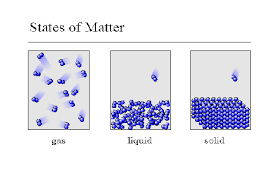
If mercury melts at -39oC and boils at 357oC, what state of matter is it at room temperature? (Room temperature is 25oC).
Solid
Liquid
Gas
Plasma

True or False: Elements that have the same number of valence electrons will react in the same way.
True
False

What are the reactants in the following equation:
HCl + NaOH --> H2O + NaCl
HCl and H2O
NaOH and NaCl
HCl and NaOH
H2O and NaCl

What compound is formed when Calcium bonds with Phosphorus?
CaP
CaP2
Ca3P
Ca3P2

What is the name of the compound N2H4 ?
Dinitrogen Tetrahydride
Nitrogen Hydride
Nitrogen Trihydride
Binitrogen Quadrahydride

How many protons, neutrons, and electrons are in a neutral nitrogen atom?
7 protons, 14 neutrons, 7 electrons
7 protons, 7 neutrons, 7 electrons
14 protons, 7 neutrons, 7 electrons
7 protons, 7 neutrons, 14 electrons

How many shells does the element Cl have?
17
35
3
7
8

Which family of elements is made up of nonmetal, highly reactive elements?
Family 1 - Alkali Metals
Family 2 - Alkaline Earth Metals
Families 3-12 - Transition Metals
Family 17 - Halogens
Family 18 - Noble Gases
You have a mixture made up of some liquids and some solids. What's the best way to separate the liquids from the solids?


A student finds an ionic compound but they don't know what the metal in it is! They do know that it bonds with oxygen like this: X2O. What is the charge of X?
+1
-1
+2
-2

Kennedy is separating a mixture. She filtrates the mixture first to separate the liquids from the solids. If she sets the liquids on fire, to separate the rest, did she use chemical or physical properties?
Filtration is chemical, burning is physical
They're both physical
Burning is chemical, Filtration is physical
They're both chemica

Which element below would bond with nitrogen like this: X3N2
Lithium
Sodium
Calcium
Aluminum
An electron is located ...
in the nucleus.
outside the nucleus.


What is the correct formula for phosphorous trichloride?
PCl3
P3Cl
P3Cl3
PCL
What is the correct name for CCl4?
carbon tetrachloride
monocarbon tetrachloride
tetracarbon monochloride
carbon chloride
What is the correct name of the compound HgCl2?
mercury (II) chloride
mercury chlorite
Monomercury dichloride

Ionic or covalent?
NaF
Ionic
Covalent
Name Al2S3
aluminum sulfide
dialuminum trisulfide
ammonium sulfide
aluminum (II) sulfite
Select the correct formula for sulfur hexachloride
S2Cl6
S6Cl
SCl6
SF6
1s2 2s2 2p6 3s2
The second shell from the center of an atom can hold how many electrons?
2
6
8
18

