
 Worksheets
Honors Bio Semester 1 Review
Total questions: 80
Worksheet time: 2hrs 5mins
Carbon dioxide is used in the
light dependent reaction
light independent reaction
Water is used in the
light dependent reaction
light independent reaction
Which of the following would NOT cause a change in the rate of photosynthesis
lack of oxygen
lack of carbon dioxide
lack of water
lack of light
What is the correct equation for cellular respiration?
oxygen + sugar -> carbon dioxide + water + Energy
carbon dioxide + sugar + Energy -> carbon dioxide + water
carbon dioxide + water -> oxygen + sugar + Energy
carbon dioxide + water + Energy -> oxygen + sugar
What is important about cellular respiration?
It produces energy from the sun.
It forms sugar.
It transforms sugar into a usable form of energy (ATP)
Only plants perform this process.
Which organ excretes (gets rid of) carbon dioxide?
Lungs
Liver
Heart
Kidney
One molecule produced by animals during cellular respiration is
carbon dioxide
glucose
oxygen
chlorophyll
What is one of the molecules needed from the Krebs Cycle in order for the Electron Transport Chain to occur?
Where does the electron transport chain occur?
Nucleus
Vacuole
Mitochondria
Nucleolus
In what part of the mitchondria does the electron transport chain occur?
Inner mitochondrial membrane (folds of the mitochondria)
Outer mitochondrial membrane
Cytoplasm
Ribosomes
What does FADH2 and NADH bring directly to the electron transport chain?
Oxygen
Water
Electrons and Hydrogen ions
ATP

Please identify the proper locations for each step of cellular respiration (more than one answer may be correct).
Glycolysis = Cytoplasm
Glycolysis = Mitochondria
Kreb Cycle = Cytoplasm
Kreb Cycle = Mitochondria
Which branch of biology deals with interactions among organisms and between organisms and their environment?
Ecology
Hydrology
Astrology
Geology
The biosphere is...
the combined portions of Earth in which all living things exist.
all of the living things in a community.
the gases in the atmosphere.
all of the abiotic factors in an ecosystem.
The difference between a population and a community is:
Population = 1 species Community = many species
Population = 2 species Community = many species
Population = many species Community = 1 species
They are the same thing.
Species make up ___________, which make up _____________.
populations ; communities
communities ; populations
ecosystems ; communities
populations ; ecosystems
Which of these is a producer?
Grass
Coyotes
Elephant
Human
What does sunlight provide to most ecosystems?
Energy
Carbohydrates
Carbon Fixation
Water
Which of these produces its own food supply?
Autotroph
Heterotroph
Consumer
Detritovore

What is shown here?
Food Web
Food Chain
Competition Chart
Decomposers
If you are an animal that eat both producers and consumers you are a(n)....
omnivore.
herbivore.
chemotroph.
autotroph.
What is the term for each step in the transfer of energy and matter within a food web?
Trophic Levels
Energy Paths
Food Pyramids
Food Chains
If you eat living things, then you are a...
carnivore.
herbivore.
producer.
all choices are correct
Oliver, Ethan, and Hannah are studying for their biology exam. They come across a question about the basic building block of carbohydrates. What is it?
Amino Acid
Nucleic Acid
Triglyceride
Monosaccharide
Nora, Mason, and Harper are in a biology class. Their teacher asks them, 'What are proteins made of?'
Amino Acids
Fatty Acids
Nucleotids
Monosaccharides

Grace, Nora, and Oliver are studying biology. They come across a nucleotide monomer under the microscope. They wonder, what kind of polymer would be formed when these monomers are joined together?
protein
carbohydrate
lipid
nucleic acid
Sophia, Henry, and Zoe are running a marathon. They need a quick energy boost. Which macromolecule made of CHO should they consume?
carbohydrates
proteins
nucleic acids
lipids
Charlotte, James, and Zoe are working on a project about polymers. They need to identify the building blocks of polymers. What should they look for?
monomer
polypeptide
monosaccharide
glycerol
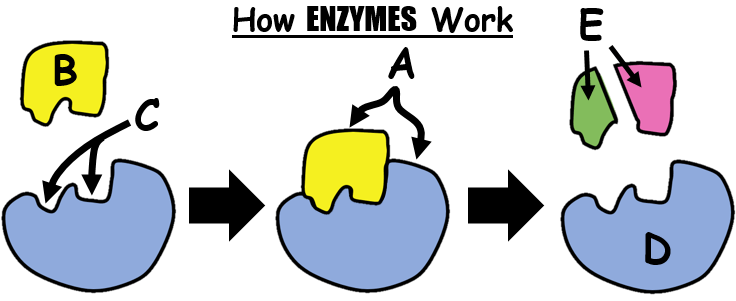
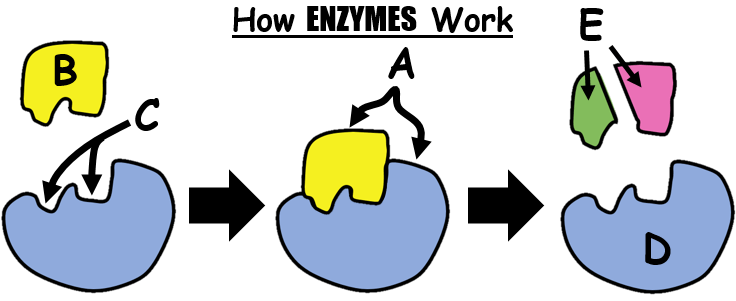
What is the main function of the cell membrane?
Regulate passage of substances
Produce energy
Store genetic information
Maintain cell shape
Describe the structure of the cell membrane.
The cell membrane is a single-layered structure
The cell membrane is composed of carbohydrates only
The cell membrane is impermeable to all substances
The cell membrane is a phospholipid bilayer with embedded proteins.
Explain the difference between active and passive transport mechanisms.
Active transport requires energy, passive transport does not.
Active transport involves carrier proteins, passive transport involves channel proteins.
Active transport occurs through osmosis, passive transport occurs through facilitated diffusion.
Active transport moves molecules from low to high concentration, passive transport moves molecules from high to low concentration.
How does osmosis differ from diffusion?
Osmosis involves the movement of gases specifically, while diffusion involves the movement of any type of particle.
Osmosis is a faster process than diffusion due to the involvement of water molecules.
Osmosis only occurs in living organisms, while diffusion occurs in non-living systems.
Osmosis involves the movement of water molecules specifically, while diffusion involves the movement of any type of particle.
Discuss the process of exocytosis.
Exocytosis is the process by which cells break down substances within the cell.
Endocytosis is the process by which cells release substances from intracellular vesicles into the extracellular space.
Exocytosis is the process by which cells absorb substances from the extracellular space into intracellular vesicles.
Exocytosis is the process by which cells release substances from intracellular vesicles into the extracellular space.
What happens to a cell placed in a hypertonic solution?
The cell will remain the same size
The cell will divide
The cell will expand
The cell will shrink or shrivel.
Why is the cell membrane considered selectively permeable?
It allows certain substances to pass through while restricting the passage of others.
It is impermeable to all substances.
It only allows water to pass through.
It allows all substances to pass through freely.
Which do BOTH prokaryotes and eukaryotes contain?
nucleus
mitochondria
ribosomes
cell wall
Which does only eukaryotic cells contain?
nucleus
DNA
cell membrane
ribosomes
Prokaryotic cells do not have…….
membrane bound organelles
cell membrane
DNA or RNA
life
You can distinguish a prokaryote apart from a nucleus by--
The presence of a ribosome
The presence of a cell membrane
The presence of DNA
The presence of a nuclear membrane
Which of the following structures is ALWAYS found in both eukaryotic and prokaryotic cells?
nucleus
mitochondria
ribosomes
cell wall
The smallest unit of a living thing are
atoms
cells
DNA
organelles
Bacteria is an example of a(n)
prokaryotic cell.
eukaryotic cell.


A species that plays a critical role in the health, maintenance, growth, or definition of an ecosystem.
keystone
invasive
engineer
predator

A species that does not belong in a balanced ecosystem, comes in, and changes it (usually for the worse).
flagnship
umbrella
invasive
predator

A species that helps to manage prey populations, which in turn controls the ecosystem's producers (vegetation).
predator
keystone
engineer
mutualist

