wayground logo

Free Printable Worksheets

Font size

S
M
L
XL
Worksheets

HPS Ch 14 & 15 Review

Total questions: 59

Worksheet time: 2hrs 43mins

Name
Class
Date
1.
An extremely strong base would have a pH of:
a)
1
b)
7
c)
9
d)
14
2.
Which of the following substances is basic?
a)
soda
b)
lemon juice
c)
soap
d)
vinegar
3.
Which of the following substances is basic?
a)
Apple juice
b)
Ginger ale
c)
Baking soda
d)
Distilled water
4.
Which is the stronger acid?
a)
pH 1
b)
pH 4
c)
pH 8
d)
pH 13
5.
What does a pH scale do?
a)
Tells you if a substance is an acid.
b)
Tells you if a substance is a base.
c)
Measures the strength or weakness of an acid or base.
d)
All of these are true.
6.
Vinegar is a base.
a)
True
b)
False
7.

What ion do acids release?

a)

H-

b)

H+

c)

OH-

d)

OH+

8.

HNO3

a)

acid

b)

base

9.

KOH

a)

acid

b)

base

10.

pH= 6

a)

weak acid

b)

strong acid

c)

weak base

d)

strong base

11.

Which of the following is an example of a Strong Acid?

a)

KOH

b)

CH3COOH

c)

H2SO4

d)

HO2C2O2H

12.

What is the name of the following acid or base?
Ca(OH)2

a)

calcium hydroxide

b)

calcium hydroxic acid

c)

calcium hydroxous acid

13.
Explain what happens when a strong acid and a strong base are poured into the same container.
a)
they form separate layers
b)
they mix physically but not chemically
c)
they break apart into separate elements
d)
they react chemically to form a salt
14.

What are the 4 major types of biomolecules?

(a)  

15.

Organic compounds

a)

are made only of carbon

b)

contain carbon bonded to hydrogen and nothing else

c)

contain carbon bonded to hydrogen

d)

contain only oxygen

16.

Which property of carbon is important in the forming of many types of organic compounds

a)

carbon has 6 electrons

b)

carbon has 6 protons

c)

carbon has 4 valence electrons

d)

carbon can only bond with hydrogen

17.

This is an example of a

a)

straight carbon chain

b)

branched carbon chain

c)

carbon ring structure

18.
Hydrocarbons are compounds that contain
a)
  Carbon and Nitrogen
b)
Carbon and Hydrogen 
c)
  Carbon, and Oxygen
d)
Carbon, Oxygen, and  Hydrogen 
19.
Which of the following elements must be present in any organic compound?
a)
Carbon
b)
Oxygen
c)
Potassium
d)
Hydrogen
20.

What type of hydrocarbon is characterized by the presence of a double bond?

a)

Alkane

b)

Alkene

c)

Alkyne

d)

Aromatic

21.

Which two of the following molecules are hydrocarbons?

a)

carbon dioxide

b)

methane

c)

ethanol

d)

butene

22.

Which two of the following molecules are hydrocarbons?

a)

carbon dioxide

b)

methane

c)

ethanol

d)

butene

23.

Name the compound: N2O5.

a)

dinitrogen pentaoxide

b)

binitrogen pentaoxide

c)

nitrogen oxide

d)

pentanitrogen dioxide

24.

Name the compound: CF4

a)

carbon tetrafluoride

b)

monocarbon tetrafluoride

c)

carbon fluoride

d)

chlorine tetrafluoride

25.

Write the formula: potassium hydroxide

a)

KOH

b)

POH

c)

KH

d)

KO

26.

Write the formula: tetraarsenic decoxide

a)

As4O10

b)

As10O4

c)

As6O9

d)

AsO

27.
Which Biomolecule is the main source of quick energy?
a)
Carbohydrates
b)
Lipids
c)
Proteins
d)
Nucleic Acids
28.
Which biomolecule group do enzymes belong in?
a)
Carbohydrates
b)
Lipids
c)
Proteins
d)
Nucleic Acids
29.
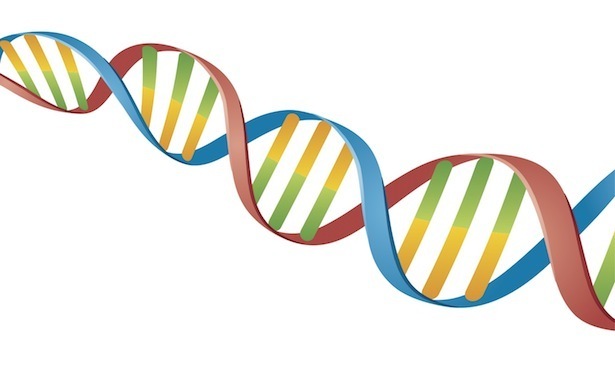
Which biomolecule stores and transmits genetic information?
a)
Carbohydrates
b)
Lipids
c)
Proteins
d)
Nucleic Acids
30.
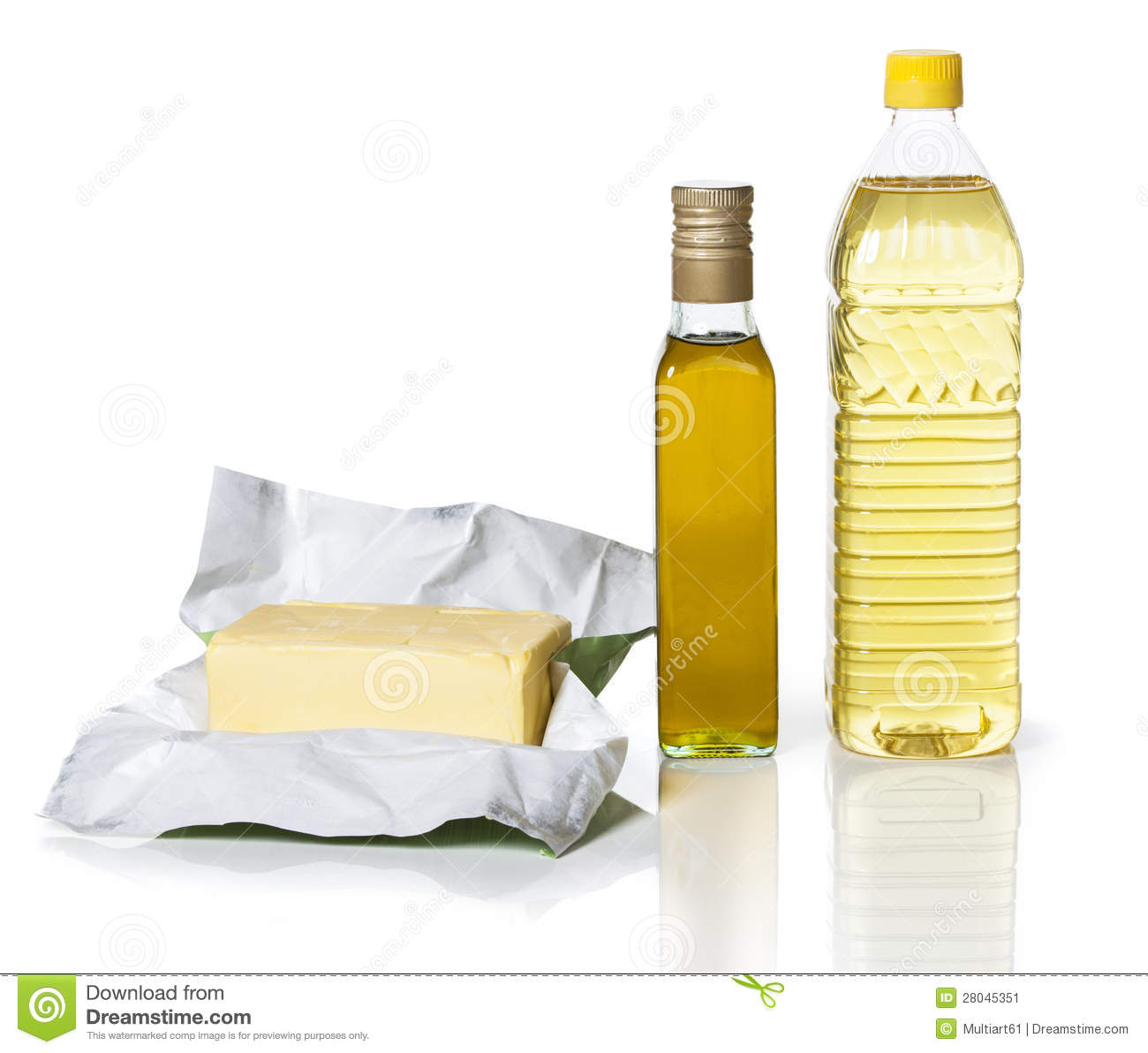
Which biomolecule is found in fats, oils, and waxes and is a source of long-term energy
a)
Proteins
b)
Nucleic Acid
c)
Lipids
d)
Carbohydrate
31.
What is the function of a nucleic acid?
a)
Stores genetic information
b)
Stores energy
c)
Quick source of energy
d)
Builds structures
32.
Which biomolecule has sugars and starches?
a)
Lipids
b)
Proteins
c)
Carbohydrates
d)
Nucleic Acid
33.

What are some common signs that a chemical reaction has occurred?

a)

Color change, gas production, formation of a precipitate, temperature change, and odor change.

b)

Change in volume

c)

Change in texture

d)

Formation of bubbles

e)

Change in pressure

34.

Why is it important to balance chemical equations?

a)

To make the equations longer

b)

To confuse students

c)

To waste time

d)

To ensure the law of conservation of mass is obeyed.

35.
What is the Law of Conservation of mass?
a)
Mass is created in a chemical reaction
b)
Mass is created in a physical change
c)
New chemicals formed from a chemical reaction have a larger overall mass than the original reactants
d)
Mass is never created or destroyed
36.
A decomposition reaction can be represented as _____________________.
a)
AB  → A + B
b)
A + B → AB
c)
AB + CD → AC + BD
d)
A + BC → B + AC
37.
A chemical change in which a single compound breaks down into two or more simpler products is called a ______________________.
a)
single-replacement reaction
b)
synthesis reaction
c)
double-replacement reaction
d)
decomposition reaction
38.
What type of chemical reaction is this?
Al(OH)3 → Al2O3  + H2O
a)
Decomposition
b)
Combustion
c)
Synthesis
d)
Single Replacement 
39.
The number of atoms you begin with in a chemical reaction ...
a)
must be the same as the number of  atoms you end with
b)
must be an even number
c)
can be different to the number you finish with
d)
changes depending on how much energy is formed
40.

2Na +S → Na2S

a)

Double Replacement

b)

Decomposition

c)

Combustion

d)

Synthesis

41.

Identify the following chemical reaction.

Pb + FeSO4 ----> PbSO4 + Fe

a)

Synthesis (or combination)

b)

Decomposition

c)

Single displacement

d)

Double displacement

42.

What type of reaction is the following:
Na2S +2HCl > H2S+2NaClNa_2S\ +2HCl\ ->\ H_2S+2NaCl

a)

Combination

b)

Decomposition

c)

Single Replacement

d)

Double Replacement

e)

Combustion

43.

What type of reaction is the following:
2C4H10 +13O2 > 8CO2+10H2O2C_4H_{10}\ +13O_2\ ->\ 8CO_2+10H_2O

a)

Combination

b)

Decomposition

c)

Single Replacement

d)

Double Replacement

e)

Combustion

44.

What type of reaction is the following:
3CuS +2Al > Al2S3+3Cu3CuS\ +2Al\ ->\ Al_2S_3+3Cu

a)

Combination

b)

Decomposition

c)

Single Replacement

d)

Double Replacement

e)

Combustion

45.

An _______ reaction is when more thermal energy is absorbed than is released.

a)

endothermic

b)

endergonic

c)

exothermic

d)

exergonic

46.

An _______ reaction is when more thermal energy is released than is absorbed.

a)

endothermic

b)

endergonic

c)

exothermic

d)

exergonic

47.

Energy is ______ when bonds break.

a)

gained

b)

lost

c)

released

d)

absorbed

48.

Energy is _____ when new bonds form.

a)

absorbed

b)

released

c)

lost

d)

gained

49.

The energy required to start a chemical reaction is ___.

a)

endothermic

b)

exothermic

c)

activation

d)

released

50.
How many Al atoms are in this compound?         4Al2O3
a)
2
b)
8
c)
6
d)
4
51.
How do chemical reactions turn substances into new substances?
a)
with burning acid
b)
the molecules mix together and create new substances
c)
the atoms break apart and combine back together in new ways
d)
the ionic compounds mix in water to form solutions
52.

Which type of reaction is represented by this graph?

a)

Exothermic

b)

Decomposition

c)

Endothermic

d)

Synthesis

53.
What is the activation energy?
a)
The energy of the products
b)
The energy of the reactants
c)
The minimum energy needed by the reactants to form the products.
d)
The energy lost in the reaction
54.
What is the purpose  of an enzyme?
a)
give permission for the reaction
b)
raise activation energy
c)
speed up reactions
d)
control how many reactions occur
55.
What is a substance called if it speeds up a chemical reaction?
a)
reusable
b)
catalyst
c)
specific
d)
fragile
56.
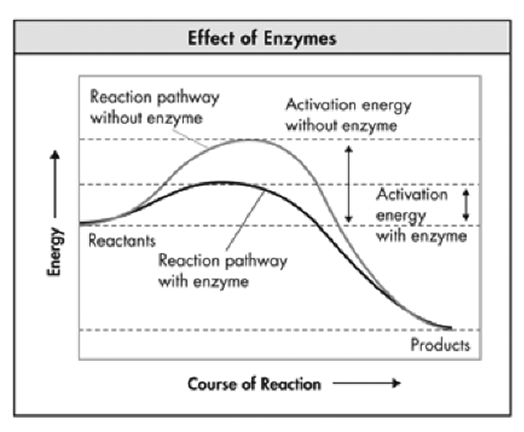
The graph shows how enzymes affect reactions in cells. Which statement best summarizes the information shown in the graph?
a)
Enzymes increase the energy of the reactants.
b)
Enzymes decrease the energy level of the products.
c)
Enzyme decrease the activation energy of the reaction.
d)
Enzymes reverse the direction of the reaction.
57.

What term is given to a reaction which transfers heat energy to the surroundings?

a)

Endothermic

b)

Reversible

c)

Exothermic

d)

Exotermic

58.
Which factors increase the rate of a reaction.
a)
increasing temperature
b)
increasing concentration
c)
increasing surface area
d)
all of these
59.
Does the reverse reaction absorb or release heat?
a)
Absorb
b)
Release
c)
Cannot be determine