
 Worksheets
8th Grade Science
Total questions: 72
Worksheet time: 46mins
Which element is represented by the symbol 'O' on the periodic table?
Oxygen
Osmium
Gold
Silver
In a chemical reaction, the mass of the reactants is 50 grams. What should be the mass of the products according to the law of conservation of mass?
25 grams
50 grams
75 grams
100 grams
Which of Newton's laws explains why passengers move forward in their seats when a car suddenly stops?
First Law
Second Law
Third Law
Law of Universal Gravitation
Calculate the acceleration of a 10 kg object when a net force of 20 N is applied to it.
0.5 m/s²
1 m/s²
2 m/s²
5 m/s²
What is the primary cause of the Coriolis effect, which influences global wind patterns?
Earth's rotation
Ocean currents
Solar radiation
Mountain ranges
Which element is represented by the symbol 'Na' on the periodic table?
Nitrogen
Sodium
Neon
Nickel
In the photosynthesis equation, 6CO2+6H2O→C6H12O6+6O2 , how many oxygen atoms are on each side of the equation?
6
12
18
24
Which of Newton's laws is demonstrated by a rocket launch?
First Law
Second Law
Third Law
Law of Universal Gravitation
If a 5 kg object experiences a net force of 15 N, what is its acceleration?
1 m/s²
2 m/s²
3 m/s²
4 m/s²
Which element is represented by the symbol 'Fe' on the periodic table?
Fluorine
Iron
Francium
Fermium
In a chemical reaction, if the mass of the products is 80 grams, what was the mass of the reactants?
40 grams
60 grams
80 grams
100 grams
Which of Newton's laws explains the action-reaction forces experienced when jumping off a boat?
First Law
Second Law
Third Law
Law of Universal Gravitation
A 20 kg object is subjected to a net force of 40 N. What is its acceleration?
1 m/s²
2 m/s²
3 m/s²
4 m/s²
How do jet streams influence local weather patterns?
By causing earthquakes
By directing ocean currents
By influencing temperature and precipitation
By creating mountain ranges
What is the acceleration of a 15 kg object when a net force of 45 N is applied?
1 m/s²
2 m/s²
3 m/s²
4 m/s²
Which element is represented by the symbol 'K' on the periodic table?
Carbon
Potassium
Krypton
Calcium

What type of front is represented here?
Cold Front
Warm Front
Occluded Front
Stationary Front
What is the acceleration of a 25 kg object when a net force of 50 N is applied?
4 m/s²
1 m/s²
2 m/s²
3 m/s²
Which element is represented by the symbol 'C' on the periodic table?
Calcium
Carbon
Chlorine
Copper
What is atmosphere?
A blanket of gases and tiny bits of dust that surround Earth.
the measurement of temperature
what the air is like at a certain time or place.
What is weather?
a measurement of how hot or cold it is outside
What the air is like at a certain time and place.
a thermometer
What device is used to measure air pressure?
Hygrometer
Anemometer
Barometer
What is wind?
moving water
moving air
moving clouds
What is air pressure?
the weight of air pressing down on Earth.
Gravity weighing down on Earth.
How fast the wind is blowing.
What is it when water falls to the ground from the atmosphere?
Precipitation
Fog
Air pressure
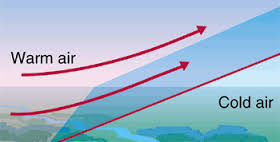


What type of front is shown?
Warm Front
Cold Front
Occluded Front
Stationary Front


A _____________ weather front occurs when a cold air mass moves forward, pushing the warm air mass up.
Cold
Warm
Stationary
Occluded

A _____________ weather front occurs two cold air masses meet and push/force the warm air in the middle upwards.
Cold
Warm
Stationary
Occluded
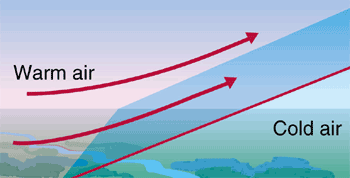
Why does warm air rise above cold air?
Warm air is less dense
Warm air is more dense
Cold air is stronger than warm air

Which type of weather front can produce foggy weather that can last for several days?
Cold
Warm
Stationary
Occluded
What type of weather will you see along a cold front?
Thunderstorms
Sunny skies
Gentle rain
No weather

What type of front is over Texas?
warm front
cold front
stationary front
occluded front
What is the primary cause of tectonic plate movement?
Convection currents in the mantle
Gravitational pull from the moon
Ocean currents
Wind patterns
Which type of plate boundary is associated with the creation of new oceanic crust?
Transform boundary
Convergent boundary
Subduction zone
Divergent boundary
What geological feature is commonly formed at a convergent plate boundary of two oceanic crusts?
Deep ocean trench
Rift valley
Mid-ocean ridge
Volcanic mountain range
What is Newtons 1st law
Inertia
F=m*a
Mass and acceleration
force
Mr. Haughey crashed his car. When he crashed, the car stops but he keeps going forward. Which one of newtons laws is this.
2nd law
1st law
3rd law
4th law
Which one of Newtons laws does this equation belong to. F=m*a
1st law
2nd law
3rd law
4th law
What happens if I push someone harder
The will go upwards
They will move forward slower
They won't move at all
They will move forward faster
What is the basic structural and functional unit of all living organisms?
Molecule
Tissue
Atom
Cell
Which organelle is known as the powerhouse of the cell?
Nucleus
Mitochondria
Ribosome
Golgi apparatus
What is the function of the cell membrane?
To produce energy
To control the movement of substances in and out of the cell
To synthesize proteins
To store genetic information
Which of the following is a chemical change?
Boiling of water
Rusting of iron
Melting of ice
Breaking of glass
Which system in the human body is responsible for transporting oxygen and nutrients to cells?
Circulatory system
Digestive system
Nervous system
Respiratory system
What is the primary function of the human skeletal system?
To regulate body temperature
To produce hormones
To digest food
To provide structure and support
Which human body system is responsible for removing waste products from the blood?
Endocrine system
Immune system
Excretory system
Respiratory system
Who were the scientists that proposed the cell theory?
Schleiden and Schwann
Darwin and Mendel
Curie and Rutherford
Newton and Einstein
Which of the following is NOT a part of the cell theory?
Cells can spontaneously generate from non-living matter.
The cell is the basic unit of life.
All cells arise from pre-existing cells.
All living organisms are composed of one or more cells.
What is the primary difference between primary and secondary succession in an ecosystem?
Primary succession is faster than secondary succession.
Primary succession occurs in an area with existing soil, while secondary succession starts on bare rock.
Primary succession involves only plant species, while secondary succession involves only animal species.
Primary succession starts on bare rock, while secondary succession occurs in an area with existing soil.
Which of the following is an example of a pioneer species in primary succession?
Oak trees
Lichens
Grasses
Ferns
During secondary succession, which event is most likely to occur first?
Invasion by non-native species
Development of a mature forest
Colonization by pioneer species
Establishment of a climax community
Which of the following is a biotic factor in an ecosystem?
Sunlight
Temperature
Plants
Water
How do biotic factors affect the population of a species in an ecosystem?
By altering the landscape
By changing the climate
By influencing the water cycle
By providing food and habitat
Which of the following interactions is an example of a biotic factor?
Wind speed
Soil erosion
Rainfall
Predation
In a food web, which organism is most likely to be a primary consumer?
Eagle
Rabbit
Grass
Fox
What role do decomposers play in a food web?
They produce energy from sunlight.
They consume primary producers.
They break down dead organisms and recycle nutrients.
They are top predators.
Which of the following best describes a food web?
A chart that lists all the species in an ecosystem.
A diagram showing the energy flow from producers to consumers.
A linear sequence of organisms where each is eaten by the next one in the chain.
A complex network of interconnected food chains in an ecosystem.

