
 Worksheets
CIA 2 review
Total questions: 94
Worksheet time: 3hrs 39mins
Which of the following would likely be a limiting factor to a population?
Abundance of food
Living near a water source
Presence of a natural predator
Multiple sources for shelter
When rabbits were introduced to Australia, they began to breed exponentially. However, over time their population has begun to decrease due to a limiting factor.
What is most likely the limiting factor in this situation?
Abundant space to breed and live
No available predator in the area
Rabbits choosing not to mate to conserve space
Lack of available food
Habitat availability increases for a population. How would the carrying capacity of the prey change?
The carrying capacity would increase as more resources become available.
Carrying capacity occurs independent of factors in the environment.
The carrying capacity would decrease as more resources became available.
The carrying capacity is set in an environment and cannot change.

When Yellowstone National Park was created in the late 1800s, wolves were on the decline. The last wolves in Yellowstone were killed in 1926, but in the 1800s, there were between 100-160 wolves in the park. In 1995, gray wolves were reintroduced to the park.
Which graph (drawn in red) below shows a prediction of how the population would change if there was less water available in the ecosystem?


There would be no change to carrying capacity.
A scientist was studying a population of fish in a pond over a period of 10 years. He observed that the population increased each year for 3 years, and then remained nearly constant for the rest of the study. The best explanation for this observation is that the population had
stopped reproducing
reached carrying capacity
mutated into a different species
run out of food and all died
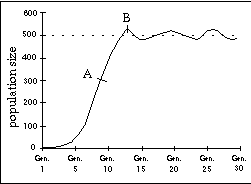
What is the carrying capacity of the graph?
around 500
more than 800
less than 300
around 700

What is the carrying capacity of the graph?
1000
8000
800
600
All of the organisms of one species living in the same area.
Individual
Population
Community
Ecosystem
"Five green and speckled frogs, sitting on a speckled log, eat some most delicious bugs."
Which level of organization is this?
Individual
Population
Community
Ecosystem
Which of the following is an abiotic factor?
Grass
Spider
Turtle
Rock

What type of growth is demonstrated in the graph?
Exponential
Carrying capacity
Linear
Negative
Leveling off of the population after the maximum number the environment can support has been reached.
Exponential
Carrying capacity
Linear
Negative
Which of the following would likely be a limiting factor to a population?
Abundance of food
Living near a water source
Presence of a natural predator
Multiple sources for shelter
When rabbits were introduced to Australia, they began to breed exponentially. However, over time their population has begun to decrease due to a limiting factor.
What is most likely the limiting factor in this situation?
Abundant space to breed and live
No available predator in the area
Rabbits choosing not to mate to conserve space
Lack of available food
Which of the following demonstrates population growth when there is limited available water in an area?


Habitat availability increases for a population. How would the carrying capacity of the prey change?
The carrying capacity would increase as more resources become available.
Carrying capacity occurs independent of factors in the environment.
The carrying capacity would decrease as more resources became available.
The carrying capacity is set in an environment and cannot change.
When Yellowstone National Park was created in the late 1800s, wolves were on the decline. The last wolves in Yellowstone were killed in 1926, but in the 1800s, there were between 100-160 wolves in the park. In 1995, gray wolves were reintroduced to the park.
Which graph (drawn in red) below shows a prediction of how the population would change if there was less water available in the ecosystem?
There would be no change to carrying capacity.
Enzymes are an example of
Lipids
Carbohydrate
Protein
Nucleic Acid
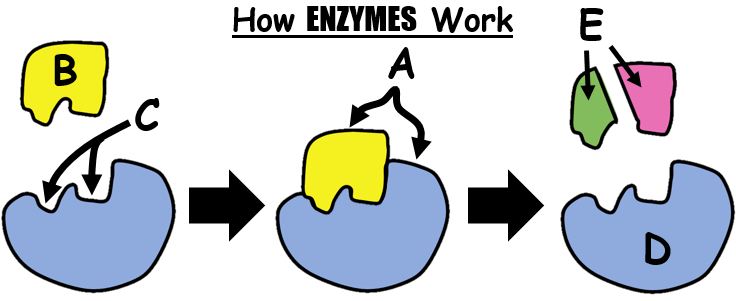
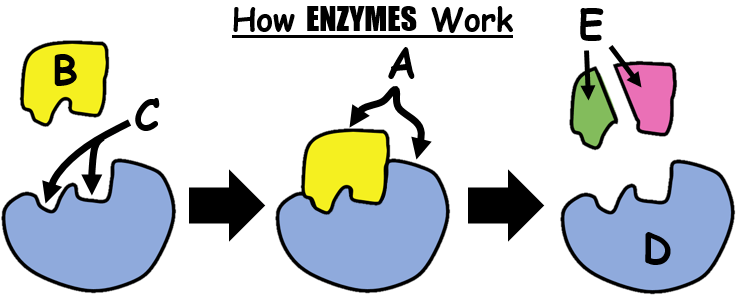
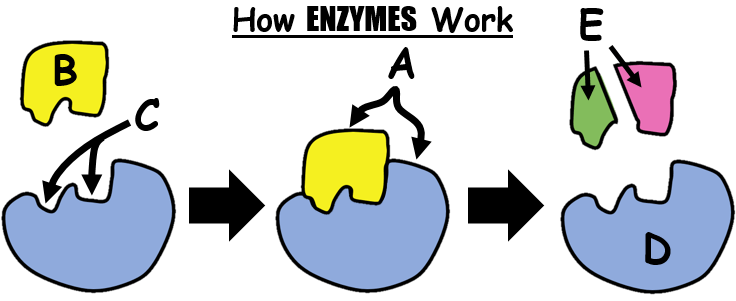
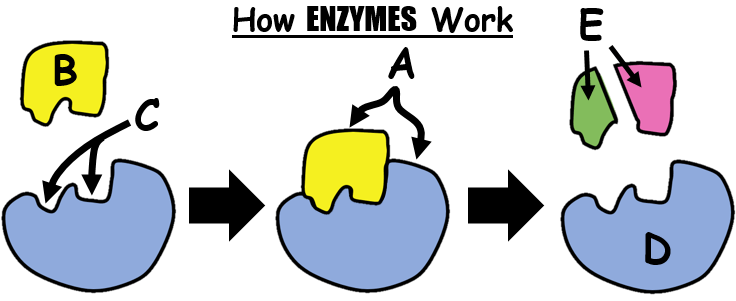
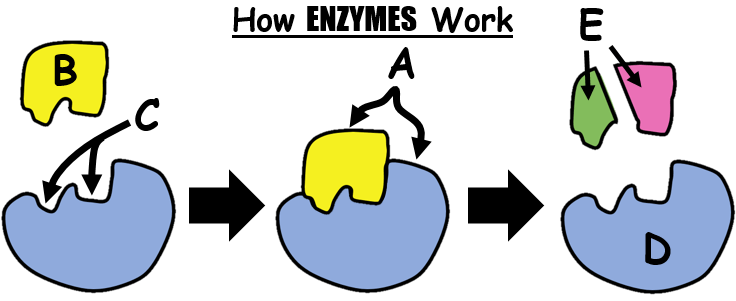
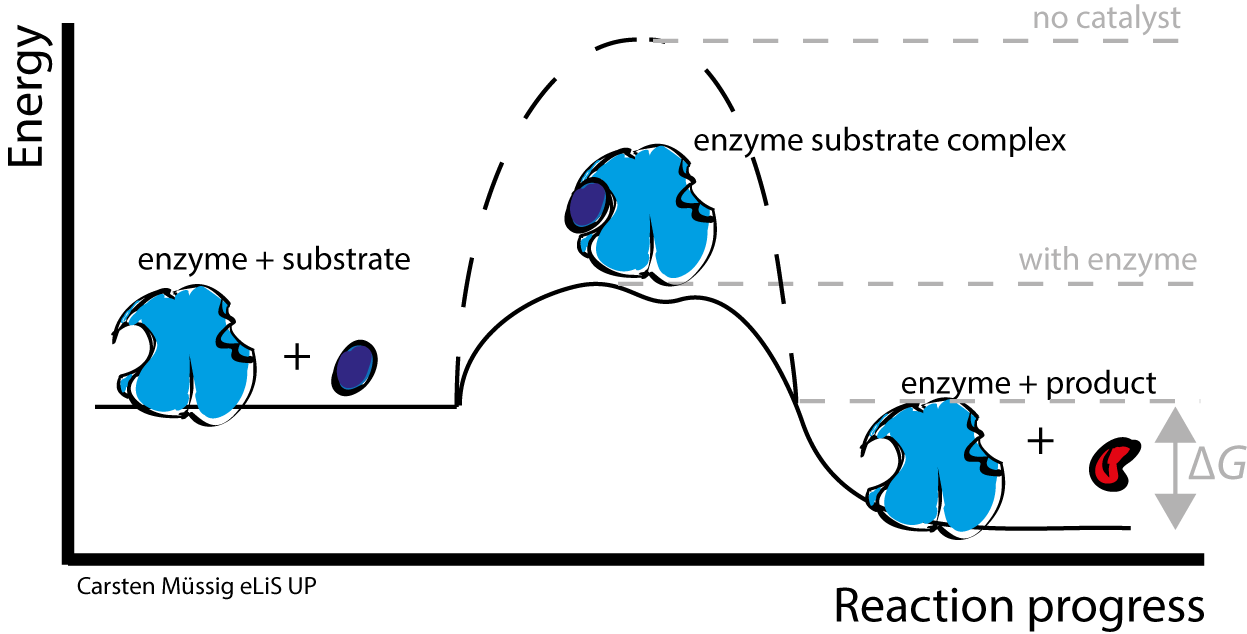
What happens when enzymes are heated to a high temperature?
The enzymes die.
The shape of the enzyme are changed and it denatures
The enzymes' amino acid sequence changes.
The enzymes remain the same
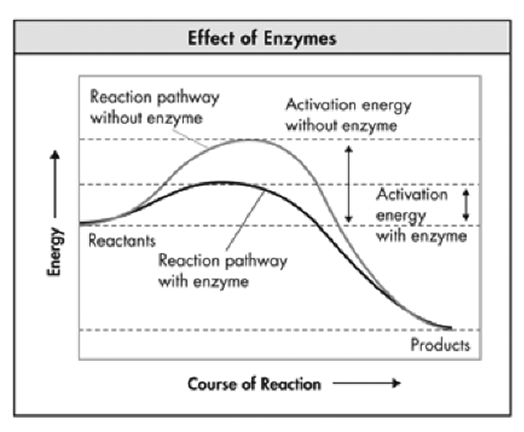
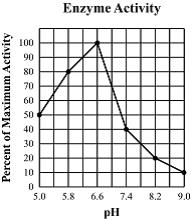


How is cellular respiration related to photosynthesis?
Both require oxygen to start
It is the reverse reaction of photosynthesis
Both start with glycolysis
Both end with 38 ATP for cells
Which of the following statements are false?
Glycolysis does not require oxygen
Glycolysis is the first step in both anaerobic and aerobic respiration
Glycolysis occurs in the mitochondria
Glycolysis produces 2 ATP, 2 Pyruvates, and 2 NADH
What are the products of aerobic cellular respiration?
ATP
Carbon dioxide (CO2)
Water
All of the above
What is cellular respiration?
the catabolism of glucose to transfer energy to ATP
the breakdown of glucose to release NADH
the breakdown of glucose to release FADH
the breakdown of glucose to release carbon
The Electron Transport Chain (ETC) occurs across the ________ and so extra folds called ________ enable it to occur more often
Mitochondrial matrix, villi
Outer mitochondrial membrane, flagella
Inner mitochondrial membrane, cristae
Cytoplasm, endoplasmic reticulum
After strenuous exercise, a muscle cell would contain decreased amounts of ______ and increased amounts of ______ ____
glucose; ATP
ATP; glucose
oxygen; lactic acid
lactic acid; ATP
What process is found in both aerobic and anaerobic metabolism?
the Kreb's cycle
oxidative phosphorylation
the citric acid cycle
glycolysis
During chemiosmosis
H+ ions serve as the final electron acceptor
a concentration gradient is generated when H+ ions are passively transported from the matrix to the inner mitochondrial membrane
energy is released as H+ ions move freely across the mitochondrial membrane
ATP is synthesized when H+ ions move through a channel in ATP synthase
The final electron acceptor of aerobic respiration is _______ and this allows _______________ to continue.
oxygen, electron flow
water, citric acid cycle
carbon dioxide, aerobic respiration
NAD+, chemiosmosis
The main purpose of fermentation is to
produce oxygen
replenish NAD+ for glycolysis
replenish oxaloacetic acid for the Krebs cycle
produce ATP

It is possible for both prokaryotes and eukaryotes to perform glycolysis because it occurs in the _____________
mitochondrial matrix
inner membrane
cytoplasm
cell membrane
Anaerobic respiration yields about ______ ATP per glucose whereas aerobic respiration yields about _______ ATP per glucose.
38, 2
2, 38
2, 18
18, 2
The electrons that transfer energy to pump protons across the inner mitochondrial membrane were supplied by
ATP and NADPH
NADH and FADH2
water and oxygen
Which reaction moves the cellular respiration process from the cytoplasm to the mitochondria?
glycolysis ---> pyruvate
pyruvate ---> acetyl CoA
acetyl CoA ---> PGA
PGA ---> PGAL
Aerobic cellular respiration also occurs in some aerobic bacteria (prokaryotes). Since these organisms do not have mitochondria, what is the likely location of the electron transport chain (ETC)?
the nuclear membrane
the endoplasmic reticulum
the cell membrane
the chloroplast
Photosynthesis is an energy storing process (in glucose) and cellular respiration is an energy releasing process (to ATP)
true
false
How does most of the water needed by the plant get into its leaves?
It enters through the stomata
The roots absorb it and then it travels up the stem
It's made during a chemical reaction in the leaf
The flowers capture water and deliver it to the leaves


Where do the dark reactions (Calvin cycle) take place?
thylakoid membrane
lumen
stroma


Which of the following correctly shows a flow of energy through the food web?
Grasshopper --> sparrow --> hawk
Snake --> toad --> grasshopper
Sparrow --> hawk --> rabbit
Rabbit --> hawk --> grass

Based on the food web, the populations of which two organisms would directly impact the population of grasshoppers?
Carrots and owls
Birds and grasses
Mice and grains
Foxes and mice
In an energy pyramid, which organism would have the least amount of energy from the Sun?
A blueberry bush
A rabbit
A grizzly bear
A bald eagle
The Sea Otter is a keystone species in its food web. It feeds on abalone, urchins, and mussels. Those three organisms feed on the kelp in the ecosystem. Why would the food web fall out of balance if the Sea Otters were no longer in the ecosystem?
The kelp would over grow.
There would be no real difference.
The three organisms that eat kelp would over eat it until there is no food left in the ecosystem.
The three organisms that eat kelp would eat less of it and the kelp would take over the ecosystem.
Which is the most likely scenario to happen if the top predator in an ecosystem is eliminated from it?
decomposers will adjust to become the top predator
animals that are normally prey would overpopulate and over eat
herbivores would evolve and become carnivores
herbivores would reproduce more and eat less producers.

A partial tundra food web is shown. Based on the information in the food web, which of the following food
chains shows one way energy flows in this ecosystem?


A partial swamp food web is shown. In this food web,
energy is transferred directly between -
mosquitos and
mudskippers
kingfishers and
mangrove crabs
prawns and
mosquito larvae
kingfishers and
mangrove trees

A partial hedgerow food web is shown. Which table shows the correct role of organisms in the food web?


A partial forest food web is shown. What role do
turkeys play in this food web?
Decomposer
Predator
Consumer
Producer

A wetlands food chain is shown below.
Which table shows the correct role of each organism?


What role do bobcats play in a
forest food web?
Bobcats break down dead
plants and animals and return
nutrients to the soil.
Bobcats are consumers of
marmots and grouses.
Bobcats produce their own
energy.
Bobcats are predators of
grasses and berries.

