
 Worksheets
Heat Transfer Review
Total questions: 49
Worksheet time: 2hrs 12mins
Hot chocolate is stirred with a spoon and the spoon gets hot.
Conduction
Convection
Radiation
Temperature
The sun warms your skin on a cold day.
Conduction
Convection
Radiation
Temperature
Macaroni rises and falls in a pot of heated water.
Conduction
Convection
Radiation
Dinner
You burn your hand by touching a hot stove.
Conduction
Convection
Radiation
Temperature
Warming your feet in front of a fire.
Conduction
Convection
Radiation
Vacation
Hot air balloon rises.
Conduction
Convection
Radiation
Adventure
The air near the ceiling in a room is warmer that the air near the floor.
Conduction
Convection
Radiation
Electricity
The sidewalk increases in temperature on a sunny day.
Conduction
Convection
Radaiation
Heat
Heat transfer through liquid and gases
Conduction
Convection
Radiation
Temperature
Electromagnetic waves through empty space
Conduction
Convection
Radiation
Magic
When two objects are in physical contact with each other
Conduction
Convection
Radiation
Friction
Energy transfer when an ice cube is put in a tray of warm water and melts
Conduction
Convection
Radiation
Mechanical
Rocks getting warmed by the sun
Conduction
Convection
Radiation
Sun bathing
Beach sand getting warmed by the sun
Conduction
Convection
Radiation
Sun bathing
The transfer of heat from one substance to another through direct contact
conduction
radiation
convection
The transfer of heat through currents caused by the warming and cooling in liquids and gasses
convection
conduction
radiation
The transfer of heat through electromagnetic waves
convection
radiation
conduction

Hot chocolate warming the outside of a cup
conduction
convection
radiation

Cooking food in a microwave
convection
radiation
conduction

Roasting marshmellows
radiation
conduction
convection

Ice melting in your hand
conduction
radiation
convection
What is heat transfer?
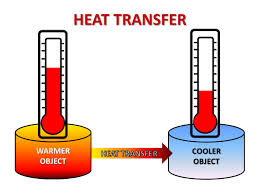
The transfer of heat from a warmer object to a cooler object.
The transfer of heat from a cooler object to a warmer object.
The transfer of heat.
Which type of heat transfer(s) do not require objects to touch?
conduction
convection
radiation
In which state(s) of matter can convection occur?
solids
liquids
gases
all of the above
Warm air/water ___________ because it is less dense than cool air/water.
rises
falls
Cool air falls because it is ___________________ than warm air.
less dense
more dense
Which of the following materials is a conductor?
Metals
Plastic
Wood
Rubber
Which of the following materials is an insulator?
Water, oil, and salt
Copper, aluminum, and iron
Metal, wood, and paper
Rubber, plastic, and glass

Metal is a great conductor of heat so it flows quicker.
True
False

Plastic is a great conductor of heat so it flows quicker.
True
False
Which particles move the FASTEST and have more thermal energy?
Cold Particles
Hot Particles
The energy that is transferred from a warmer object to a cooler object
The lowest temperature possible
The transfer of energy from one particle of matter to another within an object or between two objects that are in direct contact
A type of heat transfer that occurs through the movement of fluids, which can be solid, liquid, or gas
The movement of a fluid, caused by differences in temperature, that transfers heat from one part of the fluid to another.
Evaporation Molecules
Condensation Waves
Radiation Flow
Convection Current


What is temperature?
A material that conducts heat well.
The average kinetic energy of particles.
Heat transfer that occurs through liquids and gases.
Total kinetic energy of particles.
What is heat?
A material that does not conduct heat well.
The transfer of heat through direct contact.
Energy transfer from an object at a higher temperature to an object at a lower temperature.
Average kinetic energy of particles.

