
 Worksheets
Fall 2024 AIA Review
Total questions: 74
Worksheet time: 2hrs 32mins
When one or more substance is combined it is called __________________.
compound
element
mixture
solution
Which of the following statements describes an element?
It contains only one kind of atom.
It can be decomposed by ordinary chemical means.
It is composed of atoms of two or more elements that bond together.
It has unique properties that are different from the properties of its individual elements.
Which of the following statements describes a compound?
It contains only one kind of atom.
It can be separated by physical means.
It cannot be decomposed into simpler types of substances.
It consists of atoms of two or more different elements bond together.

What elements made up the compound Carbon dioxide?
Carbon and Oxide
Carbon and Oxygen
Carbon and Hydrogen
Carbon and Carbon

Which of the following statements is true about the illustrations below?
Illustrations I and IV are elements; Illustrations II and III are compounds.
Illustrations II and III are elements; Illustrations II and IV are compounds.
Illustrations I and II are elements; Illustrations III and IV are compounds.
Illustrations III and IV are elements; Illustrations I and II are compounds.
The smallest unit of matter that retains the chemical identity of the the elements
Element
Atom
Compound
Molecule

This picture represents which of the following?
element
compound

This picture represents which of the following?
element
compound
How many atoms of Carbon are in this formula? C6 H12O6
6
1
12
How many elements are in this chemical formula?
H2SO4
1
2
3
4
What elements are represented in this chemical formula? Fe2O3
Iron, Oxygen
Francium, Europium, Oxygen
Ferrium, Oxygen
Berylium, Oxygen
Which of the following is a molecule of a compound?
H2
Cl2
H2O
F2
Molecules that are made of more than one type of atom are called?
Molecules
Elements
Mixtures
Compounds
Which of these elements is not present in NaNO3?
sodium
hydrogen
oxygen
nitrogen
All these are examples of a chemical change EXCEPT....
Rusting metal
Boiling water
Burning paper
Rotting food.

Sodium metal is cut with a knife

Wood Burning

A nail rusting
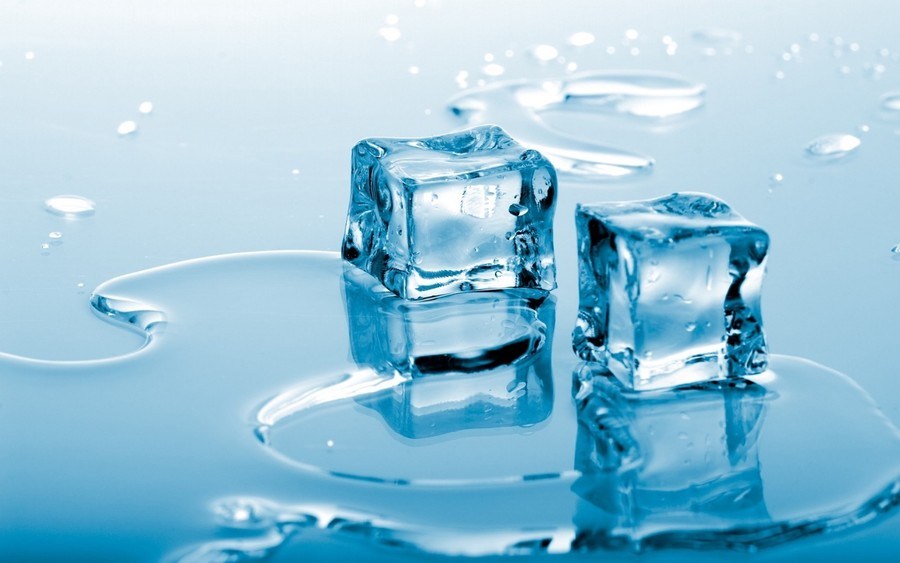
Water freezing into Ice


Melting Chocolate
chemical change
physical change

Cutting a pizza into slices is what type of change?
chemical change
physical change
A solution that contains all of the solute that it can hold at a given temperature.
unsaturated solution
homogeneous solution
You can make a solution more concentrated by adding more __________.
solution
Avery is conducting a science experiment. When water is added to a solution it is called a ______________
dilution
concentration
heterogeneous solution
dissociation
Luna and Daniel are conducting an experiment to see how much __________ can dissolve in a solvent to create saturated, unsaturated, and supersaturated solutions.
sugar
liquid
solution
solute
Calculate the average speed of a car that travels 150 kilometers in 3 hours.
45 km/h
50 km/h
55 km/h
60 km/h
Which of the following statements correctly distinguishes between speed and velocity?
Speed includes direction, while velocity does not.
Velocity includes direction, while speed does not.
Both speed and velocity include direction.
Neither speed nor velocity includes direction.
A distance-time graph shows a straight line with a positive slope. What does this indicate about the object's motion?
The object is at rest.
The object is moving at a constant speed.
The object is accelerating.
The object is decelerating.
According to Newton's First Law of Motion, what will happen to an object at rest if no unbalanced force acts on it?
It will start moving.
It will remain at rest.
It will accelerate.
It will change direction.
If a cyclist travels 30 km in 2 hours, what is their average speed?
10 km/h
15 km/h
20 km/h
25 km/h
What does a horizontal line on a distance-time graph indicate?
The object is moving at a constant speed.
The object is accelerating.
The object is at rest.
The object is decelerating.
What effect do balanced forces have on an object in motion according to Newton's First Law?
The object will stop.
The object will change direction.
The object will continue moving at a constant speed.
The object will accelerate.
A runner completes a 400-meter lap in 50 seconds. What is the runner's average speed?
6 m/s
7 m/s
8 m/s
9 m/s
What does a steep slope on a distance-time graph indicate?
Slow speed
Constant speed
Fast speed
No movement
Which of the following is an example of velocity?
30 m/s
30 m/s east
30 m
30 m east
Gabriel sprinted down the hallway for a science project. He ran a total of 40 meters in 20 seconds. What was his average speed?
2 meters per second
20 meters per second
40 meters per second
10 meters for second

Newton's first law is also called the Law of ...
Friction
Inertia
Unbalanced forces
Newtons
Newton's first law applies
to both moving and nonmoving objects
only to moving objects
only to objects that are not moving


What occurs when thermal equilibrium is reached within a system?
The system cools down rapidly.
Heat transfer stops completely.
All substances within the system have the same temperature.
Thermal energy flows in the opposite direction.
Which of the following best describes how thermal energy moves in a predictable pattern within a closed system until thermal equilibrium is reached?
It always moves from cooler to warmer areas.
It moves randomly within the system.
It moves from warmer to cooler areas until equilibrium.
It remains stagnant and doesn't move.
If you place a hot cup of coffee on a cold kitchen counter, which process allows the coffee to cool down as it transfers heat to the counter?
Conduction
Radiation
Convection
Insulation
In a well-insulated house on a hot summer day, what happens to the thermal energy inside the house?
It escapes to the outside.
It stays in the same place without moving.
It moves from cooler rooms to warmer rooms.
It moves from warmer rooms to cooler rooms until equilibrium is reached.

Which of the following statements best describes the relationship between temperature and kinetic energy of particles in a substance?
As kinetic energy decreases, temperature is not affected.
As kinetic energy increases, temperature decreases.
As kinetic energy decreases, temperature increases.
As kinetic energy increases, temperature increases.

Joshua conducted an experiment. He placed granules in a beaker of water. He measured the temperature before and after. The change in temperature gives Joshua information about the mixture best described by which of the following?
The decrease in the kinetic energy of the particles
The quantity of heat released by the mixture
The current arrangement of atoms in the mixture
The ability of the mixture to conduct an electric current

Arrow A in the diagram shows liquid water converting into gaseous water vapor during evaporation. Which of the following statements describes the particles found at arrow A?
Select two correct answers.
The particles have more kinetic energy than the particles at arrow D.
The particles have a lower temperature than the particles at arrow D.
The particles have less kinetic energy than the particles at arrow D.
The particles have no kinetic energy.
The particles have a higher temperature than the particles at arrow D.
In which phase are particles widely separated and move very quickly?
Gas
Solid
Liquid
Plasma

Which of the following describes the molecules of the liquid in the beaker on the left of the image above?
The molecules in the left beaker have more kinetic energy than the molecules in the right beaker.
The molecules in the left beaker have less kinetic energy than the molecules in the right beaker.
The molecules in the left beaker have no kinetic energy.
The molecules in the left beaker have the same amount of kinetic energy as the molecules in the right beaker.

As a solid changes to a liquid, the temperature ________, and the kinetic energy of the particles ___________.
increases, decreases
increases, increases
decreases, decreases
decreases, increases
As a gas changes to a liquid, the temperature ________, and the kinetic energy of the particles __________.
increases, decreases
increases, increases
decreases, decreases
decreases, increases
The measure of the average kinetic energy of the particles that make up that object is its
Temperature
Thermal Energy
Heat
Specific Heat
Kinetic energy is the energy of————-
Temperature
Ocean
Lotion
Motion
The total energy of all the particles in a sample of matter is called —————
Total Energy
Thermal Energy
Kinetic Energy
Particle Energy
Thermal energy is transferred from————-
A cooler object to a hotter one
A hotter object to a cooler one
The movement of thermal energy from a hotter object to a colder one is called
Motion
Kinetic energy
Temperature
Heat

What type of thermal energy transfer is warming the man from the fire?
Convection
Conduction
Radiation
Heat

What type of thermal energy transfer is occurring at point B?
Convection
Conduction
Radiation
Kinetic

In this example, explain the movement of thermal energy in the glass.
Heat is moving from the lemonade to the glass
Heat is moving from the lemonade to the ice
Cold is moving from the ice to the lemonade
Cold is moving from the ice to the glass
Thermal energy always moves from areas of ______ heat to areas of ______ heat.
low -- high
high -- low
high -- high
low -- low

Copper wire is a good example of a _____________.
Conductor
Insulator
Metal
Thermometer
What type of material slows the transfer of thermal energy?
Solid
Liquid
Conductors
Insulators

