
Font size
 Worksheets
Midterm Review
Total questions: 67
Worksheet time: 3hrs 25mins

Which color on the image of the periodic table corresponds with the halogens
Black
Red
Blue
Orange
Which family of elements does not combine with other elements unless under special conditions in a laboratory?
Halogens
Metalloids
Alkaline Earth Metals
Actinides
Noble Gases

Which color on the image of the periodic table corresponds with the transition metals?
Red
Blue
Black
Orange
Yellow

Which color on the image of the periodic table corresponds with the alkaline earth metals?
blue/green
teal
yellow
dark yellow
What experiment was responsible for discovering the electrons, a negatively charged particle?
Gold-Foil Experiement
Cathode-Ray Tube Experiment
Plum Pudding Model
Quantum Mechanics
Which of the following elements is a noble gas?
Neon
Sodium
Chlorine
Iron
Which subatomic particles make up the mass of an atom?
protons only
protons and neutrons
protons, neutrons and electrons
protons and electrons
Which subatomic particle has No charge?
Protons
Ions
Electrons
Neutrons

The negatively charged particles in an atom
Proton
Electron
Neutron
Electron Cloud
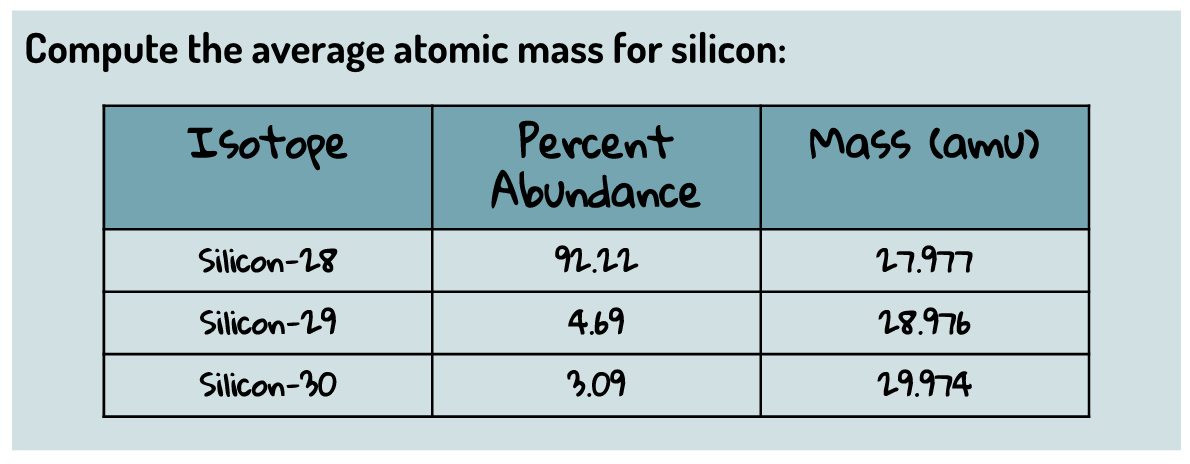
What is the average mass of this element?




What particle completes this reaction?
42He
0-1 e
00γ
178O

What particle completes this reaction?
42He
0-1 e
00Y
178O

Solve this equation.
85209At = ___ + 24He
83205Bi
86209Rn
81207Tl
85208At
Solve this equation for.
614C = ___ + -10e
410Be
714N
210He
613C
You have 100 grams of radioactive C-14. The half life of C-14 is 5730 years.
How many grams are left after 1 half life?
100 grams
25 grams
2 grams
50 grams
If 10 mg of iodine 131 is given to a patient, how much is left after 24 days? The half-life of iodine-131 is 8 days.
1.25mg
1.25g
10g
10mg
If the half-life of uranium-232 is 70 years, how many half-lives will it take for 10 g of it to be reduced to 1.25 g?
1 half-life
2 half-lives
3 half-lives
4 half-lives
The time it takes for a radioactivity level to drop by a half is is the sample's ___________________.
quarter life
whole life
wonderful life
half life
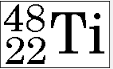

What is the mass number of bromine?
35
45
80
79.904

How many neutrons does this bromine atom have?
35
45
80

How many electrons does this magnesium ion have?
24
12
10
14
IN A NEGATIVE ION, THE # OF ELECTRONS _____ # PROTONS
>
<
=
IN AN ION THE NUMBER OF PROTONS_________ THE NUMBER OF ELECTRONS.
>
<
=
≠
What is NOT an intensive property?
(Intensive means to stay the same.)
color
Temperature
Mass
luster
Liquid to gas…
Sublimation
Vaporization
Heterogeneous
Solid
A mixture…
Cannot be physically separated into components
Can be separated into components
Sometimes can be separated onto components
Have no components
What is a physical change?
Milk souring
Rust forming
Burning wood
Crushing rocks
Solid to gas…
Vaporization
Sublimation
Filtration
Distillation
What is NOT a chemical change?
Milk souring
Cooking a steak
Rust forming
Boiling water
Which is NOT a physical change?
Water sitting
Carrots on a plate
steak cooking
Chalk breaking
State of matter with a definite shape and volume…
(a)
Any material consisting of only one type of atom is classified as what?
A compound
An element
A heterogeneous mixture
A homogeneous mixture
Which classification of matter is a pure substance?
Elements
Elements and compounds
Compounds
Elements and mixtures
Mixtures
In a ______ mixture, the material has the same composition throughout.
heterogeneous
homogeneous
_______ can be separated by physical means.
An element
A compound
Pure substances
Mixtures
In a ______ mixture, each substance can be easily distinguished.
heterogeneous
homogeneous
Nickel is an example of ______.
an element
a compound
a homogeneous mixture
a heterogeneous mixture

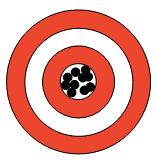
This bullseye demonstrates...
High Accuracy & High Precision
High Accuracy & Low Precision
Low Accuracy & High Precision
Low Accuracy & Low Precision

Describe the accuracy and precision of the image
Very accurate and somewhat precise
Very accurate but not precise at all
Not accurate at all but very precise
not accurate and not very precise

Which best describes the target?
Precise, but not accurate
Accurate but not precise
Precise and accurate
Neither accurate nor precise

Steve used a ruler to measure the length of a cube. He found the cube to be 3 cm. This is an example of a observation.
Quantitative
Qualitative
Neither qualitative nor quantitative

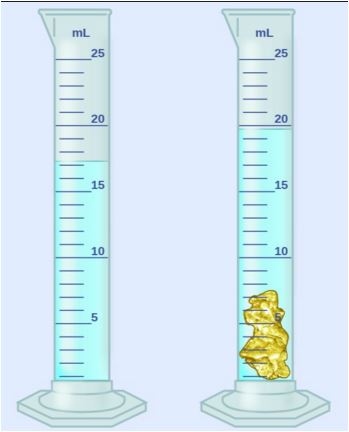
What kind of observation is in the picture?
Quantitative
Qualitative
Neither quantitative nor qualitative

What kind of observation is in the picture?
Quantitative
Qualitative
Neither quantitative nor qualitative
Cindy wanted to find out how the amount of sunlight affects the growth of plants. She placed two tomato plants in 10 inch pots with potting soil and watered them ¼ cup each day. One plant was placed under a cardboard box and one was placed in the sunlight. She measured the growth of the plant each week for three weeks.
What is the independent variable?
Using the same type of plant
Each plant was placed in a 10 inch pot
The growth of the plant
One plant is in the sunlight and the other is under a box
Cindy wanted to find out how the amount of sunlight affects the growth of plants. She placed two tomato plants in 10 inch pots with potting soil and watered them ¼ cup each day. One plant was placed under a cardboard box and one was placed in the sunlight. She measured the growth of the plant each week for three weeks.
What is the dependent variable?
Using the same type of plant
Each plant was placed in a 10 inch pot
The growth of the plant
One plant is in the sunlight and the other is under a box


What subatomic particle was discovered in the cathode ray tube experiment?
Proton
Neutron
Electron
Nucleus

