
 Worksheets
Unit 3:Matter and Reactions Quiz
Total questions: 60
Worksheet time: 32mins
Describe the shape and volume of liquids
It has a defined volume
It has a defined shape
It has a defined volume
It does not have a defined shape
It does not have a defined volume or shape
Describe the particles in a gas
The particles are packed very close together
The particles are close to each other but can move and slide past one another
The particles move quickly. They can spread very far apart or can be compressed.
Cooling a material makes the particles move...
faster
slower
The Law of Conservation of Mass states that mass cannot be...
created or destroyed
separated into different forms
changed to a solid from a liquid
When salt dissolves in water, is a new substance formed?
Yes
No
Did baking soda and vinegar form a new substance?
Yes
No
What evidence indicated to us that baking soda and vinegar created a new substance?
It created bubbles and gas.
It was a liquid.
It did not create a new substance.
We were able to mix the mixture.

Which best describes solubility?
how well a substance can change to a liquid
how well a substance can dissolve in a liquid

When a substance breaks down into particles within a liquid it is called
fusion
dissolution
solubilization
chemical change

This would be an example of
particles in a substance
particles in a mixture

How can particles of a new substance be formed from particles of an old substance?
The particles can break down and recombine in different ways, forming a substance with a new identity.
The particles break apart and disappear, and new particles appear.
Which term is an example of a chemical property?
Boiling point
State of matter
Flammability
Color
What is the best evidence of a chemical change?
The substance dissolves.
Effervescence and bubbling
Absence of color change
The solid melts.
A substance that contains atoms of 2 or more different elements bonded together
compound
atom
mixture
element
A substance that consists of a single type of atom
compound
mixture
element
molecule
Anything that has mass and occupies space
energy
matter
Glucose (C6H12O6) is considered a compound because it is composed of two or more
molecules
elements
gases
solids
Which list of formulas represents only compounds?
NaCl, H₂O, CO
H₂, N₂, O₂
H₂, Ne, NaCl
MgO, NaCl, O₂
Another name for a homogeneous mixture
matter
pure substance
element
solution
Element or compound?
H2O
element
compound
A mixture in which 2 or more substances are not mixed uniformly
homogeneous mixture
solution
heterogeneous mixture
compound
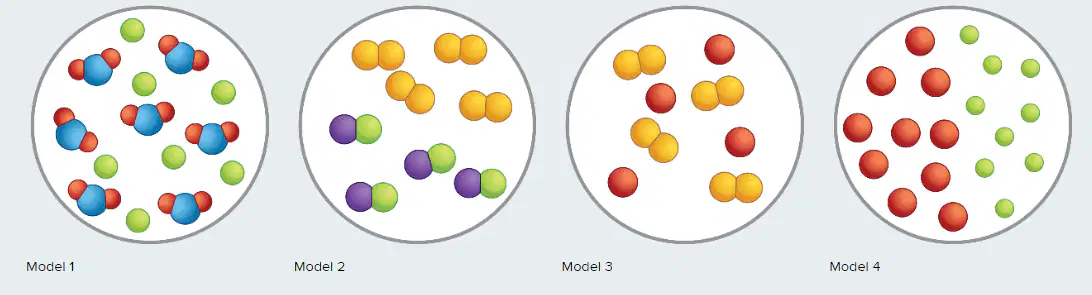
Which of these images represent heterogeneous mixtures?
Models 1 and 3
Models 1 and 4
Models 2 and 4
Models 2 and 3
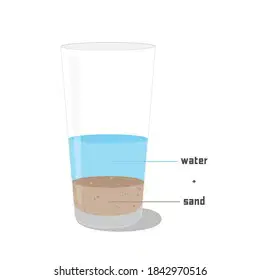
You add sand to water and shake the container. Your friend says you have made a heterogeneous mixture. How do you respond?
I disagree with my friend and say I made a compound because a compound is two or more different substances that combine.
I disagree with my friend and say I made a homogeneous mixture because the sand and water mix uniformly.
I disagree with my friend because I combined two homogeneous mixtures that combine into a heterogeneous mixture.
I agree with my friend because I am adding two substances that retain their original properties.
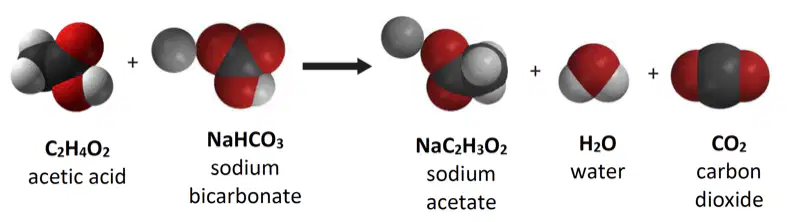
Which statement correctly describes how mass is conserved during this chemical reaction?
Atoms disappear, making the mass of the products less than the mass of the reactants.
Atoms rearrange, making the mass of the products equal to the mass of the reactants.
Atoms transform into new atoms, making the mass of the products equal to the mass of the reactants.
No changes occur, making the mass of the products equal to the mass of the reactants.
Which of the following is a pure substance?
Air
Salt water
Gold
Sand
What is the main difference between a compound and a mixture?
Compounds are made of one type of atom, mixtures are not.
Compounds have a fixed composition, mixtures do not.
Compounds can be separated by physical means, mixtures cannot.
Compounds are always solids, mixtures are always liquids.
Which of the following statements is true about elements?
Elements can be broken down into simpler substances by chemical means.
Elements are made up of two or more types of atoms.
Elements are pure substances that cannot be broken down by chemical means.
Elements are always found in a gaseous state.
What is matter?
Forms of energy
Anything that has mass and volume
Elements and compounds
Subatomic particles
How many states of matter are commonly found on Earth?
Two
Three
Four
Five
What is an element?
A pure substance that cannot be broken down into different types of substances
A combination of two or more elements
The building block of matter
A chemical reaction
What is a chemical formula?
An expression that shows the elements in a compound
A one or two-letter designation of an element
The smallest particle of an element
A combination of protons and neutrons
What are atoms?
The basic components of matter
The smallest particles of a compound
Pure substances that make up all types of matter
Particles that make up atoms
What are the three main types of subatomic particles?
Protons, electrons, and neutrons
Atoms, elements, and compounds
Reactants, products, and compounds
Mass, volume, and energy
What is a chemical reaction?
A process in which substances are transformed into different substances
A color change during a reaction
A solid product produced in a reaction
An energy transfer as a result of a reaction
What is a chemical change?
A change that produces materials different from those we started with
A color change during a reaction
A solid product produced in a reaction
An energy transfer as a result of a reaction
What are the visual clues that indicate a chemical reaction?
A color change, a gas produced, a solid product, and an energy transfer
A color change, a gas produced, a solid product, and a temperature change
A color change, a gas produced, a solid product, and a change of state
A color change, a gas produced, a solid product, and a change in volume
Water is boiled and steam is produced. This is a physical change because the water particles....
have turned into something new.
are still water particles.
have reacted with each other.
have been destroyed.
Identify the following as a Chemical Change or Physical Change: Melting of Ice
Chemical Change
Physical Change
Identify the following as a Chemical Change or Physical Change: Cooking Eggs
Physical Change
Chemical Change
Identify the following as a Chemical Change or a Physical Change: Dissolution of Salt
Physical Change
Chemical Change
Identify the following as a Chemical Change or Physical Change: Wood burning
Physical Change
Chemical Change
Identify the following as a Chemical Change or Physical Change: Explosion of fireworks
Physical Change
Chemical Change
Identify the following as a chemical change or a physical change: Chocolate syrup dissolves in hot milk
Physical change
Chemical change
Identify the following as a chemical change or a physical change: The toast is slightly burnt in a toaster
Physical change
Chemical change
Identify the following as a Chemical Change or Physical Change: A piece of paper is cut into 12 pieces
Physical Change
Chemical Change
Identify the following as a chemical change or a physical change: Two unknown liquids are mixed and a gas is produced
Physical change
Chemical change

Four changes are shown.
Which of these represents a chemical change?
A match is lit, creating a yellow-orange flame.
A small piece of ice melts, changing from solid to liquid.
A ball of clay sinks in water and floats when reshaped.
A pot of water is heated to boiling, and evaporation occurs.
Wood and oxygen commonly burn in campfires, and all that remains is ash and charcoal. What is the best conclusion about this chemical reaction?
Mass is gained in the reaction in the form of smoke.
Mass is lost in the reaction, that's why the ash is lighter.
The total mass of the reaction remains the same but the mass leaves the wood as smoke.
The mass of the reaction increases as the wood heats up.

How many oxygens are on the product side of this chemical equation?
1
2
3
4

A characteristic of matter that does not change ....
property
mixture
bubbles
phenomenon
A blend of two or more substances ...
insoluble
property
mixture
matter
A measurement that compares the amount of matter an object has to its volume ...
density
solubility
flammability
chemical property
Reactants will have different _________________ than the products
chemical reactions
properties
melting/boiling point, density, solubility
mixing, heating, cooling
Products will have different properties than the ….
reactants
a chemical reaction has happened
before and after
properties
If there is no change in the product then there was no …
a chemical change has happened
data collecting during
chemical reaction
reactant left over
A substance that exists before a chemical reaction takes place and changes as a result of the reaction is called a
reactant
product
chemical change
chemical properties
New substance that forms during a chemical reaction
chemical reaction
product
reactant
scientific evidence
This is the scientific law that states that matter cannot be created or destroyed.
law of Atomic Equations
law of conservation of matter
law of conservation of elements
law of conservation of energy
What is the difference between a reactant and a product in a chemical reaction?
Reactants participate in the reaction, while products are formed as a result of the reaction.
Reactants and products have no role in a chemical reaction.
Reactants and products are the same thing in a chemical reaction.
Reactants are formed as a result of the reaction, while products participate in the reaction.
Give an example of a chemical reaction and identify the reactants and products involved.
Carbon and nitrogen are the reactants, and carbon dioxide is the product.
Hydrogen and oxygen are the reactants, and water is the product.
Oxygen and nitrogen are the reactants, and carbon dioxide is the product.
Sodium and chlorine are the reactants, and salt is the product.

