wayground logo

Free Printable Worksheets

Font size

S
M
L
XL
Worksheets

Covalent Bonding Review

Total questions: 52

Worksheet time: 52mins

Name
Class
Date
1.

The name of P2O5 is

a)

phosphorus oxide.

b)

phosphorus pentoxide.

c)

diphosphorus pentoxide.

d)

phosphorus (V) oxygen (II).

2.

What is the molecular formula for oxygen difluoride?

a)

OF2

b)

OF

c)

O2F

d)

O2F2

3.

What is the formula for dinitrogen trioxide?

a)

NO2

b)

N2O3

c)

NO

d)

N2O5

4.

What is the molecular formula for trisilicon tetranitride?

a)

Si3N4

b)

Si4N3

c)

SiN4

d)

Si2N3

5.

What is the formula for phosphorus pentachloride?

a)

P5Cl

b)

P2Cl5

c)

P3Cl5

d)

PCl5

6.

What is the molecular formula for sulfur dichloride?

a)

SCl2

b)

S2Cl

c)

SCl

d)

S2Cl2

7.

What is the molecular formula for silicon dioxide?

a)

SiO2

b)

Si2O

c)

SiO

d)

Si2O2

8.

What is the molecular formula for sulfur hexafluoride?

a)

SF6

b)

SF4

c)

S2F6

d)

SF2

9.

What is the molecular formula for carbon tetrachloride?

a)

CH4

b)

CCl4

c)

CI4

d)

CBr4

10.

What is the formula for sulfur trioxide?

a)

SO3

b)

SO2

c)

S2O3

d)

SO

11.

What is the molecular formula for dinitrogen pentoxide?

a)

N2O5

b)

N2O4

c)

N2O3

d)

N2O

12.
Ionic compounds are bonds between
a)
Metals and Metals
b)
Metals and Nonmetals
c)
Nonmetals and Nonmetals
d)
None of the above
13.

Classify ionic or molecular

CaO

a)

Ionic

b)

Molecular

14.

Classify ionic or molecular

C2H2

a)

Ionic

b)

Molecular

15.

Classify ionic or molecular

LiOH

a)

Ionic

b)

Molecular

16.
Prefixes are used only for _______________ compounds
a)
Ionic
b)
covalent
17.
Which following is a molecular compound?
a)
SO2
b)
K2O
c)
CaO
d)
BeO
18.

What is the correct Lewis Dot Structure for ammonia NH3

a)
b)
c)
d)
19.

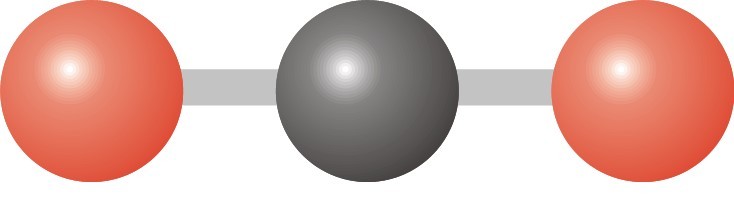
Which is the correct molecular structure for carbon dioxide?

a)
b)
c)
d)
20.
Which of the following is an acceptable Lewis structure for CH3Cl?
a)
Option A
b)
Option B
c)
Option C
d)
Option D
21.
Which of the following is the correct Lewis structure for water?
a)
A
b)
B
c)
C
22.
Which of the following is the correct Lewis structure for the compound PBr3?
a)
structure A
b)
structure B
c)
structure C
d)
structure D
23.

3. Which is a correct Lewis structure for hydrogen cyanide, HCN?

a)
b)
c)
d)
24.

Why is this Lewis Structure incorrect? Choose all that apply.

a)

There are too many bonds around Si.

b)

There should only be single bonds in this Lewis Structure.

c)

The Structure is missing a triple bond.

d)

Chlorine only has 6 electrons surrounding it.

25.
What's a valence electron?
a)
electrons in the second energy level
b)
electrons in the outermost energy level
c)
the atomic number
d)
electrons in the first level
26.

How many bonds can hydrogen make?

a)

Only 1

b)

1 or 2 Bonds

c)

1 bond with 6 electrons on it

d)

It never makes bonds

27.

Is this the correct structure for CH2O?

a)

Yes

b)

No

28.

Which of the following compounds has only single bonds?

a)

I only

b)

II only

c)

III only

d)

I and III

e)

III and IV

29.
VSEPR theory is to
a)
determine the number of bonding and lone pairs electrons
b)
determine the number of ECC
c)
determine the shape and geometry of molecule
d)
determine the lewis structure of molecule
30.

What molecular geometry is the structure shown here? (BCl3)

a)

linear

b)

trigonal planar

c)

tetrahedral

d)

trigonal pyramidal

31.
Which molecule would have this molecular geometry?
a)
BF3
b)
CH4
c)
PCl5
d)
CO2
32.
According to VSEPR, molecules adjust their shapes to keep which of the following as far away as possible?
a)
Pairs of valence electrons
b)
Inner shell electrons
c)
Mobile Electrons
d)
Electrons closest to the nucleus
33.
True or false: Electron pairs tend to be as far away as possible from each other to minimize the repulsive interactions.
a)
True
b)
False
34.
Which atom in a molecule is the focus of VSEPR theory?
a)
the most electronegative atom
b)
the largest atom
c)
the central atom
d)
the atom with the most valence electrons
35.

What shape best describes the molecular model of PCl3PCl_3 ?

(a)  

36.
Is this molecule polar?
a)

Yes

b)

No

37.
Is this molecule polar?
a)

Yes

b)

No

38.
Is this molecule polar?
a)

Yes

b)

No

39.
Is this molecule polar?
a)

Yes

b)

No

40.
If a molecule has any polar bonds, it will always be polar.
a)
True
b)
False
41.
What is the shape of molecule with 4 bonds and two lone pairs?
a)
Octahedral
b)
Square pyramidal
c)
Square planar
d)
See-saw
42.
What is the shape of molecule with 2 bonds and three lone pairs?
a)
Trigonal bipyramidal
b)
Linear
c)
T-shaped
d)
See-saw
43.
What is the shape of molecule with 3 bonds and one lone pair?
a)
Trigonal pyramidal
b)
Linear
c)
Tetrahedral
d)
Bent
44.
This molecule is...
a)
polar
b)
unpolar
45.
Which of the following geometries could be nonpolar?
a)
bent
b)
tetrahedral
c)
trigonal pyrimidal
d)
none of the above
46.

The electronegativity values for the atoms in the image are shown in blue.

Which of the following is true of CF4?

a)

CF4 has polar bonds and is a polar molecule.

b)

CF4 has polar bonds, but it is a nonpolar molecule.

c)

CF4 has nonpolar bonds and is a nonpolar molecule.

d)

CF4 has nonpolar bonds, but it is a polar molecule.

47.
In a polar covalent bond, electrons are shared ___________.
a)
equally
b)
unequally
c)
between non-metals with similar electronegativities
d)
between a metal and a non-metal
48.
Electronegativity is a measurement of the ability of a nucleus to...
a)
attract bonding electrons
b)
attract other nuclei
c)
attract elenece in the non-valence energy levels
49.

When you have H-Cl, what is the polarity?

a)

nonpolar

b)

polar

c)

ionic

50.

When you have Li-O, what is the polarity?

a)

nonpolar

b)

polar

c)

ionic

51.

When you have Be-F, what is the polarity?

a)

nonpolar

b)

polar

c)

ionic

52.

When you have Si-O, what is the polarity?

a)

nonpolar

b)

polar

c)

ionic