
 Worksheets
Health Final Part A
Total questions: 47
Worksheet time: 24mins
Name
Class
Date
1.
1. #1 viral STI in this country that can cause cervical cancer.
a)
HIV
b)
HPV (Human Papillomavirus)
c)
Herpes
d)
Pubic Lice
2.
2. The viral infection that progresses into AIDS
a)
HIV
b)
HPV (Human Papillomavirus)
c)
Chlamydia
d)
Gonorrhea
3.
3. STI that attacks white blood cells/T-cells (immune system) in the body
a)
HIV
b)
HPV (Human Papillomavirus)
c)
Chlamydia
d)
Gonorrhea
4.
4. About how often is an egg (ovum) matured and released into a women's fallopian tube? - Ovulation
a)
Once a month
b)
Once a day
c)
Once a year
5.
5. Fertilization is the term for when a sperm cell joins with an egg cell.
a)
True
b)
False
6.
6. The age of consent in Michigan.
a)
12
b)
13
c)
18
d)
16
7.
7. You can NOT get an STI by:
a)
Sexual Activity
b)
Donating Blood
c)
Sexual Intercourse
d)
Oral Sex
8.
8. Which statement about STIs is correct?
a)
A common source of STIs are animal bites.
b)
Babies born to infected mothers cannot contract the STI.
c)
Common sources of STIs are drinking fountains and showers.
d)
Some STIs are asymptomatic (without symptoms), leading infected people to think they are infection free when they are not.
9.
9. Which of the following is NOT a way that HIV can be transmitted?
a)
Through sexual relations with an infected person.
b)
Through contact with an infected person's blood.
c)
By sharing needles.
d)
Through contact with someone's perspiration (sweat).
10.
10. You can get HIV by donating blood.
a)
True
b)
False
11.
11. HIV is the viral infection that leads to AIDS.
a)
True
b)
False
12.
12. Individuals who are infected with an STI have the potential to pass it on to someone else through which of the following?
a)
Blood, semen, vaginal secretions, and hugging.
b)
Blood, semen, vaginal/anal secretions, IV drug use, and breast milk.
c)
Blood transfusions, sharing IV needles, and mosquito bites.
d)
Bodily fluids, hugging, or shaking hands.
13.
13. The most common bacterial STI in the United States is:
a)
HIV
b)
Chlamydia
c)
PID
d)
AIDS
14.
14. The most common viral STI in the United States is:
a)
Human Papillomavirus (HPV)
b)
Pelvic Inflammatory Disease
c)
HIV
d)
Herpes
15.
15. What is the most common symptom of any STI?
a)
Flu-like symptoms
b)
No symptoms
c)
Rash
d)
Itching
16.
16. If there are no symptoms of an STI, and STI can still be transmitted to another person.
a)
True
b)
False
17.
17. Being sexually active with multiple partners can increase your risk of contracting an STI.
a)
True
b)
False
18.
18. Organs that contain and store ova (eggs)
a)
Cervix
b)
Fimbria
c)
Ovaries
d)
Uterus
19.
19. The path that the ovum or zygote use to travel to the uterus.
a)
Ovaries
b)
Fallopian Tubes
c)
Urethra
d)
Cervix
20.
20. Ovulation is when semen is released.
a)
True
b)
False
21.
21. What is the only 100% way to prevent pregnancy or contracting an STI?
a)
Play sports
b)
Use contraceptives
c)
Sexual abstinence
d)
Mutual monogamy
22.
22. The male organ that contains the testes and helps regulate temperature.
a)
Anus
b)
Vagina
c)
Scrotum
d)
Prostate
23.
23. The reproductive organ where sperm mature and are stored.
a)
Testes
b)
Cowper's Gland
c)
Scrotum
d)
Epididymis
24.
24. Tubes that carry mature sperm from the epididymis to the urethra.
a)
Vas Deferens
b)
Fallopian Tubes
c)
Prostate
d)
Cowper's Gland
25.
25. The internal opening to the uterus.
a)
Fallopian Tubes
b)
Urethra
c)
Cervix
d)
Vagina
26.
26. On average, how long does it take for sperm to reach an ovum?
a)
72 days
b)
72 weeks
c)
72 hours
d)
72 minutes
27.
27. What is the purpose of pre-seminal fluid?
a)
Cleans sperm out of the cervix
b)
Cleans ovum out of the uterus
c)
Cleans semen out of the vas deferens
d)
Cleans urine out of the urethra
28.
28. If a teenager is infected with an STI, they may not know it. Why?
a)
They don't have any symptoms
b)
Condoms break all the time
c)
Teens don't often get tested.
d)
Birth control pills can fail
e)
A and C
29.
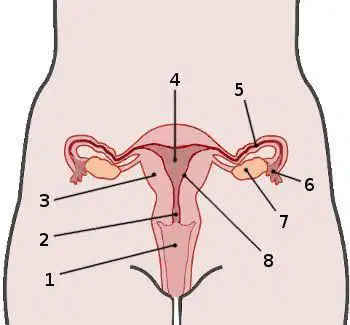
29. Identify #1
a)
Uterus
b)
Vagina
c)
Myometrium
d)
Ovary
30.
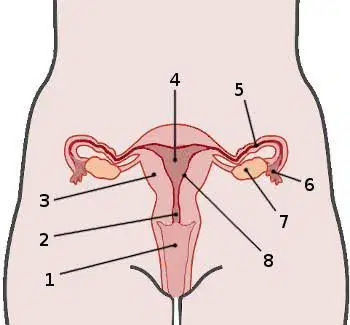
30. Identify #2
a)
Uterus
b)
Myometrium
c)
Ovary
d)
Cervix
31.

32. Identify #4
a)
Cervix
b)
Uterus
c)
Ovary
d)
Fallopian Tube
32.
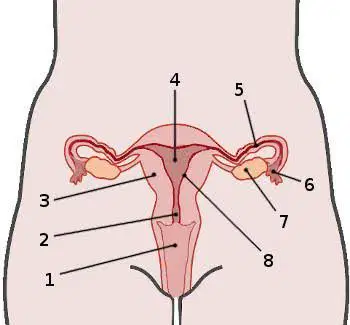
33. Identify #5
a)
Cervix
b)
Uterus
c)
Vagina
d)
Fallopian Tube
33.
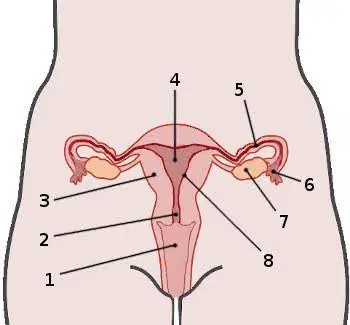
35. Identify #7
a)
Endometrium
b)
Myometrium
c)
Ovary
d)
Cervix
34.
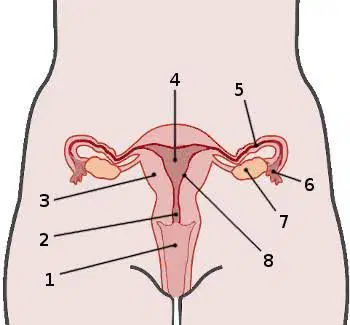
36. Identify #8
a)
Endometrium
b)
Cervix
c)
Fallopian Tube
35.
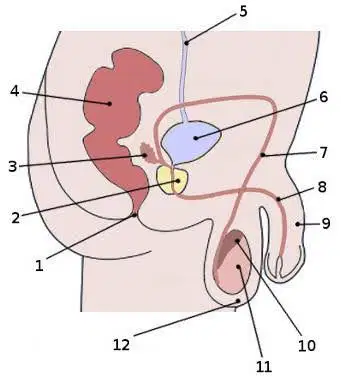
37. Identify #1
a)
Rectum
b)
Anus
c)
Scrotum
d)
Cowper's Gland
36.
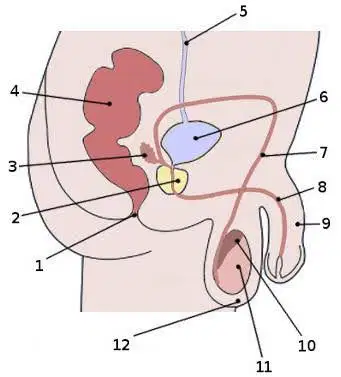
38. Identify #2
a)
Rectum
b)
Anus
c)
Prostate
d)
Cowper's Gland
37.
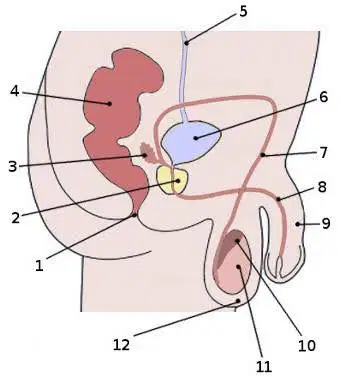
39. Identify #3
a)
Seminal Vesicle
b)
Prostate
c)
Vas Deferens
d)
Urethra
38.
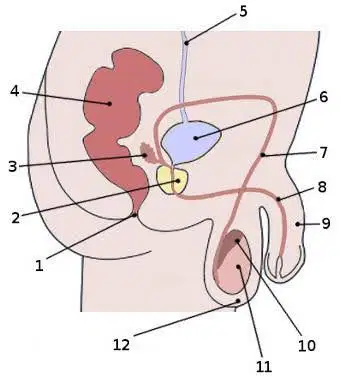
40. Identify #4
a)
Rectum
b)
Prostate
c)
Vas Deferens
d)
Urethra
39.
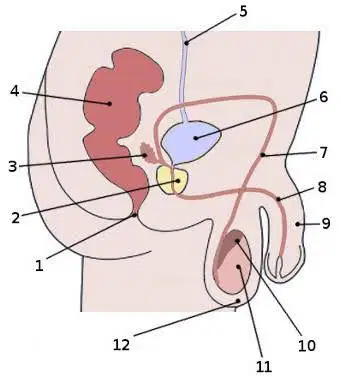
41. Identify #5
a)
Rectum
b)
Prostate
c)
Vas Deferens
d)
Ureter
40.
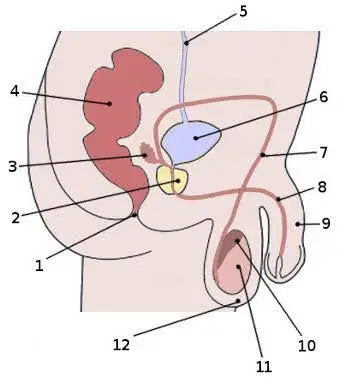
42. Identify #6
a)
Bladder
b)
Prostate
c)
Vas Deferens
d)
Ureter
41.
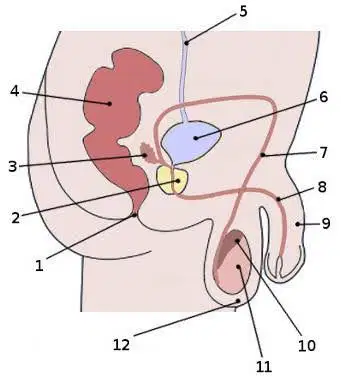
43. Identify #7
a)
Bladder
b)
Prostate
c)
Vas Deferens
d)
Ureter
42.
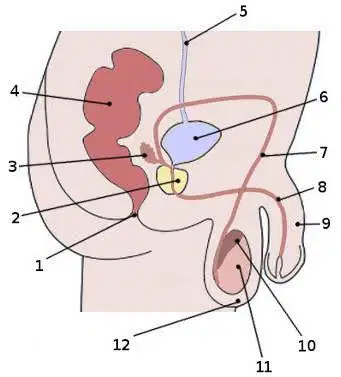
44. Identify #8
a)
Bladder
b)
Urethra
c)
Vas Deferens
d)
Ureter
43.
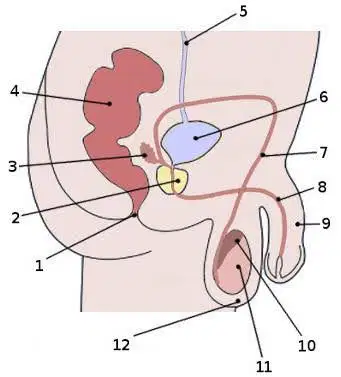
45. Identify #9
a)
Penis
b)
Urethra
c)
Vas Deferens
d)
Ureter
44.
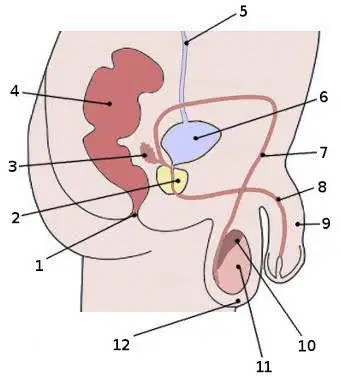
46. Identify #10
a)
Penis
b)
Urethra
c)
Epididymis
d)
Scrotum
45.
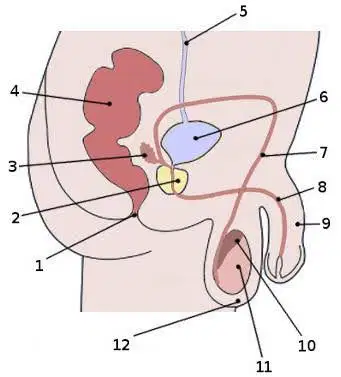
47. Identify #11
a)
Penis
b)
Testes
c)
Epididymis
d)
Scrotum
46.
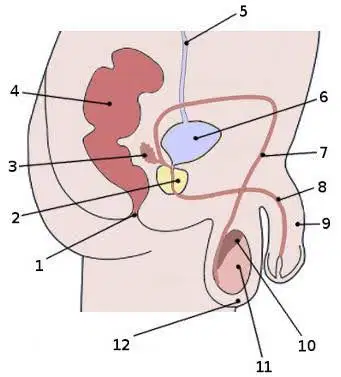
48. Identify #12
a)
Penis
b)
Testes
c)
Epididymis
d)
Scrotum
47.
49. Many people have no STI symptoms. How can you keep yourself safe knowing this?
a)
Get tested early and often, ask your partner to get tested, and use protection.
b)
Assume you will be safe.
100 %

