wayground logo

Free Printable Worksheets

Font size

S
M
L
XL
Worksheets

Honors Biology Midterm Quizizz Review

Total questions: 100

Worksheet time: 2hrs 16mins

Name
Class
Date
1.
Which of the following is the smallest unit of life that can carry out all life functions?
a)
the mitochondria
b)
the vacuoles
c)
the nucleus
d)
the cell
2.
Which cell structure is found in plant and animals cells and controls what can come into or leave a cell?
a)
cell membrane
b)
cytoplasm
c)
nucleus
d)
vacuole
3.
All cells need energy to function.  Which cell organelle is responsible for producing energy in the cell?
a)
chloroplasts
b)
mitochondria
c)
nucleus
d)
vacuoles
4.
In what part of the plant cell does the process of photosynthesis take place?
a)
nucleus
b)
mitochondria
c)
chloroplasts
d)
vacuoles
5.
Cells with a nucleus and membrane-bound organelles are called ____________________.
a)
prokaryotes
b)
eukaryotes
c)
bacteria
d)
protists
6.
He discovered that all plants are made of cells:
a)
Anton van Leeuwenhoek
b)
Theordor Schwann
c)
Robert Hooke
d)
Mattias Schleiden
7.
Who was the first  person to see cells under the microscope and give them their name?
a)
Mattias Schleiden
b)
Robert Hooke
c)
Theordor Schwann
d)
Anton van Leeuwenhoek
8.
The maintenance of an organism’s internal environment is called:
a)
compensating
b)
homeostasis
c)
balancing
d)
routine
9.

A habitat is ___________________.

a)

the place or kind of place in which an animal or plant naturally lives.

b)

is how plants produce their own food.

c)

is an animal that only eats meat.

d)

the place where only one animal lives.

10.

A niche ________________.

a)

is the function that an organism performs in the food web of that community.

b)

includes everything else the organism does and needs in its environment.

c)

is specific to each individual animal and plant.

d)

All of the above.

11.

An organism’s habitat provides _____________________.

a)

food, water, shelter, and space.

b)

food, water, and clothes.

c)

only food.

d)

video games, ninjas, and baked beans.

12.

What is a niche?

a)

Where an organism lives.

b)

An organisms role, or job, within its ecosystem.

c)

What an organism eats.

13.
Occurs when 2 or more organism use the same resource
a)
Competition
b)
Mutualism
c)
Commensalism
d)
Parasitism
14.
A close long term association between 2 or more species
a)
Mutualism
b)
Commensalism
c)
Symbiosis
d)
Parasitism
15.
Relationship where one organism benefits and the other is neither harmed nor helped
a)
Commensalism
b)
Parasitism
c)
Mutualism
d)
Competition
16.
An organism where one organism benefits and another is harmed
a)
Commensalism
b)
Parasitism
c)
Mutualism
d)
Competition
17.
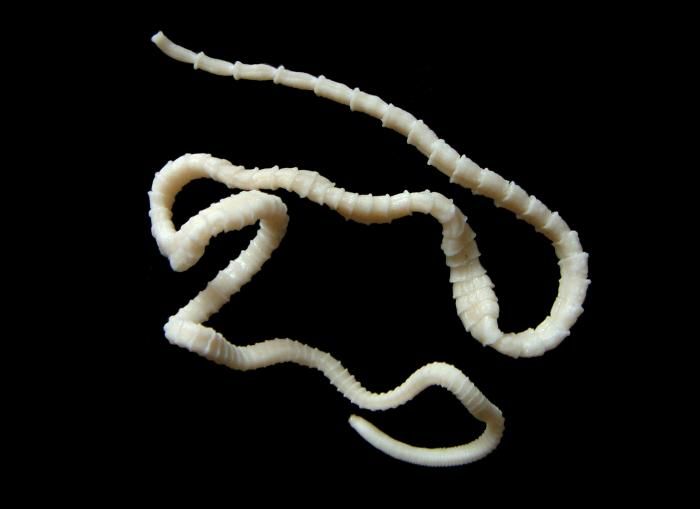
A tapeworm and a cat have this type of relationship.
a)
mutualism
b)
parasitism
c)
commensalism
d)
competition
18.
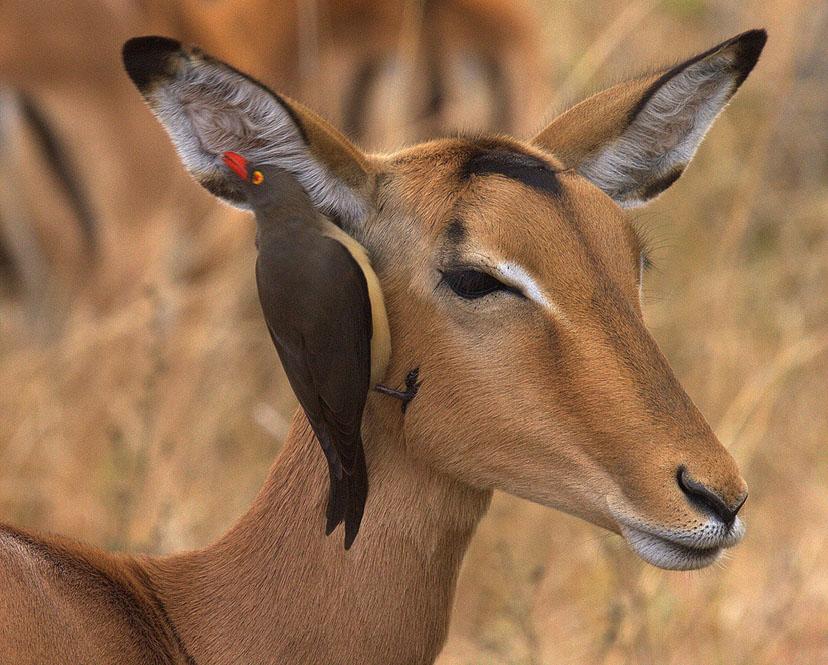
Red-billed oxpeckers are birds that often feed on parasites that infest impala.  This is an example of _______.
a)
commensalism
b)
mutualism
c)
neutralism
d)
competition
19.

Is wind a biotic or abiotic factor?

a)

biotic

b)

abiotic

20.

Is soil a biotic or abiotic factor?

a)

biotic

b)

abiotic

21.

Is disease a biotic or abiotic factor?

a)

biotic

b)

abiotic

22.

Is sunlight a biotic or abiotic factor?

a)

biotic

b)

abiotic

23.

What is succession?

a)

The first species to populate an area.

b)

Is the same of intereaction

c)

Is Disruption to the physical or biological components.

d)

The series of predictable changes that occur in a community over time.

24.
Plant life starting to grow on a volcano
a)
primary succession
b)
secondary succession
c)
tertiary succession
d)
variable succession
25.
What is the order of succession shown in this figure?
a)
A, B, C, D
b)
B, A, D, C
c)
C, D, A, B
d)
D, A, B, C
26.
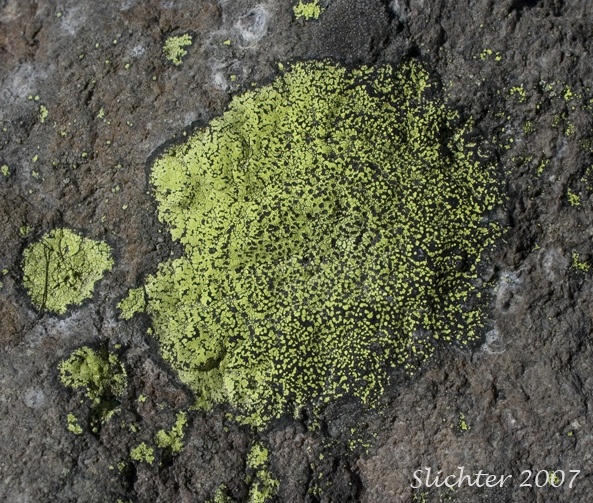
What is the first species you will see after a primary succession? (in picture)
a)
lichens
b)
grasses
c)
small plants
27.

Secondary succession (thnk soil) forms after a catastrophic event like a forest fire and has a ___________ growth rate than primary succession because soil already exists.

a)

extremely slower

b)

slower

c)

faster

28.

What is a pioneer species?

a)

Pioneer means first- so it must be the first thing to grow where nothing has grown before.

b)

Pioneer means last -it's the last thing in an ecosystem

c)

Pioneer has to do with covered wagons and traveling west during the 1800s.

29.
What is the carrying capacity of this population?
a)
100
b)
200
c)
300
d)
400
30.

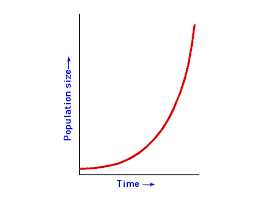
What type of growth is shown in the diagram?

a)

exponential growth

b)

logistic growth

c)

predator-prey cycle

d)

boom-bust curve

31.

This macromolecules is responsible for providing our genetic material. Choose the macromolecule that best fits.

a)

Carbohydrates

b)

Lipids

c)

Proteins

d)

Nucleic acids

32.

Which one of our macromolecules would you consume in order to receive long-term energy?

a)

Carbohydrates

b)

Lipids

c)

Proteins

d)

Nucleic acids

33.

My monomers are monosaccharides. Which macromolecule am I?

a)

Carbohydrates

b)

Lipids

c)

Proteins

d)

Nucleic acids

34.

Which of the macromolecules are structured in this way?

a)

Carbohydrates

b)

Lipids

c)

Proteins

d)

Nucleic acids

35.
What is the primary function of PROTEINS?
a)
Source of energy
b)
Long term storage of energy
c)
Transmitting genetic information
d)
Cell processes and cell signaling
36.
What is the primary function of CARBOHYDRATES?
a)
Source of energy
b)
Long term storage of energy
c)
Transmitting genetic information
d)
Cell processes and cell signaling
37.
What is the primary function of LIPIDS?
a)
Source of energy
b)
Long term storage of energy
c)
Transmitting genetic information
d)
Cell processes and cell signaling
38.
What are the monomers (building blocks) of LIPIDS?
a)
Monosaccharides (simple sugars)
b)
Amino Acids
c)
Nucleotides
d)

Triglycerides(made of 3 fatty acids)/No true monomer

39.

Which category of macromolecules do enzymes belong to?

a)

Carbohydrates

b)

Proteins

c)

Fats/Lipids

40.

An enzyme speeds up a reaction by

a)

raising the activation energy

b)

lowering the activation energy

c)

releasing energy

d)

absorbing energy.

41.

What is a substance called if it speeds up a chemical reaction?

a)

reusable

b)

catalyst

c)

specific

d)

fragile

42.

In the diagram, what is letter A?

a)

product

b)

enzyme-substrate complex

c)

substrate

d)

active site

43.

Letter D...

a)

enzyme

b)

active site

c)

substrate

d)

products

44.

Letter B...

a)

substrate

b)

active site

c)

enzyme

d)

products

45.

Letter C...

a)

products

b)

substrate

c)

enzymes

d)

active site

46.

Letter E...

a)

active site

b)

products

c)

substrate

d)

enzyme

47.

Betsy calculated the field of view to be 4.5 mm. What is the estimated width of the organisms body?

a)

5mm

b)

4mm

c)

2 mm

d)

1mm

48.

If the field of view is 4mm, what is the estimated length of one typical cell?

a)

0.5mm

b)

1.5mm

c)

3mm

d)

4mm

49.

Bob calculated the field of view with an objective of 10x to be 5m. What would the estimated size of Green Goblin be?

a)

0.5mm

b)

1.25mm

c)

4mm

d)

6mm

50.

Diffusion & Facilitated Diffusion are both __________ transport.

a)

Passive

b)

Active

c)

Easy

d)

Free

51.

Passive Transport is the movement of particles across the membrane from an area of [ ___ ] to an area of [ ___ ]

a)

high to low

b)

low to high

c)

low to low

d)

high to high

52.

What is the movement of particles with the concentration gradient using protein "helpers"?

a)

diffusion

b)

facilitated diffusion

c)

active transport

d)

enzymatic reactions

53.

Active transport across a cell membrane from low to high concentration, requires

a)

energy (ATP)

b)

no energy

c)

water

d)

oxygen

54.

Active transport is the movement of large materials across a cell membrane from ______ to ______ concentration

a)

high to low

b)

low to high

c)

high to high

d)

low to low

55.

What type of solution is shown in the picture?

a)

Hypertonic

b)

Hypotonic

c)

Isotonic

56.

What type of solution is shown in the picture?

a)

Hypertonic

b)

Hypotonic

c)

Isotonic

57.

What type of solution is shown in the picture?

a)

Hypertonic

b)

Hypotonic

c)

Isotonic

58.

What type of solution is shown in the picture?

a)

Hypertonic

b)

Hypotonic

c)

Isotonic

59.

What type of solution is shown in the picture?

a)

Hypertonic

b)

Hypotonic

c)

Isotonic

60.
During what phase of the cell cycle is DNA replicated?
a)
G1 phase
b)
S phase
c)
G2 phase
d)
M phase
61.
During what phase of the cell cycle does cell division occur?
a)
Interphase
b)
M phase
c)
S phase
d)
G2 phase
62.
During what phase of the cell cycle does the cell grow?
a)
G1 phase
b)
S phase
c)
M phase
d)
Cytokinesis
63.
During what phase of the cell cycle does the cell prepare for mitosis?
a)
G1 phase
b)
S phase
c)
G2 phase
d)
M phase
64.
Put the following stages of the cell cycle in order: G2, S, G1, M. 
a)
G1, S, G2, M
b)
S, G1, G2, M
c)
G1, M, G2, S
d)
M, G1, S, G2
65.
Put the following actions in order: DNA replicates, cell grows, cell divides, cell prepares for mitosis. 
a)
DNA replicates, cell grows, cell prepares for mitosis, cell divides
b)
cell grows, cell prepares for mitosis, DNA replicates, cell divides
c)
cell grows, DNA replicates, cell prepares for mitosis, cell divides
d)
DNA replicates, cell prepares for mitosis, cell grows, cell divides
66.
As a cell becomes larger, its
a)
surface area increases faster than its volume.
b)
volume increases faster than its surface area
67.
What is the function of ATP in living things?
a)
provides energy for cells
b)
stores genetic information
c)
provides structure in the nucleus
68.
Which of the following results in the storage of energy in terms of the ATP/ADP cycle?
a)
The breaking of the bond between the 5-carbon sugar and the 1st phosphate group
b)
The addition of a phosphate group
c)
The removal of a phosphate group
d)
The addition of glucose 
69.
Which cellular organelle is responsible for manufacturing ATP?
a)
Ribosome
b)
Nucleus
c)
Mitochondria
d)
Chloroplast
70.
Energy is released from ATP when _______________________.

a)
a phosphate group is added
b)
adenine bonds to ribose
c)
a phosphate group is removed
d)
ATP is exposed to sunlight
71.

This helps a plant absorb light and gives plants their green color:

a)

sugar

b)

water

c)

cholorphyll

d)

carbon dioxide

72.
a green molecule which uses light energy from sunlight to change water and carbon dioxide gas into sugar and oxygen 
a)
respiration
b)
chlorophyll
c)
ATP 
d)
glucose 
73.

Select all PRODUCTS or OUTPUTS of photosynthesis

a)

Glucose

b)

Carbon Dioxide

c)

Water

d)

Light Energy

e)

Oxygen

74.

Select all REACTANTS or INPUTS of photosynthesis

a)

Glucose

b)

Carbon Dioxide

c)

Water

d)

Light Energy

e)

Oxygen

75.

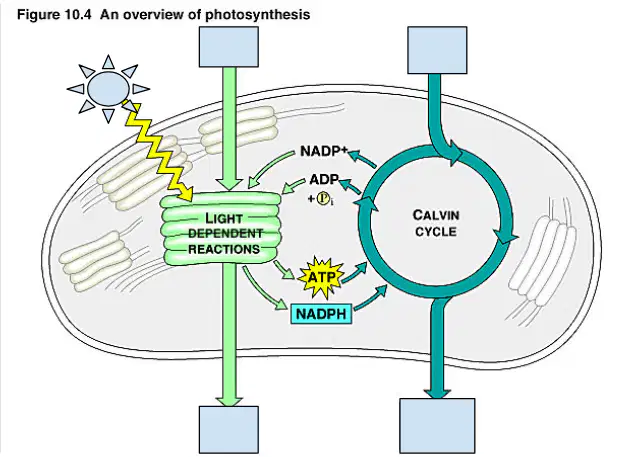
Where does the light-dependent reaction occur?

a)

Thylakoid Membrane

b)

Cytoplasm

c)

Stroma

d)

Outer Membrane

76.

Where does the light-independent reaction, or Calvin cycle, occur?

a)

Thylakoid Membrane

b)

Cytoplasm

c)

Stroma

d)

Outer Membrane

77.
ATP is 
a)
Adenosine Diphosphate
b)
Adenosine Triphosphate
c)
not an energy molecule
d)
Adenotriplet phosphate
78.
What are the reactants for cellular respiration?
a)
glucose and carbon dioxide
b)
water and glucose
c)
glucose and ATP
d)
glucose and oxygen
79.
Which is not a step in aerobic respiration?
a)
glycolysis
b)
Krebs' Cycle
c)
Calvin Cycle
d)
electron transport
80.
Which process occurs in the cytoplasm?
a)
glycolysis
b)
aerobic respiration
c)
Krebs' cycle
d)
Electron transport
81.
Glycolysis converts
a)
glucose into ATP
b)
glucose into pyruvate (pyruvic acid)
c)
glucose into oxygen
d)
glucose into ADP
82.
Which process occurs in the mitochondria
a)
glycolysis and Krebs' Cycle
b)
Krebs' Cycle and Electron Transport
c)
Calvin Cycle and Electron Transport
d)
Glycolysis only
83.
The ATP synthase is
a)
an enzyme that makes ADP
b)
an enzyme that breaks ATP
c)
an enzyme that breaks ADP
d)
an enzyme that make ATP
84.
Why is oxygen so important for aerobic respiration?
a)
It is the final electron acceptor which increases the H+ concentration gradient
b)
It is the final electron acceptor which maintains the H+ concentration gradient
c)
It is the final proton acceptor which maintains the oxygen concentration gradient
d)
It is the final enzyme acceptor which maintains the H+ concentration gradient
85.
What does it mean for something to be anaerobic?
a)
It requires CO2
b)
It does not require CO2
c)
It requires oxygen
d)
It does not require oxygen
86.
Where in the cell does aerobic respiration take place?
a)
Nucleus
b)
Cytoplasm
c)
Mitochondria
d)
Cell membrane
87.
What is the correct equation for cellular respiration?
a)
6O2 + C6H12O6 -> 6CO2 + 6H2O + Energy
b)
6O2 + C6H12O6 + Energy -> 6CO2 + 6H2O
c)
6CO2 + 6H2O -> 6O2 + C6H12O6 + Energy
d)
6CO2 + 6H2O + Energy -> 6O2 + C6H12O6
88.

True or False: Only animals can undergo Cellular Respiration.

a)

True

b)

False

89.

Which molecule is the reactant of Glycolysis?

a)

water

b)

glucose

c)

carbon dioxide

d)

ATP

90.

Which organism go through cellular respiration?

a)

animals

b)

plants

c)

both animals and plants

d)

none

91.

What is a type of respiration where oxygen is NOT needed to carry out its functions to turn pyruvate molecules into either ethanol or lactic acid depending on the cell?

a)

Aerobic respiration

b)

Pyruvatation

c)

Fermentation

92.

Is a process that splits glucose into two 3 - carbon based molecules and makes two ATP molecules.

a)

Granum

b)

Cellular Respiration

c)

Glycolysis

d)

Fermentation

93.

What are the 3 stages of cellular respiration in the correct order?

a)

Krebs, Glycolysis, Electron Transport Chain

b)

Glycolysis, Krebs, Electron Transport Chain

c)

Electron Transport Chain, Krebs, Glycolysis

94.
When respiration occurs with oxygen, it is called _______
a)
anaerobic
b)
aerobic
c)
light-dependent
d)
fermentation
95.

About how many ATP molecules are created by aerobic cellular respiration?

a)

0

b)

2

c)

36

d)

12

96.
During which step of cellular respiration is the majority of the ATP created?
a)

Fermentation

b)

Glycolysis

c)

Krebs Cycle

d)

ETC

97.

Anaerobic means without ________?

a)

Nitrogen

b)

Carbon Dioxide

c)

Oxygen

d)

Phosphorus

98.

How many fermentation types are there?

a)

2

b)

5

c)

3

d)

6

99.
What cells in the body may undergo lactic acid fermentation during exercise? 
a)
Muscle cells
b)
Fat cells
c)
Liver cells
d)
Skin cells
100.
Lactic acid fermentation occurs in your muscles after a workout because your cells are struggling to get
a)
Glucose
b)
Sunlight
c)
Oxygen
d)
Water