wayground logo

Free Printable Worksheets

Font size

S
M
L
XL
Worksheets

Properties and Categories of Elements

Total questions: 90

Worksheet time: 3hrs 8mins

Name
Class
Date
1.

Groups in the periodic table run ____________

a)

horizontally

b)

vertically

2.

What are the three categories of the periodic table
a)
Alkali Metals, Noble Gases, Transition Metals
b)
Gases, Liquids, Solids
c)
Metals, Nonmetals, Metalloids
d)
Organic, Inorganic, Biochemical
3.
Where are the metals on the Periodic Table?
a)
To the left
b)
In the upper right hand corner
c)
On the zigzag line
d)
At the bottom
4.
Good conductor of heat
a)
Metal
b)
Nonmetal
5.
Iron is a good conductor, malleable and magnetic. What type of element is Iron? 
a)
Metal
b)
Nonmetal
c)
Metalloid
d)
Pretty
6.

When an object changes shape when struck by a hammer it is said to be...

a)

luster

b)

malleable

c)

brittle

d)

ductile

7.
What side of the periodic table are nonmetals on?
a)
left
b)
right 
c)
top
d)
bottom
8.
Is oxygen metal or nonmetal?
a)
metal
b)
nonmetal
9.

Check all that are true for most nonmetals.

a)

malleable

b)

brittle solids

c)

not ductile

d)

many are diatomic

10.

Check all that are nonmetals.

a)

Ag

b)

F

c)

Mg

d)

N

e)

Ar

11.
Silicon is a semiconductor and has properties of both metals and nonmetals. What type of element is Silicon? 
a)
Metal
b)
Nonmetal
c)
Metalloid
d)
Pretty
12.

A horizontal row of elements in the periodic table.

a)

column

b)

group

c)

period

13.

What are the vertical columns on the Periodic Table called?

a)

groups

b)

periods

c)

nonmetals

d)

metals

e)

metalloids

14.

Which group of elements is the most snooty and doesn't want to play with any of the other groups?

a)

Halogens

b)

Lanthanides

c)

Alkali Earth Metals

d)

Noble Gases

e)

Alkali Metals

15.

Elements that are arranged in _______ have the most similar physical and chemical properties to each other.

a)

Groups

b)

Periods

16.

As you move left to right on a row or period what happens?

a)

Atomic number increases by 1

b)

Electrons decrease

c)

Number of shells decrease

d)

Nothing

17.

Elements in the same group have __________

a)

Similar Properties

b)

Same number of shells

c)

Similar Mass

18.

Are metals good conductors?

a)

Yes

b)

NO

19.

Which are this are types of metals on the periodic table? (Select all that apply)

a)

Alkali Earth Metals

b)

Alkali Metals

c)

Transition Metals

d)

Noble Gases

e)

Boron

20.

Most metals are solid at room temperature.

a)

True

b)

False

21.

Which is NOT a property of metals?

a)

brittleness

b)

conductivity

c)

ductility

d)

luster

22.

Where are most metals on the periodic table?

a)

on the left side only

b)

on the right side only

c)

in the middle only

d)

on the left side and in the middle

23.

The order of elements in the modern periodic table is based on an element's

a)

atomic number.

b)

name.

c)

chemical symbol.

d)

atomic mass.

24.
Most of the elements on the periodic table are classified as _____.
a)
Metals
b)
Nonmetals
c)
Metalloids
d)
Periods
25.
These are found on the Periodic Table.
a)
Compounds
b)
Elements
c)
Mixtures
26.

______________ refers to the way a metal can be hammered or rolled into thin sheets.

a)

Luster

b)

Malleable

c)

Metalloids

d)

Solid

27.

This group of elements have properties that are opposite those of metals. ______________________

a)

luster

b)

nonmetals

c)

metalloids

d)

metals

28.

This group of elements sit along a stair step line on the periodic table and have properties of both metals and nonmetals. _________________________

a)

luster

b)

metals

c)

nonmetals

d)

metalloids

29.

What is the periodic table?

a)

separates metals from nonmetals

b)

electrons in the outermost energy level

c)

a table that shows the elements with similar properties grouped together

d)

number of protons and neturons in the nucleus

30.

What is a chemical symbol?

a)

separates metals from nonmetals

b)

1 of 2 letters that represent an element

c)

electrons in the outermost energy level of an atom

d)

a table that hows the elements

31.

What is atomic mass?

a)

electrons in the outermost energy level

b)

the number of protons in an atom

c)

separates metals from nonmetals

d)

number of protons and neutrons in nucleus

32.

An element that has properties of both metals and nonmetals

a)

metalloid

b)

valence electron

c)

compound

d)

solid

33.

easy to shape or bend

a)

Malley's

b)

malleable

c)

inflexible

d)

rigid

34.
a)
Periods
b)
Groups
35.
The atomic number tells you what?
a)
number of electrons
b)
number of protons
c)
number of neutrons
d)
both electrons and protons in an atom.
36.
How many protons are in Beryllium?
a)
4
b)
9
c)
5
d)
2
37.

The periodic table is organized into columns called _______ and rows called ______.

a)

groups and periods

b)

periods and groups

c)

categories and periods

d)

categories and groups

38.
The part of the atom that determines the identity of the atom is the ____________.
a)
proton
b)
nucleus
c)
electron
d)
neutron
39.
Elements which are shiny and conduct electricity and heat are called
a)
metals
b)
nonmetals
c)
metalloids
d)
nonexistent
40.
The yellow atoms are called 
a)
metals
b)
nonmetals
c)
metalloids
d)
noble gases
41.
The atoms along the stair step or zig-zag line are called 
a)
metals
b)
nonmetals
c)
metalloids
d)
noble gases
42.
Which of the 3 major groups contains the most elements?
a)
Metals
b)
Metalloids
c)
Nonmetals
43.
Elements in the same period have
a)
same number of energy levels
b)
same number of protons
c)
same number of valence electrons
d)
similar physical and chemical properties
44.
Elements in the same group or family are expected to have  ________
a)
Similar Chemical Properties
b)
Same number of Protons
c)
Same Atomic number
45.
Elements that are gases, brittle and poor conductors are classified as what kind of elements?
a)
Nonmetals
b)
Metals
c)
Metalloids
d)
Alkali Metals
46.
Which of these is a property of metals?
a)
It's malleable
b)
It can't conduct electricity
c)
They are used in food
d)
It's very brittle
47.
Which of the following is NOT a characteristic of most metals?
a)
Brittle
b)
Good conductor
c)
Ductile
d)
Malleable
48.
How do metals differ from nonmetals?
a)
metals are shiny, nonmetals are dull
b)
metals are good insulators, nonmetals are good conductors
c)
metals are powdery
d)
nonmetals are shiny
49.

Which classification of elements are solids, semi-conductors, and have physical properties like metals and chemical properties like nonmetals?

a)

Transition metals

b)

Metalloids

c)

Nonmetals

d)

Metals

50.

What is the formula to solve for the neutron?

a)

Mass + Atomic Number= Neutrons

b)

Mass x Atomic Number = Neutrons

c)

Mass - Atomic Number = Neutrons

d)

Mass + Number of Protons = Neutron

51.

What is the formula to solve for the neutron?

a)

Mass + Atomic Number= Neutrons

b)

Mass x Atomic Number = Neutrons

c)

Mass - Atomic Number = Neutrons

d)

Mass + Number of Protons = Neutron

52.

What is the formula to solve for the neutron?

a)

Mass + Atomic Number= Neutrons

b)

Mass x Atomic Number = Neutrons

c)

Mass - Atomic Number = Neutrons

d)

Mass + Number of Protons = Neutron

53.
What is the charge of the neutron?
a)
Negative
b)
Positive
c)
electrical charge
d)
Neutral (no charge)
54.
What is the charge of the neutron?
a)
Negative
b)
Positive
c)
electrical charge
d)
Neutral (no charge)
55.
What is the charge of the neutron?
a)
Negative
b)
Positive
c)
electrical charge
d)
Neutral (no charge)
56.
How many neutrons does the an element with an atomic number of 3 and a mass of 6.9 contain?
a)
6.9
b)
4
c)
3
d)
7
57.
How many neutrons does the an element with an atomic number of 3 and a mass of 6.9 contain?
a)
6.9
b)
4
c)
3
d)
7
58.
How many neutrons does the an element with an atomic number of 3 and a mass of 6.9 contain?
a)
6.9
b)
4
c)
3
d)
7
59.
How many neutrons does oxygen have?
a)
16
b)
15.99
c)
8
d)
Doesn't contain any neutrons
60.
How many neutrons does oxygen have?
a)
16
b)
15.99
c)
8
d)
Doesn't contain any neutrons
61.
How many neutrons does a Hydrogen atom have?
a)
1
b)
2
c)
3
d)
0
62.
How many neutrons does a Hydrogen atom have?
a)
1
b)
2
c)
3
d)
0
63.
How many neutrons does a Hydrogen atom have?
a)
1
b)
2
c)
3
d)
0
64.
How many neutrons does a Hydrogen atom have?
a)
1
b)
2
c)
3
d)
0
65.
What is the number highlighted?
a)
Atomic number
b)
Atomic mass
c)
Number of protons
d)
Number of electons
66.
What is the number highlighted?
a)
Atomic number
b)
Atomic mass
c)
Number of protons
d)
Number of electons
67.
What is the number highlighted?
a)
Atomic number
b)
Atomic mass
c)
Number of protons
d)
Number of electons
68.
Which letter represents a proton?
a)
A
b)
B
c)
C
d)
D
69.
Which letter represents a proton?
a)
A
b)
B
c)
C
d)
D
70.
Which letter represents a proton?
a)
A
b)
B
c)
C
d)
D
71.
Which letter represents a neutron?
a)
A
b)
B
c)
C
d)
D
72.
Which letter represents an electron?
a)
A
b)
B
c)
C
d)
D
73.
Which letter represents an electron?
a)
A
b)
B
c)
C
d)
D
74.
Which letter represents an electron?
a)
A
b)
B
c)
C
d)
D
75.
Which letter represents an electron?
a)
A
b)
B
c)
C
d)
D
76.

How many neutrons does platinum have?

a)

78

b)

117

c)

195

d)

196

77.

How many neutrons does platinum have?

a)

78

b)

117

c)

195

d)

196

78.

How many neutrons does platinum have?

a)

78

b)

117

c)

195

d)

196

79.

How many neutrons does platinum have?

a)

78

b)

117

c)

195

d)

196

80.

How many neutrons does platinum have?

a)

78

b)

117

c)

195

d)

196

81.
In order for me to find the number of neutrons, I must round the atomic mass and then do what?
a)
atomic number-atomic mass
b)
atomic number x atomic mass
c)
atomic mass + atomic number
d)
atomic mass - atomic number
82.
In order for me to find the number of neutrons, I must round the atomic mass and then do what?
a)
atomic number-atomic mass
b)
atomic number x atomic mass
c)
atomic mass + atomic number
d)
atomic mass - atomic number
83.
In order for me to find the number of neutrons, I must round the atomic mass and then do what?
a)
atomic number-atomic mass
b)
atomic number x atomic mass
c)
atomic mass + atomic number
d)
atomic mass - atomic number
84.

How many neutrons does Helium have?

a)

2

b)

4

c)

6

85.

How many neutrons does Helium have?

a)

2

b)

4

c)

6

86.

How many Neutrons does Neon have?

a)

10

b)

20.18

c)

10.18

d)

20.18

87.

How many Neutrons does Neon have?

a)

10

b)

20.18

c)

10.18

d)

20.18

88.

How many NEUTRONS does an Iodine atom have?

a)

53

b)

126

c)

74

d)

179

89.

How many NEUTRONS does Sodium have?

a)

11

b)

22

c)

33

d)

12

90.
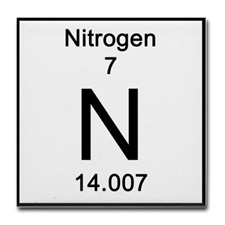
What is the number of protons that the element in this image contain?
a)
14
b)
7
c)
15
d)
18