wayground logo

Free Printable Worksheets

Font size

S
M
L
XL
Worksheets

Earth Science Rocks Unit Test Review

Total questions: 88

Worksheet time: 59mins

Name
Class
Date
1.
The five characteristics that all minerals share are:
a)
Definite Chemical Composition, Color, Density, Igneous, and Solid
b)
Definite Chemical Composition,  Crystal Structure, Inorganic, Naturally Occurring, and Solid
c)
Cleavage, Faces, Hardness, Metamorphic, and Streak
d)
Cleavage, Crystal Structure, Density, Igneous, and Solid
2.
Means that the substance must occur in nature, it cannot be created or manufactured by people
a)
Inorganic
b)
Organic
c)
Naturally Occurring
d)
Not Living
3.
Means that a mineral cannot come from something that was once living.
a)
Inorganic
b)
Organic
c)
Naturally Occurring
d)
Not Living
4.
This has a definite volume and shape, its particles are tightly packed together and cannot move easily.
a)
Chemical Composition
b)
Crystal Structure
c)
Density
d)
Streak
5.
This means the particles that make a mineral line up in a pattern that repeats over and over again.
a)
Chemical Composition
b)
Crystal Structure
c)
Fracture
d)
Solid
6.
Definite ___________ means that a mineral always contains certain elements in definite, or exact, proportions.
a)
Chemical Composition
b)
Crystal Structure
c)
Crystal System
d)
Naturally Occurring
7.
This is measured on  the Mohs Scale.
a)
Cleavage
b)
Density
c)
Hardness
d)
Luster
8.
The _________ of a mineral is a physical property that is easy to observe.
a)
Chemical Composition
b)
Color
c)
Hardness
d)
Streak
9.
_______ is found by rubbing the mineral against an unglazed tile called a plate.
a)
Cleavage
b)
Color
c)
Luster
d)
Streak
10.
This is how a mineral reflects light.
a)
Cleavage
b)
Density
c)
Hardness
d)
Luster
11.
________ is the mass per unit volume.
a)
Crystal Structure
b)
Density
c)
Hardness
d)
Solid
12.
_______ is a property that describes a mineral  that splits evenly along flat surfaces.
a)
Cleavage
b)
Fracture
c)
Inorganic
d)
Organic
13.
This describes how a mineral looks if it breaks in an irregular way.
a)
Cleavage
b)
Fracture
c)
Inorganic
d)
Organic
14.
The three major rock groups are:
a)
Inorganic, Metamorphic, and  Sedimentary
b)
Inorganic, Metamorphosis, and Sediment
c)
Igneous, Metamorphic, and Sediment
d)
Igneous, Metamorphic, and Sedimentary
15.
This rock  is formed from molten rock (magma/lava) that has cooled.
a)
Igneous
b)
Inorganic
c)
Metamorphic
d)
Sedimentary
16.
This rock is formed from lava on  the earth's  surface
a)
Inorganic
b)
Igneous
c)
Metamorphic
d)
Sedimentary
17.
This rock is formed by erosion (continuously broken down into small fragments) and  then is compressed and  cemented together.
a)
Inorganic
b)
Igneous
c)
Metamorphic
d)
Sedimentary
18.
This rock is formed by extreme heat and/or pressure that alters the chemical composition into a new form of rock.
a)
Inorganic
b)
Igneous
c)
Metamorphic
d)
Sedimentary
19.

1. Rock sediments that travel down a mountain, sand being blown across the beach, and mud sliding down a hill are all examples of

a)

pressing and cementing

b)

erosion

c)

part of the rock cycle

d)

fossil formation

20.

The remains of living things that died long ago are often found in what type of rock?

a)

igneous rocks

b)

sedimentary rock

c)

metamorphic rock

d)

all rocks

21.

The cooled and hardened magma from volcanoes form what rocks?

a)

igneous

b)

sedimentary

c)

metamorphic

d)

fossils

22.

The property of hardness is being observed when Calcite has a hardness of 3.5 and Shale has a hardness of 6.2. According to the Moh's Scales of Hardness, which rock can scratch a rock that has a hardness of 5.4?

a)

Calcite

b)

Shale

c)

neither rock

d)

both rocks

23.

Hot, molten rock inside the earth is called ...

a)

lava

b)

magma

c)

igneous rock

d)

minerals

24.

Once magma reaches the earth's surface, it is called __________.

a)

a vent

b)

minerals

c)

igneous rocks

d)

lava

25.

Rocks that are buried deep in the earth can be changed into an entirely new rock when it goes through what?

a)

weathering and erosion

b)

pressing and cementing

c)

heat and pressure

d)

cooling and hardening

26.

A person who studies the properties of rocks to tell how the rocks may have been formed are ____________.

a)

mineralists

b)

geologists

c)

rock stars

d)

rockologists

27.
What is an igneous rock?
a)
Rock that forms when melted, or molten rock from deep below Earth's surface cools and hardens.
b)
A solid material made up of one or more minerals.
c)
Rock that forms when existing rocks are changed by heat, pressure, or chemicals beneath the Earth's surface.
28.
What is metamorphic rock?
a)
Rock that forms when melted, or molten rock from deep below Earth's surface cools and hardens.
b)
A solid material made up of one or more minerals.
c)
Rock that forms when existing rocks are changed by heat, pressure, or chemicals beneath the Earth's surface.
29.

This rock cooled on the outside of a volcano and contained gas pockets when it was forming. What type of rock is this?

a)

Sedimentary

b)

Igneous

c)

Metamorphic

30.
A slow cooling igneous rock will have _____ crystals
a)
large
b)
small
c)
average
d)
black
31.
Texture is based on:
a)
size & shape of a rock's mineral grains
b)
how/where a rock forms
c)
the minerals a rock is made up of
32.

Which igneous rock is dark colored, cooled rapidly on Earth's surface, and is composed mainly of plagioclase feldspar, olivine, and pyroxene?

a)

obsidian

b)

rhyolite

c)

gabbro

d)

scoria

33.

The igneous rock is mostly composed of potassium feldpsar and quartz crystals that have an average grain size of 3 millimeters. The igneous rock is most likely

a)

granite

b)

pegmatite

c)

gabbro

d)

pumice

34.

What is the origin and rate of formation of this rock?

a)

plutonic with slow cooling

b)

plutonic with rapid cooling

c)

volcanic with slow cooling

d)

volcanic with rapid cooling

35.

Which igneous rock has a vesicular texture and

contains the minerals potassium feldspar and quartz?

a)

Andesite

b)

pegmatite

c)

pumice

d)

scoria

36.

Which intrusive igneous rock could be composed of

approximately 60% pyroxene, 25% plagioclase

feldspar, 10% olivine, and 5% amphibole?

a)

granite

b)

rhyolite

c)

gabbro

d)

basalt

37.

Which geologic process convert shale to gneiss?

a)

sedimentary layering

b)

intrusion of magma

c)

metamorphism

d)

weathering

38.

Which rock was subjected to intense heat and

pressure but did not solidify from magma?

a)

sandstone

b)

schist

c)

gabbro

d)

rhyolite

39.

The photograph below shows the texture of a rock

composed of various minerals as seen through a

microscope. Which rock is most likely shown?

a)

Sandstone

b)

Anthracite Coal

c)

Dunite

d)

Schist

40.

The cross section below represents a portion of Earth's crust. Letters A through D are locations within

the rock units. Which location is quartzite most likely found?

a)

A

b)

B

c)

C

d)

D

41.

Which rock is only formed by regional

metamorphism?

a)

Slate

b)

Hornfels

c)

Dunite

d)

Marble

42.

Wavy bands of light and dark minerals visible in

gneiss bedrock probably formed from the

a)

cementing together of individual mineral grains

b)

cooling and crystallization of magma

c)

evaporation of an ancient ocean

d)

heat and pressure during metamorphism

43.

Which two kinds of adjoining bedrock would most

likely have a zone of contact metamorphism

between them?

a)

Shale and conglomerate

b)

shale and sandstone

c)

limestone and sandstone

d)

limestone and granite

44.

Which sample best shows the physical properties

normally associated with regional metamorphism?

a)

A

b)

B

c)

C

d)

D

45.

Which physical characteristic best describes the rock

phyllite?

a)

glassy texture with gas pockets

b)

clastic texture with angular fragments

c)

bioclastic texture with cemented shell

fragments

d)

foliated texture with microscopic mica

crystals

46.

During the Permian Period, sedimentary bedrock in

the Appalachian Region was subjected to high

temperature and pressure. Calcite deposits that had

existed in this environment would most likely have

formed

a)

Schist

b)

Gabbro

c)

Marble

d)

Gneiss

47.

How do the metamorphic rocks schist and quartzite

differ?

a)

Quartzite contains the mineral quartz and schist

does not.

b)

Quartzite forms from regional metamorphism

and schist does not.

c)

Schist is organically formed and quartzite is

not.

d)

Schist is foliated and quartzite is not.

48.

In the simple rock-cycle diagram, which processes would change the schist directly into a pile of sediments ?

a)

uplift, weathering, and erosion of the schist

b)

cementing of sediment grains followed by compaction

c)

melting of the schist followed by cooling

d)

heat and/or pressure applied to the schist

49.

Rocks are classified as igneous, sedimentary, or

metamorphic based primarily on their

a)

Texture

b)

Crystal or grain size

c)

method of formation

d)

mineral composition

50.

A rock would be classified as metamorphic

because it shows

a)

Distorted Banding

b)

Organic Composition of Shells

c)

Mixture of Minerals

d)

Crystals from precipitation

51.

If a metamorphic rock bubbles when a drop of acid

is placed on its surface, the rock is most likely

a)

Schist

b)

Slate

c)

Marble

d)

Quartzite

52.

What is the rock name used to

represent the sedimentary rock that has a grain size of

0.006 to 0.2 centimeters?

a)

Siltstone

b)

Shale

c)

Sandstone

d)

Conglomerate

53.

Which mineral precipitates from oceans and forms

rock salt?

a)

Quartz

b)

Fluorite

c)

Halite

d)

Olivine

54.

Most rocks that form from fragmental rock particles

are classified as

a)

Extrusive Igneous

b)

Intrusive Igneous

c)

Clastic Sedimentary

d)

Chemical Sedimentary

55.

Most sandstone bedrock is composed of sediment

that was

a)

Sorted by size and not layered

b)

Sorted by size and layered

c)

unsorted and not layered

d)

unsorted and layered

56.

The diagram shows a test for which mineral property?

a)

Hardness

b)

Luster

c)

Cleavage

d)

Streak

57.

All of the following are characteristics of metamorphic rocks except —

a)

flattened crystals

b)

regional

c)

bending from pressure

d)

holes from trapped gases

58.

Which of the following minerals found in Virginia is known as “fool’s gold”?

a)

pyrite

b)

hematite

c)

galena

d)

limonite

59.

Which conclusion can be made based on the information in the chart?

a)

Quartz is harder than topaz.

b)

Calcite is harder than apatite

c)

Fluorite is harder than feldspar.

d)

Gypsum is harder than talc.

60.

More often than metamorphic or igneous rocks, sedimentary rocks have —

a)

many holes from trapped gases

b)

large quartz crystals

c)

numerous fossils

d)

a glassy appearance

61.

Which of these can determine the size of grains in igneous rocks?

a)

amount of rare minerals

b)

distance from a plate boundary

c)

size of the volcano

d)

cooling rate of molten rock

62.

What property is shared by many gemstones, such as diamonds, rubies, sapphires, emeralds, and topaz?

a)

extreme hardness

b)

high specific gravity

c)

carbon as the primary element

d)

ductility

63.

The density of a mineral is determined by its mass and —

a)

hardness

b)

luster

c)

volume

d)

shape

64.

Slate is a fairly common rock that can be used for roofing shingles. What property makes it most suitable for this use?

a)

it can be split into thin, flat layers.

b)

it feels soft and smooth.

c)

it is hard and brittle.

d)

it can occur in different colors.

65.

The mineral in the above table that will scratch garnet is —

a)

pyrite

b)

garnet

c)

magnetite

d)

topaz

66.
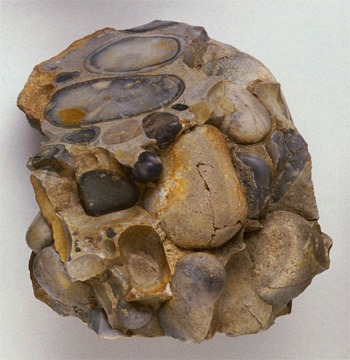
This rock formed when bits of other rocks became pressed into a solid. What type of rock is it?
a)
Sedimentary Rock
b)
Metamorphic Rock
c)
Igneous Rock
67.
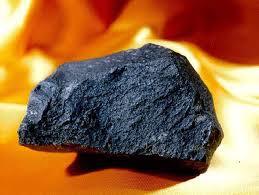
This rock was formed when magma cooled very slowly inside the Earth. What specific type of rock is it?
a)
Intrusive Igneous Rock
b)
Extrusive Igneous Rock
c)
Foliated Metamorphic Rock
d)
Clastic Sedimentary Rock
68.
This rock formed when lava cooled very quickly on Earth's surface. What specific type of rock is it?
a)
Extrusive Igneous Rock
b)
Intrusive Igneous Rock
c)
Non-Foliated Metamorphic Rock
d)
Biochemical Sedimentary Rock
69.
When you watch a volcano erupt molten rock, you are seeing _____
a)
Lava
b)
Magma
c)
Mineral Crystals
d)
Igneous Rocks
70.
When you are describing the sizes of the mineral grains in a rock, you are detailing the rock's _____
a)
Texture
b)
Composition
c)
Sedimentation
d)
Igneous-ness
71.
The individual particles that make up a rock are known as _____
a)
Grains
b)
Textures
c)
Metamorphs
d)
Lava
72.
What are the 3 major types of rocks?
a)
Igneous, Metamorphic, Sedimentary
b)
Metamorphic, Igneous, Cementation
c)
Brown, Red, Gray
d)
Streak, Hardness, Breakage
73.
Two ways to describe types of igneous rocks are _____
a)
Extrusive and Intrusive
b)
Foliated and Non-Foliated
c)
Clastic and Biochemical
d)
Black and Gray
74.
What process is used to form sedimentary rocks?
a)
Lava cools and hardens to form a rock.
b)
Weathering, Erosion, Deposition, Compaction, Cementation
c)
Extreme heat and pressure from inside the Earth turn rocks into new rocks.
d)
Magma trapped under the Earth's surface cools and solidifies.
75.
Which of the words below describe broken up rock?
a)
stalactites
b)
magmas
c)
metamorphs
d)
sediments
76.
This rock was formed by smaller pieces of rock that settled at the bottom of a lake millions of years ago. What type of rock is this?
a)
Sedimentary
b)
Igneous
c)
Metamorphic
77.
This rock was found near the mouth of a volcano. What type of rock is this?
a)
Sedimentary
b)
Igneous
c)
Metamorphic
78.
When sediments are pressed together tightly, this is called ____________.
a)
Compaction
b)
Cementation
c)
Weathering
d)
Erosion
79.
The process in which sediment are fused or glued together.
a)
compaction
b)
deposition
c)
organic rock
d)
cementation
80.
What is deposition?
a)
Dropping off sediment
b)
Movement of sediment
c)
Breaking down of sediment 
81.
The process when rocks break into smaller pieces due to exposure to natural elements is called
a)
erosion
b)
weathering
c)
sediments
d)
deposition
82.
The movement of weathered material (sediment) is called?
a)
weathering
b)
erosion
c)
deposition
d)
cementation
83.
Sedimentary rock that is made of fragments of rocks cemented together by a mineral are called...
a)
chemical
b)
organic
c)
clastic
84.
Sedimentary rock that is formed from water evaporating and minerals being left behind.
a)
clastic
b)
organic
c)
chemical
85.
Sedimentary rock made from fossils are called...
a)
organic
b)
chemical
c)
stratified
86.
This rock was formed when molten rock cooled into a solid. What type of rock is it?
a)
Igneous Rock
b)
Metamorphic Rock
c)
Sedimentary Rock
87.
Which type of rock is formed from INTENSE heat and pressure?
a)
igneous
b)
sedimentary
c)
metamorphic
88.
Is the following metamorphic rock foliated or non-foliated?
a)
Foliated
b)
Non-foliated
c)
Neither