wayground logo

Free Printable Worksheets

Font size

S
M
L
XL
Worksheets

Universe unit review

Total questions: 93

Worksheet time: 1hrs 9mins

Name
Class
Date
1.

As galaxies move away from our galaxy

a shift on the electromagnetic spectrum is noticed. This phenomena is

called _____________.

a)

redshift

b)

blueshift

2.

Cosmic Microwave Background Radiation is a form of _________.

a)

Matter

b)

Energy

c)

Visible Light

d)

Water

3.

How does Cosmic Microwave Background Radiation support the Big Bang Theory?

a)

Microwaves are found everywhere in the universe.

b)

Microwaves occurred at the time of the Big Bang

c)

Microwaves are useful in our everyday lives

4.

The Big Bang Theory explains the formation of the...

a)

Earth

b)

Sun

c)

Universe

d)

Solar System

5.
What were the original two elements in our universe?
a)
Lithium and Carbon
b)
Hydrogen and Neon
c)
Helium and Chlorine
d)
Hydrogen and Helium
6.

The "afterglow" of the energy from the origin of the universe that we see today.

a)

Cosmic microwave radiation

b)

sunlight

c)

Doppler effect

d)

Cosmic explosions

7.

In relation to us, most galaxies are…

a)

Moving toward us

b)

Moving away from us

c)

Not moving

8.
The change in wavelength of light or sound that is due to the relative motion of the source towards or away from an observer.
a)
Radar Effect
b)
Doppler Effect
c)
Light Effect
d)
Reflection
9.

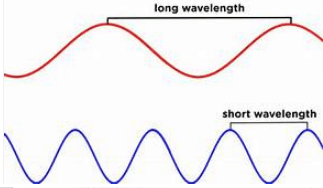
What happens to the wavelengths of energy if they are moving AWAY from a source?

a)

The waves stretch out and get longer.

b)

The waves compress and get shorter.

10.

Which scientists was responsible for coining the phrase “Big Bang?”

a)

Fred Doyle

b)

Albert Einstein

c)

Sir Isaac Newton

d)

Edwin Hubble

11.

Which statement is true?

a)

The galaxies are moving toward us.

b)

The galaxies are moving away from us.

c)

The universe remains static or unchanged in motion.

d)

None of the above

12.

Light emitted from a star or galaxy can be separated into a band of colors, called a ________.

a)

Red Shift

b)

Wave Length

c)

Spectrum

d)

Microwave

13.
The universe is expanding!  This means that:
a)
all of the galaxies are spreading out.
b)
the universe must have started from a single point.
c)
the universe is cooling down.
d)
all of the above.
14.
The universe is ____________ years old.
a)
8.13 billion
b)
13.8 billion
c)
1.83 billion
d)
381 million
15.
The universe is expanding.  This means that:
a)
Galaxies are getting bigger.
b)
Atoms are getting bigger.
c)
The universe is creating more matter.
d)
The amount of space between galaxies is increasing.
16.
What forces cause a planet to orbit?
a)
gravity and orbit
b)
gravity and inertia
c)
gravity and mass
d)
gravity and weight
17.

What best describes the doppler effect?

a)

An apparent change in frequency of a wave due to the relative motion between a wave source and an observer

b)

When sound changes pitch

c)

When light changes color

d)

An apparent change in the amplitude of a wave due to the relative motion between a wave source and an observer.

18.
If a star is being observed from Earth and it's light has shifted towards the blue side of the electromagnetic spectrum it would be...
a)
Moving towards the Earth
b)
Moving away from the Earth
c)
This is a trick question that cannot be answered
d)
It isn't a star, it is a very large blueberry.
19.

What came before the Big Bang?

a)

a different universe

b)

nothing; space,matter, and time appeared with the Big Bang

c)

a small bang

d)

a completely separate, new solar system

20.

What happened after the Big Bang?

a)

humans appeared

b)

there was a loud sound

c)

a series of explosions that created the planets

d)

the universe was flooded with incredibly bright light

21.

What do the initial moments after the Big Bang have in common with the universe as it exists now?

a)

a. All the stars, galaxies, and planets that exist today were formed just a few moments after the Big Bang.


b)

b. The universe back then could not sustain life, and it cannot sustain life now.

c)

c. The universe was extremely hot then, and it is still extremely hot now.

d)

d. The universe began expanding then, and it is still expanding today.

22.
A large celestial body that is composed of gas and that emits light.
a)
star
b)
black hole
c)
element 
d)
big bang
23.
True or False
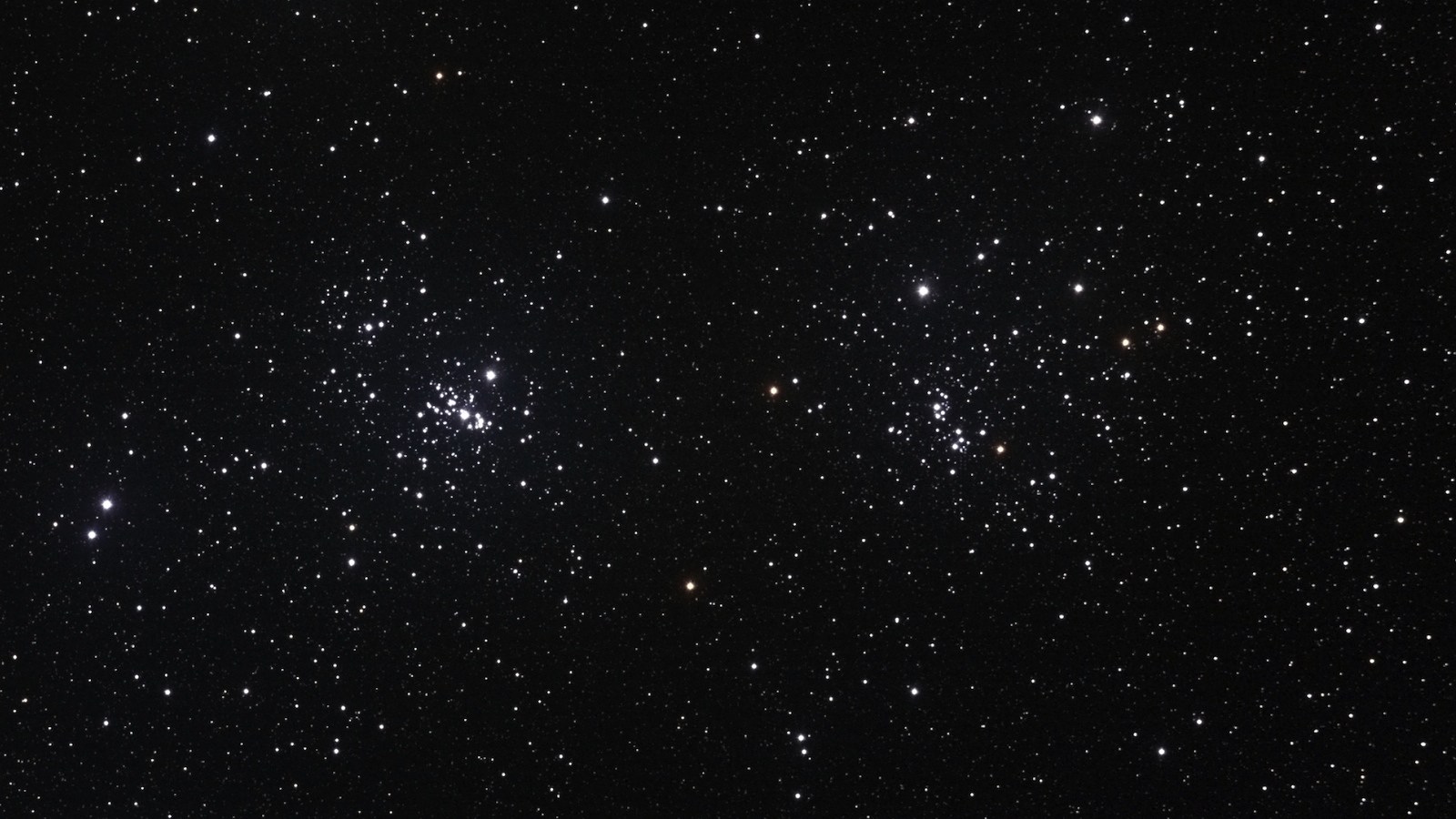
The Sun is the biggest star in the sky.
a)
True
b)
False
24.
Why do other stars appear so much smaller than the sun?
a)
They are much smaller
b)
They are so far away
c)
They are not as bright
d)
They are dwarf stars
25.
What color of star is the hottest?
a)
Blue
b)
Red
c)
Yellow
d)
Orange
26.
What color of star is the coolest?
a)
Red
b)
Yellow
c)
Blue
d)
White
27.
The H-R diagram is a graph that shows the relationship between ______________ for stars. 
a)
temperature and color
b)
temperature and brightness
c)
brightness and color
d)
distance and brightness
28.
Most stars are made of which elements?
a)
Hydrogen only
b)
Hydrogen and Lithium
c)
Hydrogen and Sodium
d)
Hydrogen and Helium
29.
Which category is our Sun located in?
a)
White Dwarfs
b)
Supergiants
c)
Main Sequence
d)
Giants
30.
The category that contains the most stars is...
a)
Main Sequence
b)
Supergiants
c)
Giants
31.
Look at the H-R diagram. Which star is
sort of cool, dim (not too much light), and red?
a)
Betelguse
b)
Sirius B
c)
Procyon B
d)
Barnard's star
32.
Which star has the lowest temperature?
a)
A
b)
B
c)
C
d)
D
33.

The best description of a super giant star would be -

a)

hot and bright

b)

hot and dim

c)

average brightness and temp

d)

cool and bright

34.
In the diagram given, what happens as we move to the left?
a)
Stars Get Larger
b)
Stars get Colder
c)
Stars get Hotter
d)
Stars get Brighter
35.
What is found on the x axis of an H-R diagram?
a)
Luminosity
(or brightness)
b)
Temperature
c)
Star Size
d)
Distance
36.
Which is an example of a Main Sequence star?
a)
Betelgeuse
b)
our Sun
c)
Sirius B
d)
Polaris
37.
A ______ telescope uses a mirror to focus light onto a small area.
a)
reflecting
b)
refracting
c)
radio
d)
spectrum
38.
What does Refracting Telescope have?
a)
Sand
b)
Mirrors
c)
Lens
d)
Batmobile 
39.
when were telescopes first invited?
a)
late 1980
b)
1956
c)
early 1600's
d)
late 1500
40.
Who invented the telescope?
a)
Hans Lippershey
b)
Galileo Galilei
c)
John Snow
d)
Isaac Newton
41.
Why is the Hubble telescope located in space?
a)
So it can be closer to the stars it magnifies
b)
They have very large optical lenses
c)
So its images arent distorted by Earth's atmosphere 
d)
So it can be operated by astronauts 
42.
What is a space probe ?
a)
a tool used for the study of space 
b)
A place that is in space 
c)
A place used for observatory 
d)
An unmanned spacecraft designed to explore the dollar system and send information back to Earth
43.
Since 1977, NASA has been gathering data about the outer planets, and even interstellar space, with this mission.
a)
Voyager
b)
New Horizons
c)
MSL
d)
James Webb
44.
What is the ISS?
a)
International Student Services
b)
Inside Sun Secrets
c)
International Space Station
d)
Iraq Space Services
45.
Which is NOT a space tool? 
a)
Refracting telescope 
b)
Reflecting telescope
c)
Spectrascopes
d)
Prisms
46.
Spectrascopes collect light and then:
a)
Combine them into white light
b)
Combine them into black light
c)
Separate them into bands of colors
d)
Seperate them into white light
47.
Spectrascopes use bands of color to identify: 
a)
Mass of star
b)
The elements in the star
c)
The weight of the star
d)
The sounds the star makes
48.
An object that orbits another object in space is a: 
a)
Space probe
b)
Space lander
c)
Space invader
d)
Satellite
49.
The space instrument that travels beyond our solar system are:
a)
Space probes
b)
Satellites
c)
Observatories
d)
Telescopes
50.
To which rocky planet are scientists planning a manned space mission
a)
Jupiter
b)
Mars
c)
Neptune
d)
Venus
51.
I orbit Earth and help your cell phones work. What am I?
a)
Space Shuttle 
b)
Rover
c)
Satellite
d)
Rocket
52.
I photographed pictures of Jupiter's Great Red Spot and sent them back to NASA on Earth. What am I?
a)
Space Shuttle
b)
Rover
c)
Rocket
d)
Space Probe
53.
______________ is the energy that can travel through space in the form of waves. 
a)
telescopes
b)
electromagnetic spectrum
c)
observatory
54.
Why are line emission spectra of elements called "atomic fingerprints"?
a)
They are all the same
b)
They are all unique
c)
They are all similar
d)
They all contain colored light
55.
A spectrograph breaks the light from an object into a(n) ____________, or range of different colors, and produces an image of it.
a)
spectrum
b)
spectragraph
c)
visible light
d)
prism
56.
What do spectroscopes do?
a)
Collect light to identify elements
b)
Refract light
c)
Absorb light
d)
Transmit light
57.
 The refractor telescope was invented in 1608 by
a)
Hans Lippershey
b)
Galileo Galilei
c)
Kepler
d)
Aristotle
58.
Why do planets orbit the sun?
a)
Gravitational attraction
b)
Magnetic pull
c)
Attached by strings
d)
They don't orbit the sun
59.
Moons orbit planets because...
a)
they do not orbit planets.
b)
they have gravitational pull.
c)
they have craters.
d)
they are magnetically attracted.
60.
How long does it take the Earth to make one REVOLUTION around the Sun?
a)
12 hours
b)
24 hours
c)
365 days
d)
29.5 days
61.
How long does it take for Earth to complete on full rotation?
a)
365 days
b)
23 hours
c)
24 hours
d)
1 month
62.
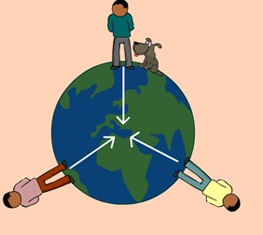
What is gravity?
a)
A force
b)
Energy
c)
A push
d)
All of them
63.
Which model has greater gravitational attraction (if any)
a)
Model A
b)
Model B
c)
Both Model A and Model B (same gravity)
64.
What scientist use a telescope to observe the night sky and led to him being called the father of astronomy?
a)
Galileo
b)
Einstein 
c)
Dr. Tyson 
d)
Dr. Wernher von Brauun 
65.
Your mass increases on a large planet with more gravity.
a)
True
b)
False
66.
What is the difference between weight and mass?
a)
Weight is the amount of matter in an object, and mass is the gravitational force exerted on an object
b)
Mass is the amount of matter in an object, and weight is the gravitational force exerted on an object
c)
Weight is the amount of matter in an object, and mass is the size of an object.
d)
Weight is the size of an object, and mass is the amount of matter in an object
67.
As the distance between two objects in space increases the gravity will _______________
a)
increase
b)
decrease
c)
stay the same
68.
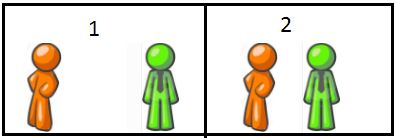
Which System has the greater gravitational pull between the two objects?
a)
System 1
b)
System 2
c)
Same: there is no gravitational attraction between the two objects
69.
Which model has the greater gravitational attraction?
a)
Model 1
b)
Model 2
c)
Neither: there is not gravitational attraction between the two objects
70.
Which of the following is a natural satellite from the Earth's perspective?
a)
Moon
b)
Sun
c)
GPS
71.
What are stars?
a)
Rocky bodies
b)
Hot exploding balls of gas
c)
5 pointed shapes
d)
Hollywood actors
72.

The main gases that burn within the sun are

a)

Oxygen and Nitrogen

b)

Hydrogen and Oxygen

c)

Neon and Sulfur

d)

Hydrogen and Helium

73.

The sun's yellow color indicates that it is a

a)

star made up of stable gases

b)

that it is a mid-range temperature star

c)

that it is a low-range temperature star

d)

that it is a high-range temperature star

74.
What color of star is the hottest?
a)
Blue
b)
Red
c)
Yellow
d)
Orange
75.
Why do other stars appear so much smaller than the sun?
a)
They are actually much smaller
b)
They are so far away
c)
They are not as bright
d)
They are dwarf stars
76.
What color of star is the coolest?
a)
Red
b)
Yellow
c)
Blue
d)
White
77.
Which star is closest to Earth?
a)
Betelgeuse
b)
Orion
c)
the sun
d)
Antares
78.
What is a difference between spring and neap tides?
a)
Spring tides occur when the earth and sun are IN LINE with the new or full moon. 
b)
Spring tides occur when moon in 3rd or 1st quarter phases
c)
Spring tides are LOWER than neap tides
79.
Which body has the greater effect on Earth's tides?
a)
Sun
b)
Saturn
c)
Moon 
d)
Venus
80.
At the same time the sea is drawn to the moon, another tidal bulge takes place on other side of Earth?
a)
Yes
b)
No
c)
Maybe
d)
I don't know!
81.
When the moon is at full moon or new moon, what type of tide will we experience?
a)
rip tide
b)
spring tide
c)
neap tide
d)
breaker tide
82.
Spring tides and neap tides occur in patterns governed by the
a)
phases of the moon
b)
seasons (fall, winter, etc.)
c)
surface currents
d)
deep sea currents
83.

Wha type of tide would this arrangement of earth-moon-sun create?

a)

full moon tide

b)

new moon tide

c)

neap tide

d)

spring tide

84.
What type of tides would this arrangement of earth-moon-sun create?
a)
neap tide
b)
spring tide
c)
new moon tide
d)
full moon tide
85.
What happens when there is a spring tide
a)
high tides 
b)
really high tides
c)
low tides
86.
Water flows toward the high tides, halfway between them causing ____________.
a)
neap tide
b)
high tide
c)
spring tide
d)
low tides
87.
Tides are the cycle of rising and falling ocean water that repeats automatically every
a)
24 hours
b)
12.5 hours
c)
25 hours
d)
6.25 hours
88.
A neap tide is a tide with the greatest difference between low and high tides
a)
true
b)
false
89.
Neap tides occur once a month. 
a)
True
b)
False
90.
Tides are caused by
a)
strong winds that blow over ocean waters.
b)
the interaction of Earth, the moon and the sun.
c)
the shifting of the plates on the ocean floor.
d)
variations in the salinity of ocean water
91.
What causes tides?
a)
gravity
b)
wind
c)
spring
d)
neap
92.
How many low tides and high tides happen in a day?
a)
1 low tide, 1 high tide
b)
4 low tides, 4 high tides
c)
3 low tides, 3 high tides
d)
2 low tides, 2 high tides
93.
The Moon has a greater influence on Earth tides than the Sun because...
a)
it is smaller than the Sun
b)
it revolves around the Earth
c)
it is closer to the Earth