
 Worksheets
Test 2: 1.1 to 1.20 Focus Biochemical Reactions, Enzymes, Acids,
Total questions: 75
Worksheet time: 47mins
What does "polar" mean?
A molecule is cold
A molecule has ionic bonds
A molecule has covalent bonds
A molecule has areas of positive and negative charge
This atom in a water molecule has more of a negative charge
Oxygen
Hydrogen
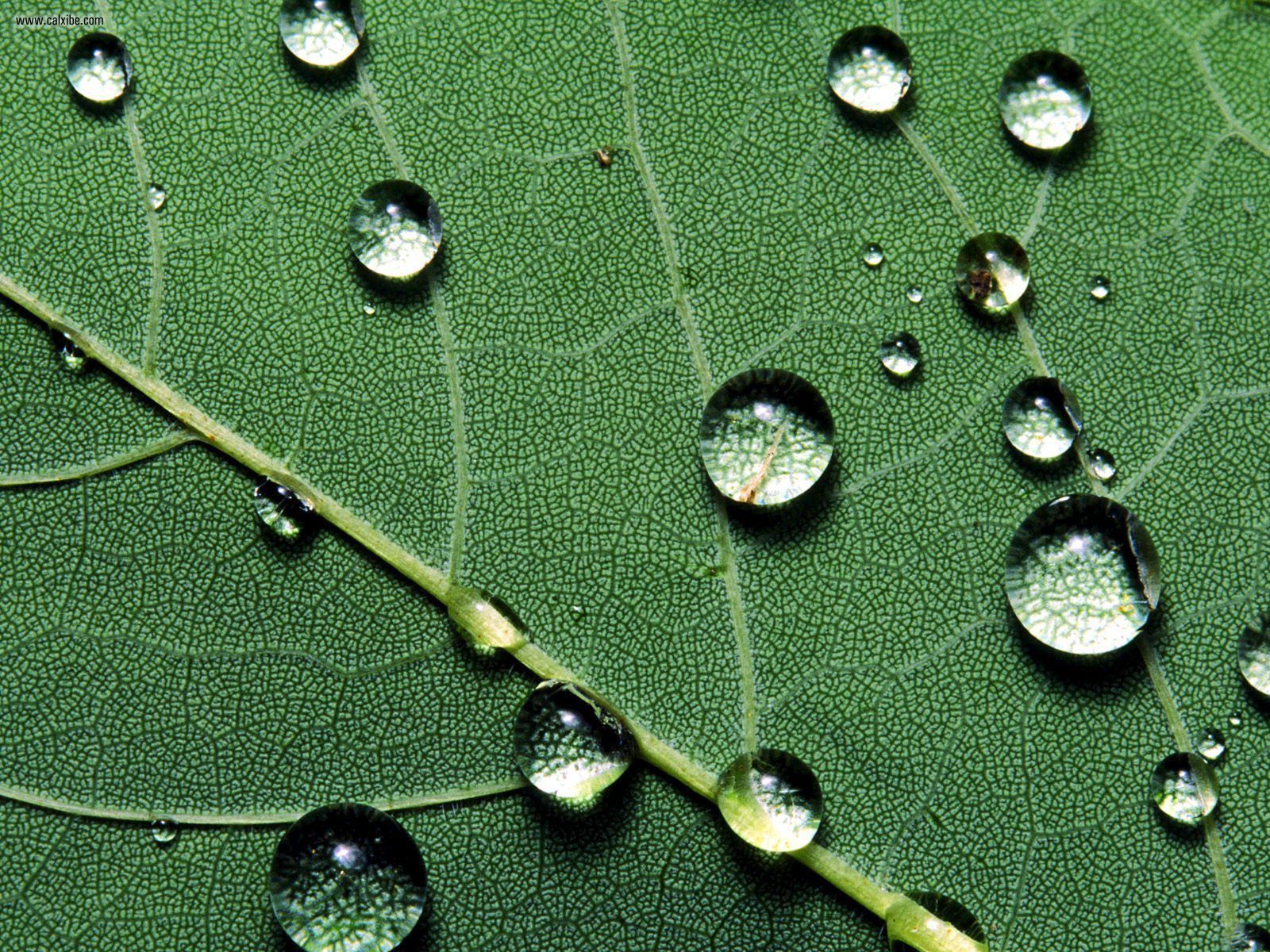
Refer to the picture of water sticking to a leaf; this is occurring because of:
Adhesion
Cohesion

Attractions between water molecules are called
Covalent bonds
Ionic bonds
Polar bonds
Hydrogen bonds
Why do ice cubes float in a glass of water?
the ice cubes are more dense than the water
the water is more dense than the ice cubes
the water is more dense than the glass
the ice is more dense than the glass
What is the meaning of adhesion?
The amount of heat needed to raise the temperature of one gram of a substance by one degree Celsius
The attraction of molecules for other molecules of a different kind
The attraction of molecules for other molecules of the same kind
The mass per unit volume of a substance
Why is water an excellent solvent?
It has a high heat capacity
It is less dense as a solid than as a liquid
It has cohesive and adhesive properties
It has the unique ability to dissolve many polar and ionic substances
What is the meaning of specific heat capacity?
The attraction of molecules for other molecules of a different kind
The mass per unit volume of a substance
The amount of heat needed to raise the temperature of one gram of a substance by one degree Celsius
The attraction of molecules for other molecules of the same kind
What is a substance called if it speeds up a chemical reaction?
reusable
catalyst
specific
fragile
Each enzyme only has 1 substrate that will fit its active site. What is this called?
reusablility
denaturation
specificity
fragility
With what 3 letters do enzymes typically end?
-ose
-ase
-ese
-tic
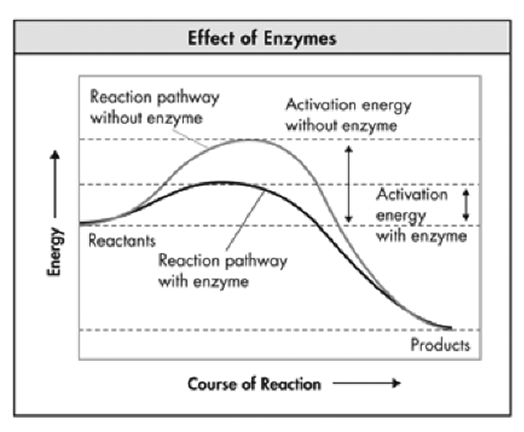
The graph shows how enzymes affect reactions in cells. Which statement best summarizes the information shown in the graph?
Enzymes increase the energy of the reactants.
Enzymes decrease the energy level of the products.
Enzyme decrease the activation energy of the reaction.
Enzymes reverse the direction of the reaction.
Any substance that is acted upon by an enzyme is called a(n)?
Coenzyme
Substrate
Vitamin
Polypeptide
Enzymes are...
nucleic acids
proteins
lipids
carbohydrates
Which of these is most likely an enzyme?
Sucrose
Galactose
Fructose
Amylase
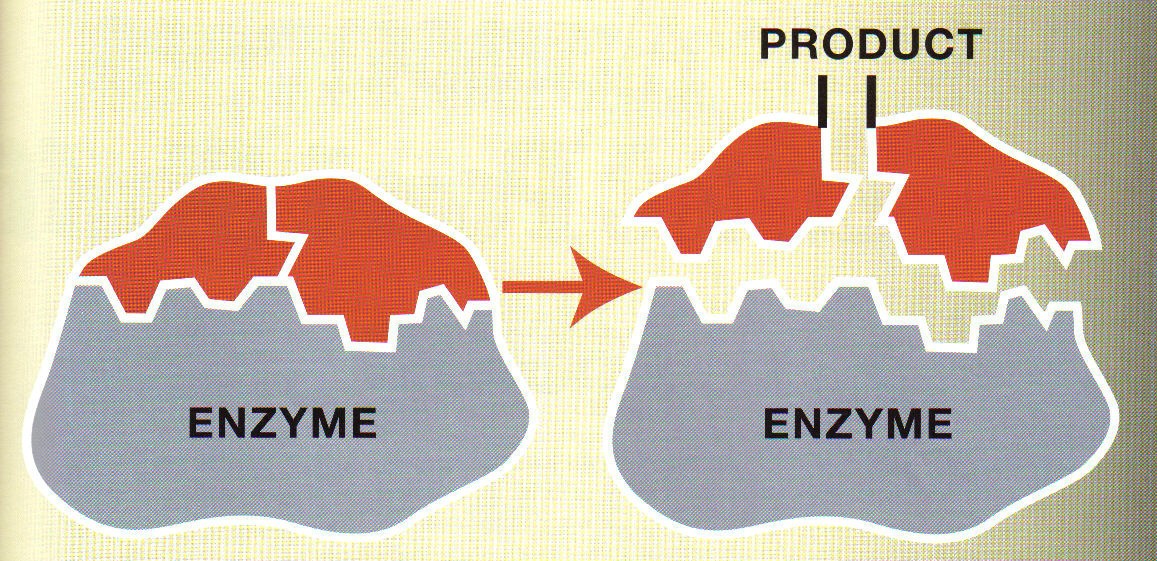
Enzymes speed up reaction rates by changing...
Activation Energy
pH
Hydrogen Bonds
Kinetic Energy
Enzymes will make a reaction go _______ and use ______ energy.
faster, less
faster, more
slower, less
slower, more

Which substrate would this enzyme catalyze?


Pure water has a pH of 7. Pure water _______.
is a base
is a neutral substance
could be either an acid or a base
is an acid
Which is the stronger acid?
pH 1
pH 4
pH 8
pH 13
When dissolved in water, acids produce:
bases
salts
hydrogen ions
hydroxide ions
The pH of a solution is tested, and it is found to be a basic solution. Of the following choices, what could the pH have been?
3
7
9
5
If a solution is basic which ion will be more present?
H+
K+
OH-
H-
Stronger acids have a pH closer to...
7
14
0
9
Neutralization is the process of an acid and a base reacting to form what? Select all that apply
An ionic salt
Hydronium ions
NaCl
Water
A pH scale is...
A corrosive substance that says a substance is an acid.
An indicator that tells if a substance is an acid or base.
A blue litmus paper.
A red litmus paper.
What are properties of a base?
Slippery, bitter, does not react with metals, pH above 7.
Slippery, bitter, reacts with metals, pH below 7.
Sour, reacts with metals, pH below 7
Sour, reacts with metals, pH above 7.
What are properties of acids?
Bitter, slippery, ph above 7
Sour, reacts with metals, ph below 7
Sour, reacts with metals, ph above 7
Bitter, ph of 7, does not react with metals
Finish the sentence: A prairie dog is one type of...
environment
habitat
organism
abiotic factor
Fill in the blanks: An organism obtains food, water, shelter, and other things it needs to __________, _________ and __________ from its environment.
soil
live
walk
grow
reproduce
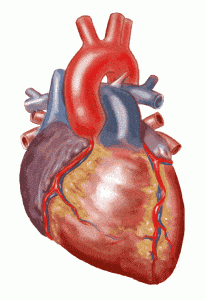
This is a example of ........
cell
organ system
organ
tissue
This is a example of........
organ system
cells
organ
tissue

When a baby kitten becomes an adult cat, this is an example of...
energy metabolism
growth and development
response to stimuli
having cells
Which of the following is the correct order of organization in living things from most basic (simple) to most complex?
a. Organism, cell, tissue, organ, organ system
a. Organ system, organ, tissue, cell, organism
a. Cell, tissue, organ, organ system, organism
a. Cell, organ, tissue, organ, organism, organ system

What type of biological molecule is shown? HINT: Made of amino acids.
carbohydrate
lipid
protein
nucleic acid

What type of biological molecule is shown?
carbohydrate
lipid
protein
nucleic acid

What type of biological molecule is shown?
carbohydrate
lipid
protein
nucleic acid

What type of molecule is sucrose?
disaccharide
monosaccharide
.
.
What Biological Molecules is responsible for muscle formation?
Carbohydrates
Lipids
Protein
Nucleic Acids
The most abundant compound in most living things is
sodium chloride
sugar
carbon dioxide
water

Streptococcus, a round cell, is the bacteria that causes strep throat.
Which characteristic of life does this refer to?
Living things need energy
Living things are composed of one or more cells
Living things respond to their environment
Living things grow and reproduce
Living things maintain a stable internal environment

Cells in your body divide to create new cells.
Which characteristic of life does this refer to?
Living things need energy
Living things are composed of one or more cells
Living things respond to their environment
Living things grow and reproduce
Living things maintain a stable internal environment
The smallest basic unit of matter is the
molecule
atom
compound
cell
Examples of nucleic acids?
DNA and RNA
carbohydrates
potatoes
meats
Which type of organic compound makes up sugars and starches?
lipids
proteins
carbohydrates
nucleic acids
Which of the following is NOT a main class of organic compounds? a. proteins b. water c. nucleic acids d. lipids
proteins
water
nucleic acids
lipids
The element carbon is considered essential for all life on earth.
TRUE
FALSE
What is the correct ordering of nucleus, chromosome, and gene from smallest to largest?
nucleus, chromosome, gene
nucleus, gene, chromosome
gene, chromosome, nucleus
gene, nucleus, chromosome

The mole's touch organ is an adaptation because it helps the mole find food in the darkness of its underground environment.
True
False
What statement used during the scientific method is falsifiable or framed in a way that allows other scientists to prove it false?
hypothesis
observation
question
conclusion
What is any type of data that may either agree or disagree with a prediction?
hypothesis
evidence
experiment
theory

You are conducting an experiment. The following statement is your prediction: If a pond contains chemical X, then there will be more deformed frogs compared to a pond that does not contain chemical X. Which statement could be your hypothesis?
If a pond contains chemical X, then there will be less deformed frogs compared to a pond that does not contain chemical X.
The number of deformed frogs in five ponds that are polluted with chemical X is lower than the number of deformed frogs in five ponds without chemical X.
The number of deformed frogs in five ponds that are polluted with chemical X is higher than the number of deformed frogs in five ponds without chemical X.
If a pond contains chemical X, then there will be the same number of deformed frogs compared to a pond that does not contain chemical X.
The final step in the scientific method involves communication.
True
False
Select all possible answers: Which theories are well known in biology?
cell theory
theory of evolution
germ theory
general theory of relativity
What is a scientific theory?
An explanation based on lots of evidence.
A guess about how or why something happens.
A prediction made at the start of an experiment.
Select all possible answers: Which of the following is an organ system? a. lung b. the digestive tract c. the nervous system
the lungs
the digestive tract
the nervous system
the heart
Two trees growing close to each other both use light, water, and the same nutrients in the soil. Which interaction is likely to occur between the two trees?
symbiosis
competition
interdependence
homeostasis
Which concept describes how the survival of one organism relies on interactions with other organisms?
competition
interdependence
predation
symbiosis
Birds landing on antelopes to pick out food from their fur is an example of symbiosis.
True
False
In an experiment designed to study the effect of fertilizer on plant growth, there are three groups of plants: plants that receive a large amount of fertilizer, plants that receive a small amount of fertilizer, and plants that receive no fertilizer. Which group is the control group?
The plants that receive no fertilizer.
The plants that receive a large amount of fertilizer.
The plants that receive a small amount of fertilizer.
Which of the following is not a physical change?
Decay of matter
Sublimation of solids to gases
Condensation of gases to liquids
Freezing of liquids to solids
_____ is the study of the chemical substances and reactions occurring in living organisms.
Biochemistry
Anatomy
Ecology
Physiology
Water (H2O) forms from hydrogen (H+ ) and oxygen (O2 ). Which chemical equation represents the formation of water from these two elements?
The atoms are rearranged in a chemical reaction and no new atoms are created in the product.
True
False
Which of the following is/are example(s) of an anabolic reaction?
Formation of proteins from amino acids
Breakdown of glycogen into glucose
Synthesis of fatty acids from glucose
Conversion of proteins into amino acids
Biochemical reactions take place inside living cells.
True
False
_______ reactions break down molecules into smaller units and release energy. a. Anabolic b. Catabolic c. Biochemical d. None of the above
Catabolic
anabolic
Biochemical
____________________ is the sum of all the biochemical reactions in a cell and organism.
What is the general chemical equation for an endothermic reaction?
Reactants + Heat → Products
What is the general chemical equation for an exothermic reaction?
Products --> reactant
Reactants --> Products + cold
Reactants --> Products + Heat
Reactants+heat --> Products
Which of the following statements is NOT true about energy and chemical reactions?
Some chemical reactions neither release nor absorb energy.
Chemical reactions can only release energy, not absorb it.
Energy is only involved in physical changes, not chemical reactions.
All chemical reactions require energy to occur.
A chemical reaction that releases energy (as heat) is called an ________ reaction.
The ability to do work is called _____.
Which of the following factors can influence the rate at which an enzyme catalyzes a chemical reaction?
All of these
The main digestive enzyme in the stomach is _____.
Pepsin

