
 Worksheets
TEST1OPTICS
Total questions: 69
Worksheet time: 56mins

Property of light best represented here
light is a form of energy
light travels in straight lines
light refracts
light reflects
Property of light which is used in solar panels
light is a form of energy
light travels in straight lines
light refracts
light reflects
A beam of light drawn as straight lines with arrows
Incidence Ray
Reflected Ray
X-ray
Ray

The angle of incidence is equal to the angle of reflection
Law of Reflection
Law of Light
Incidence Ray
The Normal

The picture shows which type of reflection?
Specular
X-ray
Diffuse
Normal

The ray of light that strikes a mirror
Reflected Ray
Incidence Ray
Angle of Incidence
Angle of Reflection

The ray that bounces off the mirror.
Angle of Reflection
Incidience Ray
Reflected Ray
Angle of Reflection

The angle between the incident ray and the normal. (X on the diagram)
Angle of X-Ray
Angle of Reflection
Angle of Incidence
Angle of Normal

An imaginary line that is drawn at a right angle (90 degrees) to a mirror (Green line)
Reflection Ray
Normal
Incidence Ray
Light Ray

The picture shows which type of reflection?
Diffuse
X-ray
Normal
Specular

If the angle of incidence in the diagram is 80°, the angle of reflection will be:
10°
100°
90°
80°
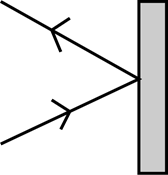
In the illustration, the light ray striking the object is-
A ray of light is incident on a plane mirror and the angle of incidence is 25 degrees. What is the angle of reflection?
A. 0 degrees
B. 50 degrees
C. 90 degrees
D. 25 degrees
The picture shows which type of reflection?
Specular
X-ray
Diffuse
Normal
The ray of light that strikes a mirror
Reflected Ray
Incidence Ray
Angle of Incidence
Angle of Reflection
The ray that bounces off the mirror.
Angle of Reflection
Incidience Ray
Reflected Ray
Angle of Reflection
The angle between the incident ray and the normal. (X on the diagram)
Angle of X-Ray
Angle of Reflection
Angle of Incidence
Angle of Normal

The angle between the reflected ray and the normal (labelled Y on the diagram).
Angle of Incidence
Angle of Reflection
Angle of Normal
Angle of Light
An imaginary line that is drawn at a right angle (90 degrees) to a mirror (Green line)
Reflection Ray
Normal
Incidence Ray
Light Ray
The picture shows which type of reflection?
Diffuse
X-ray
Normal
Specular
If the angle of incidence in the diagram is 80°, the angle of reflection will be:
10°
100°
90°
80°
In the illustration, the light ray striking the object is-

True or False: This diagram shows the correct position of the mirrors so that the light hits the target
True
False
In order to see a picture it must
produce light
reflect light
absorb light
A beam of light drawn as straight lines with arrows
Incidence Ray
Reflected Ray
X-ray
Ray
The picture shows which type of reflection?
Specular
X-ray
Diffuse
Normal
The ray of light that strikes a mirror
Reflected Ray
Incidence Ray
Angle of Incidence
Angle of Reflection
The ray that bounces off the mirror.
Angle of Reflection
Incidience Ray
Reflected Ray
Angle of Reflection
The angle between the incident ray and the normal. (X on the diagram)
Angle of X-Ray
Angle of Reflection
Angle of Incidence
Angle of Normal
The angle between the reflected ray and the normal (labelled Y on the diagram).
Angle of Incidence
Angle of Reflection
Angle of Normal
Angle of Light

The highest point on a wave, F on the diagram.
trough
amplitude
crest
wavelength

The lowest part of the wave is? (H on the diagram)
crest
trough
reflection
wavelength


Glo-Sticks are an example of a __________ light source.
Chemical
Nuclear
Electric
Combustion

The picture shows an example of a ________________ light source.
Nuclear
Chemical
Natural
Combustion

A flashlight is an example of a ________________ light source
Natural
Nuclear
Reflection
Electric

The sun is an example of a ________ light source
Combustion
Natural
Chemical


Which lens represents the path light takes through a diverging lens?


Which figure represents the path light takes through a converging lens?
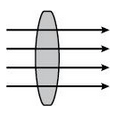
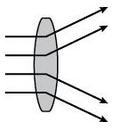
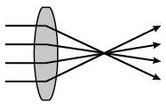
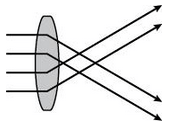
Which optical device bends light inward?
convex lens
concave lens
plane mirror
convex mirror

Which optical technology do we use to observe small things?
Telescope
Microscope
Camera
ALL of them

Which technology focuses light onto film/sensor so it can create a picture?
Telescope
Microscope
Camera
All of them

Model used to explain the characteristics and behavior of light energy. it describes light as energy in the form of waves. the different colors of light have different wavelengths. waves with shorter wavelengths have higher energy than those with longer wavelengths
Kepler's Model
Einstein's Theory of Relativity
Hawking's Wormhole Theory
Wave Model of light
The production of light by living organisms is
bioluminescence
evolution
adaptation
chemistry

X-rays are electromagnetic waves.
True
False


What would happen to your pupils if it's extremely bright outside?
They would let a lot of light into your eyes
They would expand and become very large
They would contract and become very small
They would close up completely

